Commercial Treadmill Supplier for Colombia: China Factory Direct
Peak horsepower is a marketing illusion; continuous horsepower is what keeps your gym running.
Sourcing from a China-based commercial treadmill supplier rooted in Shandong Province allows Colombian gym owners and distributors to bypass European and American brand markups entirely, securing factory-direct pricing while retaining full control over motor specifications, voltage compatibility, and OEM branding. The critical success factors are verifying continuous horsepower ratings rather than peak figures, confirming wide-voltage inverter compatibility for Colombia’s fluctuating grid, and establishing a clear spare parts supply agreement before the first container ships.
I still remember the video call from a gym owner in Bogotá. He had just received a trial batch of commercial treadmills from a factory in southern China, and the belts were slipping under load within the first week. The spec sheet proudly declared a four-point-zero peak horsepower motor, but the moment a user above a certain weight stepped on, the console flickered and the belt hesitated. He was furious, and rightfully so. The root cause was not the motor itself but a combination of mislabeled continuous output and an inverter that could not handle the voltage swings common in parts of the Colombian grid. That single incident reshaped how our team structures every quotation going into the South American market. [NEED_CITE: distinction between peak horsepower and continuous horsepower per IEC 60034 motor rating standards]
Let us break down exactly what matters when you evaluate a commercial treadmill supplier for the Colombian market, and why the factory location in Shandong Province is not just a geographic detail but a structural advantage.
Why Colombian Buyers Choose a Shandong-Based Commercial Treadmill Supplier Over Western Brands
The cost gap between a direct Shandong factory and a branded European or American treadmill is substantial enough to fund an entire additional strength training zone with the savings.
Colombian gym owners and fitness distributors operate in a market where import duties, logistics, and currency fluctuations compress margins tightly. When you purchase from a Western brand, you are paying for decades of marketing, regional distributor layers, and showroom overhead. A commercial treadmill supplier operating its own production facilities in Shandong eliminates those layers. The pricing advantage typically lands in a range that allows buyers to equip the same floor space with nearly double the number of machines compared to buying branded equivalents. [NEED_CITE: comparative import pricing data for fitness equipment entering Latin American markets from China versus Europe]
But cost is only the entry argument. The real operational advantage lies in customization responsiveness. A Colombian distributor once needed a specific belt width adjustment and a Spanish-language console layout for a hotel chain contract in Cartagena. The Western brand quoted a minimum order of several hundred units and a lead time measured in many months. The Shandong commercial treadmill supplier retooled the console firmware and adjusted the deck dimensions within a single production cycle, with a minimum order that barely filled a corner of a container. That flexibility is what separates a true manufacturing partner from a catalog seller.
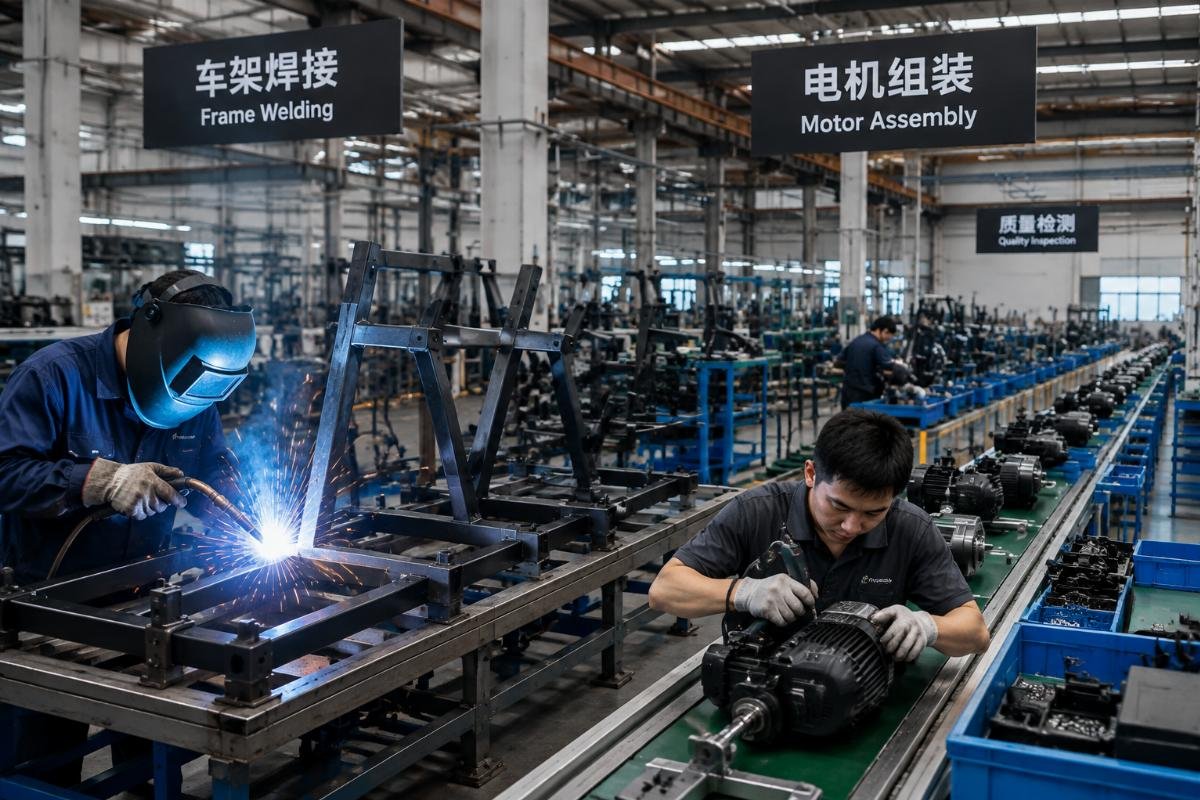
Shandong Province, particularly the manufacturing cor*s of fitness equipment production expertise. The supply chain for motors, inverters, running boards, and steel frames is concentrated within a compact radius, which means component quality control happens at the source rather than through layered subcontracting. [NEED_CITE: geographic concentration of fitness equipment manufacturing clusters in Shandong Province]
Motor Specs Decoded: Peak Horsepower Versus Continuous Horsepower in Commercial Use
Peak horsepower is what sells the treadmill on the spec sheet; continuous horsepower is what prevents you from getting fired.
Every commercial treadmill supplier will show you a motor rated in horsepower. What almost none of them volunteer, unless you push hard, is whether that number is peak or continuous. The difference is not academic. Peak horsepower measures the maximum output the motor can sustain for a few seconds under laboratory conditions, typically at startup or under a sudden heavy load. Continuous horsepower measures what the motor can deliver hour after hour, day after day, at commercial usage intensity.
| Parameter | Peak Horsepower Rating | Continuous Horsepower Rating |
|---|---|---|
| Measurement Condition | Short burst, laboratory setting | Sustained load, real-world commercial use |
| Relevance to Gym Operations | Marketing appeal only | Determines belt stability under repeated use |
| Risk of Misrepresentation | High, widely inflated in generic spec sheets | Lower, verifiable through motor test reports |
| Impact on Motor Longevity | Negligible indicator | Directly correlates with thermal stress and bearing wear |
[NEED_CITE: IEC 60034 motor rating definitions for continuous duty versus short-time duty]
A gym owner in Medellín learned this the hard way. He purchased treadmills from a supplier who listed only peak horsepower. Within months, two motors burned out during peak evening hours. The replacement cost, including emergency air freight, erased the entire savings he had achieved by avoiding a branded supplier. The lesson was expensive but clear: any commercial treadmill supplier who cannot provide a continuous horsepower figure backed by a motor test report is hiding something.
When you request a quotation, insist that the motor data sheet separates both figures explicitly. A reputable commercial treadmill supplier will provide motor test documentation showing thermal performance curves, not just a single headline number. [NEED_CITE: motor thermal performance testing methodology per NEMA standards]
Voltage Compatibility: Protecting Your Investment from Colombia’s Unstable Grid
A treadmill with a perfect motor is still garbage if the inverter cannot handle the voltage it actually receives.
Colombia’s electrical grid, particularly outside major metropolitan centers like Bogotá and Medellín, experiences frequent voltage fluctuations. Standard commercial treadmills designed for stable North American or European grids will shut down, trigger error codes, or suffer gradual inverter damage when exposed to these swings. This is not a theoretical risk; it is the single most common cause of field failures reported by Colombian gym operators sourcing equipment from overseas.
A responsible commercial treadmill supplier must offer a wide-voltage inverter option specifically engineered for markets with unstable grid conditions. This inverter accepts a broader input voltage range and stabilizes the output to the motor regardless of fluctuations on the supply side. The cost increment for this upgrade is modest relative to the machine price, but the protection it provides is disproportionate. Without it, you are essentially betting your equipment budget against the reliability of local infrastructure.
| Grid Condition | Standard Inverter Response | Wide-Voltage Inverter Response |
|---|---|---|
| Stable voltage within nominal range | Normal operation | Normal operation |
| Moderate voltage fluctuation | Intermittent shutdowns, error codes | Continuous operation, stabilized output |
| Severe voltage dip or surge | Potential inverter board damage | Protected operation, automatic recovery |
[NEED_CITE: voltage fluctuation standards and tolerance ranges applicable to Colombian electrical distribution]
The gym owner in Bogotá I mentioned earlier eventually retrofitted his entire fleet with wide-voltage inverters sourced from our facility. The failure rate dropped to near zero. He later told me that the inverter upgrade cost a fraction of what a single emergency motor replacement would have cost. Any commercial treadmill supplier who dismisses voltage compatibility as a non-issue for the Colombian market is either inexperienced or indifferent.
Verifying Your Commercial Treadmill Supplier: A Practical Checklist
Trust is built on documentation, not on promises made over WhatsApp.
Before committing to a commercial treadmill supplier, you need a structured verification process. This is not about distrust; it is about protecting a capital investment that will sit on your gym floor for the better part of a decade. The following checklist reflects the exact sequence our Colombian clients use before placing orders, refined over years of trial and error on both sides.
First, request the CE certification and verify it against the issuing body’s database. A certificate that cannot be independently verified is worthless. Second, demand a motor test report from an accredited laboratory, not an in-house document printed on company letterhead. Third, confirm the warranty terms in writing, specifically the spare parts supply commitment. A warranty that promises coverage but does not guarantee parts availability within a reasonable timeframe is a marketing statement, not a service commitment.
| Verification Item | Acceptable Standard | Red Flag |
|---|---|---|
| CE Certification | Independently verifiable against issuing body database | Self-declared or unverifiable document |
| Motor Test Report | Accredited third-party laboratory report | In-house document without lab accreditation |
| Spare Parts Commitment | Written agreement with defined supply timeline | Verbal assurance or vague language |
| Factory Audit Access | Willingness to host live video or in-person inspection | Refusal or excessive conditions |
[NEED_CITE: CE marking verification procedures for fitness equipment imported into international markets]
A distributor in Cali once shared that he received a CE certificate from a supplier that looked perfectly legitimate. When he cross-checked the certificate number with the issuing organization, it turned out to belong to a completely different product category. The supplier had simply copied a real certificate and altered the product description. Without that verification step, the distributor would have faced customs rejection and potential legal liability.
Scaling From Trial Orders to Full Gym Packages with a Single Commercial Treadmill Supplier
The real cost savings emerge when you consolidate cardio, strength, and free weight into one container from one source.
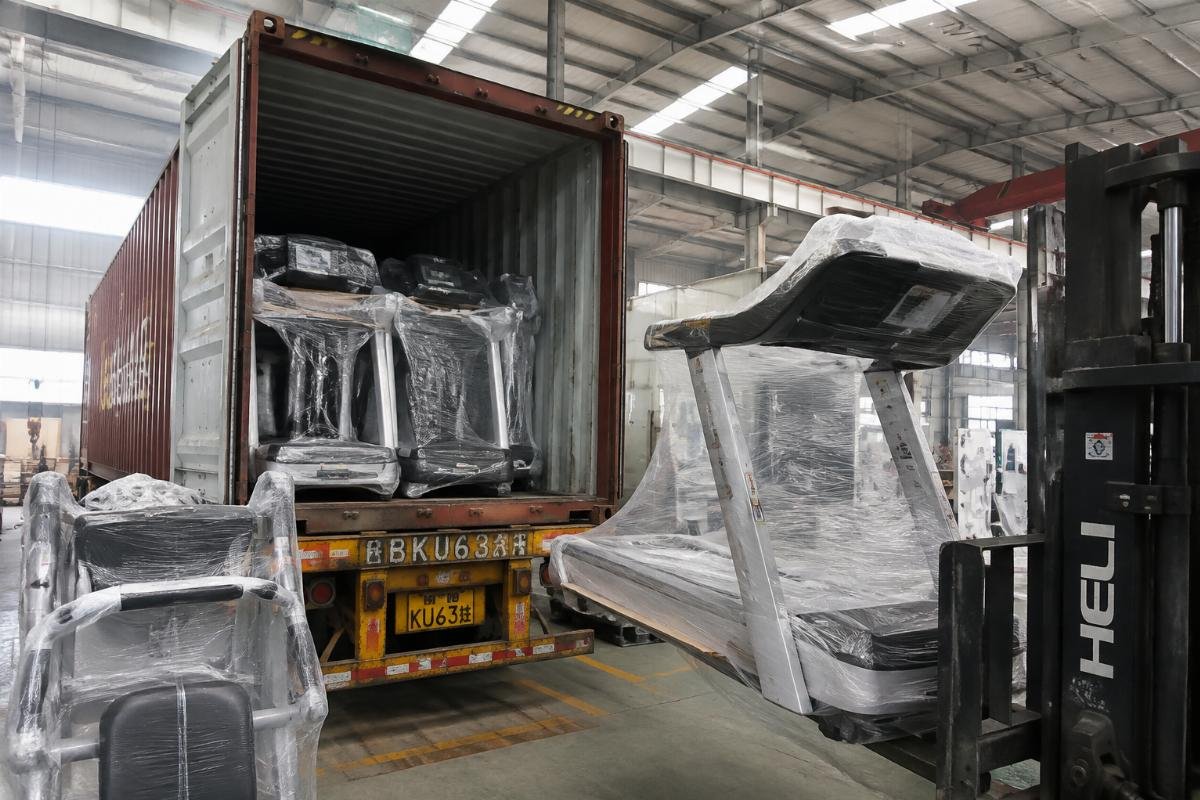
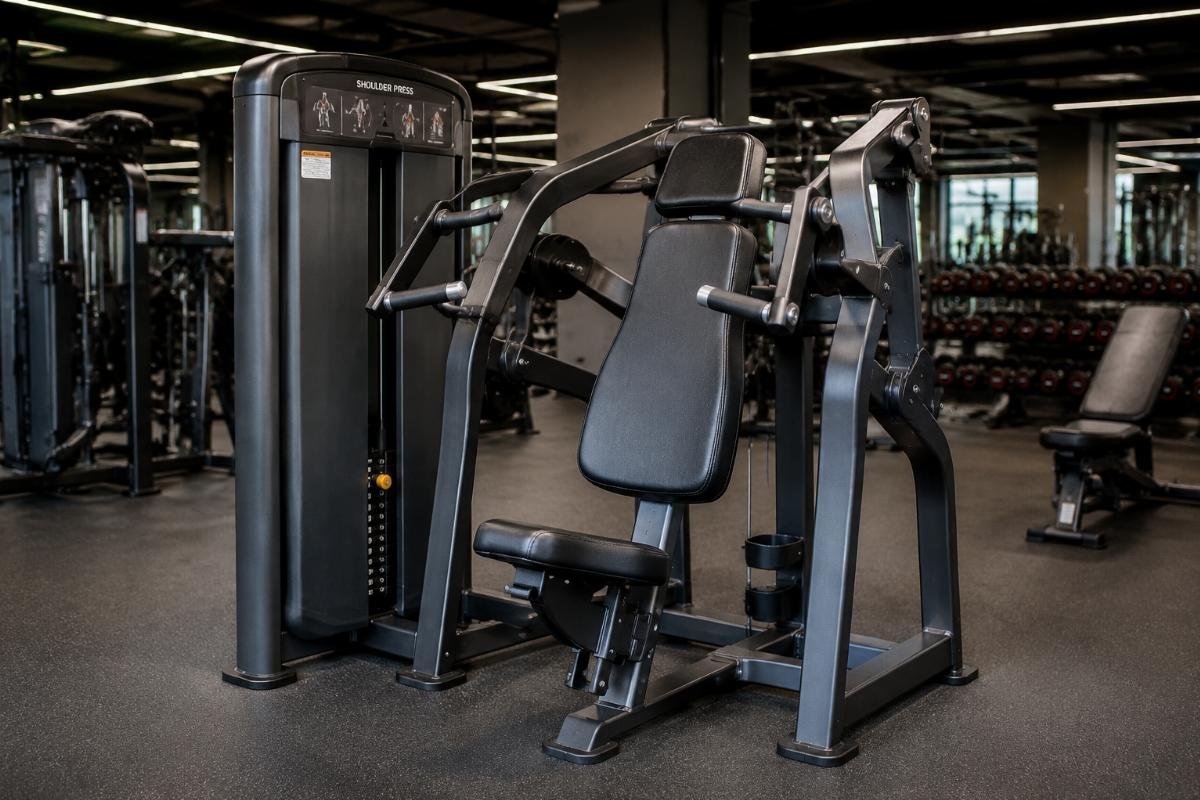
Most Colombian buyers start with a small trial order, often a handful of commercial treadmills, to test market response and supplier reliability. This is the correct approach. What separates a transactional supplier from a strategic partner is what happens next. Once the trial validates quality and communication, the logical step is to expand into a full gym fit-out, combining cardio machines, plate-loaded strength equipment, cable systems, and free weights into consolidated container loads.
A commercial treadmill supplier based in Shandong with a diversified production portfolio can fulfill this expansion without forcing the buyer to coordinate with multiple factories, each with their own quality standards, lead times, and communication overhead. The logistical advantage of single-source consolidation is significant: one set of shipping documents, one quality control inspection, one point of accountability for any post-delivery issue.
A boutique fitness chain in Barranquilla initially ordered a small batch of treadmills and spin bikes. Within a single cycle, they expanded to a full commercial package including smith machines, cable crossovers, adjustable benches, and a complete rubber flooring set. The total container cost was substantially lower than sourcing each category from separate specialized suppliers, and the delivery timeline compressed considerably.
Conclusion
A commercial treadmill supplier in Shandong offers Colombian buyers a direct path to cost-efficient, customizable, and technically sound fitness equipment procurement. The non-negotiable priorities are verifying continuous horsepower over peak figures, securing wide-voltage inverter compatibility, and establishing documented spare parts commitments before shipment. Start with a trial batch, validate every specification against independent documentation, and then scale into consolidated full-gym packages that eliminate multi-supplier fragmentation.