Fitness Equipment Price in Ghana: 2026 Wholesale Buyer Guide
The fitness equipment price in Ghana is not determined by the factory price tag—it is shaped by container loading efficiency, moisture protection during ocean transit, and voltage compatibility with the local power grid.
Commercial gym buyers in Ghana typically pay 30%-40% above the base factory cost when sourcing through intermediaries, while direct factory procurement with optimized container consolidation and proper tropical shipping preparation can compress the total landed cost significantly.
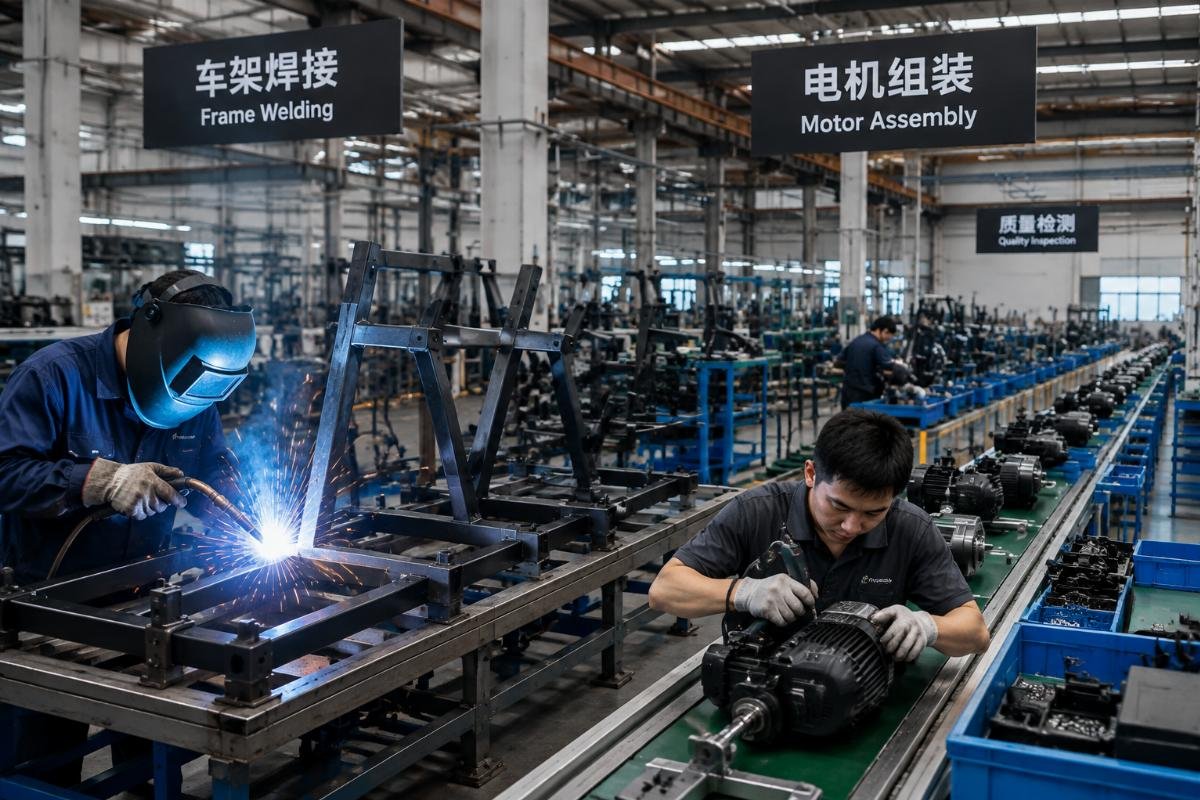
When I first started loading containers at our factory in Shandong, I treated every treadmill and Smith machine like furniture—wrap it, strap it, ship it. Then we sent a full container of commercial treadmills and strength equipment to a hotel project in West Africa. The client called within weeks: two control boards had short-circuited, and the leather on several benches was cracking. The investigation traced it back to ocean humidity penetrating poorly sealed packaging during the weeks-long transit. That single shipment cost us months of dispute resolution and replacement parts. Since then, I have personally overseen every container bound for tropical ports, and I can tell you that the real fitness equipment price in Ghana is written in the details of how the goods survive the journey. [NEED_CITE: impact of tropical maritime humidity on electronic components in fitness equipment]
Understanding these variables is what separates buyers who get fair value from those who keep paying hidden costs. Let us break down exactly what drives the fitness equipment price in Ghana and how experienced buyers control each factor.
What Determines Fitness Equipment Price in Ghana?
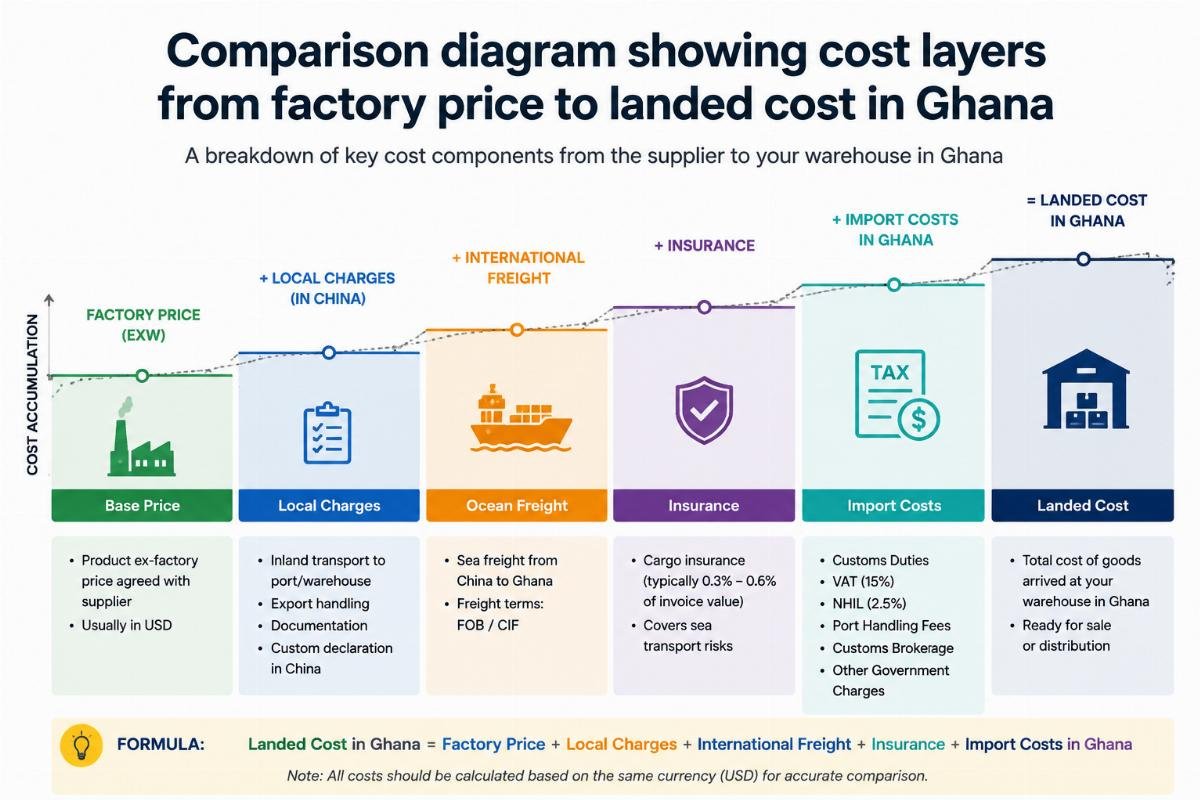
The final fitness equipment price in Ghana is a sum of four layers: factory production cost, international freight, import duties and clearance fees, and local distribution margins.
Most overseas buyers focus exclusively on the factory quotation and assume that number is the real cost. In practice, the factory price is only the starting point. Ocean freight rates fluctuate with global shipping conditions, and the volume you ship directly affects the per-unit freight allocation. Ghana’s import duty structure at Tema port applies specific tariff rates to fitness equipment categories, and clearance procedures add documentation and handling expenses. [NEED_CITE: Ghana customs tariff classification for gym and fitness equipment]
Here is where the real separation happens. Buyers who purchase through trading companies or regional agents absorb an additional margin layer—often substantial—before the goods even reach Accra or Kumasi. Buyers who source directly from manufacturers and manage their own container loading eliminate that intermediary premium entirely.
I have seen the same commercial treadmill quoted at wildly different fitness equipment price in Ghana depending on whether the buyer was working with a middleman or dealing factory-direct. The machine itself was identical. The difference was purely structural—how many hands touched the transaction before the container doors closed.
For buyers assembling a complete gym, the composition of the order matters just as much. A container loaded entirely with heavy free weights reaches its weight limit long before it fills the available volume. A container loaded only with large cardio machines fills the volume but barely dents the weight allowance. The smart approach is mixing equipment types so that both weight and space are maximized, driving down the per-unit freight cost across the entire order.
How to Compare Commercial Treadmill vs. Strength Machine Costs?
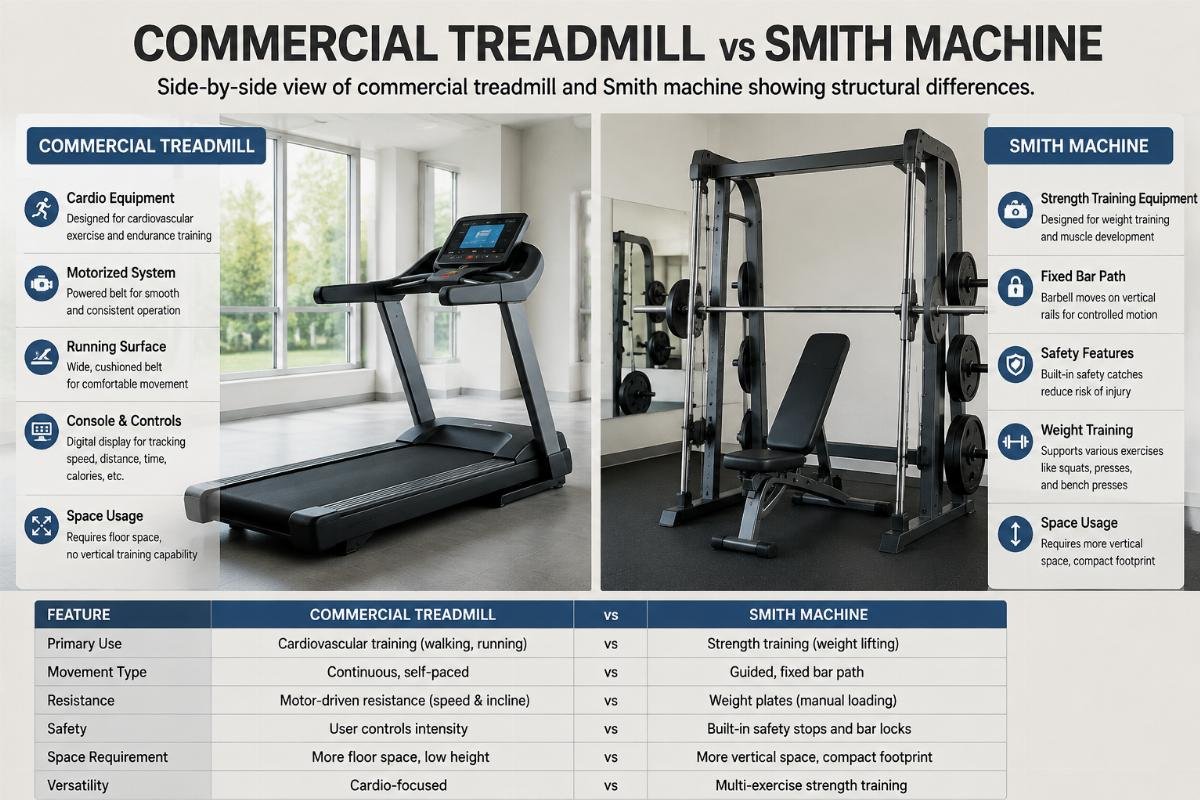
Cardio equipment carries a higher unit price but transparent margins, while strength machines offer wider customization flexibility—and combining both in a single container is the most effective way to balance the overall fitness equipment price in Ghana.
Let me lay out the comparison the way I walk buyers through it at the factory.
| Parameter | Commercial Treadmill | Smith Machine / Power Rack | Plate-Loaded Strength |
|---|---|---|---|
| Unit Price Level | Noticeably higher | Moderate | Moderate to low |
| Customization Scope | Limited to motor, deck, console options | High—grip positions, attachment points, pad colors | High—pad material, stack weight, frame finish |
| Container Space Consumption | High—large footprint, cannot be nested | Moderate—upright frame, some nesting possible | Moderate to high depending on configuration |
| Weight per Unit | Heavy—motor and steel frame | Very heavy—solid steel construction | Very heavy—weight stacks and steel |
| Margin Transparency | Tight—market pricing well established | Wider—customization creates pricing variation | Moderate |
| Vulnerability to Transit Damage | High—electronics, belt, deck | Low—primarily steel structure | Low to moderate—cables and pulleys need protection |
[NEED_CITE: container loading optimization for mixed fitness equipment shipments]
A hotel developer I worked with in West Africa needed both cardio and strength equipment for a mid-size fitness center. If they had ordered treadmills and ellipticals in one shipment and strength machines in a separate one, they would have paid two full containers of freight. By consolidating into a single shipment with careful loading planning, the per-unit freight allocation dropped noticeably across the entire order.
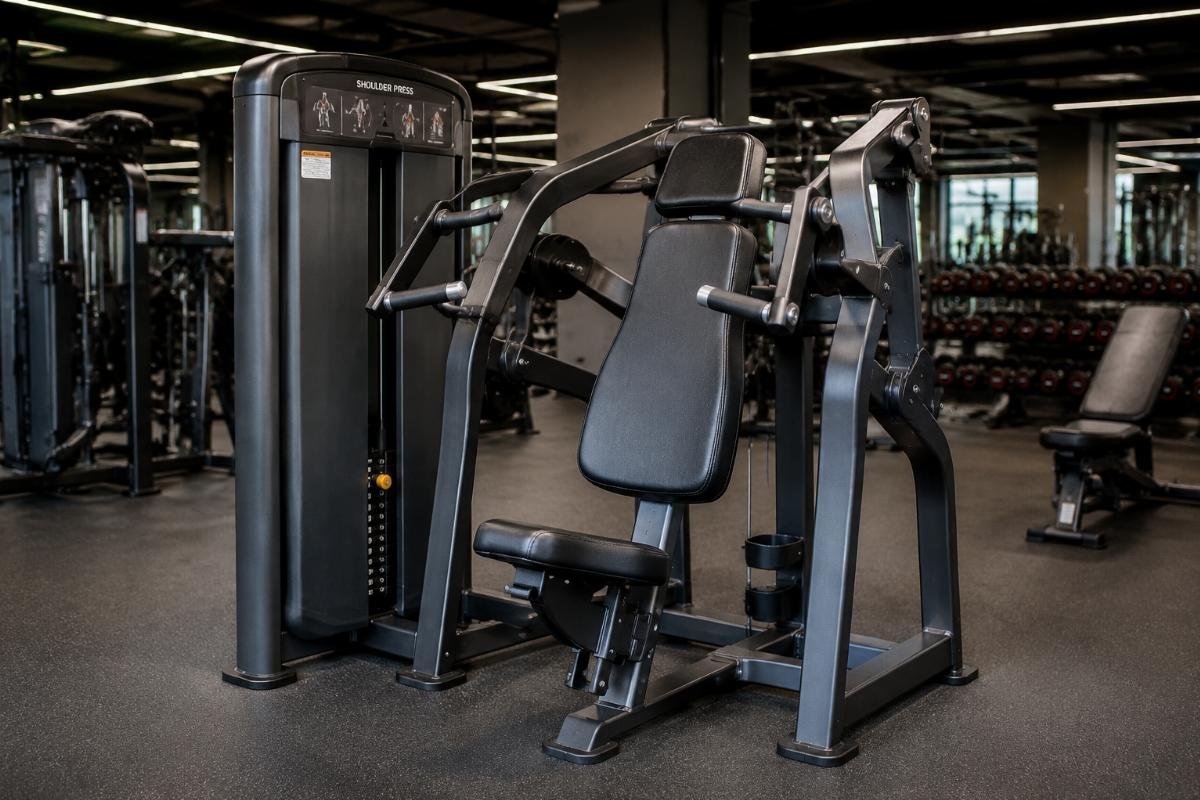
The key insight is this: treadmills and ellipticals are where buyers tend to overpay because the electronics and motors create a perception of complexity that inflates prices. Strength machines, by contrast, are fundamentally steel fabrication—and the fitness equipment price in Ghana for these items is heavily influenced by steel grade, tube wall thickness, and finishing process rather than exotic components.
| Steel Specification | Light Commercial | Full Commercial | Heavy-Duty |
|---|---|---|---|
| Frame Tube Wall | Basic | Standard | Controlled |
| Load Capacity Rating | Moderate | High | Substantially extended |
| Weld Quality | Standard | Full penetration | Full penetration with grinding |
| Finish Durability | Basic powder coat | Enhanced powder coat | Multi-stage pretreatment with industrial powder coat |
| Salt-Spray Endurance | Vulnerable | Resistant | Robust |
[NEED_CITE: commercial strength equipment steel tube thickness standards and load ratings]
Buyers who understand this distinction stop comparing unit prices in isolation and start evaluating the fitness equipment price in Ghana on a total-container basis.
Which Specifications Prevent Shipping Damage and Warranty Claims?
Moisture-proof packaging, proper surface pretreatment before powder coating, and control board voltage compatibility with Ghana’s power grid are the three critical defenses against transit damage and premature warranty claims.
This is the section where I have the strongest opinions, because I have seen what happens when any one of these three is neglected.
Moisture Protection for Ocean Transit
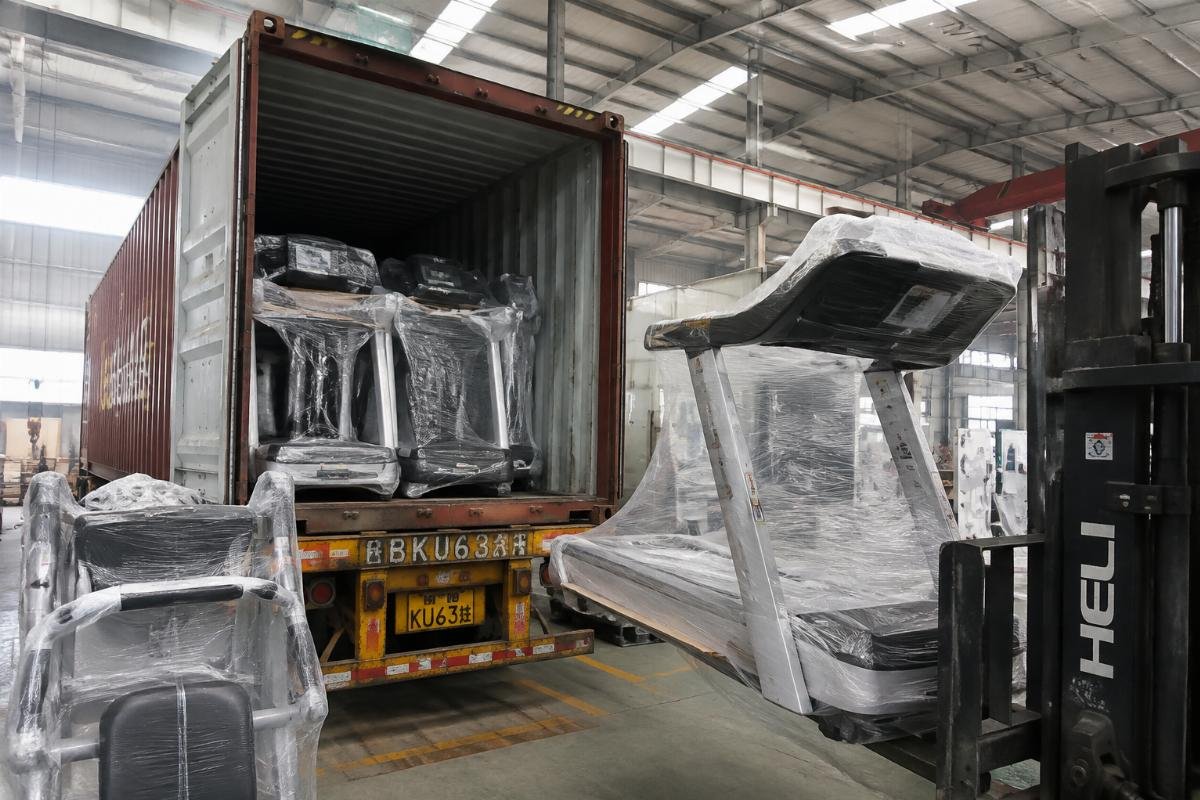
The sea journey from a Chinese port to Tema takes weeks. Inside a sealed container, temperature swings between day and night create condensation—essentially, the container breathes moisture in and out. Electronics in treadmills and ellipticals are the most vulnerable. Control boards, display panels, and motor drive circuits can corrode or short-circuit if exposed to sustained humidity.
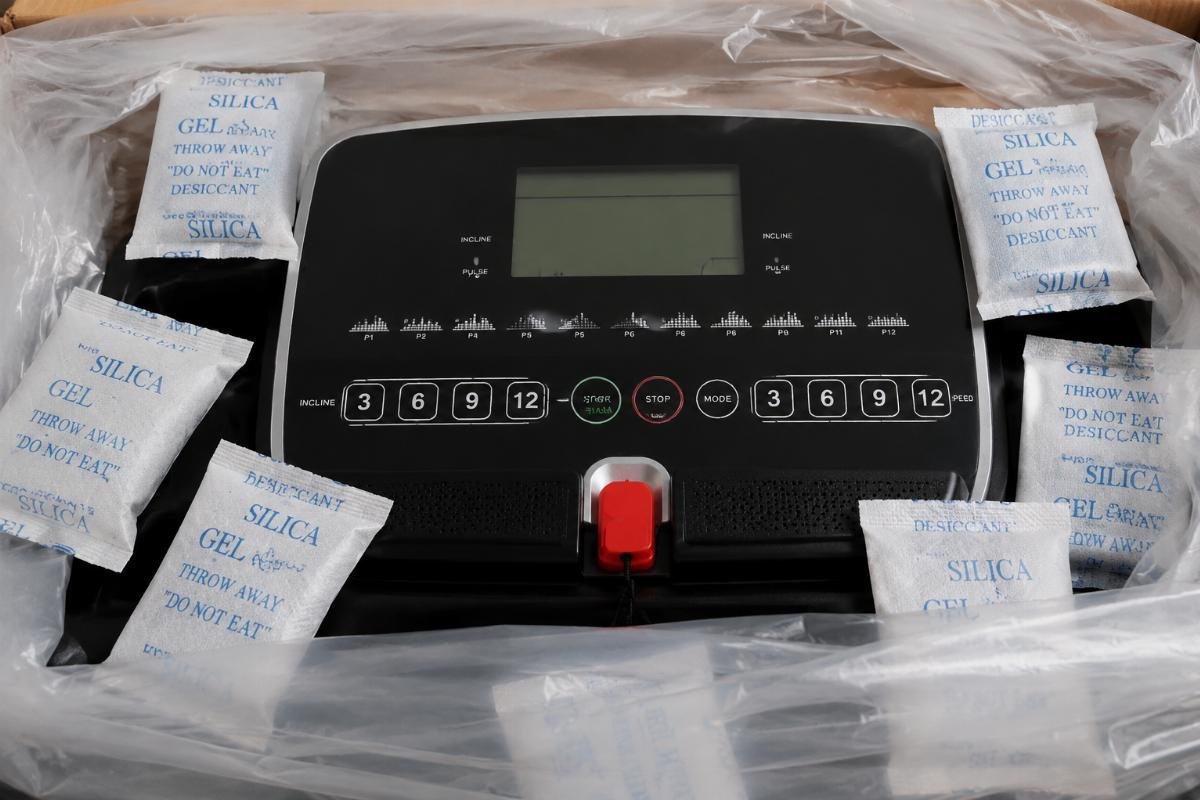
The solution is not just wrapping machines in plastic. It requires desiccant placement inside the packaging, sealed polyethylene barriers around electronic components, and in some cases, vacuum-sealed inner wraps for the most sensitive parts. A proper moisture protection protocol adds a full cycle of preparation work at the factory, but it eliminates the majority of electronics-related warranty claims after arrival. [NEED_CITE: best practices for moisture protection of electronic fitness equipment during ocean freight]
Surface Pretreatment and Powder Coating
Ghana’s climate is hot and humid year-round. Equipment that sits in a gym with open ventilation—common in many facilities—faces constant exposure to moisture and sweat. If the steel frame was not properly pretreated before powder coating, rust will start appearing at weld joints and connection points within months.
Propretreatment involves multiple stages: degreasing, rust removal, phosphating or zirconium-based conversion coating, rinsing, and drying. Skipping or shortening any stage saves factory cost but guarantees field failures. The fitness equipment price in Ghana for properly pretreated equipment is higher upfront, but the total cost of ownership is far lower because the frames last years longer.
Voltage and Frequency Compatibility
Ghana’s electrical grid operates at 230V/50Hz, but voltage fluctuations are common—especially outside major urban centers. Treadmill control boards designed strictly for stable 220V environments can fail when subjected to sustained overvoltage or undervoltage conditions.
The fix is specifying control boards with wider voltage tolerance ranges and built-in surge protection. This is not an exotic modification—it is a specification choice that should be confirmed before production begins. I have replaced control boards under warranty that burned out not because of any defect, but because the voltage tolerance was too narrow for the local grid conditions.
How to Optimize Container Loading for Ghana Import?
Mixing heavy free weights with bulky strength machines and cardio equipment in a single container pushes volume utilization to its practical maximum and significantly reduces the per-unit freight component of the fitness equipment price in Ghana.
Container loading is not an afterthought—it is a planning exercise that directly affects your landed cost.
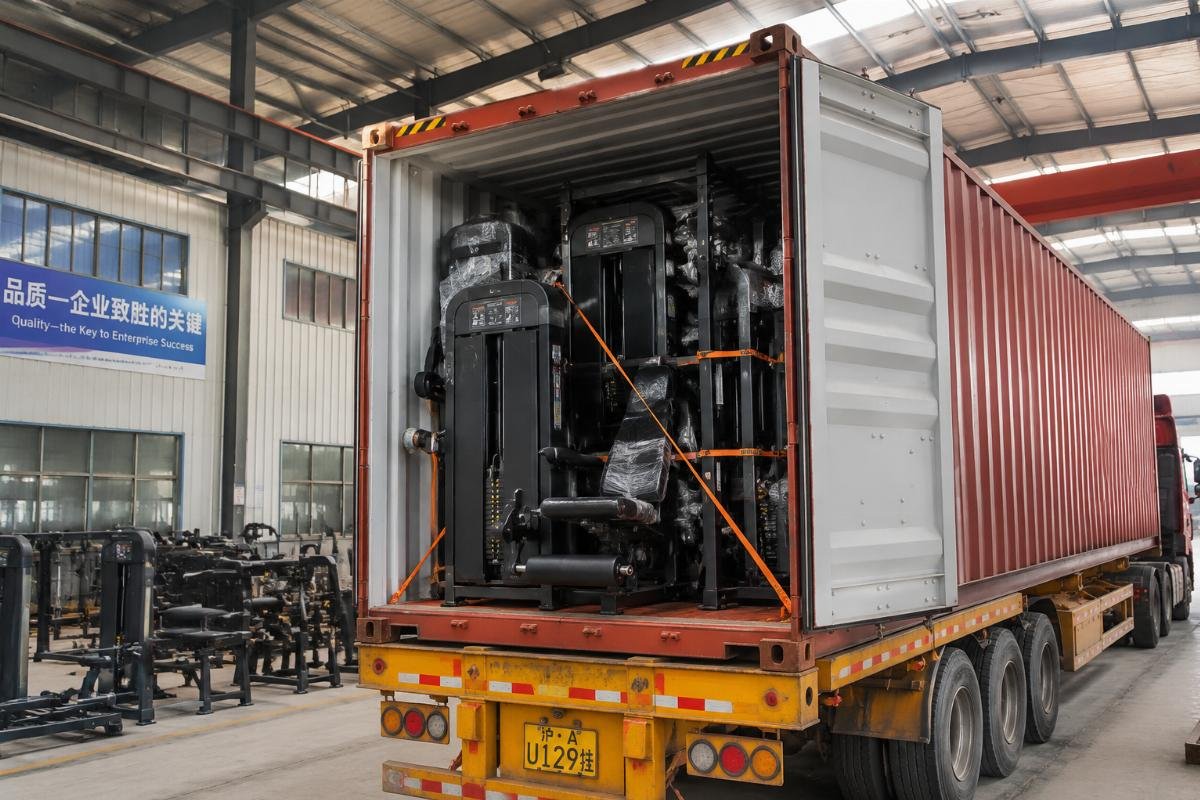
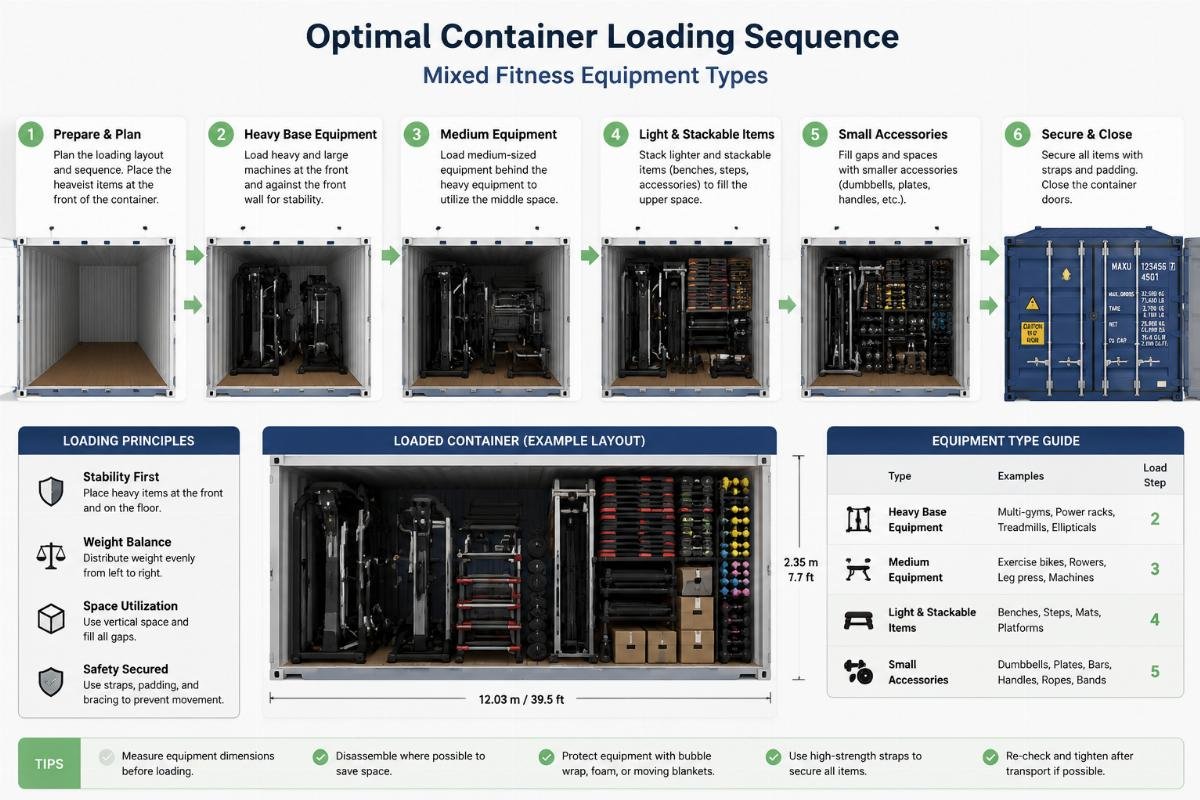
The principle is straightforward. A 20-foot container has both a volume limit and a weight limit. Free weights—dumbbells, barbells, plates—hit the weight limit quickly but leave most of the volume empty. Treadmills and cable machines fill the volume quickly but leave weight capacity unused. By combining both types in a single container, you utilize both dimensions simultaneously.
Here is the loading sequence I use for mixed gym shipments:
-
Floor layer: Heavy flat items—rubber flooring rolls, weight plates, and bench frames—go on the container floor first. They create a stable base and use the weight allowance efficiently.
-
Wall layer: Tall, flat-framed equipment—power racks, Smith machines, cable crossover frames—are positioned upright against the container walls. Their rectangular profiles nest efficiently.
-
Middle fill: Plate-loaded machines, adjustable benches, and functional training accessories fill the gaps between the wall-layer equipment.
-
Top and remaining space: Free weights in boxed sets, resistance bands, small accessories, and spare parts fill every remaining cavity.
-
Securing: All items are strapped and blocked to prevent shifting during ocean transit. Shifting is the second most common cause of transit damage after moisture.
[NEED_CITE: container loading optimization methods for mixed cargo in fitness equipment export]
A distributor in Accra who had been importing in separate shipments switched to consolidated loading and reported that the per-unit freight allocation across the entire order dropped noticeably. The fitness equipment price in Ghana for each item—whether a treadmill or a set of dumbbells—reflected that savings.
| Loading Strategy | Volume Utilization | Weight Utilization | Per-Unit Freight Impact |
|---|---|---|---|
| Cardio only | Noticeably high | Noticeably low | Noticeably higher per unit |
| Free weights only | Noticeably low | Near maximum | Noticeably higher per unit |
| Mixed consolidated | Substantially extended | Substantially extended | Noticeably reduced |
The critical point: container loading optimization is not about squeezing more units into a box. It is about ensuring that every kilogram of weight allowance and every cubic meter of volume is working to reduce the fitness equipment price in Ghana for the buyer.
What Certifications and Warranty Terms Matter for Ghana Buyers?
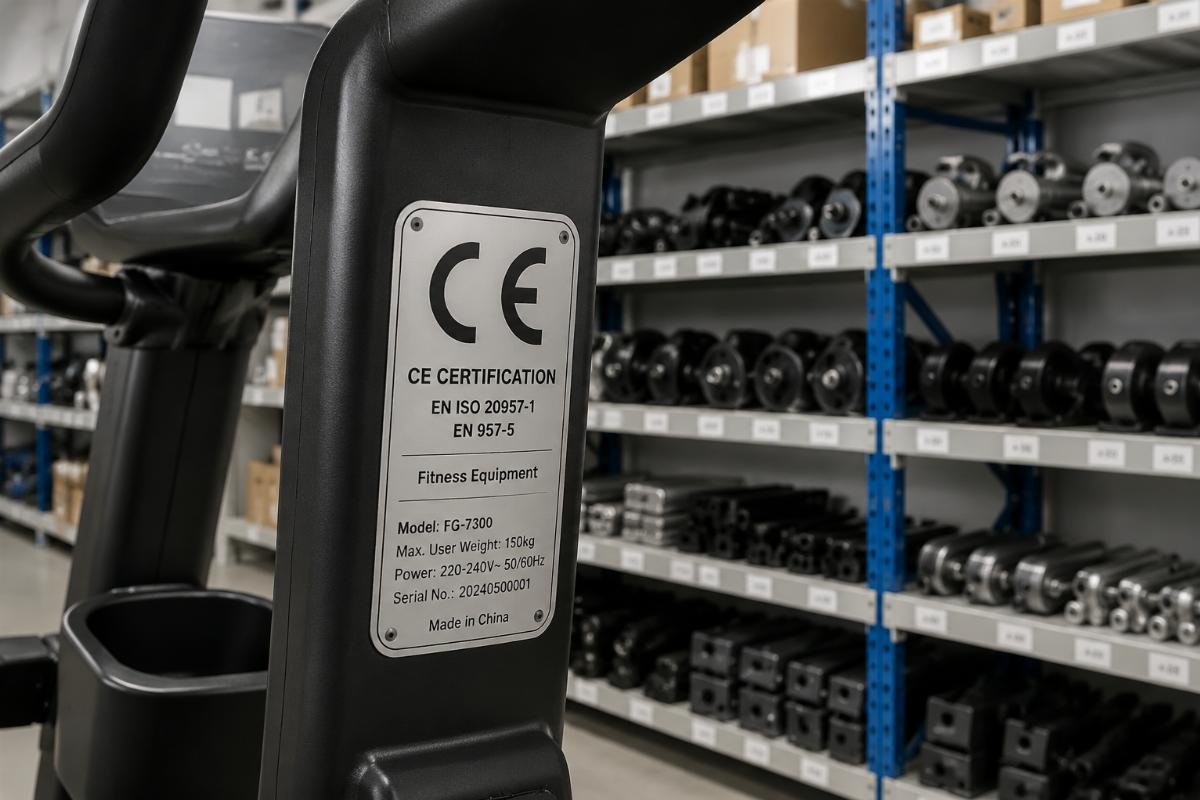
CE certification is the baseline entry requirement for Ghana imports, but the real protection for buyers lies in spare parts availability and responsive technical support—not just the length of the warranty period.
Ghana’s import regulations require certain product categories to carry recognized safety certifications. For fitness equipment, CE marking demonstrates compliance with European safety standards, which Ghana’s regulatory framework accepts as a baseline quality indicator. [NEED_CITE: Ghana import certification requirements for fitness and gym equipment]
However, certification alone does not protect your investment when something breaks. Here is what experienced buyers actually need:
Spare Parts Supply
Every gym equipment owner will eventually need replacement parts—drive belts, deck boards, control boards, cable sets, pulley wheels, upholstery pads. The question is not whether you will need them, but how quickly you can get them. A warranty that promises coverage but requires weeks of waiting for parts is nearly useless when a commercial treadmill in a busy gym is out of service.
Reliable manufacturers maintain spare parts inventories specifically for export markets and can ship replacement components within days, not months. The fitness equipment price in Ghana effectively includes the cost of downtime—every day a machine is non-functional is revenue lost.
Technical Support Responsiveness
When a control board fails or a motor behaves abnormally, the buyer needs access to someone who understands the equipment—not a generic customer service line. Video-call troubleshooting, wiring diagrams, and diagnostic guides make the difference between a quick fix on-site and a machine sitting idle for weeks.
Warranty Structure That Reflects Reality
Frame warranties of multiple years are standard for commercial-grade equipment. Electronics and wearable parts typically carry shorter coverage. What matters is clarity—knowing exactly what is covered, what is not, and how claims are processed.
| Warranty Element | Basic Supplier | Reliable Manufacturer |
|---|---|---|
| Spare Parts Availability | Self-reported | Verifiable |
| Technical Support Access | Limited | Full batch-level documentation and remote support |
| Claim Processing | Uncontrolled | Standard with defined timelines |
| Frame Warranty Duration | Moderate | Substantially extended |
| Electronics Coverage | Vulnerable to disputes | Clearly defined with quick replacement |
[NEED_CITE: fitness equipment warranty best practices for international commercial buyers]
I have worked with buyers who chose the lowest fitness equipment price in Ghana upfront, only to discover that sourcing a single replacement control board took months and cost more than the original component. The real cost was never the purchase price—it was the total operational reliability.
Conclusion
The fitness equipment price in Ghana is a function of sourcing structure, shipping preparation, and long-term support—not just the factory quotation.
Buyers who source directly from manufacturers, consolidate mixed equipment loads into single containers, specify moisture-proof packaging and voltage-compatible electronics, and verify spare parts availability before ordering will consistently achieve a lower total cost of ownership than those who focus solely on unit price. The difference between a good purchase and an expensive lesson lies in these operational details.