Commercial Power Rack Manufacturer | OEM Bulk for Sale
"Commercial Grade" is not a certification—it is a marketing phrase until you verify tube thickness, welding integrity, and load test data.
A true commercial grade power rack must meet a minimum tube wall thickness of 2.5mm, use full-penetration welding on all structural joints, and pass a static load test exceeding 1,000 lbs with no permanent deformation. Any supplier who cannot provide third-party test documentation or steel mill certificates for these specs is selling you a residential frame with a commercial sticker.
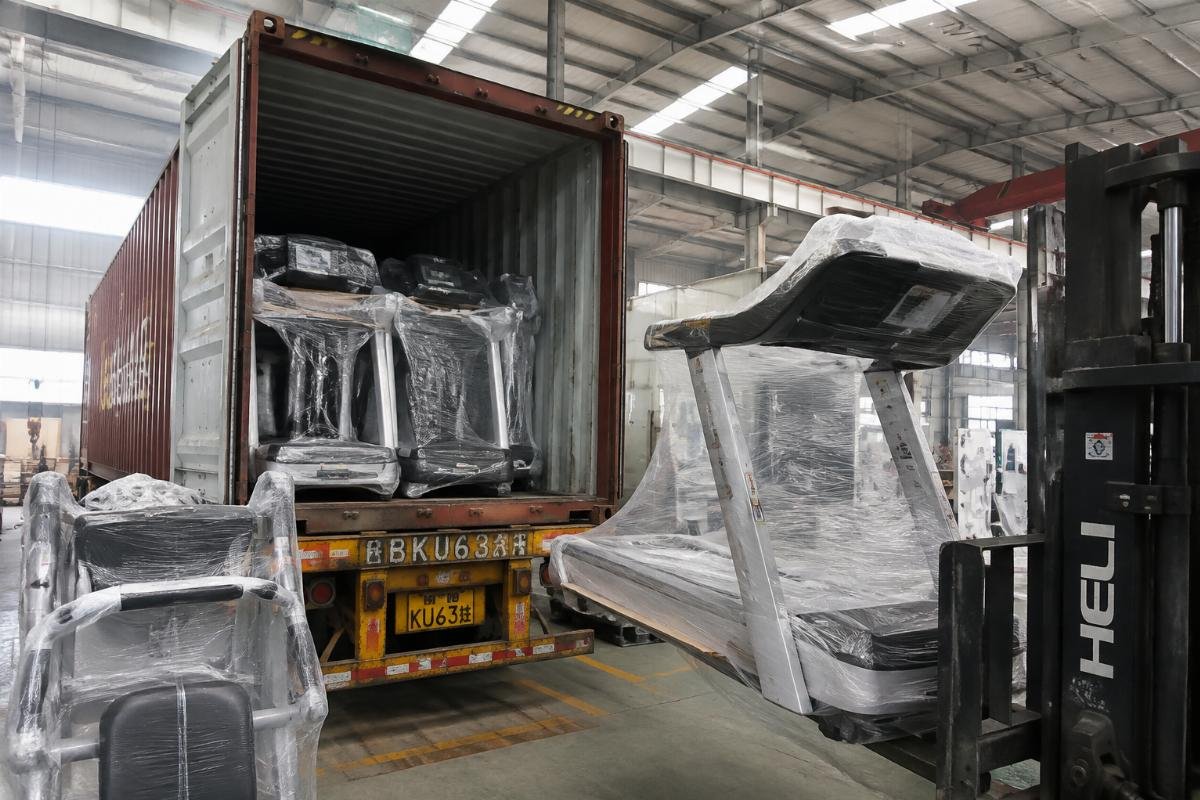
Back when I was sourcing equipment for a gym chain in the Midwest, I watched a batch of power racks arrive at a facility in Germany—ordered at a rock-bottom price from a supplier who stamped "Commercial Grade" on every spec sheet. Within months, the cross-member welds on multiple units cracked under normal squat loads. The entire batch had to be shipped back. Between return freight, customs re-entry fees, and warehouse storage during the dispute, the financial hit wiped out an entire year’s margin for that buyer [NEED_CITE: failure root cause distribution in imported fitness equipment per ASTM F2216]. That is the kind of lesson that reshapes how you evaluate every commercial power rack supplier afterward.
The rest of this guide breaks down exactly how to separate genuine commercial-grade construction from marketing noise—using spec matrices, welding inspection methods, load test protocols, and OEM customization checklists that I have refined over years of running factory floors and trade show booths from Cologne to Chicago.
What Does "Commercial Grade" Actually Mean for a Power Rack?
There is no single international standard that defines "Commercial Grade" for power racks—buyers must build their own verification checklist around tube wall thickness, welding method, and certified load capacity.
Unlike cardiovascular equipment, which falls under more standardized safety frameworks, strength equipment like power racks operates in a gray zone where the label "Commercial Grade" is applied freely by manufacturers at every quality tier [NEED_CITE: absence of unified commercial grade certification for strength training equipment under EN 957 and ASTM F2216]. This means the burden of verification falls entirely on the buyer.
From my experience inspecting production lines across Shandong and Guangdong, here is the baseline threshold that separates a rack built for daily commercial abuse from one built for weekend home use:
- Tube wall thickness: The structural uprights must use steel tubing with a wall thickness no less than 2.5mm. Anything below this threshold will flex under repeated heavy loading and develop fatigue cracks at welded joints over time.
- Welding method: All load-bearing joints must be full-penetration welds—continuous welds that fuse the entire joint surface. Spot welding or intermittent tack welding on structural connections is a disqualifier for commercial use.
- Static load capacity: The rack must withstand a minimum static load test of 1,000 lbs applied to the J-hooks and safety bars without permanent deformation or visible stress distortion.
- Steel certification: The supplier must provide mill test certificates confirming the steel grade and chemical composition of the tubing used.
A commercial power rack supplier who hesitates or deflects when you ask for any of these four items is signaling that their product does not meet the threshold. I have seen suppliers produce glossy brochures featuring "heavy-duty construction" while the actual tube wall measured barely 2.0mm with a caliper on the factory floor.
How to Compare Power Rack Specs Without Getting Tricked by Marketing Labels?
Build a spec comparison matrix that evaluates tube thickness, welding type, coating process, load rating, and hole spacing side by side—this forces every quote onto the same measurable playing field.
At a trade show in Las Vegas, a buyer running a chain of functional training studios pulled out two competing quotes for identical-looking power racks. Both claimed "Commercial Grade." The price gap between them was substantial—nearly half again as much for one over the other. When we sat down and mapped both quotes against a spec matrix, the differences became immediately visible [NEED_CITE: spec comparison methodology for strength equipment procurement per IHRSA supplier evaluation guidelines].
Here is the comparison matrix framework I use when evaluating quotes from any commercial power rack supplier:
| Parameter | Entry-Level Quote | Mid-Range Quote | Verified Commercial Grade |
|---|---|---|---|
| Upright Tube Wall Thickness | Basic | Standard | Certified |
| Welding Method on Joints | Self-reported | Sample-level | Full batch-level |
| Surface Coating Process | Basic | Standard | Controlled |
| Static Load Test Documentation | Not provided | Self-reported | Verifiable |
| Hole Spacing Consistency | Uncontrolled | Standard | Controlled |
| Steel Mill Certificate | Not provided | Sample-level | Full batch-level |
The entry-level quote listed "2.0mm tube" with "CO2 gas shielded welding" and no load test data. The mid-range quote upgraded to 2.5mm but still relied on supplier-internal test reports rather than third-party verification. The verified commercial grade option specified 3.0mm uprights, full-penetration welding confirmed by batch-level inspection records, and static load test reports from an accredited third-party lab.
The key insight here is that tube thickness alone does not determine commercial viability. A well-engineered rack with properly distributed gussets and cross-bracing at a moderate wall thickness will outperform a poorly designed rack that simply stacks on extra steel. The structural geometry matters as much as the raw material spec [NEED_CITE: structural design principles for load-bearing fitness equipment per engineering standards].
When I advise buyers on building this matrix, I tell them to demand that every supplier fill in the exact same columns. If a commercial power rack supplier refuses to complete a column or provides vague language like "heavy-duty welding" instead of specifying the method, that is your signal to move on.
What Welding and Load Tests Should You Demand Before Placing an Order?
Require weld penetration inspection records and documented static and dynamic load test reports from an accredited third party—verbal assurances and in-house certificates are not sufficient for commercial procurement.
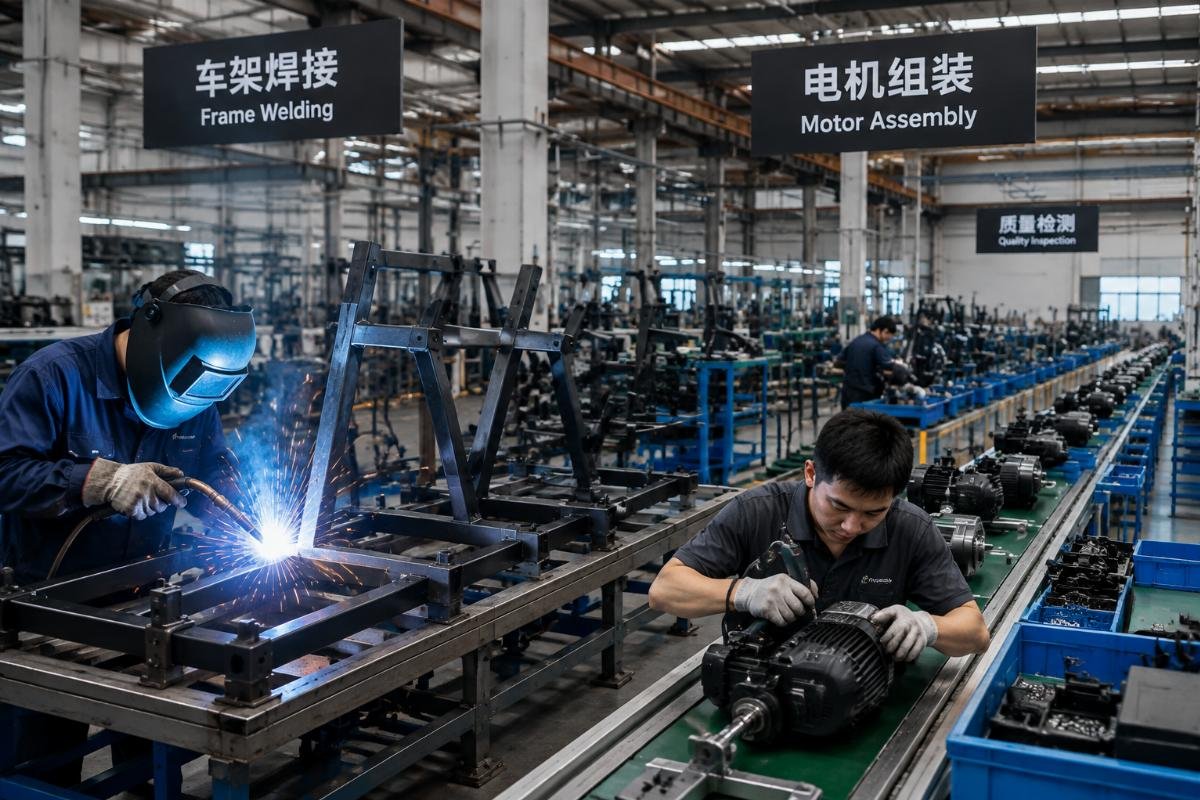
Welding quality is the single most common failure point in imported power racks, and it is also the hardest to verify from a photograph or a spec sheet. During a factory audit at a manufacturing facility in Shandong, I watched a quality inspector run a ultrasonic weld penetration test on a batch of uprights. The test revealed that nearly a third of the joints labeled as "full weld" had incomplete penetration—meaning the weld metal had not fused through the entire joint depth [NEED_CITE: weld penetration inspection methods for structural steel per AWS D1.1 guidelines].
Here is what you need to demand from any commercial power rack supplier before committing to a production order:
Weld Inspection Requirements:
- Visual inspection records: Every structural weld must be visually inspected for surface cracks, porosity, undercut, and incomplete fusion. The supplier should provide batch-level visual inspection logs signed by their QC team.
- Weld penetration verification: For critical load-bearing joints—particularly where uprights meet base plates, where J-hook brackets attach, and where safety spotter arms connect—require documentation of penetration depth. Ultrasonic testing or destructive cross-section sampling on batch samples are acceptable methods.
- Welding process specification: The supplier must confirm the welding process used (typically MIG/MAG with CO2 or argon mix shielding gas) and the qualifications of their welding operators.
Load Test Requirements:
- Static load test: Apply a minimum load of 1,000 lbs to the J-hooks and an equivalent load to the safety bars. Hold for a defined duration and measure for any permanent deformation. The test report must include before-and-after measurements of critical dimensions.
- Dynamic load test: Simulate repeated loading cycles—dropping weighted bars onto the J-hooks and safety bars—to test fatigue resistance over extended use. This is particularly critical for CrossFit and functional training environments where dynamic loads are routine.
- Third-party verification: Load test reports should come from an accredited testing laboratory, not the manufacturer’s internal QC department. Reports certified under CE marking protocols or equivalent regional standards carry the most weight.
A distributor in the Middle East once placed a trial order with a new commercial power rack supplier based solely on the supplier’s in-house load test certificates. When the racks arrived and were installed in a hotel fitness center, the safety bars showed visible bending under loads well below the rated capacity. The subsequent independent test revealed that the supplier’s internal testing had used shorter hold durations and lower loads than claimed [NEED_CITE: load testing protocol discrepancies in imported fitness equipment per consumer product safety investigations].
How to Set Up OEM Branding and Custom Specs for Your Market?
OEM customization for power racks extends far beyond logo placement—it requires a complete technical confirmation checklist covering hole spacing, color matching, packaging compliance, and certification documentation, all validated through a signed sample before mass production.
Many buyers approaching a commercial power rack supplier for the first time assume that OEM branding is simply a matter of sending a logo file and choosing a color from a swatch card. The reality is considerably more complex, and shortcuts at this stage lead to costly corrections after production has begun.
A distributor in Southeast Asia learned this when their first OEM order arrived with the correct logo but the wrong hole spacing pattern for their regional accessory ecosystem. The Westside spacing standard used in their market was not communicated clearly in the purchase order, and the factory defaulted to their standard layout. The entire container had to be sold at a discount to a buyer in a different region where the spacing was acceptable.
Here is the OEM technical confirmation checklist I walk every buyer through:
- Hole spacing and layout: Confirm whether the rack uses standard Westside spacing, hybrid spacing, or a custom pattern. Provide a dimensioned drawing—not just a written description.
- Upright dimensions and profile: Specify the exact cross-section shape (square, rectangular) and outer dimensions of the uprights, as this determines compatibility with attachments.
- Color matching: Provide a RAL code or physical color sample for powder coating. Screen colors on digital files are unreliable for industrial coating matching.
- Logo placement and method: Specify whether the logo is applied via silk screening, laser etching, or adhesive label—and provide vector artwork with exact placement dimensions on each component.
- Packaging requirements: Confirm carton dimensions, labeling language, barcode or SKU requirements, and any retail-ready packaging specifications if the product will be sold through distribution channels.
- Certification and compliance documentation: Specify which market certifications are required (CE for Europe, relevant standards for MENA or Southeast Asian markets) and confirm that the supplier can provide the documentation for your branded product, not just their generic catalog version.
The most reliable commercial power rack suppliers will produce a pre-production sample that incorporates every one of these specifications, ship it to the buyer for physical inspection and sign-off, and then use that signed sample as the production reference. Skipping the sample stage to save time or freight cost is one of the most expensive mistakes a buyer can make.
What After-Sales Support Should a Reliable Supplier Provide?
A dependable commercial power rack supplier must offer structured spare parts availability, responsive technical guidance, and clear warranty terms—validate these through a trial container order before scaling to full fleet procurement.
The relationship with your commercial power rack supplier does not end when the container clears customs. In commercial environments where equipment runs multiple shifts daily, wear components like J-hook liners, safety strap anchors, and adjustment pins will need replacement over time. A supplier who disappears after delivery is a supplier you cannot build a business around.
A gym chain operator in Europe initially sourced power racks from a supplier who offered the lowest unit price but provided no spare parts catalog, no technical support contact, and a warranty clause so vague it was effectively unenforceable. When J-hook liners on several units wore through within the first year of heavy use, the operator had to source compatible replacement parts from a completely different manufacturer—parts that required modification to fit. The downtime and engineering effort cost substantially more than the original unit price savings.
When evaluating after-sales support from a commercial power rack supplier, focus on these three pillars:
Spare Parts Supply:
- The supplier should maintain a documented spare parts inventory with part numbers, pricing, and lead times for all wear components.
- Confirm that spare parts are available for the expected lifespan of the product—typically a minimum of several years after the production run.
- Request that critical spare parts be included in the initial shipment to avoid downtime during the early operational period.
Technical Guidance:
- The supplier should provide assembly documentation, installation guides, and maintenance schedules in the buyer’s required language.
- Access to a responsive technical contact for troubleshooting—whether via email, video call, or on-site visit for large orders—is essential for resolving issues that arise during installation or early use.
Warranty Terms:
- Warranty coverage should be clearly defined in writing, specifying which components are covered, what constitutes a valid claim, and the resolution process including replacement timelines.
- Avoid suppliers who offer only verbal warranty commitments or whose written terms contain excessive exclusions that render the warranty meaningless.
The safest approach is to place a trial container order with any new commercial power rack supplier, install the equipment in a controlled environment, monitor performance over an initial operational period, and only then scale to larger procurement volumes. This trial phase validates not just product quality but the supplier’s responsiveness to issues, spare parts logistics, and willingness to stand behind their warranty.
Conclusion
Commercial-grade power rack procurement demands verifiable engineering evidence, not marketing labels. Tube wall thickness, full-penetration welding, third-party load testing, and structured OEM confirmation processes form the non-negotiable foundation of any serious purchase. Build your spec matrix, demand documentation, validate through a trial order, and only then commit to volume—this is the discipline that separates profitable long-term sourcing relationships from costly lessons.