Commercial Gym Equipment Manufacturer for UK Market: Buyer Guide
Most buyers assume the lowest FOB quote wins the contract. The real cost killer hides in UKCA compliance gaps, 230V/50Hz mismatches, and spare parts droughts after the container clears customs.
Entering the UK commercial fitness market demands a commercial gym equipment manufacturer who delivers CE/UKCA certification, BS 1363 plug compliance, 230V/50Hz electrical customization, and verifiable after-sales parts depth — not just the cheapest price tag.
I spent years handling export documents at Qingdao Port before moving into sales. One shipment to a Chilean gym chain taught me the hard way: we sent treadmills wired for 220V/60Hz because that was our default, and their local grid ran 220V/50Hz. Three control boards fried within the first week. Since then, I ask every buyer about destination voltage, plug standards, and certification requirements before quoting a single SKU. [NEED_CITE: UK electrical supply standard voltage and frequency per BS 7671]
That habit — checking compliance details upfront — is what separates a smooth UK market entry from a costly customs headache.
What Electrical and Certification Standards Must UK Gym Equipment Meet?
The UK requires 230V/50Hz power supply with BS 1363 fused plugs, and UKCA marking for post-Brexit market access — CE alone no longer suffices.
Many importers still treat CE certification as a global passport. It is not. Since the UK left the EU, the UKCA mark has become the mandatory conformity assessment for commercial gym equipment sold or operated in Great Britain. [NEED_CITE: UKCA marking requirements for electrical equipment post-Brexit transition period]
Here is what a compliant commercial gym equipment manufacturer must provide:
| Requirement | UK Standard | Typical Non-Compliant Setup |
|---|---|---|
| Voltage | 230V nominal | 110V or 200V mismatch |
| Frequency | 50Hz | 60Hz motor winding |
| Plug Type | BS 1363 with fuse | Unfused Schuko or NEMA |
| Safety Mark | UKCA | CE only or no mark |
| EMC Compliance | UK SI 2016 No. 1091 | Unverified or missing |
A Middle East distributor once ordered a full container of strength and cardio gear for a London hotel project. The factory supplied CE paperwork but no UKCA documentation. The shipment sat at Felixstowe for weeks while the buyer scrambled to arrange retroactive testing — a process that cost several times the original certification fee and delayed the gym opening by months. [NEED_CITE: UKCA vs CE marking differences for gym equipment under UK law]
When evaluating a commercial gym equipment manufacturer, ask for the UKCA certificate number and verify it against the UK government’s product safety database. If the supplier only offers CE, treat it as a red flag unless they have a clear, written timeline for UKCA conversion.
How to Compare Cardio vs. Strength Equipment Specs for UK Commercial Use?
Commercial-grade cardio and strength equipment must withstand extended daily usage hours and higher user weight capacities — home-grade builds will fail under gym-floor conditions.
UK commercial gyms typically run equipment for extended hours daily, often across multiple shifts. A commercial gym equipment manufacturer designing for this market must spec components accordingly:
| Parameter | Commercial Grade | Light Commercial / Home Grade |
|---|---|---|
| Daily Usage Capacity | Extended continuous operation | Limited hourly cycles |
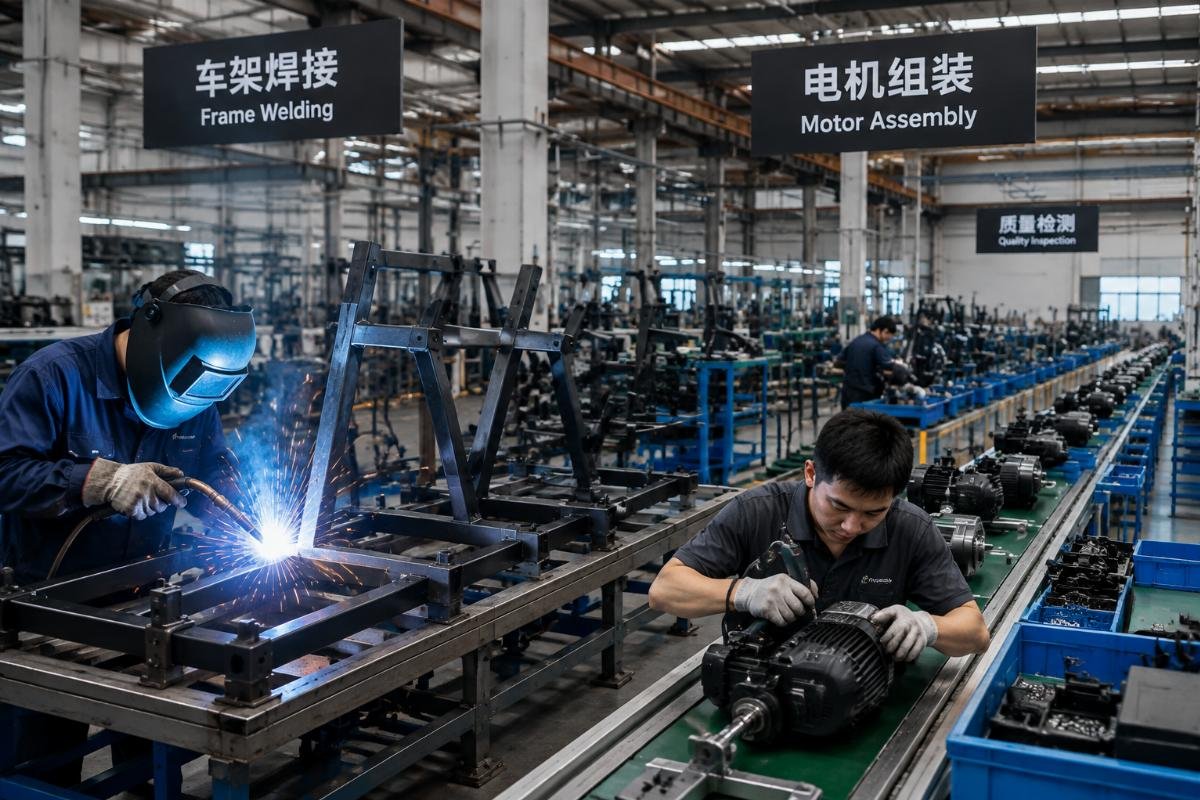
| Frame Construction | Heavy-duty steel, reinforced welding | Standard gauge tubing |
| Motor (Cardio) | High-torque AC induction | Lower-duty DC or AC |
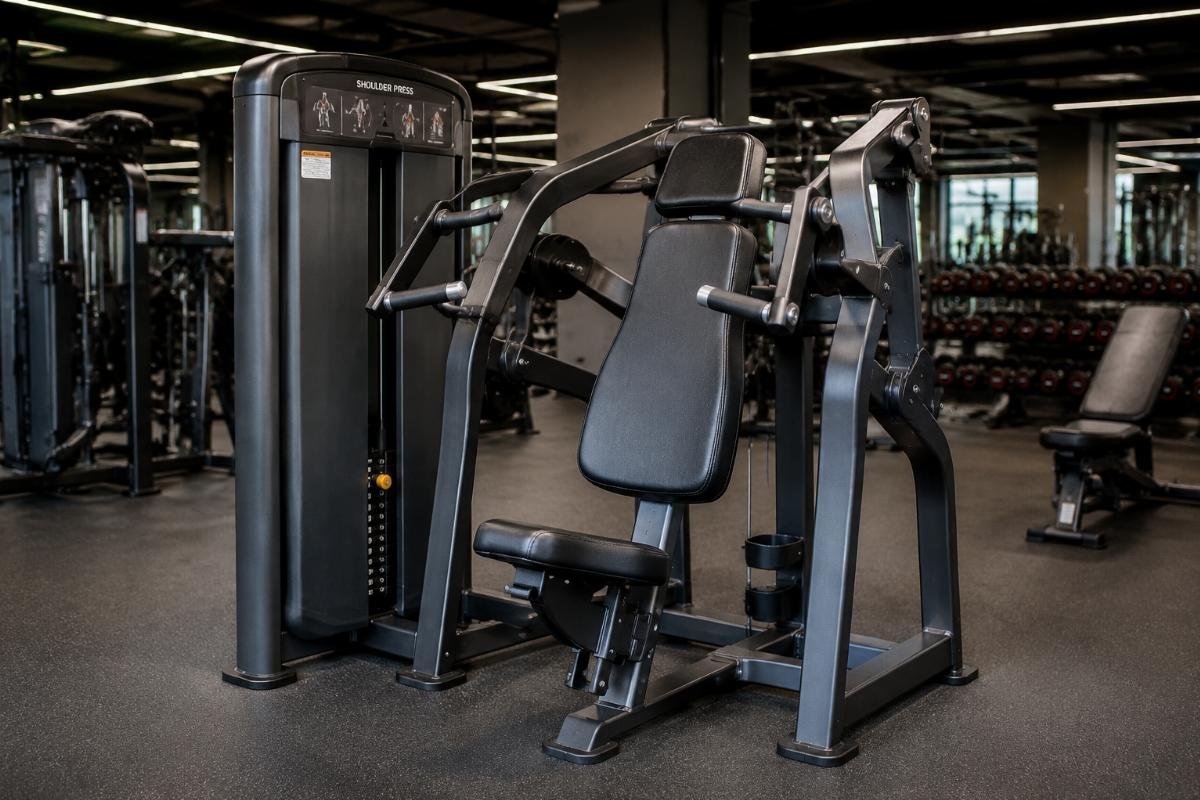
| Weight Stack (Strength) | Selectorized or plate-loaded, high capacity | Light resistance range |
| Bearing & Pulley System | Sealed industrial-grade | Standard consumer-grade |
A boutique studio owner in Manchester purchased a batch of spin bikes from a supplier who listed them as "commercial" but delivered home-grade crank assemblies. Within months, the bottom brackets developed play, and pedal threads stripped under class intensity. The replacement cost and member complaints far exceeded the initial savings. [NEED_CITE: commercial vs residential fitness equipment durability standards]
When requesting quotes from a commercial gym equipment manufacturer, specify your expected daily usage hours and peak user load. A serious supplier will adjust motor ratings, frame thickness, and bearing specs accordingly — and document those specs in the contract.
What Should You Verify Before Placing a Bulk Order with a Chinese Supplier?
Certification authenticity, voltage customization capability, and spare parts availability must be written into the purchase contract — verbal promises do not clear UK customs or fix burned control boards.
Before committing to a bulk order with any commercial gym equipment manufacturer, verify three critical areas:
First, certification documents. Request scanned copies of UKCA and CE certificates, and cross-check the certificate holder name against the factory’s business license. Some suppliers borrow certificates from sister factories or use expired documents. [NEED_CITE: how to verify UKCA certificate authenticity for imported gym equipment]
Second, electrical customization. Confirm in writing that the supplier will configure all motorized equipment — treadmills, ellipticals, exercise bikes — to 230V/50Hz with BS 1363 plugs. Do not assume "we can do UK standard" means they have actually done it before. Ask for photos of previous UK orders or a sample unit wired to spec.
Third, spare parts commitment. A commercial gym equipment manufacturer should guarantee spare parts availability for a defined period — typically several years — and provide a parts list with part numbers before shipment. Without this, a single failed control board can sideline a machine for weeks while you source a replacement from China.
A Latin American dealer once received a full container of strength equipment where the selectorized pin mechanisms used non-standard sizes. When pins wore out, no local machine shop could replicate them, and the original factory had no drawings on file. The entire batch became partially unusable. [NEED_CITE: importance of spare parts standardization in commercial gym equipment]
How to Optimize Shipping and Landing Costs for UK Gym Equipment Imports?
Mixed-container consolidation combined with pre-arrival customs preparation reduces total landed cost significantly compared to single-SKU full containers.
Importing from a commercial gym equipment manufacturer involves more than the FOB price. Shipping, customs clearance, inland transport, and compliance adjustments all add to the final cost.
A common mistake is ordering full containers of a single product to maximize unit quantity and minimize per-piece freight. But gyms need a mix of cardio, strength, and free-weight equipment. Filling a container with only treadmills leaves you with excess stock of one SKU and zero of others — tying up capital and warehouse space.
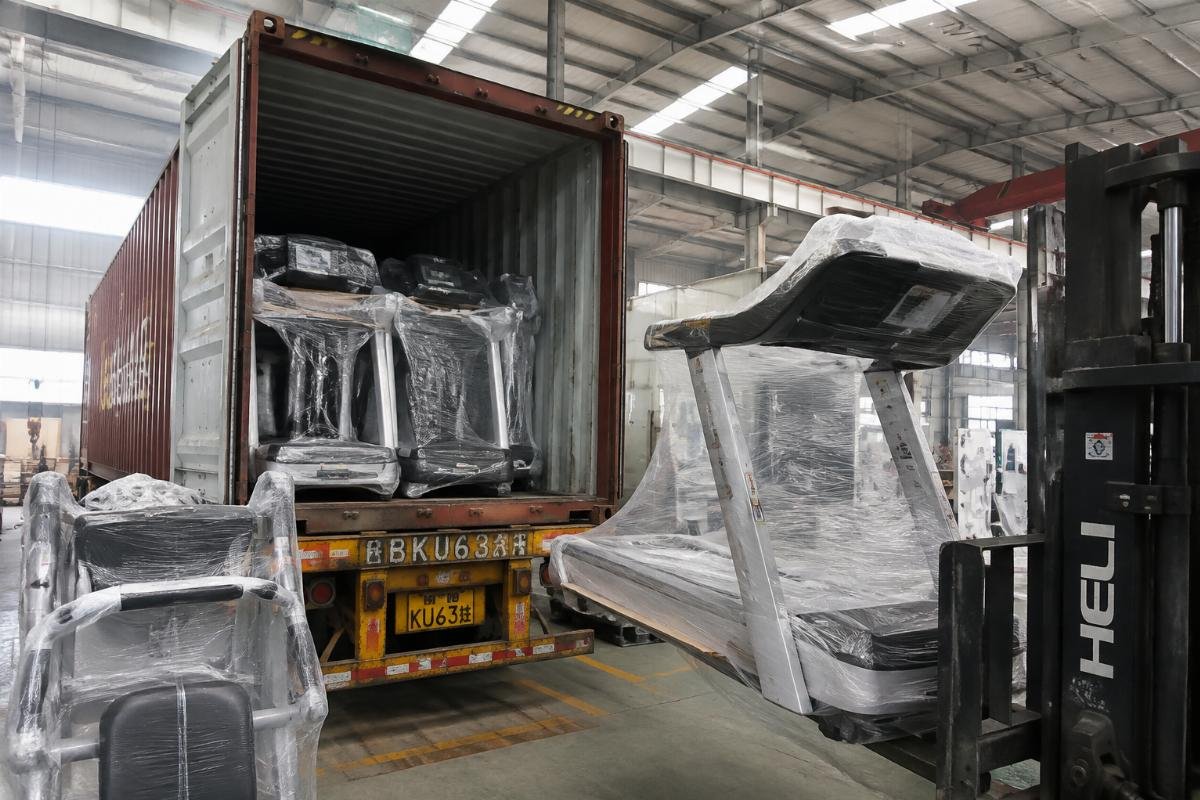
A commercial gym equipment manufacturer with mixed-container capability can pack treadmills, ellipticals, Smith machines, dumbbell sets, and flooring into a single container, matching your actual gym layout plan. This approach reduces the number of shipments, lowers per-SKU minimums, and avoids overstocking slow-moving items.
Additionally, working with a supplier experienced in UK imports means they can prepare commercial invoices, packing lists, and UKCA documentation in advance, enabling pre-arrival customs clearance and reducing port storage fees. [NEED_CITE: UK customs pre-lodgement procedures for imported fitness equipment]
A hotel developer in Edinburgh planned a 200-room property fitness center. Instead of three separate shipments from different vendors, they sourced a complete package — cardio, strength, free weights, and rubber flooring — from one commercial gym equipment manufacturer in a consolidated shipment. The single-source approach cut logistics coordination time and avoided mismatched delivery windows that would have delayed the gym opening.
Conclusion
UK market entry for commercial gym equipment hinges on compliance, electrical accuracy, and supplier verification — not just price. A commercial gym equipment manufacturer who handles UKCA certification, 230V/50Hz customization, mixed-container shipping, and long-term spare parts supply removes the hidden costs that destroy margins after the container arrives. Check documents, confirm specs in writing, and choose a partner who understands British standards before the first wire is cut.