Commercial Gym Equipment Price in Iraq: 2026 Wholesale Buyer Guide
The single-unit FOB price you see on a quotation sheet is almost never the number that matters. What actually determines your real cost per machine is how many units fit inside a 40-foot container, what Iraq’s import duty schedule applies to that HS code, and whether the motors arrive pre-configured for the local 220V/60Hz grid.
For a mid-size commercial gym in Iraq, expect cardio machines to land at roughly two to three times the FOB unit price once shipping, customs clearance, inland transport, and electrical adaptation are included. Strength stations and plate-loaded machines carry a lower freight-to-value ratio because of their density, while free-weight items like bumper plates and dumbbells are priced almost entirely by weight and raw material surcharges.
I spent several months on installation sites across the Gulf region, including multiple gym fit-outs where containers had already cleared the port before I arrived. One project in particular involved a full commercial gym package where the treadmills and ellipticals arrived with 50Hz motors wired for a market that runs on 60Hz industrial power. Two drive boards burned out during the first week of commissioning. The replacement inverters, emergency air-freight, and two days of idle labor cost several times what a factory-side voltage adaptation would have added to the original invoice. That kind of miscalculation is what pushes buyers to rethink how they evaluate gym equipment price in Iraq from the very first inquiry.
Understanding the full cost picture means walking through four separate layers: category-level pricing, container-loading efficiency, electrical compatibility, and turnkey package planning.
How Much Does Gym Equipment Cost in Iraq by Category?
Pricing breaks down into four product families, each with a different cost structure driven by materials, electronics, and shipping density.
When buyers search for gym equipment price in Iraq, they usually want a quick reference by equipment type. The table below summarizes the relative cost positioning and the main cost drivers for each category based on current wholesale sourcing patterns.
| Category | Typical FOB Price Position | Primary Cost Driver | Shipping Density |
|---|---|---|---|
| Commercial Cardio (treadmills, ellipticals, bikes) | Mid to high per unit | Motor, drive board, console electronics | Low — bulky, partially hollow frames |
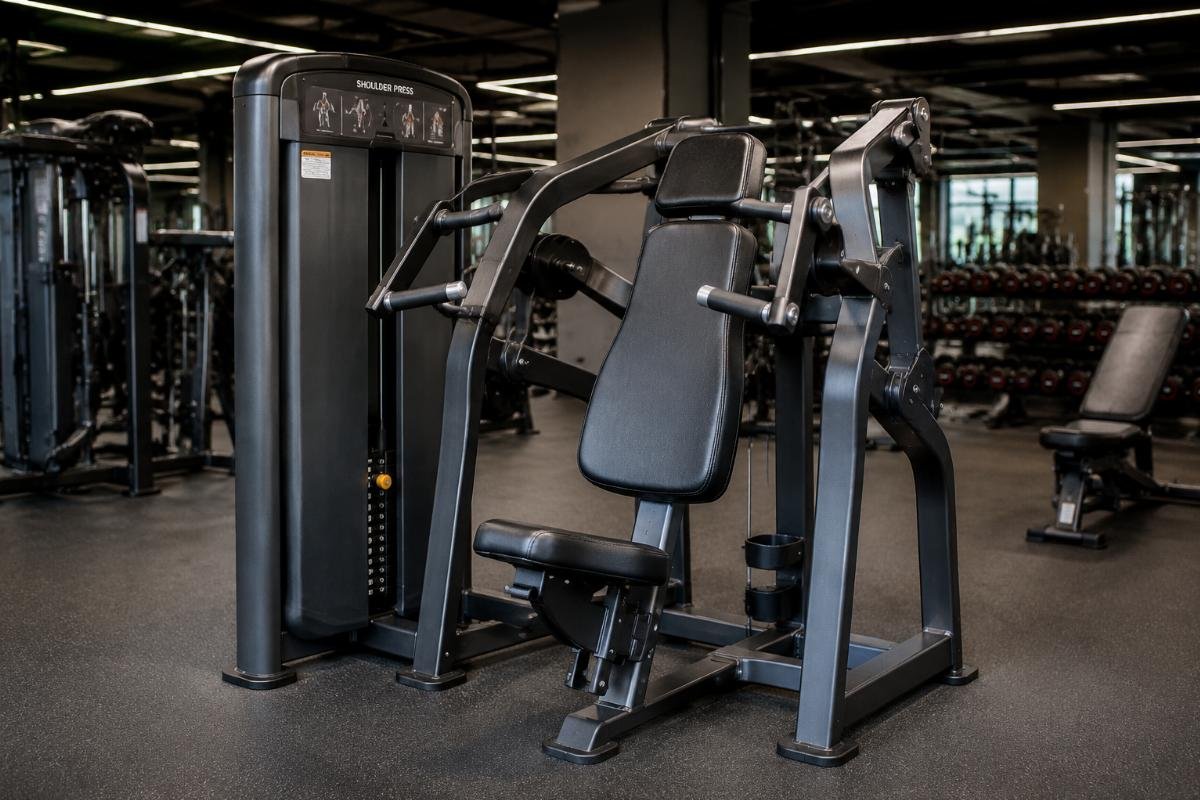
| Fixed Strength Machines (Smith, cable crossover, plate-loaded) | Mid per unit | Steel frame weight, pulley assemblies, guide rods | Medium — stackable with disassembly |
| Free Weights (plates, dumbbells, barbells, kettlebells) | Low per unit, high per kilogram | Raw material (cast iron, rubber coating, chrome) | High — weight-limited, compact |
| Functional Training Gear (rigs, racks, battle ropes, plyo boxes) | Low to mid per unit | Steel gauge, padding density, accessory count | Medium to high depending on item |
[NEED_CITE: global steel price index trend and its impact on fitness equipment manufacturing cost]
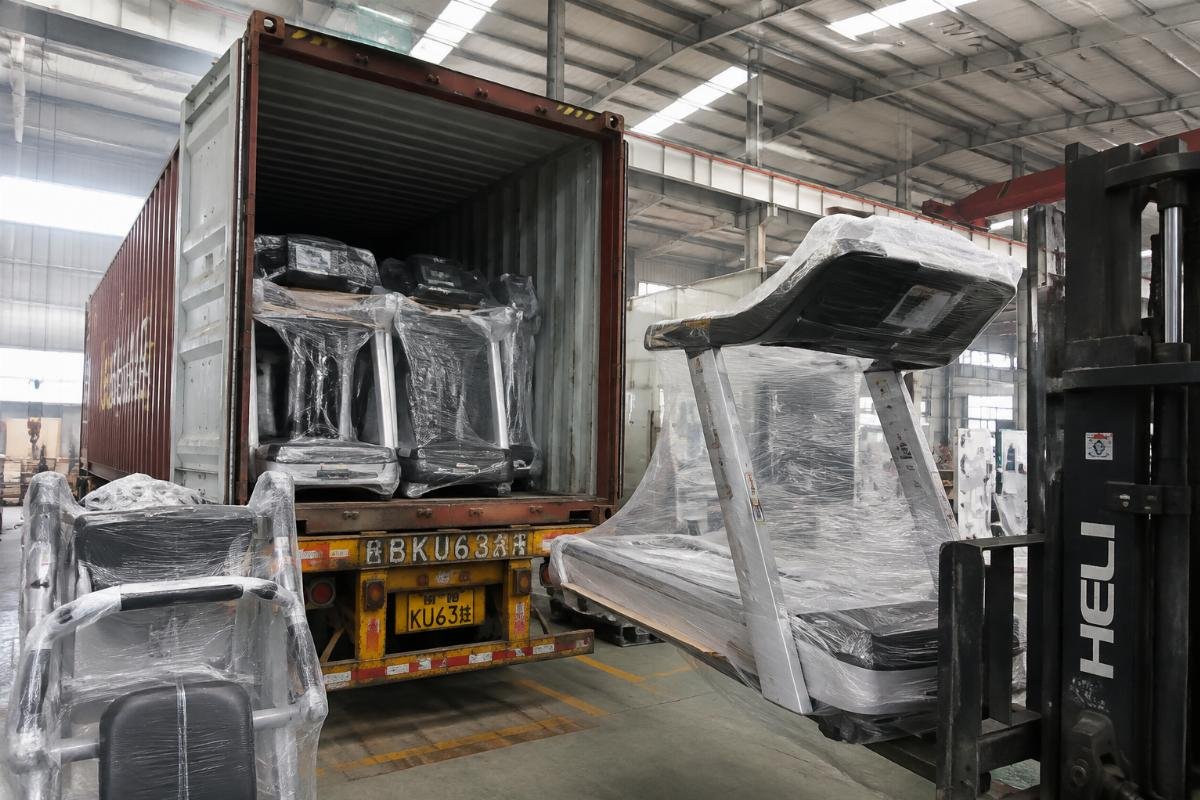
A commercial treadmill, for instance, carries a significantly higher electronics cost than a plate-loaded leg press, yet the treadmill occupies far more container volume per dollar of FOB value. That mismatch is the single biggest reason why the gym equipment price in Iraq at the port of Umm Qasr can diverge so sharply from the factory quotation.
A distributor in the MENA region once compared two quotations side by side: one for a treadmill priced noticeably lower per unit, and another for a cable crossover priced slightly higher. What the comparison missed was that the cheaper treadmill left almost no usable space above or beside it in the container, while the crossover could be partially disassembled and nested with benches and weight trees. By the time both containers reached the warehouse, the per-unit landed cost of the treadmill was substantially higher despite the lower FOB number.
What Is the Real Landed Cost Per Unit After Shipping to Iraq?
The FOB price is only the starting point. Ocean freight, Iraqi customs duty, inland haulage from Umm Qasr or the border, and electrical adaptation together form the true per-unit cost.
Buyers who focus only on the factory invoice regularly underestimate the final gym equipment price in Iraq by a wide margin. The landed cost formula includes at least six components:
- FOB unit price
- Ocean freight (allocated per unit based on container load factor)
- Marine insurance
- Iraqi customs clearance and duty (HS-code dependent) [NEED_CITE: Iraq customs tariff schedule for fitness and sports equipment HS codes]
- Inland transport from port to final site
- Electrical adaptation and commissioning labor
The critical variable most buyers overlook is the container load factor. A 40HQ container has a fixed internal volume, and every cubic meter of air you ship is cubic meter you pay freight for without receiving a sellable unit in return. Cardio machines, because of their upright consoles and long running decks, tend to leave significant unused space above and around them. Strength machines can often be partially knocked down and stacked. Free weights, being dense, hit the weight limit long before they fill the volume.
[NEED_CITE: standard 40HQ container internal dimensions and maximum payload capacity]
A practical example: a container loaded exclusively with commercial treadmills might carry a certain number of units, but the same container could carry that same number of treadmills plus a full layer of adjustable benches and dumbbell sets in the remaining space. The freight cost allocated to each treadmill drops noticeably when the container is fully utilized, which directly lowers the per-unit landed cost.
| Loading Scenario | Container Space Utilization | Freight Cost Per Unit |
|---|---|---|
| Cardio-only (treadmills and ellipticals) | Noticeably below capacity | Substantially higher per unit |
| Mixed cardio and flat-pack strength | Standard utilization | Moderate per unit |
| Strength and free weights combined | Near weight limit, good volume fill | Lower per unit for heavy items |
This is why a supplier who can consolidate mixed SKUs into a single container — cardio on top, knocked-down strength frames in the middle, weight plates and accessories filling the floor-level gaps — will deliver a lower effective gym equipment price in Iraq than a supplier who ships single-product containers.
How Do You Avoid Voltage and Frequency Mismatch Problems?
Iraq’s industrial power supply runs at 220V and 60Hz. Any motor, drive board, or variable-frequency drive shipped from a 50Hz manufacturing base must be adapted before it leaves the factory, not after it arrives on site.
This is the single most expensive mistake in Middle East gym procurement, and it has nothing to do with the gym equipment price in Iraq on paper. It is a specification error that turns a routine installation into an emergency repair project.
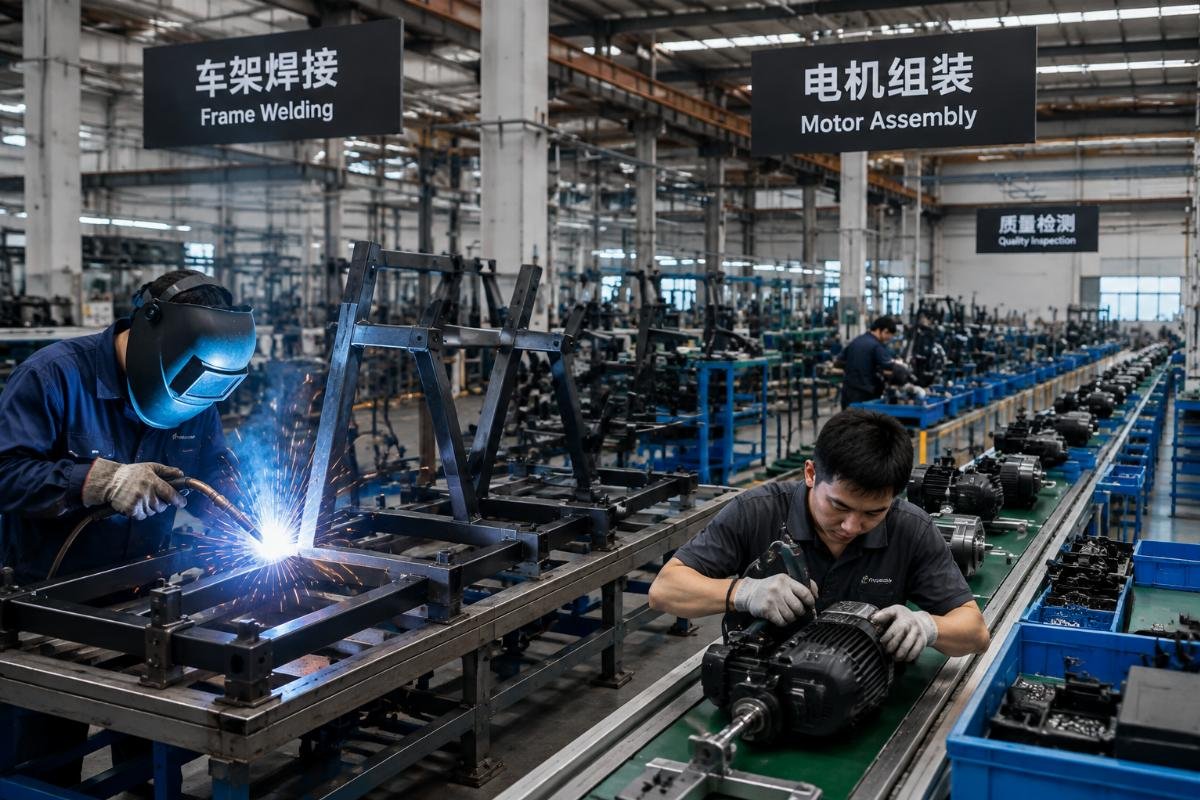
The root cause is straightforward. A motor designed for 50Hz will spin faster when fed 60Hz at the same voltage. The cooling fan, sized for the lower speed, cannot dissipate the extra heat. The variable-frequency drive, calibrated for a specific motor frequency range, sees an unexpected operating window and can trip or fail outright. In a commercial gym where a dozen treadmills run simultaneously, the harmonic load on the electrical panel compounds the problem.
[NEED_CITE: IEC standards for motor nameplate frequency ratings and variable-frequency drive compatibility]
The correct approach is to specify 60Hz motors and matching drive boards at the purchase order stage. The factory-side cost of this adaptation is a small fraction of what an on-site motor swap or emergency inverter replacement will cost once the container is already in Iraq. It also avoids the downtime penalty — a burned drive board can take weeks to air-freight and reprogram, during which the machine generates zero revenue and the gym owner absorbs member complaints.
| Specification Approach | Factory-Side Cost Impact | On-Site Risk |
|---|---|---|
| Standard 50Hz motor shipped without adaptation | None at invoice | Vulnerable — high failure probability |
| 60Hz motor and matched VFD specified at order | Noticeably small increment | Robust — standard commissioning |
| Post-arrival motor replacement | Several times the original adaptation cost | Resistant only after extended downtime |
A gym operator in the region once received a full cardio shipment where the console displays worked but the drive motors overheated within the first month. The root cause was a 50Hz motor running on 60Hz supply without a matching VFD profile. The solution required pulling every treadmill apart, swapping motors, and re-tuning the drive parameters — a process that took a small crew the better part of a week and cost several times what the factory adaptation would have added to the original order.
How Do You Plan a Turnkey Gym Package Within Budget?
Allocating budget by functional zone — cardio, strength, free weights, flooring and accessories — produces a more predictable outcome than pricing equipment piece by piece, and typically reduces the overall gym equipment price in Iraq by a meaningful margin.
A turnkey approach works because it lets the supplier optimize container loading, match electrical specifications across all motorized equipment in a single production batch, and include a spare-parts package sized to the actual installed base rather than guessing later.
The typical budget allocation for a commercial gym follows a recognizable pattern:
- Cardio zone: the largest single budget share, driven by higher per-unit cost and lower shipping density
- Fixed strength zone: a substantial share, with cost concentrated in steel tonnage and pulley assemblies
- Free weights and functional training: a smaller budget share by value but a high share by weight and container floor space
- Flooring, mirrors, signage, and accessories: a modest share that protects the investment in the equipment above it
[NEED_CITE: commercial gym space planning standards and equipment-to-floor-area ratios]
A hotel developer outfitting a mid-scale fitness center, for instance, benefits from a single supplier who can deliver the treadmills, the Smith machine, the dumbbell set, and the rubber flooring in one consolidated shipment. The alternative — sourcing cardio from one vendor, strength from another, and flooring from a third — means three separate customs clearance cycles, three inland haulage arrangements, and three different electrical specification sheets to verify against the site’s 60Hz supply.
A spare-parts package shipped with the original container is another cost saver that is easy to overlook. Belts, drive rollers, console fuses, and cable sets are inexpensive at the factory but become disproportionately expensive once the gym is operational and a machine is down. Having critical spares on the shelf from day one keeps downtime measured in hours rather than weeks.
| Procurement Approach | Container Efficiency | Specification Consistency | Spare-Parts Availability |
|---|---|---|---|
| Piece-by-piece from multiple suppliers | Uncontrolled | Vulnerable to mismatch | Not provided until failure |
| Turnkey package from single manufacturer | Controlled | Standard | Full batch-level with initial shipment |
Conclusion
The gym equipment price in Iraq is not a single number on a quotation — it is the sum of factory cost, container efficiency, customs duty, electrical compatibility, and after-sales readiness. Buyers who evaluate only the FOB unit price routinely discover after delivery that the real cost per usable machine is substantially higher. Specifying 60Hz motors at the order stage, consolidating mixed SKUs into fully loaded containers, and planning the full gym as a single package rather than a collection of individual purchases are the three practices that separate a controlled project budget from a costly surprise at the port.