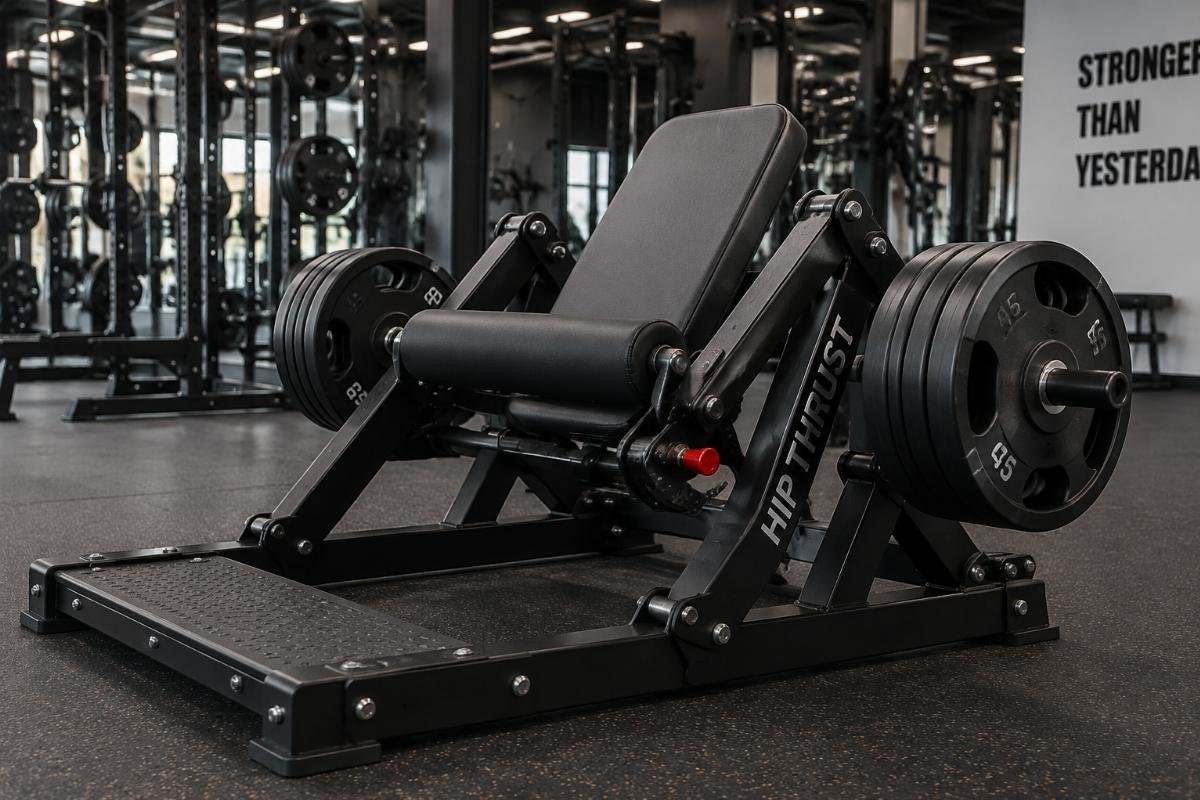
Wholesale Smith Machine Rack SM-Pro Package for Amazon FBA Restocking
Most FBA rejections for heavy fitness equipment have nothing to do with product quality — they trace back to carton dimensions, label placement, and weight declaration mismatches.
When restocking a Wholesale Smith Machine Rack SM-Pro Package into Amazon FBA warehouses, the single most important factor is packaging and labeling compliance with Amazon’s inbound shipment standards, not unit price or lead time. Every outer carton must meet FBA box size limits, every SKU must carry a scannable FNSKU label on the correct face, and every shipment declaration must match actual gross weight within tolerance — or the load gets refused, rerouted, or hit with oversized surcharges before a single Smith machine reaches the shelf.
I still remember a full container we sent to a Middle East gym client who wanted part of the load diverted to an FBA warehouse in the US. The Smith racks, cable crossovers, and plate-loaded machines were built solid, wrapped in EPE foam, strapped to pallets the way we always do for port-to-door shipments. But nobody had checked the pallet height against FBA’s inbound requirements. The load sat outside the gate for days, accumulating storage fees that ended up costing several times what the ocean freight saving had been. That was the moment I started treating every FBA-bound Wholesale Smith Machine Rack SM-Pro Package as a completely different animal from a normal commercial gym shipment. [NEED_CITE: Amazon FBA inbound shipment requirements for box dimensions and pallet standards]
From that point on, I began walking through every FBA order with a checklist that had nothing to do with welding quality or powder coating — it was all about carton specs, label positions, and declaration accuracy. The machine itself is only half the job; getting it accepted at the dock is the other half.
What Are the Packaging and Labeling Rules for FBA Inbound?
Amazon enforces strict outer carton size limits, mandatory FNSKU labeling on every unit, and specific pallet configurations for inbound shipments — and heavy fitness equipment like Smith machines triggers extra scrutiny because of weight and dimension thresholds.
The trend over recent years has been a steady tightening of FBA inbound rules, especially for oversized and heavy items. Amazon has progressively lowered the tolerance for dimension mismatches and shifted more inspection burden onto sellers at the packing stage. [NEED_CITE: year-over-year tightening of Amazon FBA inbound compliance policies for oversized items] For a Wholesale Smith Machine Rack SM-Pro Package, this means the packaging team at the factory must treat FBA specs as the primary design constraint, not an afterthought.
Here is what typically needs to be verified before a Smith machine package leaves the factory floor:
- Outer carton dimensions must stay within FBA’s maximum box size for non-oversized SKUs, or be declared correctly as oversized if the Smith rack exceeds standard thresholds.
- FNSKU labels must be printed at the correct size, placed on the specified face of each carton, and remain fully scannable after stretch wrap and strapping.
- Pallet configuration must follow Amazon’s height, overhang, and wrapping rules — no protruding straps, no mixed-SKU pallets unless explicitly allowed.
- Shipment ID labels (FBA labels) must be affixed on the correct number of carton faces, usually two opposite sides for standard pallets.
- Weight declaration on the shipping documents must match the actual gross weight of each carton and pallet within Amazon’s tolerance range.
A European e-commerce seller I worked with learned this the hard way on their first trial order of a Wholesale Smith Machine Rack SM-Pro Package. The factory had used the same SKU codes from their own ERP system, which did not match the FNSKU format Amazon required. The entire batch sat in a receiving backlog for an extended cycle before being pulled aside for manual relabeling. The relabeling service fees and the delayed availability on the listing ended up costing noticeably more than the original ocean freight. [NEED_CITE: FNSKU label format and placement requirements per Amazon Seller Central]
The pattern I keep seeing is that buyers assume product quality is the main risk, when in reality the first gate is purely administrative — can Amazon’s scanners read your labels, and do your cartons fit their dimensional rules?
How Should a Wholesale Smith Machine Rack SM-Pro Package Be Loaded and Declared?
Accurate pre-shipment measurement of carton dimensions and gross weight, combined with smart container loading planning, is the only reliable way to avoid oversized surcharges and customs inspection triggers on FBA restocking shipments.
International freight documentation standards require that declared weight and dimensions closely match physical reality, and Amazon’s inbound system cross-checks these figures against what arrives at the dock. [NEED_CITE: international freight declaration accuracy standards for FBA-bound cargo] When a Wholesale Smith Machine Rack SM-Pro Package is involved, the stakes are higher because each Smith machine is heavy, and even a small per-carton weight error multiplies across a full container.
The loading and declaration process I now follow on every FBA order runs roughly like this:
- Weigh and measure every carton individually after final packing — not by averaging, not by using the CAD model weight. Actual scale, actual tape measure.
- Record the data in a packing list that mirrors the FBA shipment plan, matching each carton to its corresponding FBA SKU and shipment ID.
- Run a container loading simulation before booking the container, using the real carton dimensions to optimize pallet positions and verify that the total weight stays within the container’s payload limit.
- Cross-check the declared weight on the bill of lading and commercial invoice against the measured totals, keeping the variance within the tolerance range that Amazon and the carrier accept.
- Photograph the loaded container with the pallet positions visible, so there is a record if a discrepancy claim arises at the destination warehouse.
A North American distributor once received a Wholesale Smith Machine Rack SM-Pro Package where the supplier had declared an estimated weight per carton rather than the measured weight. The variance triggered a customs inspection at the port of entry, and the shipment was held for an extended period while authorities verified the actual contents. Beyond the inspection fees, the delay pushed the restocking window past a peak sales period, and the lost revenue dwarfed any freight cost saving the supplier thought they had gained by skipping the weighing step. [NEED_CITE: customs inspection trigger factors related to weight declaration discrepancies]
The lesson that keeps repeating itself is simple: a few extra hours at the factory measuring and documenting properly will almost always cost less than a single surprise at the FBA dock or the border.
What Does a Full FBA Restocking Workflow Look Like From Factory to Warehouse?
A step-by-step pre-shipment compliance check — covering packaging, labeling, documentation, and loading — is the most effective way to reduce the risk of FBA rejection for a Wholesale Smith Machine Rack SM-Pro Package.
Over the years, I have seen the same handful of problems surface again and again on heavy fitness equipment shipments bound for FBA. The products themselves are rarely the issue. The failures cluster around a predictable set of administrative and physical details that can be checked long before the container leaves the factory yard. [NEED_CITE: common FBA inbound rejection reasons for oversized and heavy merchandise]
The workflow I now use on every order breaks down into a few critical checkpoints:
- Packaging review against FBA box size rules before any carton is sealed, confirming that the Smith machine’s packed dimensions fall on the correct side of the oversized threshold.
- Label audit to verify that every carton carries the right FNSKU, that the barcode is at the specified minimum size, and that it is placed on a flat, unobstructed surface — not over a strap, not around a corner.
- Pallet build to FBA standards, checking height limits, overhang limits, and stretch wrap coverage, with shipment ID labels on the required faces.
- Documentation alignment, making sure the commercial invoice, packing list, and bill of lading all carry the same weight and dimension figures that were physically measured.
- Final walk-around inspection with photos, creating a visual record that can be referenced if the receiving warehouse raises a discrepancy.
A Middle East gym operator who was also testing Amazon as a secondary sales channel had a full order of Smith machines and power racks turned away at the FBA gate because the outer cartons exceeded the standard box size limit by a small margin, yet were not declared as oversized in the shipment plan. The load was refused, rerouted to a third-party prep warehouse, and then sent back to FBA after repacking — a process that added substantial cost and weeks of delay. [NEED_CITE: FBA oversized item declaration requirements and refusal scenarios]
The pattern across all these cases is consistent: the rejection is almost never about whether the Smith machine works. It is about whether the package speaks the same language as Amazon’s receiving system.
How Do You Choose a Supplier Who Can Handle FBA-Ready Smith Machine Packages?
A reliable supplier for a Wholesale Smith Machine Rack SM-Pro Package must demonstrate hands-on experience with FBA inbound requirements — not just in product manufacturing, but in packaging design, label compliance, and shipment documentation.
The fitness equipment manufacturing base in Shandong Province has deep capability in commercial-grade strength equipment, from Smith machines and power racks to cable crossovers and plate-loaded machines. But the ability to build a solid Smith machine is only the baseline. What separates a factory that can support FBA restocking from one that cannot is whether they treat Amazon’s inbound rules as a core part of their packing and shipping process. [NEED_CITE: Shandong fitness equipment manufacturing cluster capabilities in commercial strength equipment]
When evaluating a supplier for a Wholesale Smith Machine Rack SM-Pro Package, the questions that matter most are operational:
- Can they design outer carton dimensions that fit FBA’s standard or oversized thresholds based on the specific Smith machine model?
- Do they have a label printing process that produces FNSKU-compliant barcodes at the correct size and placement?
- Are they willing to weigh every carton individually and provide a packing list that matches the FBA shipment plan line by line?
- Have they handled FBA-bound container loads before, and can they walk through a past example of how they resolved a packaging or labeling issue?
- Can they coordinate container loading in a way that respects both the container’s payload limit and FBA’s pallet requirements?
A supplier with genuine FBA experience will answer these questions with specific process details, not vague assurances. They will know the difference between a standard FBA label and an FNSKU label, they will understand why pallet overhang matters, and they will treat weight declaration accuracy as a non-negotiable step rather than an optional formality.
From my own experience running projects across multiple regions, I can say that a manufacturer based in Shandong with established export operations has a realistic path to supporting FBA restocking — provided they have invested in the packaging engineering and documentation discipline that Amazon’s system demands. The product quality from this region’s top fitness equipment makers is well established; the differentiator for FBA sellers is whether the factory can deliver a Wholesale Smith Machine Rack SM-Pro Package that walks straight through the FBA receiving dock without a single hold or surcharge.
Conclusion
For a Wholesale Smith Machine Rack SM-Pro Package, FBA restocking success depends on packaging compliance, label accuracy, and declaration precision — not just product quality or price. Every carton dimension, every FNSKU label, and every weight figure on the shipping documents must align with Amazon’s inbound standards before the container leaves the factory. Suppliers who treat these requirements as core to their packing process, rather than an afterthought, are the ones whose loads get accepted at the dock on the first attempt.