How Wholesalers Buy Half Power Rack at Factory-Direct Cost
The unit price on the quotation sheet is only a fraction of what you actually pay when a half power rack lands on your warehouse floor. Wholesalers achieve true factory-direct cost on half racks by optimizing MOQ tiers, verifying steel specs, and avoiding hidden logistics and customs markups—not just negotiating the unit price.
I started inspecting weld seams on squat stands in a Qingdao workshop before I ever sent a single proforma invoice. The first time I handled a bulk order for a Middle East distributor, the freight forwarder split the uprights and crossmembers into separate HS codes. Customs classified them as loose steel tubes instead of assembled fitness frames, and the tariff jumped noticeably higher than expected. The buyer wired me a message demanding we absorb the difference. We did, but it cost us a full quarter of margin on that container. Now I verify the HS code with every client before production starts, and I write the classification into the contract appendix. The money you save by going direct to a wholesale half rack factory direct cost source can vanish at the port if paperwork is sloppy.
Let me walk you through the variables that actually determine your landed cost, the spec traps that inflate claims, and the shipping decisions that separate profitable importers from those who quietly lose money on every shipment.
What Determines the Real Factory-Direct Cost of a Half Rack?
Landed cost is shaped by steel grade, MOQ tier, container utilization, and compliance documentation—unit price accounts for only a portion of the total. When buyers compare quotes from different manufacturers, they often fixate on the per-piece figure and ignore the structural cost drivers underneath.
The steel used in the uprights and base plates is the single largest raw material expense. Manufacturers source cold-rolled or hot-rolled steel coils at grades that vary in yield strength and consistency. A supplier quoting a noticeably lower price may be using thinner gauge steel or a lower-grade alloy that passes visual inspection but deforms under repeated heavy loading. [NEED_CITE: steel grade standards for fitness equipment structural frames per EN 20957] You cannot verify this from a catalog photo. You need mill certificates or third-party test reports.
MOQ tiers also reshape the per-unit economics. Factories running dedicated production lines for your order spread setup costs across more units. A buyer ordering a single mixed container of half racks, pull-up bars, and storage posts pays a different per-piece rate than one filling a container with identical half racks. The difference is not marginal—it shifts the entire cost structure.
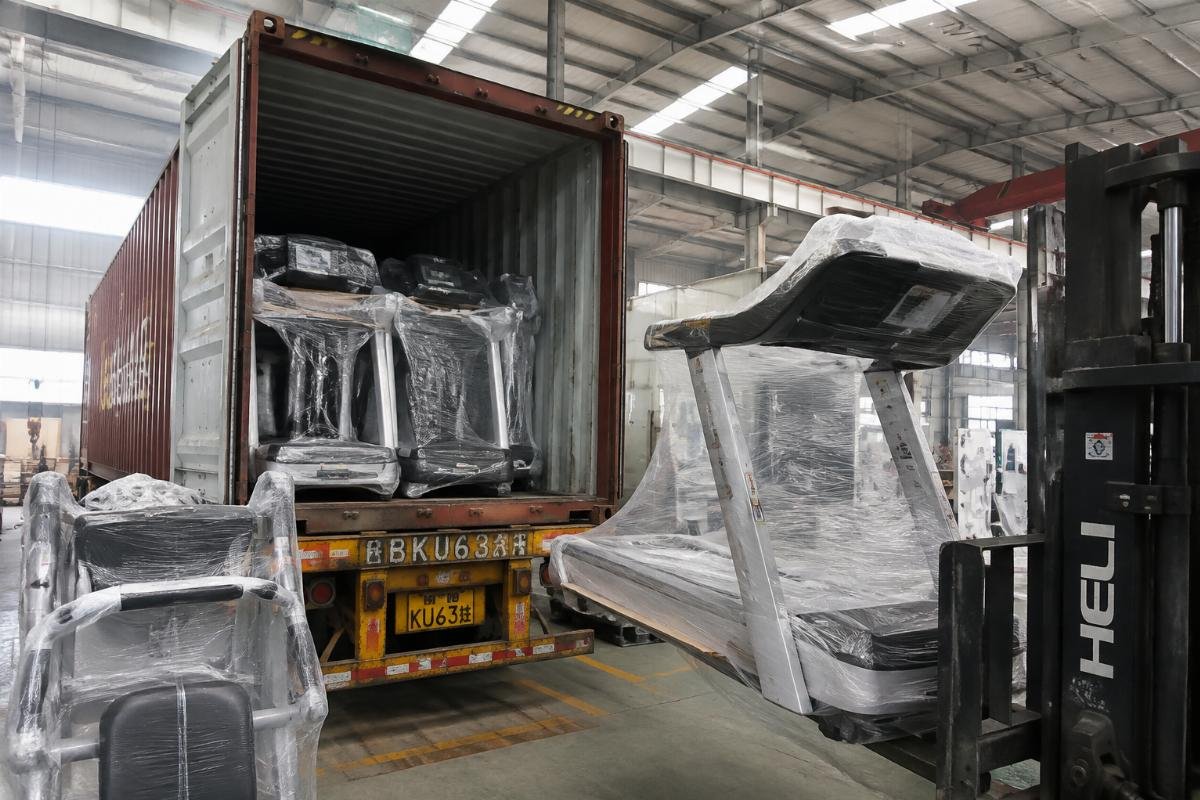
Container utilization is where inexperienced buyers lose the most money. A half rack disassembles into uprights, crossmembers, J-cups, safety straps, and hardware. If the packaging design does not allow nested stacking, you may ship a container that is volumetrically full but contains far fewer units than technically possible. I have seen containers where a packaging redesign allowed the buyer to fit a noticeably higher quantity without changing the freight cost per container. [NEED_CITE: container loading optimization for disassembled fitness equipment]
Compliance documentation carries its own cost layer. CE marking for the European market, EN certification for institutional buyers, or ASTM references for North American distributors all require testing and paperwork. Some factories include these costs in the unit price. Others quote a clean number and add certification fees later. You need to know which model you are dealing with before you compare.
How to Compare Half Rack Specs Without Getting Misled?
Focus on upright cross-section dimensions, wall thickness, and weld penetration quality—not just the weight capacity number printed on the spec sheet. Weight capacity claims are the most abused metric in the fitness equipment trade because there is no universal testing protocol that all factories follow.
Let me lay out the typical spec tiers you will encounter when sourcing a wholesale half rack factory direct cost from Shandong-based manufacturers.
| Parameter | Entry-Level | Mid-Range Commercial | Heavy-Duty Commercial |
|---|---|---|---|
| Upright Cross-Section | 50×50 mm | 75×75 mm | 75×75 mm or larger |
| Wall Thickness | Thin gauge | Standard commercial gauge | Heavy commercial gauge |
| Weight Capacity Claim | Basic rating | Standard commercial rating | High commercial rating |
| Hole Spacing Pattern | Westside only | Westside + front | Multi-directional |
| Finish | Basic powder coat | Standard powder coat | Dual-stage powder coat |
| Weld Type | Spot + continuous | Full continuous | Full continuous with gussets |
[NEED_CITE: structural testing methods for power rack uprights per ISO 20957]
The upright cross-section matters more than most buyers realize. A 50×50 mm upright with a thin wall will flex noticeably during heavy squats, especially when the bar is loaded unevenly. A 75×75 mm upright with a heavier wall resists torsion far better. The weight difference per unit is higher, but so is the perceived quality when your end customer uses it.
Wall thickness is where cost-cutting hides most easily. Two factories may both claim "75×75 mm uprights," but one uses a noticeably thinner wall than the other. The visual difference is negligible. The structural difference under a loaded barbell is not. I once received a sample from a new supplier that looked identical to our own production model. Only after we sectioned the upright and measured with calipers did we find the wall was thinner by a meaningful margin. The supplier had not lied—they just quoted the outer dimension and omitted the wall spec.
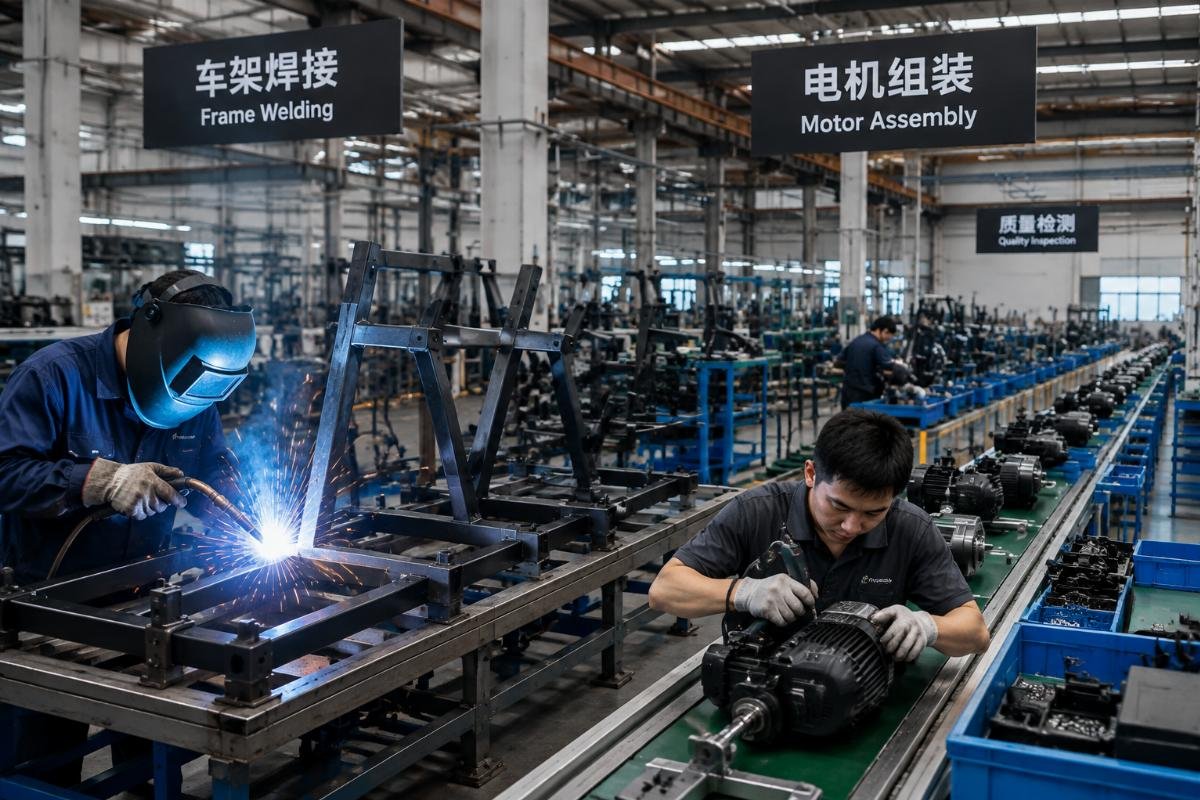
Weld quality separates machines that last years from machines that develop creaks and cracks within months. Full continuous welding on all load-bearing joints, with gusset reinforcement at high-stress points, is the standard for commercial-grade equipment. Spot welding or short intermittent beads may hold during factory QC but will fatigue under gym-floor conditions.
A gym chain buyer in Southeast Asia once sent me photos of a competitor’s half rack that had cracked at the J-cup mounting point after a few months of use. The weld had been superficial—barely fused to the surface. That kind of failure does not show up in a catalog. It shows up in warranty claims and reputation damage.
What MOQ and Shipping Options Minimize Per-Unit Cost?
Full container loads with nested packaging and consolidated accessory loading cut per-unit freight costs substantially compared to less-than-container shipments. The MOQ conversation is not just about how many units the factory requires—it is about how efficiently you fill the steel box that crosses the ocean.
A half rack, fully disassembled, occupies a predictable volume. The question is whether your packaging design allows you to stack uprights inside base plates, nest J-cups within hardware bags, and fill every void. Factories that ship regularly to overseas wholesalers have developed packaging templates that maximize container density. Factories that primarily serve domestic buyers may not have optimized for export container loading.
When you ship a full container, the per-unit freight cost drops dramatically. The ocean freight rate for a full container is not linearly proportional to the number of units inside. Filling that container to its volumetric limit spreads the fixed freight cost across more units. [NEED_CITE: ocean freight cost structure for full container versus LCL shipments in fitness equipment trade]
I worked with an African gym chain that started with a trial order of mixed equipment—half racks, benches, dumbbell sets—in a single container. The per-unit cost was high because the container was not optimized for any single product. When they returned for a second order dedicated entirely to half racks, using our export packaging template, the per-unit landed cost dropped noticeably. They reordered on a quarterly basis after that, each time refining the accessory mix to fill the container completely.
Accessory consolidation is the hidden lever. Half racks need J-cups, safety straps, pull-up bars, and landmine attachments. If you source these separately from different suppliers, you pay separate freight, separate customs clearance, and separate handling. If your half rack supplier can bundle all accessories into the same container, you eliminate those duplicate costs entirely.
Shipping terms also affect the final number. FOB pricing looks lower than CIF, but CIF includes ocean freight and insurance. If your own freight forwarder cannot negotiate rates as competitive as the factory’s regular shipping partner, the CIF number may actually be lower than what you end up paying on FOB plus your own arrangements. Always compare the total landed number, not just the Incoterm on the invoice.
How to Avoid Hidden Costs in Customs and Compliance?
Pre-verify the HS code classification and confirm all required certifications before production begins—tariff surprises at the destination port are the most expensive mistake in international fitness equipment sourcing. Customs classification is not a gray area you can resolve after the ship has left. It is a binary determination that either saves you money or costs you a noticeable portion of your order value.
Half power racks are typically classified under a specific HS heading for fitness equipment. But if the declaration splits the product into component parts—uprights classified as steel tubes, crossmembers classified as steel brackets, hardware classified as fasteners—the customs authority at the destination may apply entirely different tariff rates to each component. The combined tariff can be substantially higher than the rate for the assembled product classification. [NEED_CITE: HS code classification rules for disassembled fitness equipment frames]
I mentioned the Middle East case earlier. The same pattern repeats across regions. A buyer in Latin America received a container where the customs broker classified the powder-coated uprights as "painted steel structures" rather than "fitness equipment parts," triggering a higher duty bracket. The correction required a formal reclassification request that took weeks and required documentation from the manufacturer that the buyer did not have on file.
Certification requirements vary by market. The European Union requires CE marking for fitness equipment sold commercially. Some countries in the Middle East and Africa require conformity assessment certificates from accredited bodies. North American buyers may request ASTM reference compliance. If your factory does not hold these certifications, you either need to arrange testing before shipment or face the risk of the goods being held at the port.
The cost of pre-shipment certification is always lower than the cost of port detention, re-testing, or forced re-export. Ask your supplier for copies of current test reports and certification certificates before you place the order. Verify that the certificate covers the specific product model you are buying, not just a generic factory audit.
When Should Wholesalers Choose OEM vs Standard Models?
OEM branding adds a modest cost layer but enables substantially higher retail margins and market differentiation in regions where brand recognition drives purchasing decisions. The decision between buying a factory-standard half rack and commissioning an OEM-branded version is not purely a cost calculation—it is a positioning decision.
Standard models from a wholesale half rack factory direct cost source come in the factory’s default color scheme, with the factory’s logo or no logo at all. They are priced at the lowest point because no customization work is required. For buyers who resell to price-sensitive markets or who supply equipment to facilities where branding is irrelevant, standard models make sense.
OEM customization typically involves powder coat color matching to the buyer’s brand palette, logo application via screen printing or laser etching on the uprights, and custom packaging with the buyer’s branding and barcode labels. Some factories also offer custom hole spacing patterns, additional attachment points, or modified base plate dimensions. Each of these changes adds cost, but the increase is proportional—not exponential.
The margin story is where OEM becomes compelling. A standard half rack sold under a generic label competes primarily on price. The same half rack, powder-coated in a signature color with a professional logo and retail-ready packaging, can command a noticeably higher price in markets where gym owners and home buyers associate visual presentation with quality. [NEED_CITE: brand premium impact on fitness equipment retail pricing in emerging markets]
A distributor in the Gulf region started by importing our standard black half rack. After a year, they commissioned an OEM run in a dark gunmetal gray with their logo etched on the uprights and custom carton printing. Their retail price increased noticeably while their cost increase was modest. The product moved faster because it looked like a premium brand, not a commodity.
The threshold for OEM orders has dropped as factories have streamlined their customization workflows. You no longer need to commit to massive quantities to get branded product. Many manufacturers, including ours, offer OEM runs starting at a single container load, with color and logo setup costs amortized across the full order.
Conclusion
Factory-direct cost on half racks is determined by the entire supply chain, not the quotation line item. Steel spec integrity, container loading efficiency, HS code accuracy, and OEM positioning decisions collectively determine whether your import operation is profitable or whether you quietly subsidize your customers with margin you never intended to give away. Verify every variable before you commit the purchase order.