Commercial Gym Equipment for Sale | Bick Factory Direct Pricing
Most buyers fixate on unit price, only to discover that packaging, shipping, and landed cost structure quietly erase any upfront savings.
The true gym equipment price in Qatar is not the FOB quote—it is the sum of factory cost, ocean freight, import duties, port handling, and inland delivery to Doha. Buyers who optimize container consolidation, packaging integrity, and spare parts provisioning typically reduce total project spend by a meaningful margin compared to those who only compare catalog prices.
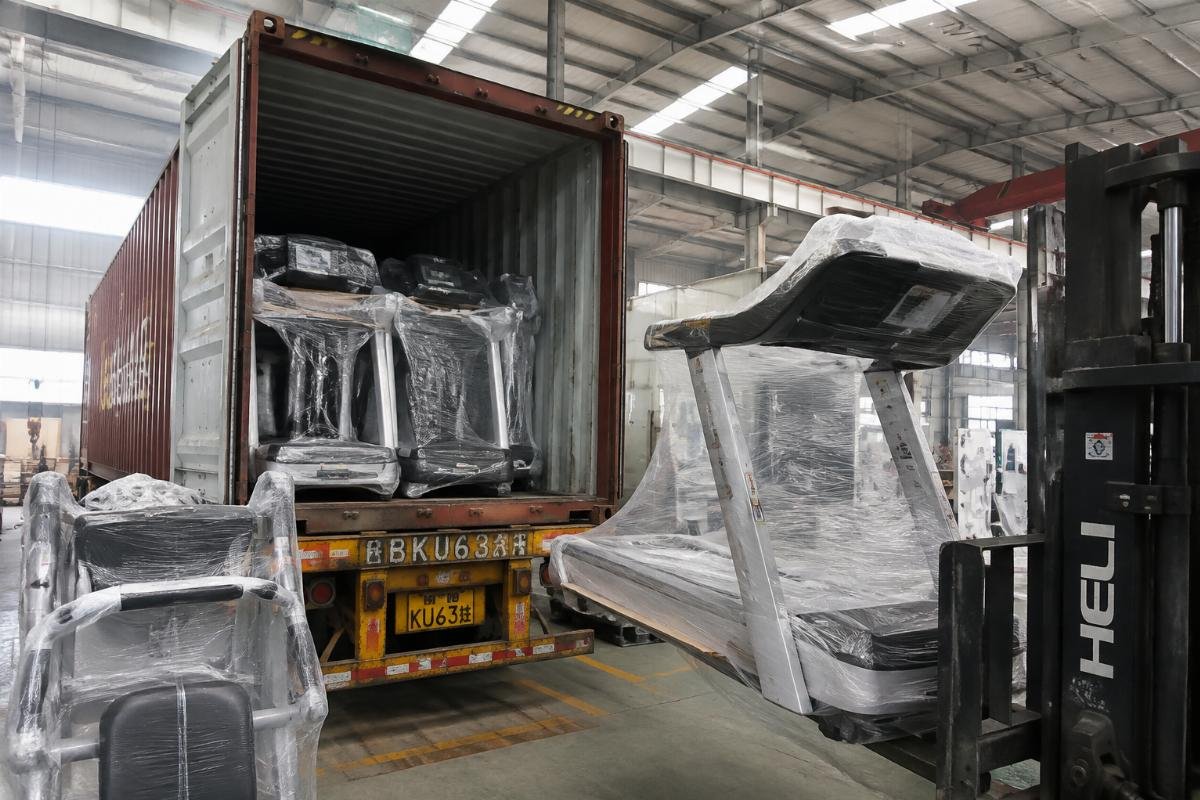
I still remember a full-container shipment we sent to a commercial gym project in São Paulo years ago. The client opened the crates and found weld spatter on the frame joints, leather scratches on the seat pads, and chipped powder coating on the Smith machines. The root cause was not manufacturing—it was the loading plan. No edge protectors, insufficient stretch wrap layers, and loose plate-loaded machines shifting against each other during transit. The client refused acceptance and demanded air-freight replacements. The air cargo bill alone wiped out the entire profit margin on that order, not to mention the reputational damage. Since then, I have made it a non-negotiable practice to lock down packaging specs and container loading diagrams before a single unit rolls off the line, especially for long-haul routes to the Middle East and Latin America where port congestion and stacking conditions add extra risk.
When you research gym equipment price in Qatar, you are really researching how to control total landed cost across a chain of variables that most suppliers will never mention in their quotation sheet.
Understanding how these cost layers stack up is the first step toward building a realistic procurement budget.
What Does Gym Equipment Actually Cost in Qatar in 2026?
The gym equipment price in Qatar is composed of four cost blocks: factory price, ocean freight, customs duties, and last-mile inland transport—each contributing a distinct share to the final landed figure.
Many first-time buyers in the Gulf region request a CIF Doha quote and assume that number represents their total spend. It does not. Qatar Customs applies a standard import duty rate on fitness equipment classified under HS Chapter 95, and port handling charges at Hamad Port add another layer on top of that [NEED_CITE: Qatar Customs duty schedule for sporting goods under HS 9506]. On top of duties, you have inland trucking from the port to your facility in Doha, Lusail, or Al Wakrah—distance and access conditions matter significantly.
A typical cost breakdown for a full commercial gym package looks roughly like this:
| Cost Component | Share of Total Landed Cost |
|---|---|
| Factory price (FOB) | Dominant share |
| Ocean freight (FCL to Hamad Port) | Noticeable share |
| Import duty and VAT | Moderate share |
| Port handling and documentation | Minor but recurring |
| Inland transport to site | Variable by location |
The critical insight here is that the factory price, while the largest single line item, is not the only lever you can pull. A buyer who negotiates the FOB price down by a small margin but accepts poor packaging will likely face replacement costs that dwarf the original saving. I have seen Middle East distributors absorb mid-five-figure replacement expenses because seat foam cracked during transit and the supplier refused warranty coverage, citing "improper handling."
For buyers comparing gym equipment price in Qatar across multiple suppliers, the discipline is to request a full landed cost simulation—not just a unit price list.
How Do Equipment Categories Compare in Price Range?
Strength machines, cardio equipment, and free weights each follow distinct cost drivers, and treating them as a single pricing category leads to budgeting errors.
When building a commercial gym in Doha or a hotel fitness center in The Pearl, the equipment mix typically spans three domains: plate-loaded and selectorized strength machines, motorized cardio units, and free-weight stations. Each category responds to different cost pressures.
| Category | Primary Cost Driver | Typical Build Standard |
|---|---|---|
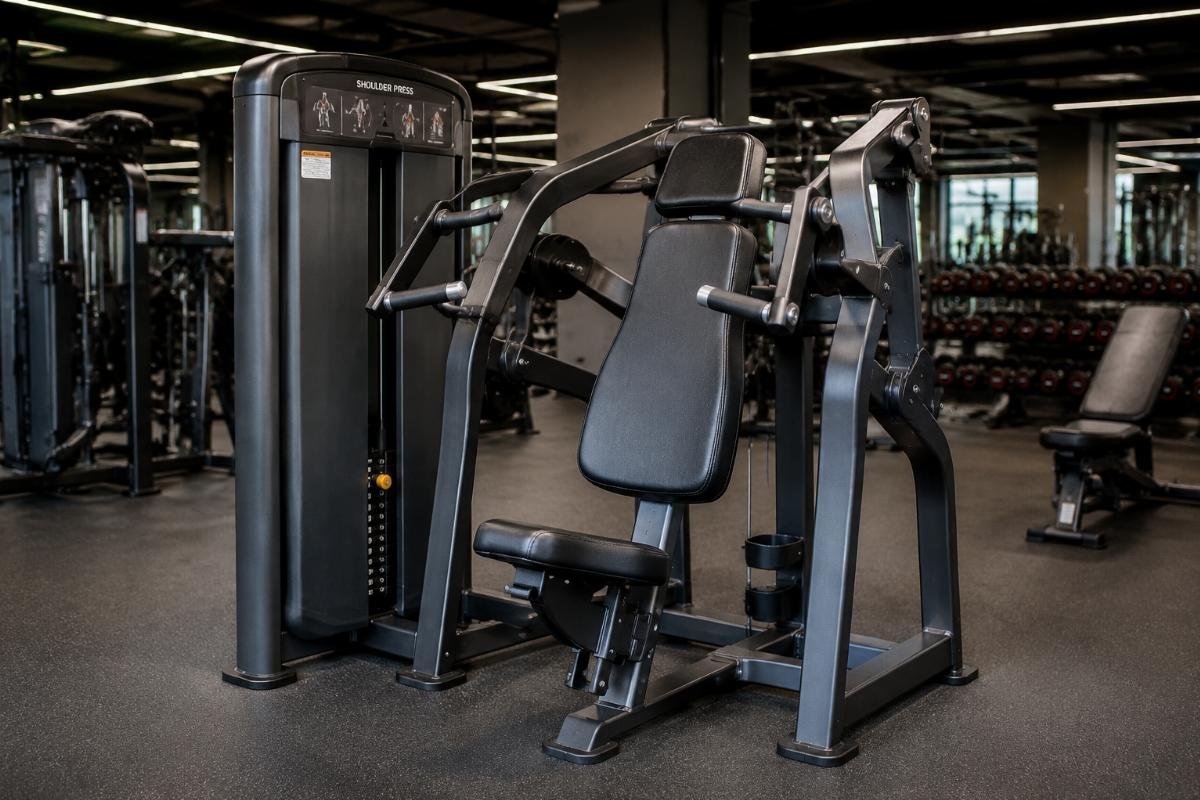
| Strength machines (Smith, cable crossover, plate-loaded) | Steel gauge, pulley system, cable rating | Heavy-duty commercial frame |
| Cardio (treadmill, elliptical, spin bike) | Motor power, console electronics, deck system | Continuous-duty motor rated |
| Free weights (dumbbells, plates, barbells) | Material density, coating process, knurling precision | Competition or commercial grade |
Strength equipment pricing is driven predominantly by steel thickness and the complexity of the pulley-cable routing. A Smith machine with a heavier gauge frame and linear bearing barbell guidance will sit at a noticeably higher price tier than a basic fixed-rail version [NEED_CITE: commercial strength equipment steel gauge standards per EN 957-1]. Cable crossover units with dual adjustable pulleys and multi-position weight stacks add machining and assembly complexity that shows directly in the unit cost.
Cardio pricing hinges on motor specification. A commercial treadmill intended for twelve-hour daily operation in a hotel gym requires a fundamentally different motor and deck system than a light-duty unit for a boutique studio. Buyers who spec a lower-tier motor to save on unit price often find that motor replacements begin within the first year of heavy use, and the downtime cost far exceeds the initial saving.
Free weights appear simple but hide cost variation in coating quality and knurling consistency. Rubber-coated hex dumbbells with virgin rubber compound resist chipping and odor development substantially longer than recycled-rubber equivalents. For a gym equipment price in Qatar comparison, always verify the coating material specification rather than just the weight increment and unit count.
What Hidden Costs Turn a Cheap Quote into an Expensive Project?
Packaging failure, container misloading, customs documentation errors, and missing spare parts are the four silent budget killers that transform a low unit price into a high total cost.
Let me walk you through a pattern I have witnessed repeatedly across Gulf and Latin American projects. A buyer receives three quotations for a full gym setup. Supplier A offers the lowest per-unit price. The buyer awards the order. Six weeks later, the container arrives at Hamad Port. During uncrating, the buyer discovers that several selectorized machine weight stacks have shifted and bent the guide rods, the treadmill console screens are cracked, and the leather on multiple bench seats is torn.
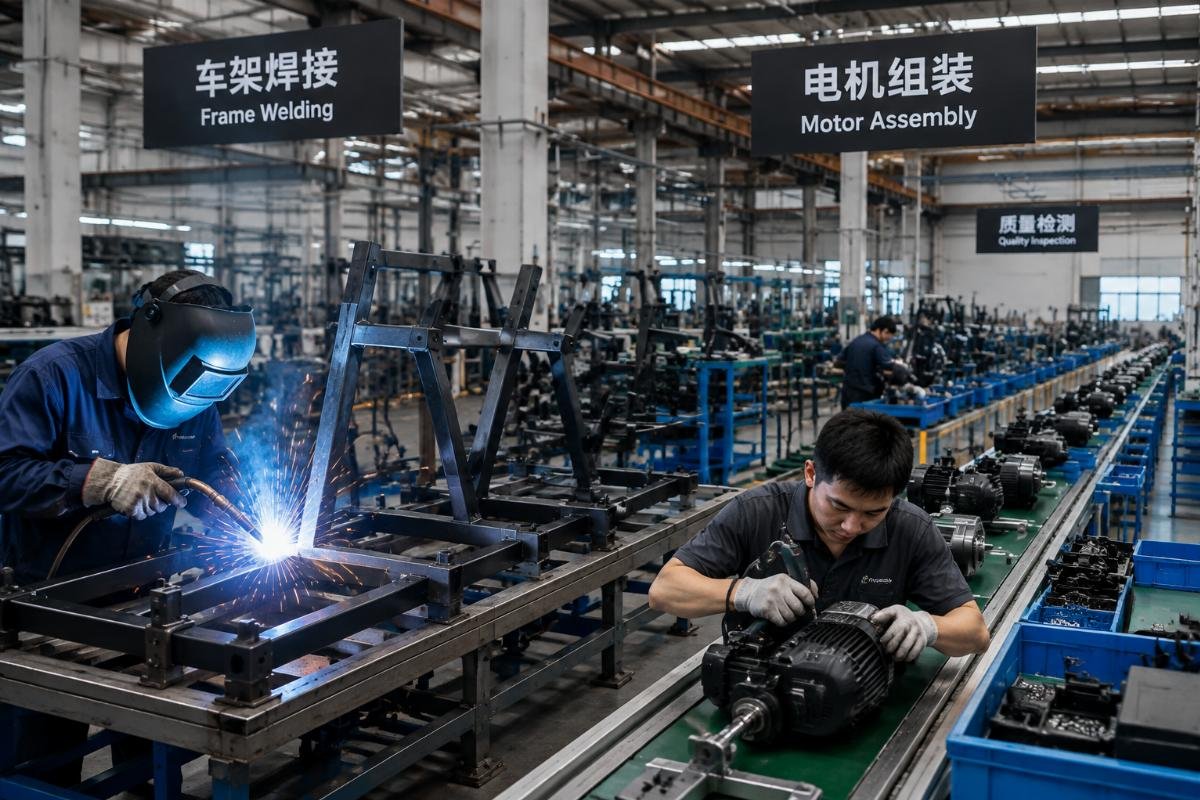
What went wrong? Not manufacturing quality—the factory inspection photos before sealing showed everything intact. The problem was the loading plan: no palletization on the free-weight racks, insufficient edge protection on the cardio units, and the weight stacks were not locked with transit bolts. The supplier’s packaging spec was "standard export packing," which in practice meant minimal protection.
| Hidden Cost Source | Typical Impact |
|---|---|
| Inadequate packaging (no edge protectors, loose items) | Structural damage, cosmetic defects |
| Poor container loading (no weight distribution plan) | Shifting, crushing, guide rod bending |
| Missing or incorrect customs documents | Port storage fees, clearance delays |
| No spare parts package included | Extended equipment downtime post-delivery |
The replacement cost for a single bent weight stack guide rod—air-freighted from China to Doha, customs-cleared, and installed—can run to several times the cost of the transit bolt that would have prevented the damage. And that is before you count the member dissatisfaction during the weeks the machine sits out of service.
Another frequent trap: the buyer receives the equipment but has no consumable spare parts on hand. Cables fray, grip pads wear, seat adjustment pins loosen. If the original order did not include a spare parts package sized for the first year of operation, the buyer must place a small emergency order—subject to minimum order quantities, production scheduling delays, and another round of shipping costs. For any serious gym equipment price in Qatar evaluation, the spare parts line item is not optional; it is a risk-mitigation instrument.
How to Reduce Total Landed Cost Without Sacrificing Quality?
Container consolidation optimization, OEM branding instead of premium-label markup, and front-loaded spare parts procurement are three actionable levers that lower total spend while maintaining commercial-grade quality.
The first lever is container loading efficiency. A standard forty-foot high-cube container has a fixed internal volume. How you fill it determines whether you ship one container or two for the same gym package. I have worked with buyers who received equipment quotations priced per unit, only to discover that the dimensional layout of the machines left significant unused space in the container. By reconfiguring the equipment selection—substituting a modular functional trainer for a larger fixed-frame unit, or nesting adjustable benches inside power rack frames during transit—the same gym package fits into a single container instead of requiring a second shipment. The freight saving alone is substantial, and it also reduces the number of port handling cycles.
The second lever is OEM branding. Many buyers in Qatar and the wider Middle East market want their own brand identity on the equipment—whether for a hotel chain’s private fitness label or a regional distributor’s house brand. Ordering OEM-branded equipment from a factory with full OEM/ODM capability costs noticeably less than buying equivalent-spec equipment under a global premium brand name, while delivering the same commercial-grade steel construction, CE-certified safety compliance, and warranty coverage [NEED_CITE: CE certification requirements for fitness equipment under EN 957 series standards]. The price gap between OEM-direct and premium-branded equipment is wide enough that it can fund an entire spare parts package and still leave budget headroom.
The third lever is proactive spare parts procurement. When placing a bulk order for a commercial gym or hotel fitness center, negotiate a spare parts package covering high-wear consumables—cables, pulleys, seat adjustment knobs, grip pads, and treadmill deck lubricant—sized for the first operational year. The incremental cost added to the original container shipment is marginal compared to the cost of emergency air-freighting individual parts months later.
| Cost Reduction Lever | Mechanism |
|---|---|
| Container consolidation | Maximize volume utilization, reduce freight per unit |
| OEM branding | Eliminate brand premium, retain build quality |
| Front-loaded spare parts | Avoid emergency logistics costs and downtime |
Each of these levers is within the buyer’s control. The gym equipment price in Qatar that matters is the one you engineer through smart procurement decisions, not the one handed to you on a supplier’s price sheet.
What Should You Verify Before Placing a Bulk Order?
Packaging specification sign-off, container loading supervision, and written spare parts warranty terms are the three pre-order checkpoints that separate a controlled project from a costly surprise.
Before you commit to a full-container order for a gym project in Doha or any Qatari city, insist on three deliverables from your supplier.
First, a written packaging specification document. This should detail the protection method for each equipment category: steel frame machines wrapped in multi-layer stretch film with cardboard edge protectors on all corners; cardio units on palletized bases with foam-molded console covers; free-weight sets in steel-strapped crates with internal dividers. Do not accept "standard export packing" as a specification—it is a placeholder, not a standard.
Second, a container loading supervision report. Either your own inspection agent or the supplier’s quality team should document the loading sequence with timestamped photographs: which machines go in first, where the weight distribution points are, how the cargo is secured with lashing straps and dunnage bags. This report serves as your evidence baseline if any damage claim arises at destination.
Third, a spare parts supply agreement embedded in the purchase contract. Specify which consumable parts are included, their quantities relative to the equipment count, and the supplier’s commitment to supply additional spare parts at agreed pricing for a defined period [NEED_CITE: commercial fitness equipment after-sales service standards per ISO 20957]. Without this clause, you have no leverage when a critical component fails and the supplier quotes a new production lead time.
| Pre-Order Checkpoint | Deliverable |
|---|---|
| Packaging specification | Written document with per-category protection method |
| Loading supervision | Timestamped photo report of container sealing |
| Spare parts agreement | Contract clause with parts list and supply commitment |
These three checkpoints take minimal time to execute but provide disproportionate protection against the hidden costs outlined earlier. Any supplier unwilling to provide them should raise a red flag regardless of how attractive the gym equipment price in Qatar quotation appears.
Conclusion
The real gym equipment price in Qatar extends far beyond the factory quotation—it encompasses freight, duties, packaging integrity, and spare parts readiness.
Buyers who treat procurement as a total landed cost exercise, optimize container utilization, leverage OEM manufacturing for brand building, and lock in spare parts coverage before shipment consistently achieve better project economics than those who optimize for unit price alone. The difference between a profitable gym opening and a budget overrun often lies not in the equipment itself, but in the invisible logistics and planning decisions made long before the container is sealed.