China Factory Direct Commercial Treadmill Supplier for Germany
CE compliance is never a one-time checkbox—it is a living lock between your BOM, your motor nameplate, and your customs declaration. Sourcing from a China factory direct commercial treadmill supplier for the German market succeeds or fails on one thing: document-to-physical consistency at the port of entry. The real cost of a mismatch is not a rejected shipment; it is weeks of demurrage, re-labelling fees, and a damaged relationship with your gym chain clients.
I learned this the hard way. A German boutique studio chain handed me a spec sheet modelled after a top-tier international brand. We adjusted the running deck thickness and motor housing material to match their usage pattern. The machines ran perfectly in pre-shipment tests. But when the container reached Hamburg, customs flagged a discrepancy—the motor model on the CE certificate was one tier above the actual installed unit. The entire shipment was held for weeks. Warehousing costs alone ran into mid-five figures in euros. [NEED_CITE: Hamburg port demurrage cost structure for detained fitness equipment containers]
That container taught me a rule I now apply before every quotation: lock the BOM, lock the CE file, then discuss configuration changes. If you are evaluating a China factory direct commercial treadmill supplier for Germany, here is what actually matters.
How Do You Guarantee CE Document Consistency Without Surprises at Hamburg Port?
CE marking for commercial treadmills is not a sticker—it is a traceable chain linking every critical component to a notified body file. Under the EU Machinery Directive, any change to a safety-relevant component—motor, emergency stop mechanism, running belt friction coefficient—requires documentation review. [NEED_CITE: EU Machinery Directive 2006/42/EC requirements for commercial aerobic equipment component traceability]
Most buyers assume that once a factory shows a CE certificate, the job is done. This is where the trap springs. The certificate covers a specific motor model at a specific power rating. If the factory substitutes even a functionally equivalent motor from a different batch or supplier without amending the technical file, the machine is non-compliant at the border.
Here is what a rigorous compliance check looks like:
| Compliance Layer | What to Verify | Risk if Ignored |
|---|---|---|
| Motor nameplate vs. CE file | Model number, voltage, CHP rating must match exactly | Container detention at EU port |
| Emergency stop mechanism | Physical switch type matches declared safety component | GS audit failure during gym inspection |
| Running belt friction | Material grade aligns with EN 957 test report | Liability exposure in user injury claim |
| Frame welding standard | Weld procedure matches declared manufacturing spec | Structural fatigue under high-frequency use |
A European fitness chain buyer I worked with once received a batch where the motor supplier had quietly updated their internal model numbering. The performance was identical. The paperwork was not. The buyer spent weeks reconciling the discrepancy with their German distributor before the machines could be deployed. [NEED_CITE: EN 957 safety standard requirements for stationary training equipment electrical components]
The fix is simple but unforgiving: before production begins, obtain a complete BOM snapshot with every safety-critical component’s exact model number. Cross-reference each against the CE technical file. If any component changes during production—even a connector or a fuse—the factory must notify you and update the documentation before the container is sealed.
What Specifications Actually Matter When Matching International Brand Performance?
The running deck system and frame structure determine commercial lifespan far more than motor brand pedigree. Buyers often fixate on whether the motor is a known international name. In reality, for high-usage German gym environments running extended daily hours, the deck thickness, belt layer construction, and frame steel gauge carry more weight in total cost of ownership.
A China factory direct commercial treadmill supplier for Germany should be able to demonstrate spec parity on the structural elements that actually wear out:
| Specification Element | Entry-Level Config | Commercial-Grade Config | Impact on Service Life |
|---|---|---|---|
| Running deck thickness | Standard single-layer | Multi-layer with reinforced core | Substantially extended |
| Motor housing material | Basic ABS | High-temp rated composite | Noticeably reduced thermal degradation |
| Frame steel gauge | Light-duty profile | Heavy-wall rectangular tube | Robust under continuous loading |
| Belt layer construction | Two-layer basic | Multi-layer with low-friction coating | Noticeably reduced replacement frequency |
I once worked with a German client who wanted to match the feel of premium international machines without the premium price tag. We kept the AC motor specification at commercial continuous duty rating, but redirected budget toward a thicker running deck and a motor housing rated for higher thermal endurance. The result was a machine that handled their high-traffic studio schedule without the deck wear issues they had experienced with previous imports. [NEED_CITE: Commercial treadmill running deck material thickness impact on service interval frequency]
The key insight: motor peak horsepower is a marketing number. Continuous horsepower under actual gym loading conditions is what matters. A properly rated AC motor at the right continuous duty level, paired with a robust deck system, will outperform an overrated motor on a flimsy frame every time.
Which Procurement Steps Prevent Costly Errors Between Order and Customs Clearance?
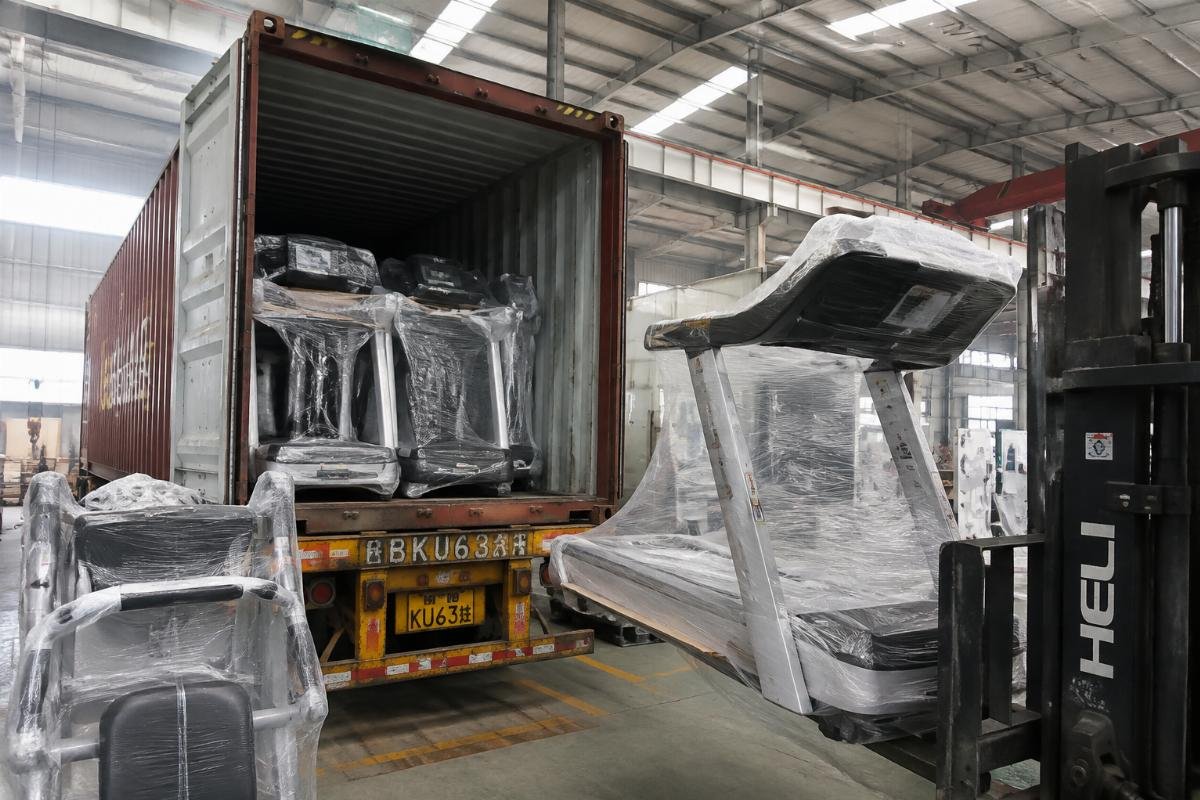
Pre-shipment document audit and strategic spare parts loading are the two levers that prevent post-arrival disasters. The physical product is only half the equation. The paperwork travelling with it—commercial invoice, packing list, CE declaration of conformity, test reports—must be airtight before the container leaves the factory floor.
Working with a China factory direct commercial treadmill supplier for Germany requires a disciplined sequence:
- BOM Lock: Finalise every component model number in writing. This becomes your production and inspection baseline. No verbal changes.
- Pre-Production Sample Approval: Build one unit to exact BOM spec. Photograph every nameplate, every label, every safety sticker. This becomes your golden reference.
- Mid-Production Audit: Verify that running production matches the approved sample. Check motor nameplates against the BOM. Check frame weld quality against the approved standard.
- Pre-Shipment Documentation Review: Every document the container will carry must be reviewed line by line. Model numbers, quantities, HS codes, CE references—all must align.
- Spare Parts Strategy: Load a calculated percentage of wear-prone components—running belts, deck lubrication pads, emergency stop switches—into the same container. A small failure should not mean a machine sitting idle waiting for a parts shipment.
A Middle East distributor once skipped the mid-production audit to save time. When the container arrived, they discovered that a batch of control boards had been substituted with a different supplier’s equivalent. Functionally fine. Documentation wrong. They faced a choice: re-label every unit at destination cost, or reject the batch. [NEED_CITE: Fitness equipment import documentation requirements for EU customs clearance]
The spare parts point deserves emphasis. For a full container of commercial treadmills heading to a German gym chain, loading a small pallet of running belts, key switches, and drive belts costs a fraction of the freight. But when a unit goes down in a busy studio, having that part on-site means hours of downtime instead of weeks.
How Does Shandong Manufacturing Support Flexible OEM and Container Consolidation?
The Shandong fitness equipment manufacturing cluster offers a combination of vertical integration and MOQ flexibility that supports everything from single-unit sampling to full-gym turnkey packages. This is not about generic cheapness. It is about the ability to lock specifications, run small-batch OEM branding, and consolidate mixed equipment into a single container to optimise freight cost.
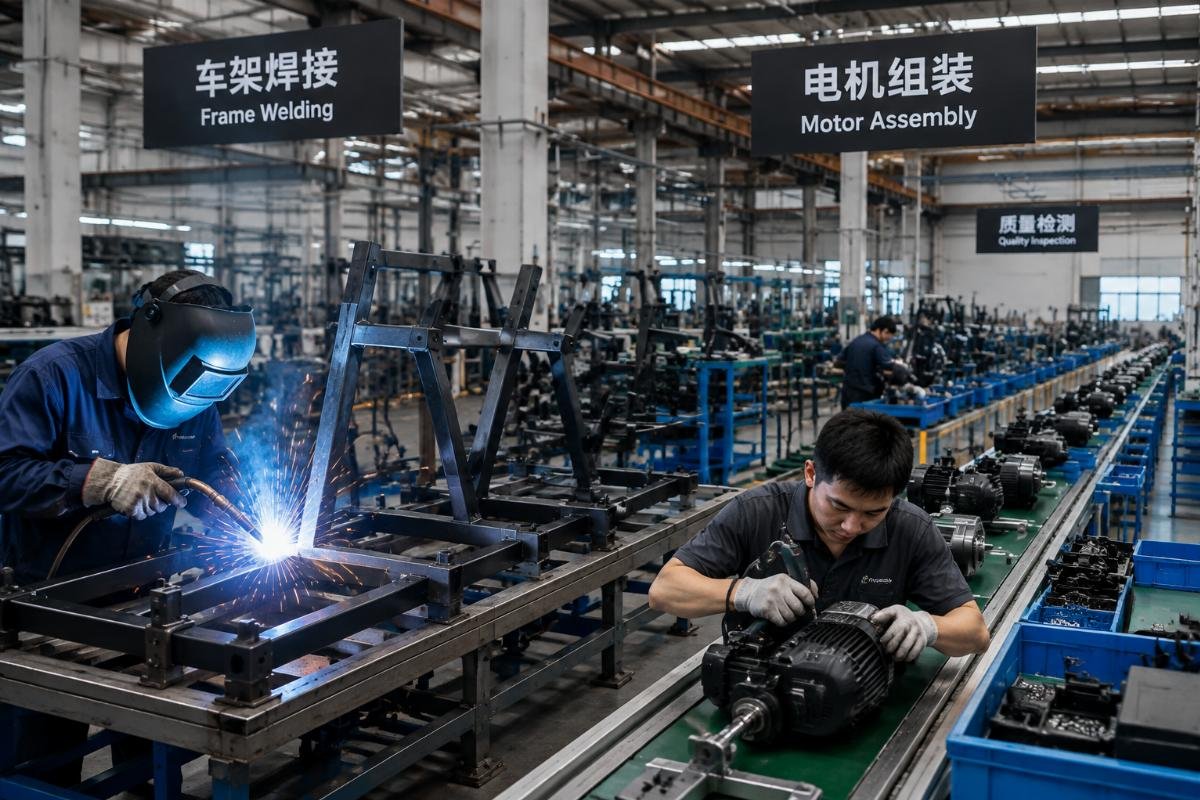
A China factory direct commercial treadmill supplier for Germany operating from this region typically controls the full production chain—from steel tube cutting and welding, through powder coating, to motor assembly and final testing. This vertical control means specification changes can be implemented and verified without depending on external subcontractors.
The practical advantages for a European buyer:
- OEM Branding Flexibility: From custom console badging to branded running belt packaging, the factory can implement your visual identity across the product line.
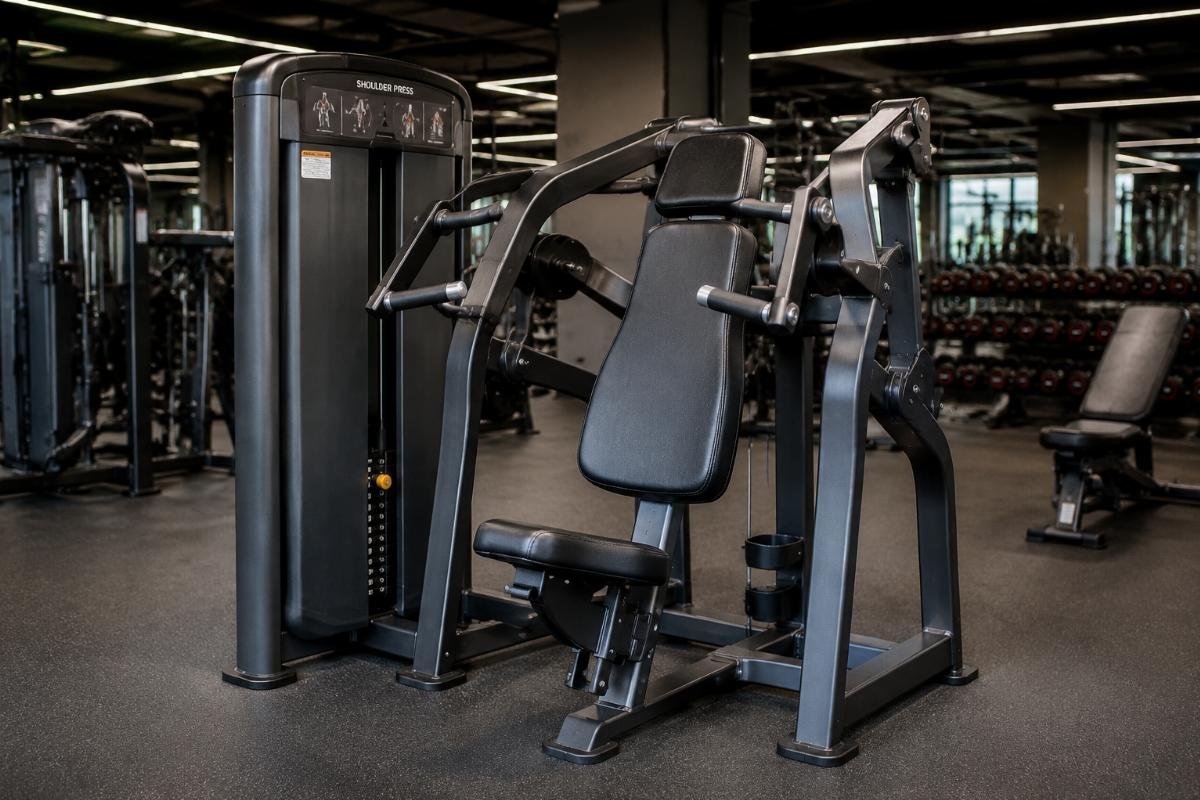
- Mixed Container Loading: A single container can combine treadmills, ellipticals, strength stations, and free weight equipment. This is critical for outfitting a new gym location where every square metre of floor space needs equipment, and paying for partial containers is not economical.
- Specification Iteration: If your German clients feedback that a console interface needs adjustment or a frame colour needs to match their studio design, the factory can implement and validate changes within the production cycle.
I have worked with European buyers who started with a single treadmill sample to validate quality, then scaled to a full commercial gym package—cardio, strength, free weights, flooring—all consolidated into multiple containers shipped on a coordinated schedule. The factory’s ability to hold the BOM spec consistent across that entire product mix, while supporting private-label requirements, is what turns a one-off purchase into a long-term supply relationship.
Conclusion
Document consistency beats price negotiation every time when importing commercial treadmills into Germany. Lock your BOM before production, audit your CE file against physical components before shipment, and load strategic spare parts to protect uptime. A China factory direct commercial treadmill supplier for Germany who understands this discipline will save you far more than their price difference versus international brands.