Wholesale Olympic Barbell for Rehabilitation Clinic Directors | Bick Factory
The smoother the bearing spins, the worse it is for your patients.
Rehabilitation clinic directors sourcing a wholesale Olympic barbell must prioritize low-rotation damping, fine knurling depth, and chemically resistant coatings—specs fundamentally opposite to those chosen for commercial powerlifting gyms. Evaluating a wholesale Olympic barbell supplier against clinical-specific criteria, rather than generic fitness catalogs, is the only way to avoid patient discomfort, skin injury, and costly full-container returns.
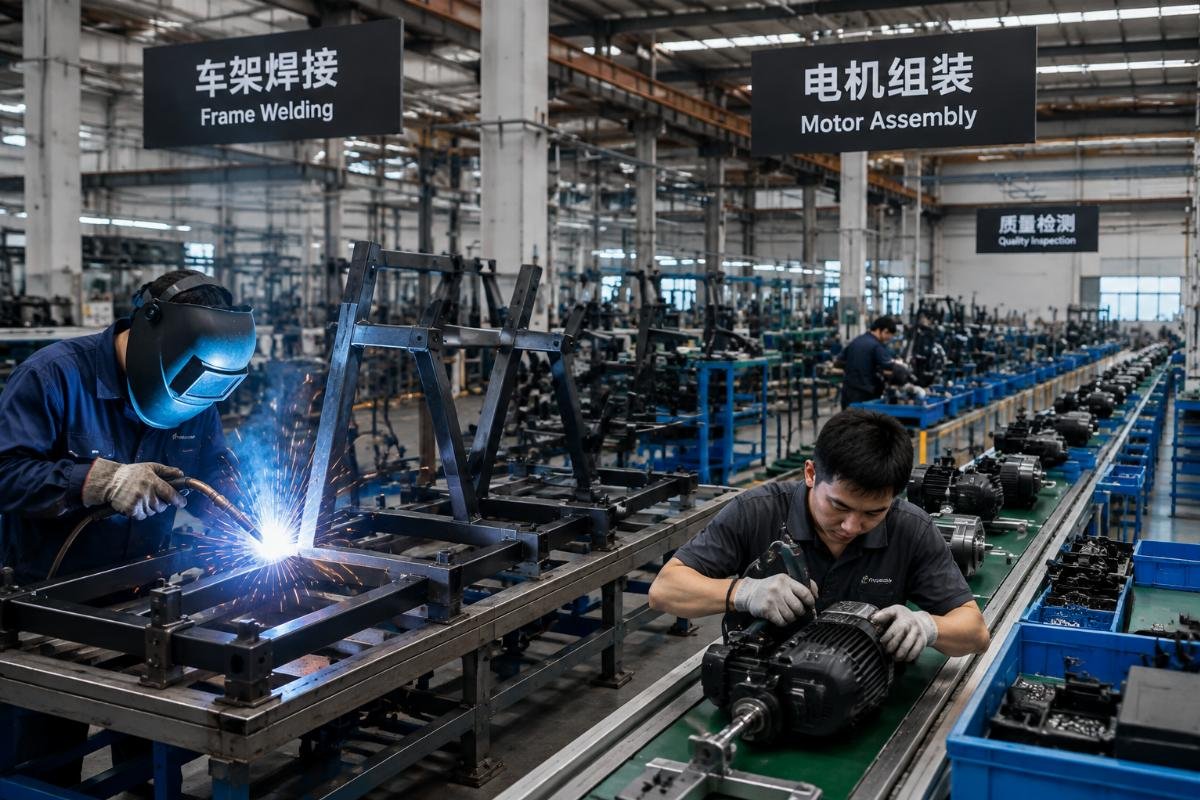
I used to spend my days on the shop floor with a micrometer in hand, measuring knurling depth and counting bearing spin cycles before the bars ever reached a shipping container. Later I moved into trade, spending years walking the floors at IHRSA in Chicago and Connect in Las Vegas, talking to buyers from rehab chains and performance centers across North America and Europe. At one Chicago show, a US-based rehabilitation chain placed an order for Olympic bars intended for post-surgical recovery protocols. I quoted standard commercial specs—high-spin bushings, aggressive mountain-pattern knurling, hard chrome finish—and shipped a full container. When the bars arrived, the clinic director called within days: patients could not control the sleeve rotation during light rehabilitation lifts, the knurling was tearing into sensitized post-operative skin, and the chrome was already showing micro-pitting after routine disinfectant wiping. The entire shipment sat in their warehouse. We ended up absorbing the refurbishment cost and a replacement cycle that delayed their program launch by months. That single order reshaped how I think about every wholesale Olympic barbell spec that leaves the factory.
If you are procuring free-weight equipment for a clinical environment, the rest of this guide breaks down exactly which specifications matter, how to test them, and how to evaluate the supplier sitting across the negotiation table.
Why Rehabilitation Clinics Cannot Use Standard Commercial Olympic Barbells?
Commercial gym bars and rehabilitation bars solve two completely different mechanical problems, and treating them as interchangeable is the single most expensive mistake a clinic procurement team can make.
A commercial powerlifting bar is engineered*gh a stiff shaft and a freely spinning sleeve, minimizing torque on the wrists during a clean or snatch. A rehabilitation bar, by contrast, must transfer controlled, low-velocity force from a patient recovering from shoulder surgery, knee reconstruction, or neurological impairment—where uncontrolled sleeve spin can cause the loaded plate to jerk the limb past its safe range of motion. [NEED_CITE: biomechanical risk factors in post-surgical upper limb rehabilitation loading protocols]
The knurling tells the same story. Commercial bars use deep, aggressive mountain-pattern knurling designed to bite into callused palms under heavy loads. In a clinic, the hands gripping the bar often belong to patients with freshly healed skin grafts, reduced grip strength, or neuropathy—skin that tears at a fraction of the force a healthy lifter tolerates. [NEED_CITE: skin integrity thresholds in geriatric and post-surgical hand populations during grip tasks]
Then there is the coating. Commercial gym bars see chalk, sweat, and occasional wiping. Rehabilitation bars see hospital-grade disinfectant wipes, quaternary ammonium solutions, and accelerated hydrogen peroxide sprays multiple times per day. Standard hard chrome, while durable in a gym, is vulnerable to chemical etching under this frequency of exposure, leading to surface pitting that becomes a bacterial harbor and a tactile hazard. [NEED_CITE: chemical compatibility of metallic coatings with hospital-grade disinfectants per material testing standards]
A European physiotherapy center I worked with learned this the hard way. They ordered a batch of bars with standard chrome shafts for their newly opened rehabilitation wing. Within weeks of daily disinfection cycles, the coating on the grip zones began to discolor and flake. The clinical team flagged it as an infection-control risk, and the entire batch had to be pulled. The root cause was not poor manufacturing—it was a spec mismatch between the coating chemistry and the clinical cleaning protocol.
| Specification | Commercial Gym Bar | Rehabilitation-Grade Bar |
|---|---|---|
| Bearing rotation | High-spin, minimal damping | Controlled damping, low rotation |
| Knurling pattern | Deep mountain / aggressive volcanic | Fine-to-medium diamond / shallow mountain |
| Knurling depth | Deep, sharp edges | Shallow, smooth edges |
| Shaft coating | Hard chrome | Zinc alloy or clinical-grade cerakote-type finish |
| Chemical resistance | Sweat and chalk | Repeated hospital-grade disinfectant exposure |
| Primary user hand condition | Callused, high grip strength | Sensitive, post-surgical, or neuropathic skin |
The takeaway is simple: a wholesale Olympic barbell supplier who quotes you the same spec sheet for a clinic as they do for a CrossFit box is not a clinical supplier—they are a gym supplier hoping you will not notice the difference.
What Are the Key Specifications for Rehabilitation-Grade Olympic Barbells?
The four specifications that determine whether a bar will perform safely in a clinical setting are bearing damping behavior, knurling geometry, shaft coating chemistry, and shaft diameter—and they must be evaluated as an integrated system, not a checklist of independent choices.
Let me walk through each one.
Bearing damping behavior. The most counterintuitive spec in the entire clinical bar conversation is this: you do not want the sleeve to spin as freely as possible. In a commercial lifting context, free spin is desirable. In rehabilitation, a sleeve that spins too freely can rotate under minimal load, causing the weight plate to swing unexpectedly and pull the patient’s limb into an unsafe position. The correct specification is a sleeve with measurable rotational damping—enough resistance that the plate does not freewheel, but enough smoothness that the patient does not fight the bar during a controlled movement. Testing this requires a simple bench protocol: mount the bar horizontally, apply a known light torque to the sleeve, and measure both the number of free-spin rotations before stopping and the deceleration time. [NEED_CITE: rotational damping measurement methodology for rehabilitation-grade barbell bearings]
Knurling geometry. Knurling is defined by three parameters: pattern (mountain vs. diamond), depth, and spacing. For rehabilitation use, the pattern should be diamond or a very shallow mountain, the depth should sit at the shallow end of the spectrum, and the spacing should be tight enough to distribute pressure evenly across sensitive skin. The goal is tactile feedback without abrasion. A medium-depth fine knurl sits in the safe zone—enough grip for a patient with reduced hand strength, but not aggressive enough to compromise compromised skin. [NEED_CITE: knurling depth and pattern classification standards for therapeutic exercise equipment]
Shaft coating chemistry. As noted earlier, the coating must withstand repeated chemical disinfection without degrading. Zinc alloy coatings and certain advanced ceramic-type finishes demonstrate substantially better resistance to quaternary ammonium and hydrogen peroxide compounds than traditional hard chrome. The coating must also maintain a consistent tactile feel—patients with sensory deficits rely on texture for grip confidence, and a coating that becomes slick or pitted over time removes that feedback. [NEED_CITE: comparative chemical resistance of barbell shaft coatings under clinical disinfection protocols]
Shaft diameter. Standard men’s Olympic bars use a 28–29 mm shaft. For rehabilitation populations—particularly geriatric patients, pediatric populations, and those with grip-strength deficits—a narrower shaft in the range of 25–27 mm reduces the grip circumference and lowers the muscular demand on the hand. Some clinics stock both diameters and assign them by patient cohort.
| Parameter | Rehabilitation-Grade Range | Testing / Verification Method |
|---|---|---|
| Bearing damping | Low rotation, measurable deceleration | Bench spin-cycle and stop-time test |
| Knurling pattern | Diamond or shallow mountain | Visual and tactile comparison matrix |
| Knurling depth | Shallow to medium | Micrometer measurement at multiple shaft zones |
| Coating type | Zinc alloy or clinical-grade ceramic-type | Chemical exposure test per coating standard |
| Shaft diameter | 25–27 mm for sensitive populations; 28 mm for general rehab | Caliper measurement |
When I evaluate a wholesale Olympic barbell on behalf of a clinic client, I never accept a spec sheet alone. I request a sample bar, run the spin test on our bench, measure the knurling with a profilometer, and expose a coated coupon to the clinic’s actual disinfectant for a simulated cycle count. Only then do I sign off.
How to Evaluate a Wholesale Olympic Barbell Supplier for Clinical Use?
Price and lead time matter, but for a rehabilitation clinic, the supplier’s ability to execute clinical-specific specs consistently, provide verifiable samples, and reference other healthcare accounts is what separates a reliable partner from a liability.
Here is the evaluation framework I use when a clinic director asks me to vet a supplier.
First: custom spec execution capability. Can the supplier modify bearing preload, knurling depth, and coating type to your clinical protocol—not just offer you what is already in their catalog? Many factories will say yes, but when you press for evidence, their production line is too rigid to hold the tighter tolerances a clinical bar demands. Ask for documentation of how they adjust bearing damping during assembly. Ask whether their knurling dies can produce the shallow diamond pattern you need, or whether they only stock aggressive commercial dies. A genuine clinical-capable supplier will have process records, not just marketing claims. [NEED_CITE: supplier capability audit criteria for custom rehabilitation equipment manufacturing]
Second: sample testing protocol. A trustworthy wholesale Olympic barbell supplier will send you a pre-production sample that is manufactured on the same line and with the same tooling as the production run—not a hand-finished prototype that will never represent what you actually receive. The sample should come with a test report covering bearing spin behavior, knurling depth measurements at multiple points, and coating adhesion and chemical resistance data. If the supplier cannot provide this, walk away.
Third: clinical reference accounts. Ask the supplier which rehabilitation clinics or physiotherapy centers they currently supply. A supplier who has successfully delivered to clinical environments will have references, case notes, and an understanding of the regulatory and infection-control language your compliance team will use. A supplier who only references commercial gyms and home fitness brands will not.
Fourth: post-sale support and replacement policy. Bars in a clinical setting are subject to more rigorous inspection cycles than those in a gym. If a coating defect or knurling inconsistency surfaces six months into service, will the supplier replace the affected units, or will they argue that the damage was caused by your disinfection protocol? Get the replacement terms in writing before the first container ships.
A Middle East rehabilitation institution I advised once placed a large order with a supplier who excelled at commercial gym equipment but had no clinical track record. The bars arrived with standard gym knurling and chrome coating—nothing the supplier had done was technically wrong, but everything was wrong for the application. The clinic spent months in a replacement cycle and had to source a second supplier at a premium to meet their opening deadline. The lesson: the cheapest wholesale Olympic barbell quote is only cheap if the spec is right.
What Are the Common Procurement Mistakes and How to Avoid Them?
The three most frequent errors in clinical bar procurement are spec confusion between gym and clinic use, inadequate sample validation, and ignoring post-sale support structures—and each one has a predictable, avoidable cost.
Mistake one: ordering to a gym spec sheet. This is the mistake I made on that Chicago order, and I still see it happen regularly. The procurement team pulls a spec from a commercial gym catalog—high-spin bearing, aggressive knurling, chrome finish—because those are the only parameters they have seen quoted. The bar arrives, the clinical team tests it on a patient, and the mismatch becomes immediately visible. The fix is to write your own clinical spec first, then source the supplier to match it—not the other way around.
Mistake two: accepting a non-representative sample. Some suppliers will send a sample bar that is hand-finished, uses a different knurling die, or has a coating applied in a separate batch. It feels great. The production run does not. The fix is to specify in your purchase agreement that the pre-production sample must be manufactured on the production line with production tooling, and that the sample’s test data will serve as the acceptance benchmark for the full shipment.
Mistake three: ignoring post-sale support. Clinical environments have zero tolerance for equipment that degrades in a way that creates infection risk or patient injury. If a coating begins to peel or a bearing begins to grind, the bar must be pulled from service immediately. Your supplier agreement must define the response time for replacement units and the cost-sharing structure for warranty claims. Without this, you are holding the full risk.
| Common Mistake | Root Cause | Preventive Action |
|---|---|---|
| Spec confusion | Using gym catalog defaults for clinical procurement | Write clinical spec first; source supplier to match |
| Non-representative sample | Supplier sends hand-finished prototype | Contractually require production-line sample with test data |
| Ignoring post-sale support | No written replacement or warranty terms | Define response time and cost-sharing before first shipment |
A wholesale Olympic barbell order for a clinical environment is not a commodity purchase. It is a patient-safety decision dressed up as a procurement task. Treat it accordingly.
How to Structure a Wholesale Order for Mixed-Use Facilities?
Facilities that serve both rehabilitation patients and general fitness users must structure their order as two distinct SKU sets with clear labeling, segmented packaging, and separate spec documentation—mixing them in a single container without differentiation is a guaranteed source of clinical complaints.
Many rehabilitation clinics also operate a general strength-training zone for staff, long-term maintenance patients, or community members. These facilities need both clinical-grade bars and standard commercial bars in the same shipment. The procurement challenge is ensuring that the two categories never get crossed on the clinic floor.
The solution is straightforward but must be enforced at the supplier level. First, define two separate SKUs with distinct model numbers, spec sheets, and finish colors or markings if possible. Second, require the wholesale Olympic barbell supplier to package each SKU in separately labeled cartons with the spec sheet printed on or inserted into each box. Third, request that the supplier load the container with the two SKU categories in physically separated zones—do not allow them to be intermixed pallet by pallet. Fourth, include a packing list that maps each carton to its destination zone within your facility, so your receiving team can verify the shipment at the dock before any bar reaches the floor.
A Middle East rehabilitation institution I worked with learned this lesson after a mixed container arrived with clinical bars and gym bars packed together in unmarked cartons. The receiving team, unfamiliar with the subtle visual differences, distributed several gym-spec bars into the clinical treatment rooms. It took weeks of patient feedback and staff complaints before the mismatch was identified. The institution subsequently required their supplier to implement zone-labeled packaging, and the problem never recurred.
When structuring your order, also consider the volume split. Clinical-grade bars typically represent a smaller portion of the total free-weight requirement in a mixed facility, but they carry disproportionate risk if specified incorrectly. Allocate your evaluation time accordingly—the clinical bars deserve more scrutiny per unit than the gym bars, even if they are fewer in number.
Conclusion
A rehabilitation clinic’s barbell is a clinical instrument, not a gym accessory. Procuring a wholesale Olympic barbell for this environment demands a fundamentally different spec set—low-rotation damping, fine knurling, chemically resistant coatings, and appropriate shaft diameter—evaluated through sample testing, supplier capability audits, and written post-sale terms. Mixed-use facilities must enforce SKU separation at the packaging and container-loading level. Get the spec right, and the bar serves your patients safely for years. Get it wrong, and the cost is measured in patient discomfort, clinical downtime, and full-container returns.