How to Source Stair Climber from China Factory for Bahrain Market
Most buyers think the lowest unit price wins the deal. The real cost killer is landed cost—customs delays, wrong HS codes, and scattered LCL shipments that quietly double your spend.
To source a stair climber from China factory for Bahrain gyms successfully, you must lock commercial-grade flywheel specs, match HS codes to Bahrain customs classifications exactly, and consolidate shipments into full containers to compress per-unit freight. Skipping any one of these turns a profitable import into a port-side liability.
I still remember a container of treadmills we sent to Dubai years ago. The commercial invoice listed a generic "fitness machine" HS code instead of the specific cardio equipment classification. The cargo sat at Jebel Ali for weeks. The gym opening got pushed back, storage fees piled up, and we ended up covering both the demurrage and an emergency document revision. Since then, I treat Bahrain customs paperwork with the same intensity—small market, zero tolerance for sloppy documentation. [NEED_CITE: GCC Customs Union harmonized tariff classification rules for fitness equipment]
Getting the specs right before the container is sealed is where the real sourcing work happens.
What Specs Should Bahrain Gyms Require for Commercial Stair Climbers?
Commercial flywheel weight and load capacity determine whether a stair climber survives a Bahrain gym’s peak-hour traffic or breaks down within months.
A boutique studio in Manama once ordered a batch of stair climbers marketed as "heavy-duty" from a general trading company. When the machines arrived, the flywheels were noticeably lighter than what true commercial units carry, and the step mechanisms started slipping under continuous use. The owner had to replace the entire batch within a year. The root issue was never the price—it was the spec gap between light-commercial and true commercial grade.
Here is how commercial-grade and light-commercial stair climbers compare across the parameters that matter in a high-traffic Bahrain facility:
| Parameter | True Commercial Grade | Light Commercial / Prosumer | Home Grade |
|---|---|---|---|
| Flywheel Weight | Heavy-duty range | Mid-range | Lightweight |
| Load Capacity | Full commercial user range | Moderate user range | Limited user range |
| Drive System | Industrial-grade motor | Standard motor | Basic motor |
| Step Mechanism | Reinforced linkage | Standard linkage | Basic linkage |
| Noise Level | Noticeably reduced | Standard | Noticeably louder |
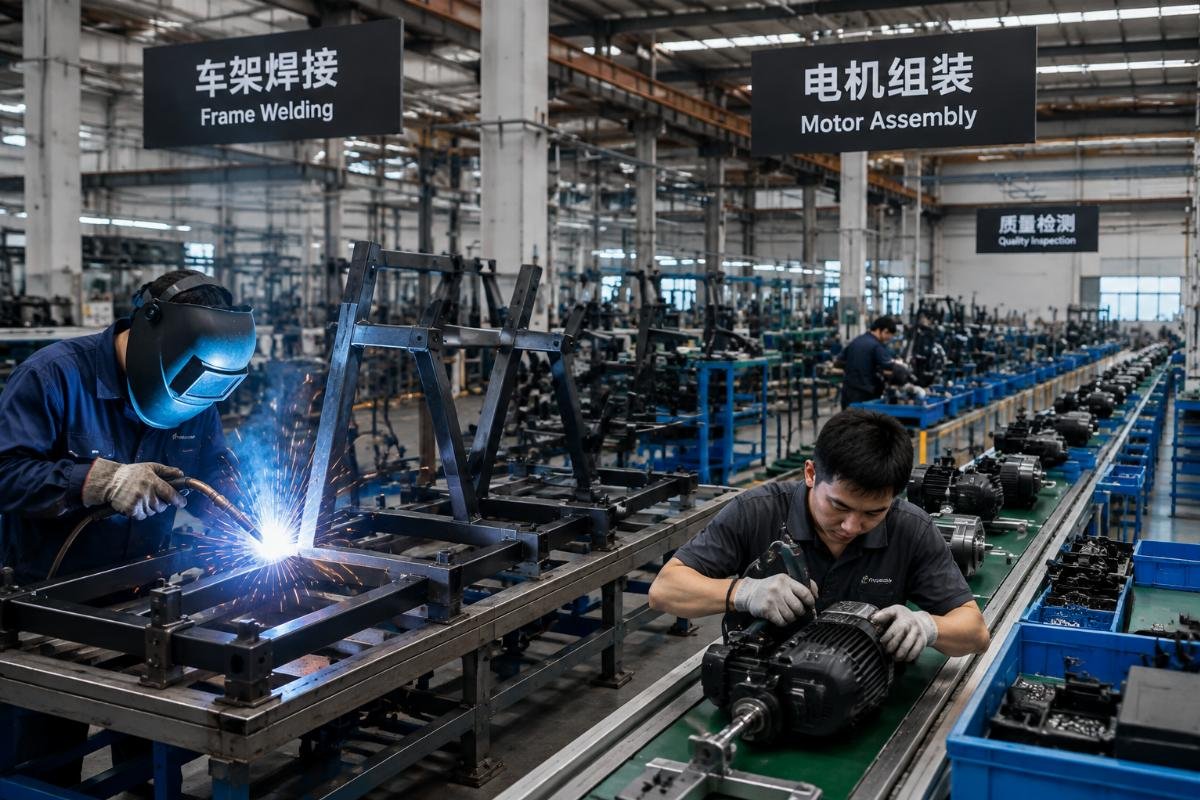
| Frame Construction | Welded steel commercial chassis | Mixed assembly | Tubular assembly |
| CE Certification | Full batch-level certified | Sample-level certified | Not provided |
[NEED_CITE: commercial fitness equipment durability standards for high-usage gym environments]
When I walk a gym floor in the Gulf region, the first thing I check is the flywheel housing. A properly weighted flywheel delivers smooth, consistent step resistance even when the machine runs twelve hours a day. Lightweight flywheels create jerky pedal motion that accelerates wear on the drive belt and step bearings.
For Bahrain’s climate, where gym ambient temperatures can push higher even with air conditioning, motor heat dissipation matters. Industrial-grade drive systems handle thermal load substantially better than standard motors, which means fewer service calls during the peak summer months.
A stair climber from China factory built to true commercial specs also carries a structural advantage: the frame is designed for bolt-down installation and continuous commercial cycling. Light-commercial frames flex over time, creating alignment issues that cascade into electronic faults and step irregularities.
How to Calculate the True Landed Cost of Stair Climbers in Bahrain?
FOB price is just the starting line. Bahrain customs duty, clearance fees, inland transport, and potential demurrage form the real cost structure—and full container loads compress every one of those line items.
A hotel developer in the Gulf once asked me why his per-unit stair climber cost ended up substantially higher than the quoted FOB price. The answer was straightforward: he had shipped three separate LCL consignments, each incurring its own clearance cycle, documentation fees, and inland delivery charges. Had he consolidated into a single container, the per-unit landed cost would have dropped noticeably.
The landed cost structure for importing fitness equipment into Bahrain follows this sequence:
- FOB value: the factory price of the stair climber from China factory, including standard export packaging
- Ocean freight: determined by container type and volume; full containers spread freight cost across more units
- Marine insurance: calculated as a percentage of CIF value
- Bahrain customs duty: applied to the CIF value under GCC Common External Tariff rules [NEED_CITE: GCC Common External Tariff rate for fitness and gym equipment]
- Clearance agent fees: documentation processing, customs declaration, and inspection coordination
- Inland transport: port-to-site delivery within Bahrain
- Potential demurrage: storage charges if documentation delays hold cargo at the port
The hidden trap is the last line item. Demurrage does not appear in any quotation, but it accumulates daily. A container held at Mina Salman port for even a short period due to paperwork errors can erase the savings from negotiating a lower FOB price.
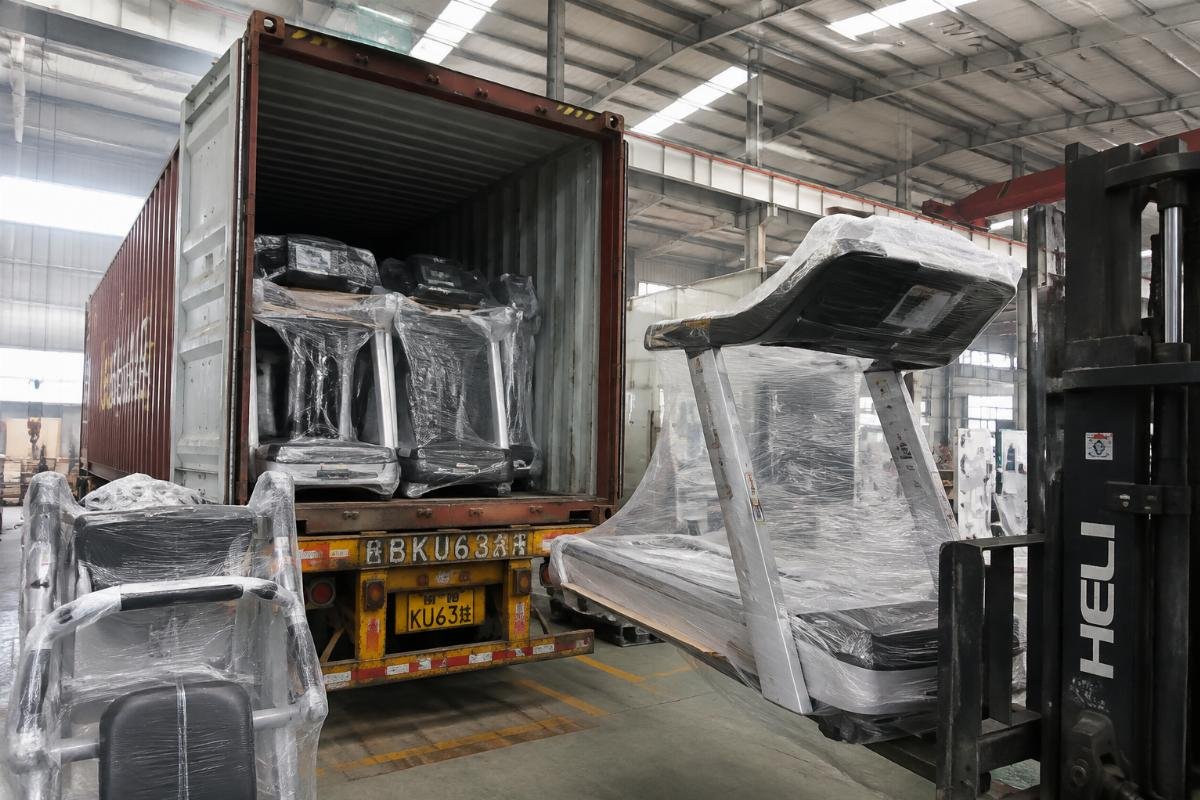
This is where container consolidation becomes a strategic tool, not just a logistics choice. A full container load of stair climbers, ellipticals, and complementary cardio equipment from a single factory means one customs declaration, one clearance cycle, one inland delivery. The per-unit freight and clearance cost drops substantially compared to multiple scattered shipments.
For distributors planning repeat orders, building a relationship with a factory that offers container-load consolidation service means you can mix stair climbers with strength equipment and free weights in a single shipment, maximizing container utilization and minimizing per-unit overhead.
Which Customs Documents Are Critical for Bahrain Import Clearance?
HS code accuracy, certificate of origin, and CE certification must align perfectly—any mismatch triggers inspection delays and port storage fees.
I mentioned the Dubai HS code mistake earlier. The same type of error hits Bahrain shipments just as hard. Bahrain customs operates under the GCC Customs Union framework, which means tariff classifications follow a unified regional system. [NEED_CITE: Bahrain National Bureau for Revenue customs import documentation requirements]
The critical document package for importing a stair climber from China factory into Bahrain includes:
- Commercial invoice: must describe the product with sufficient specificity to match the HS code; vague terms like "gym machine" invite scrutiny
- Packing list: detailed weight and volume breakdown matching the physical shipment
- Bill of lading: original or telex release, matching all invoice and packing details
- Certificate of origin: required for GCC tariff treatment; must be issued by the relevant Chinese authority
- CE certificate: Bahrain and the broader Gulf market increasingly expect CE marking on imported fitness equipment; the certificate must cover the exact model being shipped
- HS code classification: the code for motorized cardio fitness equipment must be applied consistently across all documents
The most common mistake I see is inconsistency between documents. The commercial invoice says one thing, the packing list says another, and the bill of lading carries a third description. Customs officers flag these mismatches automatically, and the cargo gets pulled for physical inspection.
For stair climbers specifically, the HS code must reflect motorized cardio equipment, not generic "sports equipment" or "weight training machines." Misclassification does not just cause delays—it can trigger tariff rate disputes that require formal amendment procedures, adding weeks to the clearance timeline.
A Middle East distributor I worked with learned this the hard way. His first shipment of stair climbers used an incorrect code that classified the machines under a lower-tariff category. Customs caught it during a routine audit, and the resulting reassessment cost him substantially more in back duties and penalties than the original tariff difference would have been.
How to Choose Between Single-Unit Order and Full Container Load?
Single units work for trial orders; full containers drive real margin for distributors and gym chains planning multiple locations.
A boutique fitness studio owner in Manama needed just a few stair climbers to test member response before committing to a larger fleet. A single-unit or small LCL order made sense for that phase. But once the machines proved popular and he planned to equip a second location, the economics shifted entirely.
Here is how the two approaches compare for a buyer sourcing a stair climber from China factory:
| Factor | Single Unit / LCL | Full Container Load |
|---|---|---|
| Per-Unit Freight | Substantially higher | Noticeably lower |
| Customs Clearance | Per-shipment fees apply | Single declaration for all units |
| MOQ Flexibility | Suitable for trial | Requires volume commitment |
| Equipment Mix | Limited to one or two items | Can combine cardio, strength, free weights |
| Lead Time per Unit | Longer effective timeline | Shorter effective timeline per unit |
| OEM Branding | Rarely available | Readily available |
| Spare Parts Inclusion | Minimal | Batch-level spare parts package |
[NEED_CITE: fitness equipment import logistics cost comparison LCL vs FCL]
For a distributor building inventory across Bahrain and neighboring Gulf markets, a full container allows you to load stair climbers alongside ellipticals, spin bikes, and rowing machines from the same factory. The container utilization improves, the per-unit cost drops, and you present a complete cardio package to your gym clients.
For a hotel developer outfitting a fitness center, a full container lets you combine stair climbers with strength machines and free weight sets in one shipment. The space planning package arrives together, installation happens in one window, and the project timeline stays tight.
The OEM branding option only becomes practical at container-load volume. If you are building a distributor brand in the Bahrain market, having your logo on the stair climber console, frame decals, and packaging requires a production run that aligns with full-container economics.
What After-Sales Support Should You Require from a China Factory?
Spare parts availability and technical response speed matter more than the initial unit price when a stair climber goes down during peak gym hours.
A gym chain operator in the Gulf region once told me his biggest headache was not the equipment purchase—it was waiting weeks for a replacement drive board while a stair climber sat idle. Every day that machine was offline, members complained, and revenue from that station disappeared.
When you source a stair climber from China factory for the Bahrain market, the after-sales framework should cover:
- Spare parts inventory: the factory should supply a spare parts package proportional to the order size, covering high-wear components like drive belts, step bearings, and control boards
- Parts shipment speed: critical spare parts must be shippable by air freight within a short turnaround, not bundled into the next sea freight cycle
- Technical documentation: wiring diagrams, error code manuals, and maintenance schedules must be provided in English, ideally with video troubleshooting guides
- Remote technical support: the factory’s engineering team should be reachable for real-time troubleshooting when local technicians encounter unfamiliar faults
- Warranty terms clarity: warranty coverage must specify which components are included, what the claim process looks like, and whether replacement parts ship at cost or are covered
[NEED_CITE: commercial fitness equipment after-sales service standards for gym operators]
The factory’s willingness to include a spare parts package with the initial shipment is a strong signal of long-term reliability. Factories that treat after-sales as an afterthought typically disappear after the container leaves the port. Factories that build spare parts supply into their standard offering understand that gym equipment uptime is the real product.
For Bahrain buyers specifically, having a factory that understands the Gulf operating environment—high ambient temperatures, continuous usage patterns, and the need for rapid parts replacement—makes the difference between a machine that runs for years and one that becomes a recurring expense.
Conclusion
Sourcing a stair climber from China factory for Bahrain is a spec, logistics, and documentation game—not just a price negotiation. Lock commercial-grade flywheel and frame specs, calculate true landed cost including customs and demurrage risk, align every document to GCC classification rules, choose container-load shipping for real per-unit savings, and secure a spare parts framework that keeps machines running. The factories that master all five elements earn repeat orders; the rest earn port storage invoices.