How to Compare Half Rack Suppliers in China for Wholesalers
The wall thickness printed on a quotation sheet is not the wall thickness that arrives at your warehouse. The only reliable way to compare half rack suppliers in China is to audit their steel grade certification, welding process documentation, and post-sale claim handling history—not to line up spec sheets side by side and pick the lowest unit price.
When I first started sourcing strength equipment for buyers in the Middle East, a client ordered forty half racks from a factory that looked impeccable on video tour. The samples were flawless. The full container, however, arrived at Jeddah port with several crossmembers visibly bent. The after-sales cost ended up exceeding the original invoice. That moment reshaped how I evaluate every half rack supplier in China I work with: factory floor first, showroom second; warranty terms before unit price.
What follows is a practical framework built from years of container-load sourcing, port-side inspections, and difficult conversations with gym owners who trusted the wrong quotation. If you are a wholesaler, distributor, or commercial gym operator comparing half rack suppliers in China, these are the dimensions that actually separate a reliable long-term partner from a costly one-time lesson.
What Steel Grade and Wall Thickness Should a Commercial Half Rack Actually Use?
A commercial-grade half rack must use cold-rolled steel of at least 11-gauge wall thickness, with certified material test reports available per shipment. Anything below that threshold belongs in a home-gym context, not under the load cycles of a busy fitness facility. [NEED_CITE: ASTM A1011 standard for cold-rolled commercial steel sheet specifications]
Here is how the typical market breaks down when you start asking the right questions:
| Parameter | Entry-Level Supplier | Mid-Range Supplier | Premium Supplier |
|---|---|---|---|
| Steel type | Hot-rolled, unverified | Cold-rolled, self-reported | Cold-rolled, mill-certified |
| Wall thickness | 14-gauge or thinner | 11-gauge, spot-checked | 11-gauge or 7-gauge, batch-verified |
| Material certificate | Not provided | Available on request | Included with every shipment |
| Weld consistency | Visible porosity on joints | Clean on visible sides | Full-penetration, ground smooth |
| Load rating claim | Unverified | Tested on sample | Third-party tested per batch |
The critical distinction here is not the number on the spec sheet—it is whether that number is verifiable. I have seen entry-level half rack suppliers in China quote 11-gauge on paper while shipping 14-gauge production runs, banking on the assumption that the buyer will not bring a caliper to the container door. A mid-tier supplier may ship the correct thickness but mix steel batches without documentation. Only a supplier who provides mill test certificates with each container gives you the traceability needed to defend your own warranty claims downstream.
A distributor in North Africa once received a full container of half racks where the J-hooks were manufactured from a softer steel grade than the uprights. The uprights held up; the J-hooks bent under repeated heavy squat loads within months. The root cause was not the design—it was the absence of a unified steel grade standard across components. [NEED_CITE: common failure modes in commercial strength equipment per equipment industry field reports]
When you compare half rack suppliers in China, ask to see the material test report before placing an order. If they cannot produce one, or if the report covers only the uprights and not the attachments, you are buying uncertainty at a discount.
How Do Welding Process and Surface Treatment Affect Long-Term Durability?
The welding method and powder coating process determine whether a half rack survives a humid coastal gym or starts rusting within a single year. Structural integrity begins at the weld; longevity begins at the surface.
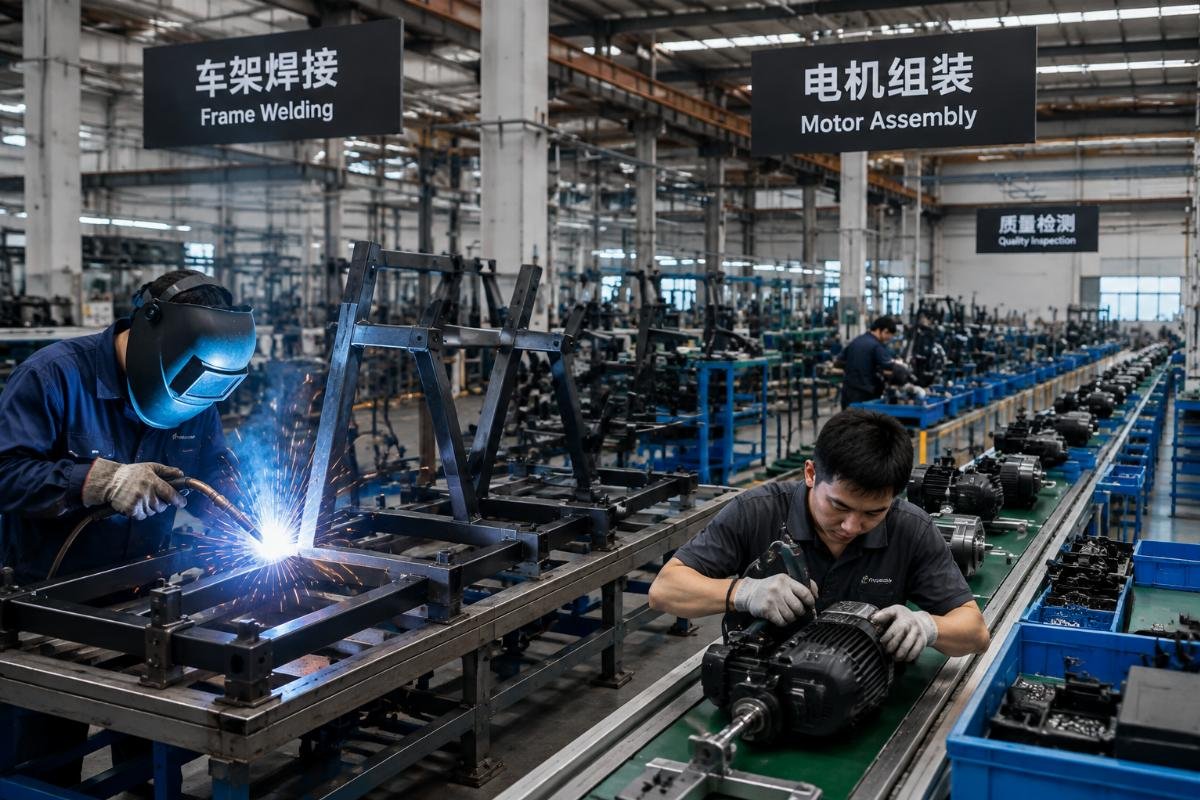
Most half rack suppliers in China use one of two welding approaches: manual MIG welding or robotic welding. Manual welding is common among smaller workshops and introduces human variability—porosity, incomplete fusion, and inconsistent bead penetration become more likely as shift fatigue sets in. Robotic welding, while more expensive to operate, delivers repeatable penetration depth and cleaner joints. [NEED_CITE: welding quality standards for structural steel fitness equipment frames]
Surface treatment is equally decisive. The industry standard for commercial equipment is electrostatic powder coating applied after a multi-stage pretreatment process—degreasing, phosphating, rinsing, and drying. Skipping or shortening any of these stages means the powder adhesion is compromised, and chips, scratches, or humidity exposure will accelerate corrosion underneath the coating.
| Treatment Stage | Minimal Process | Standard Commercial Process |
|---|---|---|
| Degreasing | Single bath | Multi-stage alkaline wash |
| Phosphating | Spray-only | Immersion bath |
| Powder application | Manual gun, single coat | Electrostatic, dual-layer where needed |
| Curing | Time-estimated | Temperature-controlled oven with logged cycle |
| Salt-spray resistance | Not tested | Substantially extended endurance per industry benchmarks |
I inspected a batch of half racks at a port in Southeast Asia where the coating was already bubbling on several uprights before the containers were even opened. The supplier had rushed the curing cycle to meet a shipping deadline. The entire batch had to be re-coated locally—a cost that erased any factory-direct savings the buyer had negotiated.
When evaluating a half rack supplier in China, request photos of their pretreatment line and ask whether curing oven temperatures are logged per batch. A supplier who tracks these parameters is a supplier who understands that surface treatment is not a cosmetic step—it is the first line of structural defense.
What Attachment Ecosystem and Hole Spacing Standards Should Wholesalers Require?
A half rack is only as versatile as its attachment compatibility, and West-Side hole spacing has become the de facto standard for commercial-grade equipment. Wholesalers who ignore this specification lock their end customers into a single-source dependency.
The two dominant hole spacing patterns in the market are 1-inch spacing and West-Side spacing (a combination of 1-inch and 2-inch intervals). West-Side spacing allows for finer J-hook and safety strap adjustments, which matters significantly for lifters working in the 200 kg and above range where small height differences change exercise mechanics. [NEED_CITE: hole spacing configuration standards in commercial power rack manufacturing]
Beyond spacing, the attachment ecosystem itself is a differentiator:
| Attachment Category | Basic Supplier Offering | Full-Ecosystem Supplier Offering |
|---|---|---|
| J-Hooks | Standard steel, UHMW liner optional | Multiple profiles, UHMW lined, monolift option |
| Safety straps | Pin-and-pipe only | Strap-based and pin-based, adjustable |
| Pull-up bar | Fixed straight bar | Multi-grip rotating bar included |
| Landmine and band pegs | Not included | Included as standard |
| Storage horns | Optional add-on | Integrated into rear uprights |
| Compatible accessories | Proprietary only | Open-standard West-Side compatibility |
A gym chain operator in the Gulf region ordered half racks from a supplier whose pull-up bars were welded in non-standard positions. The racks functioned fine for squats and bench presses, but the attachment ecosystem was so limited that the operator had to source lat pulldown and landmine attachments from a different vendor—attachments that did not fit. The result was a mixed-equipment floor that looked unprofessional and frustrated members.
When comparing half rack suppliers in China, request a complete attachment list with dimensions before committing. A supplier who offers a broad, West-Side compatible ecosystem is signaling that they understand the end-user market, not just the manufacturing process.
How Should Wholesalers Structure Warranty Terms and After-Sales Communication?
A warranty is only as valuable as the supplier’s willingness and speed to honor it across borders. The gap between a written warranty clause and a resolved claim is where most wholesaler-supplier relationships break down.
Most half rack suppliers in China offer a structural warranty ranging from one to several years on frames, with shorter or no coverage on wearable attachments like J-hook liners and cable pulleys. The critical variables are not the warranty length—they are the response time, the burden of proof, and the resolution mechanism.
Key warranty dimensions to clarify before ordering:
- Claim documentation required: Does the supplier ask for photos, video, or return of the defective part? Photo-based claims are fastest; return-based claims add weeks and freight cost.
- Replacement shipping responsibility: Who pays for the replacement part—FOB or delivered? Some suppliers cover the part but leave the buyer with international courier costs that exceed the part value.
- Response time commitment: Is there a stated response window, or does it depend on the sales representative’s availability? [NEED_CITE: after-sales service response benchmarks in international fitness equipment trade]
- Spare parts inventory: Does the supplier maintain a standing inventory of common replacement parts, or are they manufactured to order after a claim is filed?
A wholesale buyer in Latin America experienced a recurring issue with a specific batch of half racks where the safety strap mounting holes were drilled slightly off-center. The supplier acknowledged the defect within days, shipped replacement uprights at their own cost, and provided a credit on the next order. The entire cycle took less than a month. That supplier earned a multi-year contract because the after-sales process was predictable and transparent.
Conversely, another buyer spent months in email exchanges with a different half rack supplier in China over a welding crack claim, with the supplier repeatedly requesting additional documentation and eventually offering a partial credit that covered only a fraction of the local repair cost. The relationship ended after a single order.
When you evaluate a half rack supplier in China, ask for a written summary of their warranty claim process—not just the warranty duration. The process document reveals whether the supplier has thought through cross-border after-sales logistics or is improvising when a claim arrives.
What Packaging and Container Loading Practices Prevent Transit Damage?
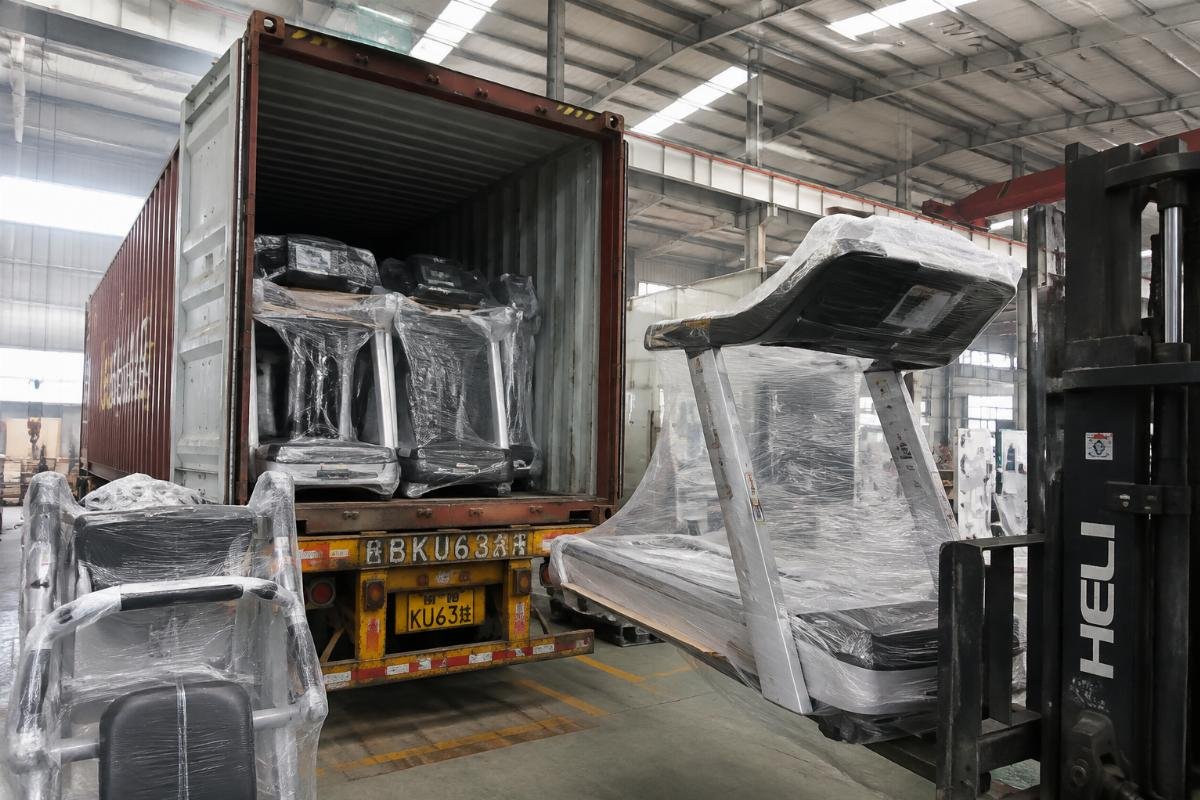
Half racks are heavy, angular, and prone to shifting inside a container—packaging quality is the difference between a clean arrival and a port-side disaster. This is the dimension most buyers overlook until damage has already occurred.
The standard packaging approach among half rack suppliers in China involves disassembled flat-pack delivery with steel components wrapped in EPE foam and secured by steel banding inside a plywood or cardboard crate. The variations that matter are in the details:
| Packaging Element | Risk-Prone Practice | Robust Practice |
|---|---|---|
| Upright protection | Single-layer foam | Foam plus corner protectors |
| Hardware bagging | Loose in carton | Sealed poly bags, labeled and taped to frame |
| Crate construction | Thin plywood, nailed | Multi-layer plywood or steel-frame crate, bolted |
| Container loading | Mixed with loose goods | Dedicated half-rack loading with internal bracing |
| Moisture protection | None | Desiccant packs and plastic wrap for humid routes |
A buyer in the Middle East received a container where several half rack uprights had shifted during ocean transit, gouging into adjacent cartons and damaging the powder coating on contact points. The supplier had used single-layer foam and had not braced the load inside the container. The visible damage required local touch-up; the structural concern was whether any hidden stress fractures had formed in the welds.
When comparing half rack suppliers in China, request photos of their packaging line and their container loading protocol. A supplier who uses corner protectors, labeled hardware bags, and internal container bracing is a supplier who has learned from past transit damage claims—and is actively working to prevent the next one.
Conclusion
Comparing half rack suppliers in China is an exercise in verifying claims, not collecting quotations. Steel grade traceability, welding and surface treatment quality, attachment ecosystem breadth, warranty process transparency, and packaging rigor are the five dimensions that determine whether a supplier becomes a long-term partner or a costly lesson. The supplier who invests in documentation, process control, and after-sales infrastructure is the supplier who will still be answering your calls after the third container—not just the first.