Custom Logo Stair Climber Manufacturer for Gym Operators
Logo placement on a stair climber is never purely cosmetic—it is a structural decision.
Custom logo stair climbers require upfront validation of mold structure, printing position, and shipping stress points to avoid defects. Buyers must align branding requests with manufacturing constraints before production begins, or risk cosmetic failures that turn a container-load order into a costly rework nightmare.
I still remember the first time a gym chain in Riyadh placed a full order with laser-engraved Arabic lettering right on the console frame. The workshop foreman flagged the drawing immediately—the position sat directly on the mold parting line, and mass production would guarantee edge burrs. The client insisted the design was non-negotiable. When the shipment arrived at Jebel Ali Port, every single console frame showed visible scratches along the engraving edges. The complaint video came in within hours. That batch had to be reworked on-site, delaying the gym opening by weeks. Since then, I have learned that sourcing a custom logo stair climber is not about where the client wants the logo—it is about where the mold, the welding seams, and the load-bearing zones actually allow it. [NEED_CITE: mold parting line identification checklist for fitness equipment housings]
Let me walk you through the real constraints behind custom branding on stair climbers, so you can avoid the same mistakes.
Why Does Logo Placement Matter on Stair Climbers?
Incorrect logo placement causes structural defects, cosmetic failures, and warranty claims that far exceed the original printing cost.
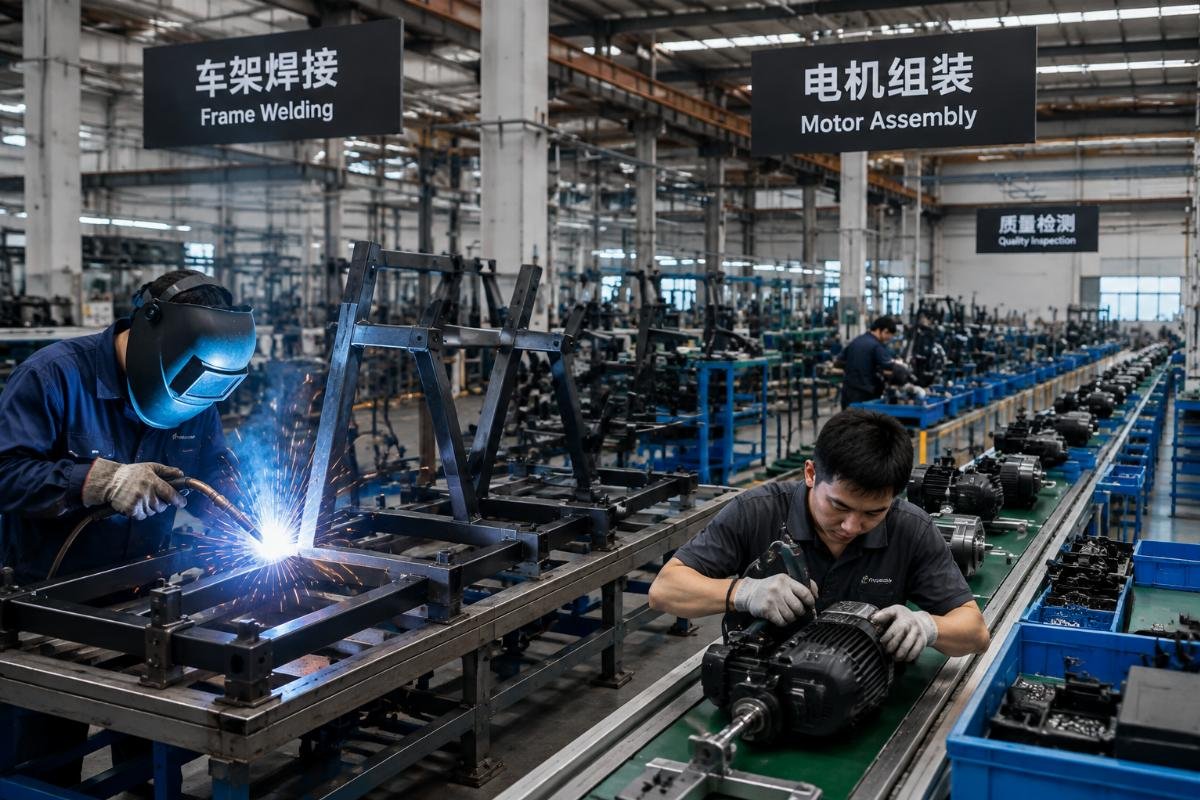
Most buyers assume logo positioning is an aesthetic choice. It is not. Every surface on a commercial stair climber has a manufacturing story—mold parting lines, welding seams, stress concentration zones, and assembly clearances. Placing a logo on the wrong surface can compromise the part itself.
Consider the three most common failure scenarios I have seen across multiple regions:
| Failure Type | Root Cause | Consequence |
|---|---|---|
| Edge burrs on engraved logo | Logo placed on mold parting line | Cosmetic defect requiring full rework |
| Paint peeling on silk-screened logo | Logo placed on high-humidity contact zone | Adhesion failure within months |
| Logo distortion on pedal arms | Logo placed on load-bearing stress zone | Visual deformation under repeated use |
A distributor in West Africa once requested full-color silk-screen printing on the side panels of a stair climber. The panels sit near the user’s hand contact zone, where sweat and humidity are constant. Within a few months of installation in a tropical gym environment, the paint began peeling. The warranty claims ended up costing several times more than the original printing savings. We eventually switched to UV printing with a primer layer, which resolved the adhesion issue entirely. [NEED_CITE: surface preparation requirements for UV printing on ABS and steel fitness equipment housings]
Another case: a hotel project in Southeast Asia needed a compact stair climber with an embossed logo on the pedal arms. The pedal arms are high-stress structural components that flex under every step. The embossed logo distorted visibly after limited use because the raised surface created a stress concentration point. We relocated the logo to the non-load-bearing shroud cover, and the problem disappeared.
The takeaway is straightforward: before you finalize any logo design for a custom logo stair climber, you must review the mold structure and identify which surfaces are safe for branding. [NEED_CITE: fitness equipment OEM branding placement guidelines from industry trade associations]
Which Branding Method Fits Your Custom Order?
Each branding method carries distinct trade-offs in durability, cost, minimum order quantity, and production feasibility—choosing the wrong one guarantees problems.
The branding method you select determines not only how your logo looks, but how long it survives, how much it costs per unit, and whether the factory can even produce it at your requested volume. Here is a practical comparison based on real production experience:
| Method | Durability | Cost Level | MOQ Impact | Best Application |
|---|---|---|---|---|
| Laser Engraving | Robust | Moderate | Low | Metal frames, console housings |
| Silk-Screen Printing | Basic | Low | Low | Flat plastic panels, low-contact zones |
| UV Printing with Primer | Resistant | Moderate-High | Moderate | Curved surfaces, high-humidity environments |
| Embossing / Debossing | Robust | High | High (requires mold modification) | Structural plastic covers, shrouds |
Laser engraving works well on metal surfaces such as the main frame or console housing. It is permanent and does not rely on paint adhesion. However, as the Riyadh case showed, it fails badly if placed on a mold parting line. The laser follows the existing surface geometry, including any micro-gaps at the parting line, creating burrs.
Silk-screen printing is the cheapest option and works fine for simple one-color logos on flat, low-contact plastic panels. But it is vulnerable to humidity, sweat, and friction. If your stair climber is going into a humid climate or a high-traffic commercial gym, silk-screen alone is a risk. [NEED_CITE: paint adhesion test standards for fitness equipment surfaces per ISO coating specifications]
UV printing with a primer layer offers a strong middle ground. The primer creates a bonding layer between the substrate and the ink, significantly improving adhesion on both plastic and metal. It handles curved surfaces better than silk-screen and resists humidity well. The cost is higher, and the factory needs to validate the primer-ink-substrate combination before mass production.
Embossing or debossing produces the most premium look—raised or recessed logos molded directly into the plastic. But it requires modifying the injection mold, which means higher upfront tooling cost and a higher MOQ to justify the mold change. This method only makes sense for large-volume orders or exclusive distribution agreements.
When I work with buyers on a custom logo stair climber project, I always ask three questions first: What is the target climate? What is the order volume? And where exactly on the machine will the logo sit? The answers determine the method.
How to Validate Custom Designs Before Mass Production?
A structured pre-production approval process—3D mockup, physical sample, and pilot run—prevents costly rework and keeps delays minimal.
Skipping pre-production validation is the single most expensive mistake buyers make on custom branding orders. I have seen clients approve a logo design based on a flat JPEG file, only to discover problems when the first physical units arrived. By then, retooling, repainting, or replacing parts costs far more than a proper sample stage would have.
Here is the approval workflow we follow for every custom logo stair climber order:
-
3D Mockup Review — The engineering team produces a 3D rendering of the stair climber with the proposed logo placed on the exact surface, showing mold lines, assembly gaps, and curvature. The buyer reviews the rendering for visual accuracy and positional feasibility. [NEED_CITE: OEM approval workflow standards for fitness equipment branding]
-
Physical Sample Production — A single unit is produced with the actual branding method (laser, UV, silk-screen, or embossing) applied to the real surface. This sample reveals issues that 3D renderings cannot—such as how light hits a curved surface, whether the logo aligns with adjacent components, or whether the printing process creates any surface irregularities.
-
Stress and Adhesion Testing — The sample undergoes basic durability checks: tape adhesion test for printed logos, visual inspection for engraved burrs, and flex assessment for embossed areas on structural components.
-
Buyer Sign-Off — The buyer approves the physical sample in writing before mass production begins. Any changes at this stage are documented and re-sampled if necessary.
-
Pilot Run Inspection — The first batch off the production line is inspected against the approved sample before the full order proceeds.
A gym equipment distributor in Eastern Europe once sent us a logo file for a stair climber order without requesting a physical sample. The logo included a fine gradient that silk-screen could not reproduce accurately. The bulk order showed visible banding in the gradient across every unit. The distributor had to absorb the cost of replacing the side panels. A single sample would have caught the issue.
This validation process typically adds a short extension to the production timeline, but it keeps the total delay well within a manageable window. More importantly, it prevents the far larger delay of reworking an entire container. [NEED_CITE: pre-production sample approval protocols per international fitness equipment manufacturing standards]
What Packaging Protections Are Needed for Branded Equipment?
Ocean freight demands reinforced packaging specifically designed to protect custom finishes—standard packaging is not enough for branded surfaces.
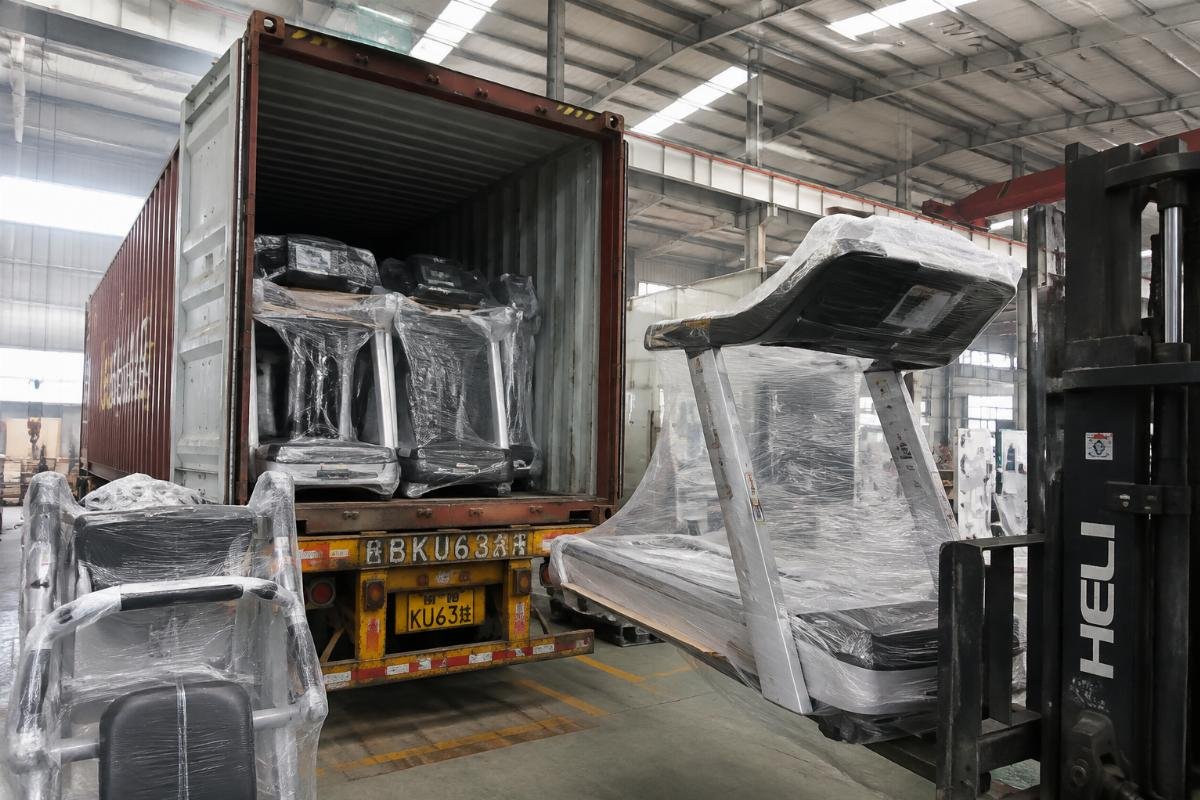
A custom logo stair climber leaves the factory looking perfect. But if the packaging does not account for the specific vulnerabilities of branded surfaces during ocean transit, the machine can arrive at the destination with peeling prints, scratched engravings, or dented embossed panels.
The key risk factors during ocean freight include:
- Vibration and friction — Containers vibrate continuously during sea transit. Unprotected surfaces rub against packaging materials, causing abrasion on printed or engraved logos.
- Humidity and condensation — Temperature fluctuations inside a shipping container cause condensation. Moisture trapped against a silk-screened surface can soften the ink and cause adhesion failure.
- Stacking pressure — Containers are often stacked. Excessive pressure on the outer packaging can transfer force to the machine surfaces, damaging embossed or raised logos.
For every custom logo stair climber we ship, the packaging specification is adjusted based on the branding method used:
| Branding Method | Packaging Requirement |
|---|---|
| Laser Engraving | Foam separation at engraving zone to prevent metal-to-metal contact |
| Silk-Screen Printing | Moisture barrier wrap plus silica gel desiccant inside carton |
| UV Printing | Standard foam protection with humidity monitoring indicator |
| Embossing | Reinforced corner protectors and load-distribution carton design |
[NEED_CITE: ISTA packaging test standards for fitness equipment ocean freight]
An importer in South America received a shipment of stair climbers with silk-screened logos. The machines were packed in standard cartons without moisture barriers. After a six-week sea voyage during the rainy season, condensation inside the containers caused the silk-screen ink to soften and smear on multiple units. The cost of replacing the affected panels exceeded the entire packaging savings from skipping the moisture barrier.
The lesson is simple: custom finishes require custom packaging. The additional packaging cost per unit is marginal compared to the cost of a single warranty claim for a damaged logo. [NEED_CITE: ocean freight packaging guidelines for branded fitness equipment per international shipping standards]
Conclusion
Custom branding on stair climbers is a manufacturing engineering challenge, not a graphic design exercise. Align your logo placement with mold structure, choose the right branding method for your climate and volume, validate every design through physical samples, and protect custom finishes with transit-specific packaging. These steps separate a successful private-label order from an expensive lesson.