Commercial Treadmill Price in Canada: 2026 Wholesale Buyer Guide
The factory price you see on a quote sheet is rarely what you will actually pay once the treadmill rolls onto your gym floor in Ontario, Alberta, or British Columbia.
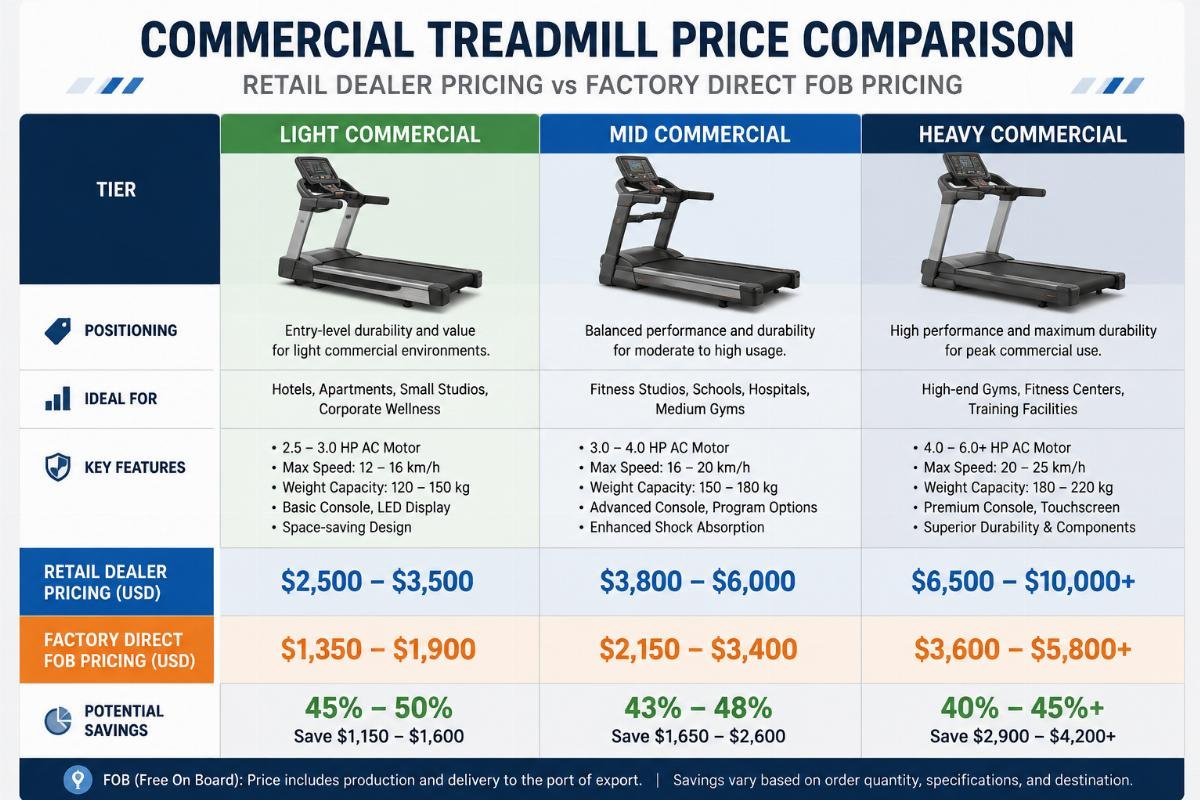
Commercial treadmill price in Canada for 2026 spans three distinct tiers: light commercial units land in the low-to-mid four figures per unit at retail, mid-range commercial models sit in the mid four figures, and heavy-duty club-grade treadmills command upper four figures to low five figures through domestic dealers. When sourced directly from Chinese manufacturers on an FOB basis, the same tiers drop to roughly one-third to one-half of Canadian dealer pricing before freight, duty, and inland delivery are added.
I still think about a show floor conversation in Chicago a few years back. A purchasing manager from a mid-size Ontario fitness chain pulled out a Life Fitness quote and asked me to match it on a comparable commercial treadmill. I gave him an honest FOB number — probably too honest — and he walked away smiling. Weeks later his assistant emailed to say the landed cost, once he factored in ocean freight, CBSA duty, HST, and the drayage to his warehouse in the GTA, actually exceeded the local dealer’s delivered price. That was the day I stopped talking about factory prices and started talking about landed cost. Since then, I have walked dozens of Canadian buyers through the same math, and the pattern never changes: the commercial treadmill price in Canada is a layered equation, not a single number [NEED_CITE: CBSA tariff classification and duty rate lookup for motorized treadmills under HS heading 9506.91].
Let me walk you through what actually determines what you will pay, tier by tier, shipment by shipment.
What Is the Real Price Range for Commercial Treadmills in Canada in 2026?
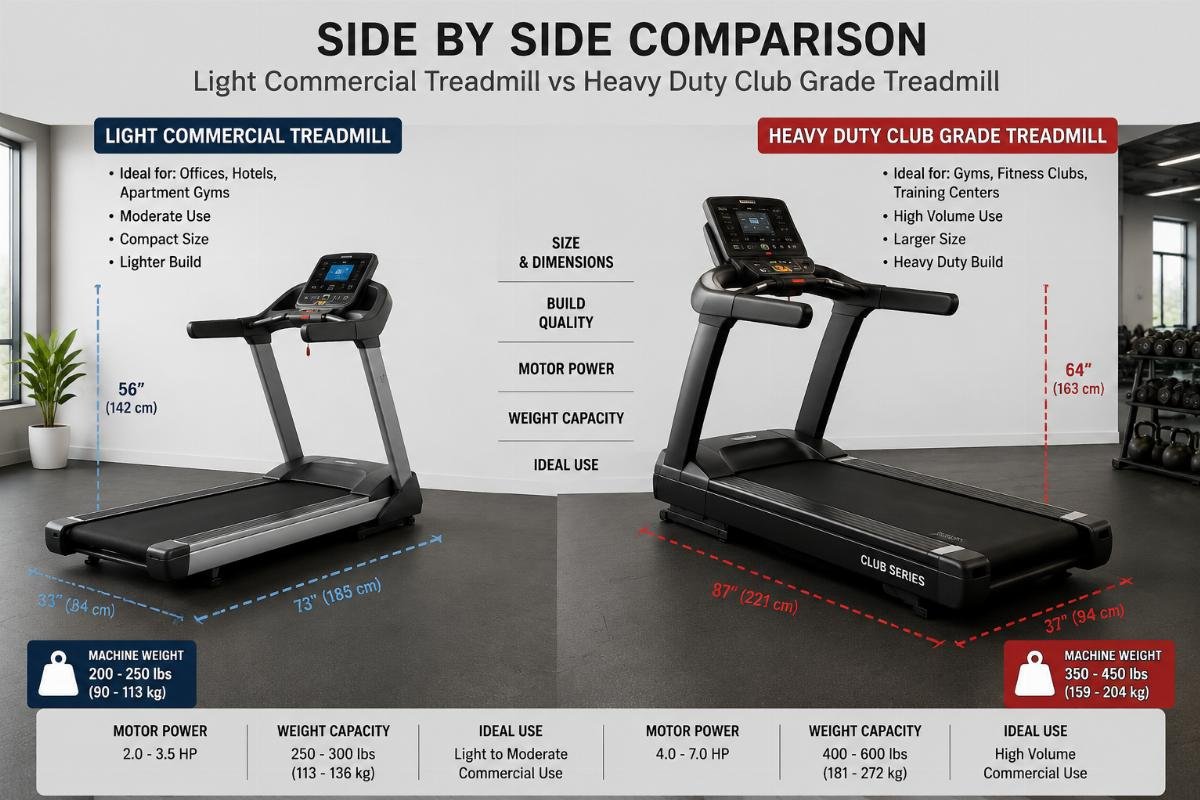
Commercial treadmill price in Canada breaks down into three usage-based tiers, each with a clearly different retail range through domestic dealers and a different FOB range when sourced from Shandong-based manufacturers.
Here is how the tiers stack up from a buyer’s seat:
| Tier | Typical Use Case | Canadian Dealer Retail (per unit) | China Factory FOB (per unit) | Key Spec Differentiators |
|---|---|---|---|---|
| Light Commercial | Boutique studios, hotel fitness corners, PT clinics | Mid four figures | Low three figures to low four figures | Lower continuous HP motor, narrower running deck, moderate weight capacity |
| Mid-Range Commercial | Independent gyms, apartment amenity floors, small chains | Mid-to-upper four figures | Mid four figures | Higher continuous HP, wider and longer running surface, enhanced cushioning, CSA or UL electrical readiness |
| Heavy-Duty Club Grade | High-traffic commercial gyms, university rec centers, hotel flagship properties | Upper four figures to low five figures | Upper four figures | AC motor or high-output DC, oversized running deck, maximum user weight rating, integrated entertainment console options |
The gap between dealer retail and FOB is where the opportunity lives — and also where the misunderstanding lives. A buyer who only looks at the FOB column will assume direct import is always cheaper. A buyer who only looks at the dealer column will assume local purchasing is always safer. Neither assumption holds once you run the full calculation.
I worked with a hotel developer in Alberta who needed treadmills for a compact fitness corner in a new property. They were considering a handful of units from a Canadian distributor. The per-unit dealer price looked manageable until they realized the dealer’s minimum order for commercial-grade models pushed them into a total spend that exceeded their entire fitness-room budget. When we restructured the conversation around a mixed-container approach — treadmills alongside ellipticals and a small selection of strength equipment — the per-unit treadmill cost dropped noticeably because the container was fully utilized and the freight was spread across a broader equipment package.
The commercial treadmill price in Canada, viewed purely as a retail number, tells you almost nothing about what is achievable when you understand the supply chain underneath it [NEED_CITE: Canadian fitness equipment market pricing benchmarks and dealer markup structures].
How Do You Calculate Landed Cost for a Treadmill Imported to Canada?
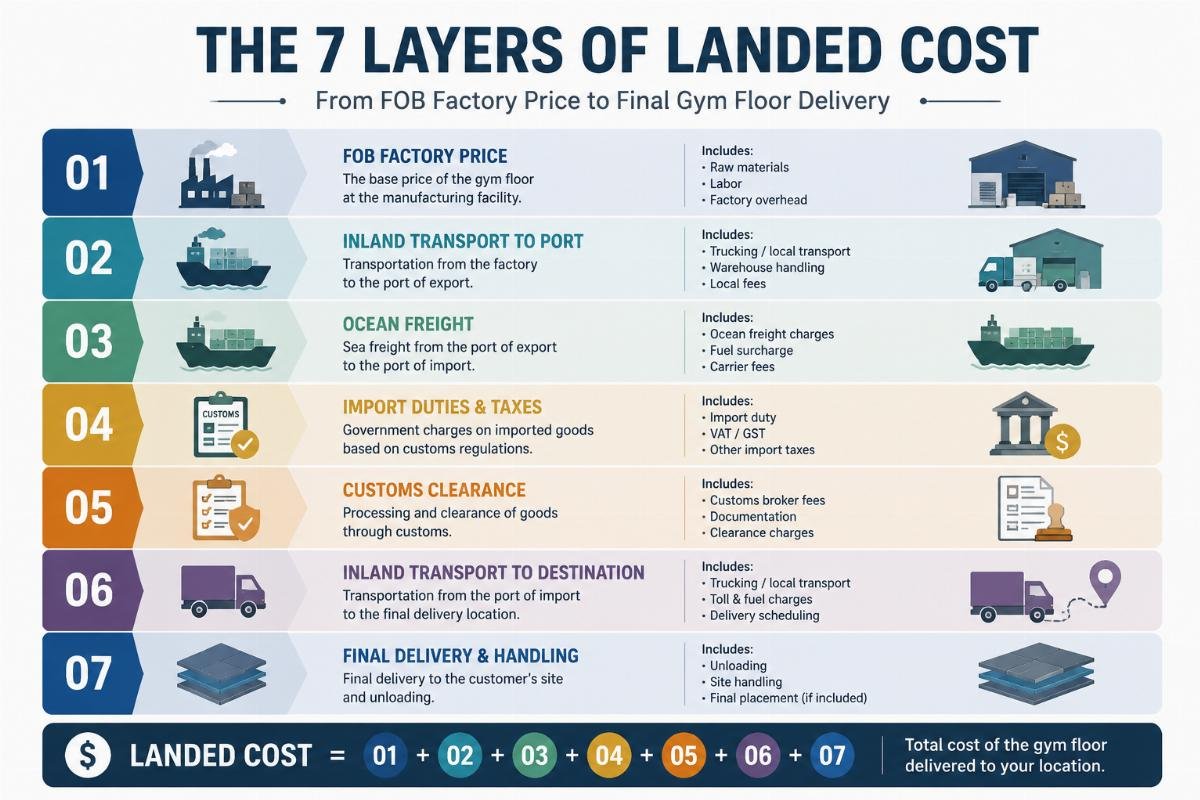
Landed cost is the only number that matters, and it is built from seven additive layers sitting on top of the FOB price.
Here is the formula I use with every Canadian buyer, in the order the costs actually accrue:
- FOB price — the factory gate cost including standard export packaging.
- Ocean freight — varies by origin port in Shandong (Qingdao is the primary outbound point) and destination port (Vancouver, Prince Rupert, or Montreal via all-water or intermodal routing).
- Marine insurance — typically a modest percentage of the combined FOB and freight value.
- CBSA customs duty — determined by the HS code classification for motorized treadmills. Canada’s tariff treatment for this category is not the highest bracket, but it is not zero either, and the rate depends on whether any preferential trade arrangement applies [NEED_CITE: CBSA customs tariff schedule for fitness equipment under HS 9506.91].
- GST or HST — applied on the value for duty, which includes the FOB price, freight, and duty combined. This is recoverable for registered businesses but still hits cash flow at the border.
- Inland drayage and delivery — port to warehouse, or port to final site if the carrier offers inside delivery. This line item is where surprises happen, especially for locations outside major metropolitan corridors.
- Assembly, calibration, and commissioning — commercial treadmills arrive partially assembled in a crate; someone has to uncrate, position, level, belt-tension, and electronics-check every unit.
A common mistake is to treat duty and tax as a single blob. They are not. Duty is calculated on the FOB-plus-freight value. GST or HST is calculated on the FOB-plus-freight-plus-duty value. The compounding effect is small per unit but becomes material across a full container.
Another mistake is underestimating inland delivery. I have seen buyers in western Canada get a freight quote to Vancouver that looked extremely competitive, only to discover that the final-mile delivery to a gym in a secondary market added a per-unit cost that erased most of the savings versus buying locally. The lesson is to get the full chain quoted, not just the ocean leg.
When you add all seven layers, the commercial treadmill price in Canada shifts from a factory number to a true door-cost number — and that is the number you should be comparing against any dealer quote [NEED_CITE: total landed cost methodology for imported fitness equipment into Canada].
Does Buying Direct from China Actually Save Money vs Canadian Dealers?
The answer depends entirely on your order volume and how you fill the container.
I break this into three scenarios based on what I have actually shipped and what I have seen buyers experience:
Scenario A — A handful of units, shipped as LCL (less than container load). This is where the math gets ugly. LCL shipments carry consolidation fees, deconsolidation fees at destination, and often higher per-CBM freight rates. Add in the CBSA clearance fees for a smaller shipment and the drayage for a partial load, and the per-unit landed cost can creep uncomfortably close to — or even exceed — what a Canadian dealer charges for the same model delivered to your door. The dealer’s markup suddenly looks like a convenience fee rather than a rip-off.
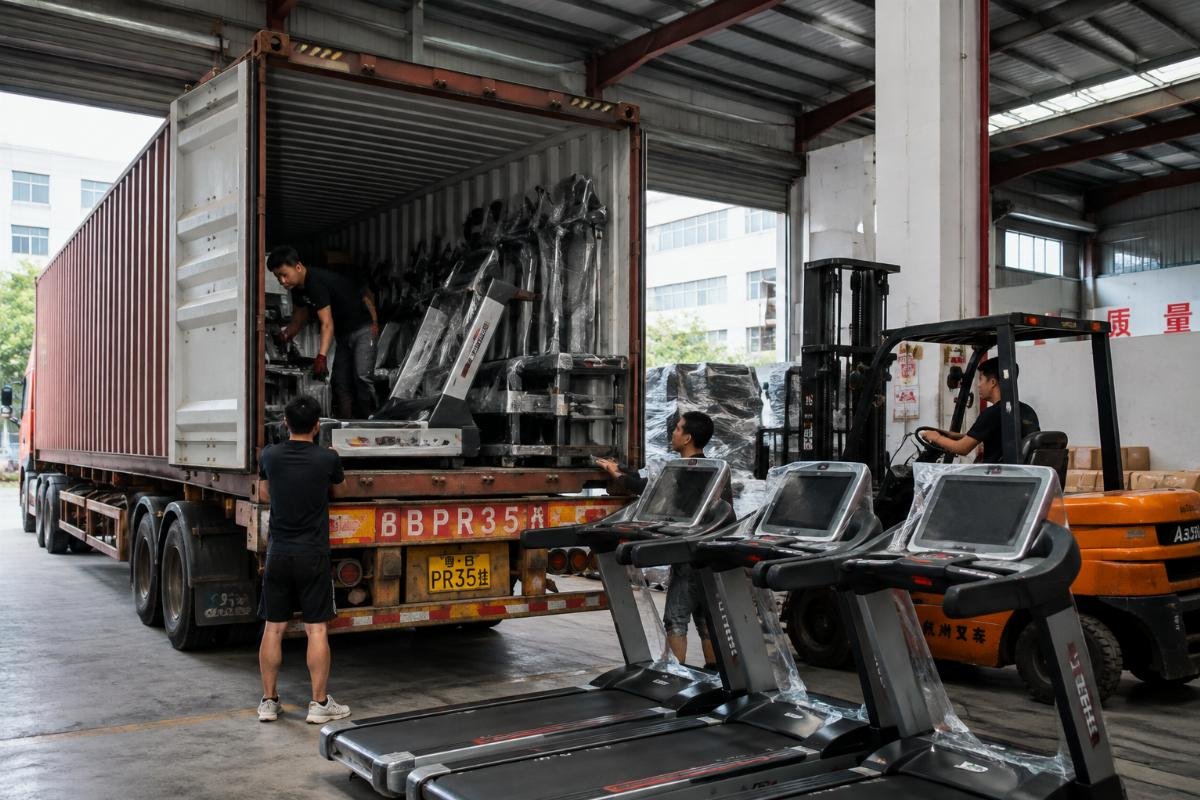
Scenario B — A shared container, mixed with other equipment. This is the sweet spot for smaller gyms, hotel projects, and emerging studios. You fill a container with treadmills, ellipticals, bikes, and perhaps some plate-loaded strength machines. The freight cost per treadmill drops substantially because the container is fully utilized. The duty and tax are still applied per unit, but the freight and clearance costs are amortized across a broader equipment package. In this scenario, the per-unit treadmill cost versus buying from a Canadian dealer drops noticeably — often by a meaningful margin — and you also gain the advantage of selecting exact specifications rather than accepting whatever the dealer keeps in stock.
Scenario C — A full container dedicated to treadmills, or a multi-container order for a chain rollout. This is where the economics become overwhelmingly favorable for direct import. The per-unit freight cost reaches its lowest point. The factory can offer volume-based pricing that sits at the bottom of the FOB range. And because you are ordering at scale, the manufacturer can include a spare-parts package — drive belts, deck lubricant, console fuses, lower control boards — in the same container at marginal additional cost, which protects your operational uptime for months or even years.
I have worked with a regional distributor in British Columbia on their first full-container order. They had been buying from a domestic master distributor and were frustrated by limited model availability and long backorder lead times. We structured a mixed-model container — several heavy-duty club treadmills, a batch of mid-range units for their apartment-client projects, and a selection of light commercial models for boutique studio accounts. The MOQ threshold was flexible enough to accommodate the mixed SKU request, and the OEM branding option meant they could apply their own dealer label across the entire range. From initial inquiry to container arrival at their Surrey warehouse, the timeline was measured in a matter of weeks, not months. Their per-unit landed cost on the treadmill line came in well below what they had been paying the master distributor, and they finally had inventory control in their own hands.
The commercial treadmill price in Canada, when sourced through direct import at the right volume, consistently undercuts dealer pricing — but only if you respect the container economics [NEED_CITE: comparative cost analysis of direct import versus domestic dealer channels for commercial fitness equipment in Canada].
What Specs and Certifications Matter for Canadian Commercial Treadmill Pricing?
The spec sheet is where the price tag is actually written, and Canadian buyers need to pay attention to a few details that do not always appear in a generic catalog listing.
Here is what moves the price within each tier:
| Spec Factor | Impact on Price | What to Verify for Canadian Market |
|---|---|---|
| Motor type and continuous HP | High — AC motors and high-output DC motors command a premium over basic DC units | Confirm continuous duty HP, not peak HP; marketing materials often inflate the number |
| Running deck dimensions | Moderate to high — wider and longer decks require more material and a heavier frame | Minimum deck width and length should match your tallest and widest expected user base |
| User weight capacity | Moderate — higher capacity requires reinforced deck supports and heavier-duty rollers | Look for the rated capacity, not the implied capacity; commercial-grade should handle heavy users comfortably |
| Cushioning system | Low to moderate — proprietary cushioning adds cost but reduces joint impact and long-term deck wear | Test or request demo feedback; cushioning quality affects both user retention and belt replacement frequency |
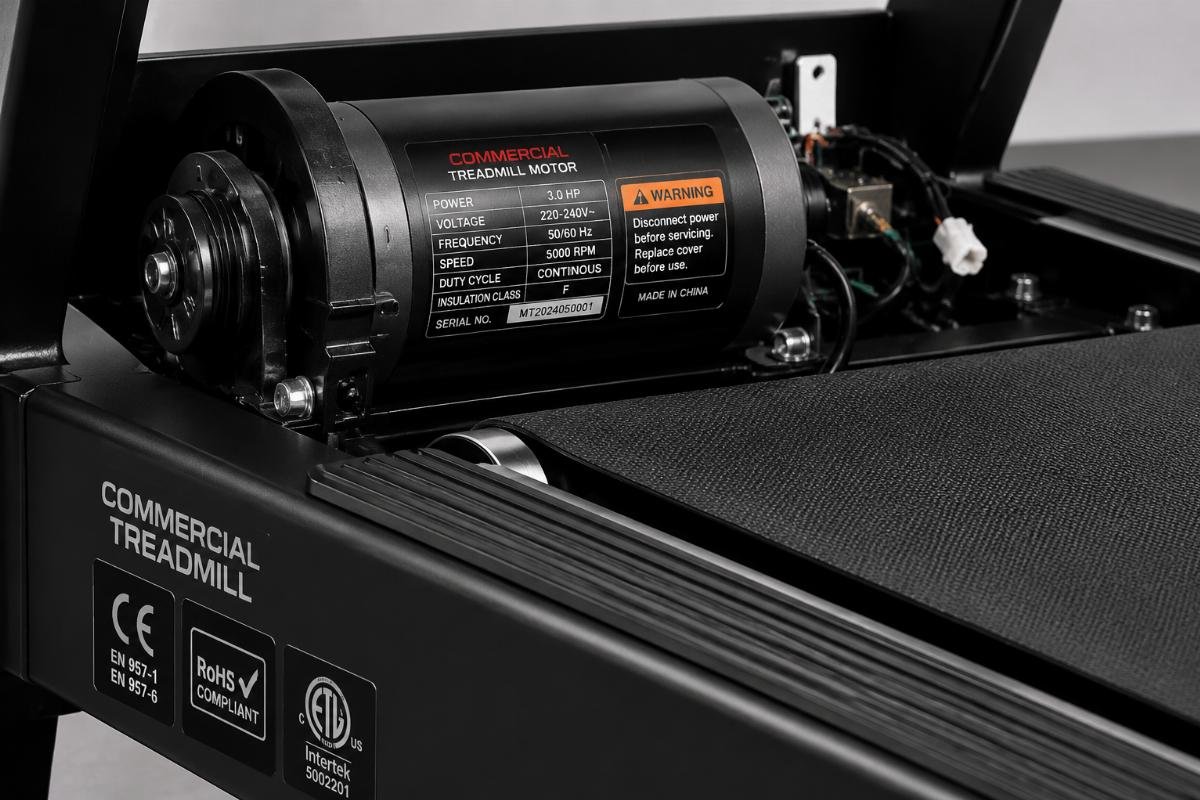
| Electrical certification | High — CSA or UL listing is effectively mandatory for commercial installations in Canada | Without proper certification, your insurance may not cover the equipment and your municipal inspection may fail [NEED_CITE: Canadian electrical code requirements for commercial fitness equipment certification] |
| Console and connectivity | Moderate — integrated screens, heart-rate telemetry, and app connectivity add cost | Decide whether your users actually need premium consoles or whether a simpler unit with a tablet holder suffices |
The electrical certification point deserves special emphasis. I have seen shipments held up — or worse, rejected at the inspection stage — because the treadmill’s motor controller or power supply lacked the CSA or UL mark that Canadian inspectors expect in a commercial setting. The factory price difference between a non-certified unit and a certified unit is modest relative to the total landed cost, but the consequence of shipping a non-certified unit is catastrophic: the equipment sits in your warehouse, unusable, while you figure out whether retrofit certification is even possible.
Similarly, the motor specification is a frequent source of confusion. Some manufacturers quote peak HP, which is the number the motor can hit for a few seconds under ideal conditions. Canadian commercial buyers should insist on continuous duty HP, which is what the motor can sustain through hours of back-to-back use in a gym environment. The price difference between a treadmill built around a continuous-duty motor and one built around a peak-rated motor is real, and it shows up in long-term reliability far more than it shows up in the initial invoice.
When you align the spec sheet with the actual demands of your facility, the commercial treadmill price in Canada becomes a function of informed selection rather than guesswork [NEED_CITE: commercial treadmill specification standards and certification requirements for the Canadian market].
How to Get an Accurate Quote and Avoid Hidden Costs?
The quality of your quote depends entirely on the quality of the information you give the manufacturer before the quote is written.
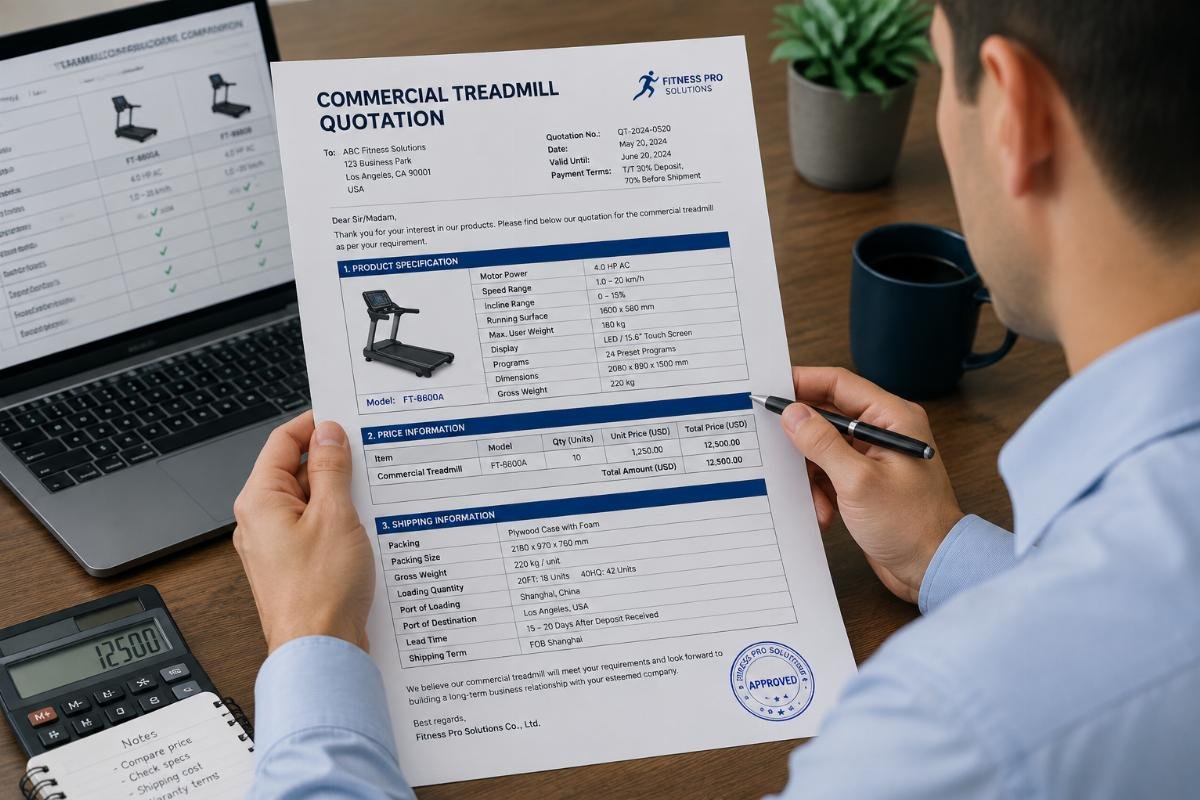
I have processed quotes where the buyer sent a single line — "price for commercial treadmill" — and then spent the next several rounds of emails clarifying everything from voltage to destination port. And I have processed quotes where the buyer provided a structured request upfront, and the first draft of the quotation was essentially final. The difference is not just efficiency; it is risk reduction.
Here is what a well-structured inquiry should include:
- Quantity and SKU mix — how many units, and which models or spec tiers. If you are unsure about the exact model, specify the intended use case (e.g., high-traffic commercial gym, hotel fitness room, boutique studio) and let the manufacturer recommend.
- Container strategy — are you looking for a full dedicated container, a shared container with other equipment, or an LCL shipment? This single decision reshapes the per-unit freight cost more than almost any other factor.
- Destination port and final delivery address — Vancouver, Prince Rupert, Montreal, or another port? And is the final site in a major metro area or a secondary market? Both answers affect the freight and drayage components of the landed cost.
- Electrical standard and certification requirement — Canadian commercial installations require specific voltage and frequency compatibility, and CSA or UL certification is expected. State this upfront so the quotation includes the correct electrical configuration and certification cost.
- Spare-parts and warranty packaging — do you want a spare-parts kit included in the container? What is the warranty expectation, and how will warranty claims be handled — through local technician support, through shipped replacement parts, or through a combination?
- Branding requirements — if you are a distributor or a chain that wants OEM branding on the console, shroud, or packaging, this needs to be in the initial request so the quotation reflects any tooling or labeling costs.
A buyer in eastern Canada once reached out after receiving a quotation from another supplier that looked exceptionally low. The problem was that the quotation was based on a non-certified electrical configuration, excluded the spare-parts package, and assumed delivery to the port only — not to the buyer’s warehouse several hundred kilometers inland. By the time all the missing pieces were added, the price had climbed substantially, and the buyer had lost weeks of procurement time. The lesson is simple: a low initial number is not a low final number unless the scope is fully defined.
When you approach the quotation process with this level of clarity, the commercial treadmill price in Canada stops being a source of anxiety and becomes a manageable, predictable input to your project budget [NEED_CITE: best practices for requesting accurate quotations on imported commercial fitness equipment].
Conclusion
The commercial treadmill price in Canada is not a single number — it is a chain of costs, and the chain is only as strong as its least understood link. From the factory floor in Shandong to the gym floor in Toronto, Calgary, or Vancouver, every layer — FOB, freight, duty, tax, drayage, assembly — adds to the final figure. Buyers who calculate the full landed cost, choose the right container strategy for their volume, verify Canadian electrical certifications, and request quotations with complete specifications will consistently arrive at a better outcome than those who fixate on the factory price alone. The gap between a well-sourced direct import and a domestic dealer purchase is real, but it rewards informed buyers, not just aggressive negotiators.