Buy Gym Equipment Container Discount | Wholesale Supplier MOQ
Full container pricing is never a flat discount off retail—it is a dynamic range shaped by how tightly you pack, how you mix categories, and how you structure payment.
Buying gym equipment in full container loads saves buyers substantially versus retail or mixed LCL shipments, with real landed-cost reductions driven by container density optimization, category blending, and FOB negotiation—not simply by ordering more units. A 40ft high-cube container, when loaded with the right equipment mix, delivers the lowest per-unit freight and duty cost, turning a standard wholesale gym equipment container discount into a structural cost advantage over piece-by-piece importing.
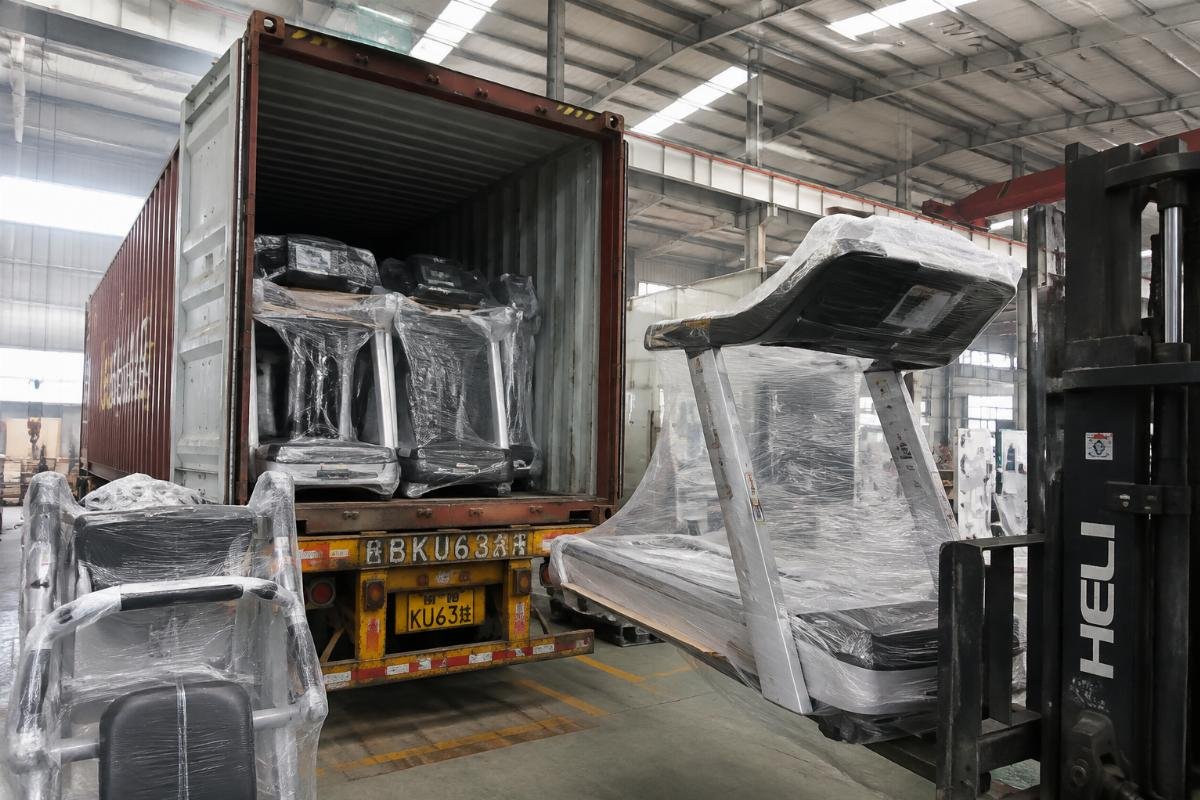
I still remember standing at Qingdao port watching a forklift tilt a 40ft high-cube, the doors swinging open to reveal two commercial ellipticals with their base frames buckled inward. The buyer—a gym owner in the Middle East—had hand-picked the SKU list himself, stacking heavy plate-loaded machines on top of tall cardio units without calculating weight distribution or center of gravity. The damage wiped out the entire margin he expected from the wholesale gym equipment container discount he had negotiated. That container became a textbook case I now walk every new client through before a single piece of gear is loaded. [NEED_CITE: ISO 668 container loading weight distribution standards for freight integrity]
What follows is the framework I use to turn a standard container order into a genuine wholesale gym equipment container discount, covering how the pricing actually works, how to mix equipment for maximum density, how to avoid the loading mistakes that erase savings, and how to negotiate terms that protect cash flow.
What Does "Container Discount" Actually Mean for Gym Equipment?
A wholesale gym equipment container discount is not a fixed percentage taken off the retail price—it is a variable outcome determined by container density, category mix, and payment structure.
Most first-time importers assume that ordering a full container automatically unlocks a set discount, the way buying bulk raw materials does. Gym equipment does not work that way. Factories price by SKU, and the "container-level" discount is really a combination of three separate levers: how many sellable units fit into the cube, how those units are grouped across categories, and what payment rhythm the buyer agrees to. [NEED_CITE: factory-direct pricing structure for commercial fitness equipment versus retail markup]
The first lever is density. A 40ft high-cube offers roughly 67 cubic meters of usable space and a gross weight ceiling in the mid-twenties metric tons. A treadmill shipped in its retail carton occupies far more cube than the same treadmill shipped partially disassembled on an iron pallet. The difference between the two loading methods directly changes how many units share the container freight, and therefore the per-unit landed cost.
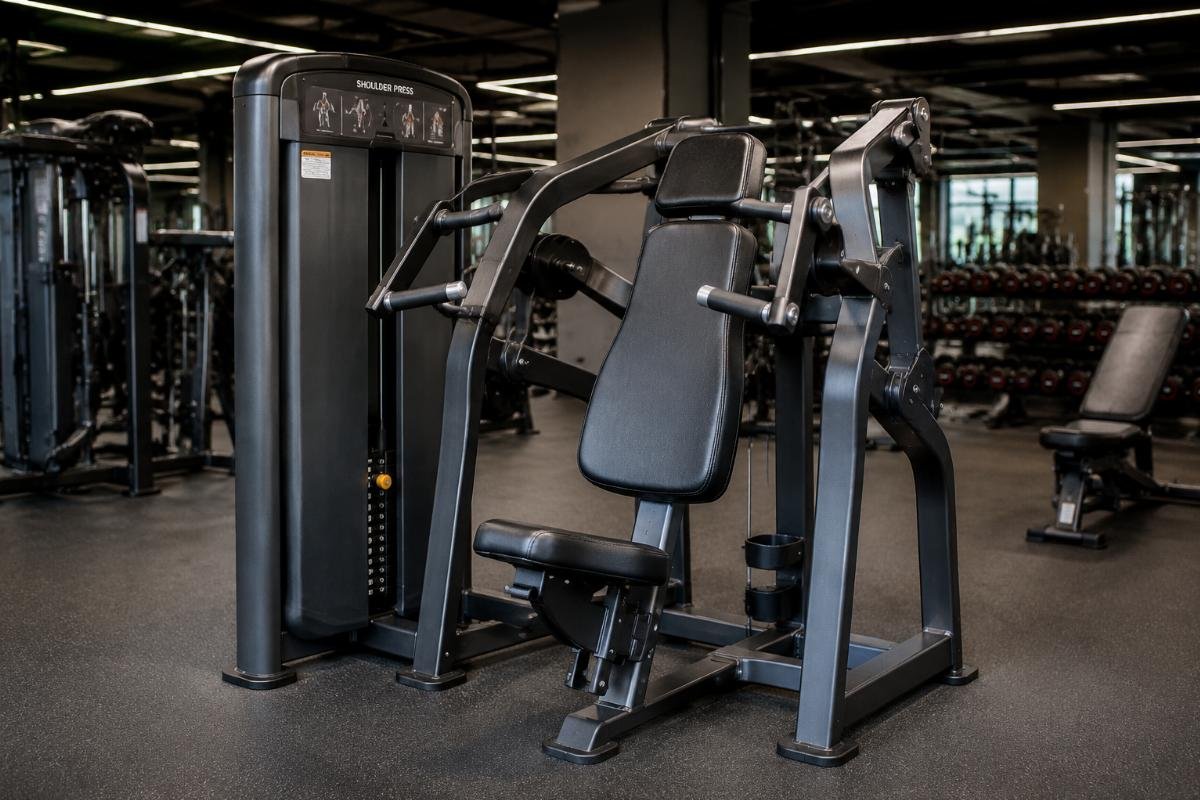
The second lever is category mix. Commercial treadmills and ellipticals are volume-heavy but relatively light per unit. Plate-loaded strength machines, Smith machines, and dumbbell sets are dense and heavy but compact. Free-weight accessories—plates, bars, kettlebells—can fill voids under benches and between frames. A container loaded only with cardio equipment hits the cube limit long before it hits the weight limit, wasting payload capacity. A container loaded only with iron plates hits the weight limit long before the cube is full, wasting space. The wholesale gym equipment container discount materializes when both limits are approached together.
The third lever is payment structure. A 30 percent deposit with the balance paid against the bill of lading copy is standard practice, but factories will adjust unit pricing based on whether the buyer accepts a sight L/C, a deferred L/C, or open account terms on repeat orders. Cash-flow flexibility here often matters more to the final unit price than the headline discount percentage. [NEED_CITE: typical payment term structures in commercial fitness equipment export trade]
| Pricing Lever | What It Controls | Weak Execution | Strong Execution |
|---|---|---|---|
| Container Density | Per-unit freight share | Retail-carton loading | Partial-disassembly iron pallet |
| Category Mix | Cube-to-weight balance | Single-category load | Cardio + strength + free-weight blend |
| Payment Terms | Unit price adjustment | 100 percent upfront | 30/70 BL copy or L/C |
A distributor in West Africa once came to me after his first container arrived with a wholesale gym equipment container discount that looked excellent on paper but delivered almost no real savings. He had filled the container with selectorized machines only—every unit heavy, every unit compact. The container maxed out on weight at roughly half its cube capacity. The freight cost per sellable unit was nearly double what it would have been with a mixed load. The discount he negotiated was real, but the wasted cube erased it.
How to Calculate Real Savings: Retail vs Container Load Pricing
The headline factory price for a full container sits well below retail, but the true wholesale gym equipment container discount only appears after ocean freight, customs duty, inland transport, and port charges are deducted.
Retail pricing for commercial-grade cardio and strength equipment carries distributor margins, local warehousing costs, and after-sales overhead. Factory-direct container pricing strips most of that away, but importers who only compare the factory invoice to the retail tag are in for a surprise when the goods reach their warehouse. The real comparison must be landed cost to landed cost. [NEED_CITE: commercial gym equipment landed cost components including freight duty and inland haulage]
Ocean freight for a 40ft high-cube fluctuates by route and season, but the per-unit share of that freight is what matters. A container carrying a small number of high-value treadmills allocates a large freight share to each unit. A container packed with benches, racks, and plates allocates a tiny freight share to each unit because the unit count is high. This is why the wholesale gym equipment container discount is structurally larger for accessory-heavy orders than for cardio-heavy orders, even though the factory unit price on accessories is already low.
Customs duty is the second variable most buyers underestimate. Gym equipment does not fall under a single HS code. Commercial treadmills, cable crossover machines, adjustable benches, and rubber dumbbells each carry different tariff classifications, and the rates vary meaningfully by destination country. A container mix that is not planned with tariff codes in mind can push the effective duty rate higher than necessary. [NEED_CITE: HS code classification differences across cardio strength and free-weight gym equipment]
Inland transport from port to warehouse adds a third layer. A container that exceeds legal road weight limits in the destination country must be deconsolidated at the port and moved in smaller loads, multiplying inland cost. I have seen buyers in regions with strict axle-weight enforcement pay for a second truck because their container was loaded with nothing but iron plates—technically under the ocean freight weight ceiling, but far over the road limit for the final leg.
| Cost Layer | Retail / LCL Import | Full Container Import |
|---|---|---|
| Factory Unit Price | High | Noticeably reduced |
| Ocean Freight per Unit | High | Substantially reduced |
| Customs Duty Rate | Varies by HS code | Optimizable by mix |
| Inland Haulage | Multiple shipments | Single shipment if weight compliant |
| Landed Cost per Unit | Baseline | Meaningfully lower with correct mix |
A hotel developer in Southeast Asia was outfitting a chain of apartment buildings and initially planned to buy cardio from one supplier, strength from another, and accessories from a third—three separate LCL shipments. When we ran the numbers as a single consolidated container, the wholesale gym equipment container discount on the combined order, plus the elimination of three separate freight bookings and three separate customs clearances, brought the per-unit landed cost down to a level that let him add an extra bench and dumbbell set to every gym room without increasing his total budget.
What Is the Optimal Equipment Mix for a 40ft Container?
The highest-value wholesale gym equipment container discount comes from a load that approaches both the cube limit and the weight limit simultaneously, using heavy compact items as the base, disassemblable cardio as the mid-layer, and free-weight accessories to fill every void.
The internal dimensions of a standard 40ft high-cube are fixed, but how those dimensions are used varies enormously by loading plan. The goal is to treat the container as a three-dimensional puzzle where weight goes low and centered, volume goes around and above, and gaps disappear. [NEED_CITE: internal dimensions and payload capacity of ISO 40ft high-cube shipping container]
The base layer should be the densest items in the order: weight plates, dumbbell sets, kettlebells, and the base frames of plate-loaded machines. These items are heavy relative to their cube and should sit directly on the container floor, centered over the axle line. This keeps the center of gravity low and prevents shifting during ocean transit.
The mid layer is where disassembled cardio equipment belongs. Commercial treadmills shipped with the console and motor cover removed, and upright bikes shipped with the seat post and handlebar detached, occupy a fraction of the cube they would in retail packaging. These units stack on top of the base layer, secured with straps and edge protectors. Ellipticals are trickier—their height and irregular shape make them vulnerable to compression damage if heavy items are placed on top. They belong against the container walls, upright, not flat.
The top layer and all residual gaps are filled with free-weight accessories, benches (disassembled where possible), functional training items like plyo boxes and medicine balls, and bundled resistance bands. These items are light but cube-hungry, and they are the difference between a container that is legally full and one that is economically full.
| Equipment Category | Cube Profile | Weight Profile | Recommended Position |
|---|---|---|---|
| Plate-loaded machines, Smith machines | Compact | Heavy | Base layer, centered |
| Free-weight plates, dumbbells, kettlebells | Very compact | Very heavy | Base layer, floor level |
| Treadmills, upright bikes (disassembled) | Moderate | Moderate | Mid layer, above base |
| Ellipticals, recumbent bikes | Tall, irregular | Moderate | Upright, against walls |
| Benches, cable attachments, accessories | Bulky | Light | Top layer and gap fill |
A gym chain operator in the Middle East initially wanted to fill his container with nothing but commercial treadmills and ellipticals—high-ticket items, strong retail demand. The loading plan showed the container would hit the cube limit with roughly half the allowable weight onboard. We restructured the order to add a full set of plate-loaded machines for the back half, power racks for the mid section, and dumbbell sets with rubber flooring rolls to fill every remaining gap. The wholesale gym equipment container discount on the restructured order was not dramatically different at the factory level, but the per-unit landed cost dropped noticeably because the freight was now shared across a much larger unit count.
How to Avoid Costly Loading Mistakes That Erase Your Discount?
The most common loading errors—poor weight distribution, incorrect disassembly sequence, and inadequate moisture protection—can destroy equipment on arrival and turn a profitable wholesale gym equipment container discount into a total loss.
Damage in transit is rarely random. It follows predictable patterns tied to how the container was loaded, and almost every claim I have processed traces back to one of three mistakes.
The first is center-of-gravity error. When heavy plate-loaded machines are loaded at the rear of the container and light cardio at the front, the weight shifts during braking and acceleration on the truck leg, and the container can literally tilt on the chassis at port. Worse, when heavy items are stacked on top of tall cardio frames—as in the Middle East case I opened this article with—the compressive force during vessel stacking crushes the weaker structure underneath. Elliptical base frames and treadmill side rails are the most common casualties. [NEED_CITE: container cargo securing guidelines for mixed heavy and tall freight]
The second is disassembly error. Removing the wrong components to save cube can render a machine unusable on arrival. I have seen consoles detached without labeling the wiring harnesses, motor covers removed and packed separately from their mounting bolts, and adjustable bench frames separated from their adjustment pins. The equipment arrives intact but cannot be reassembled without a service call, and the buyer pays for missing hardware out of his own stock.
The third is moisture damage. Ocean transit through tropical routes exposes the container interior to condensation cycles that can rust bare metal surfaces and warp MDF packaging. Free-weight plates with bare cast-iron finishes, chrome-plated guide rods on selectorized machines, and unpainted frame welds are all vulnerable. Silica gel packs inside individual cartons help, but the container-level defense is a full lining of kraft paper or a desiccant pole system hung from the ceiling rails. [NEED_CITE: container condensation prevention methods for metal fitness equipment during ocean freight]
| Loading Mistake | Typical Damage | Prevention |
|---|---|---|
| Heavy items on top of tall cardio | Crushed frames, bent base plates | Heavy items at floor level only |
| Unlabeled disassembly | Unreassembleable machines, missing hardware | Photo log and labeled hardware bags |
| No moisture protection | Surface rust, warped packaging | Desiccant poles and kraft lining |
| Rear-heavy weight distribution | Container tilt during road transport | Center weight over axle line |
A distributor in East Africa received a container where every chrome guide rod on the selectorized machines had surface rust, despite the cartons looking intact on the outside. The loading team had skipped the desiccant poles to save a small amount on materials, and the six-week ocean transit through the humid season did the rest. The wholesale gym equipment container discount he had negotiated was entirely consumed by the cost of replacing the guide rods and repackaging the affected units before they could be sold.
What Payment Terms and MOQ Should You Negotiate?
The wholesale gym equipment container discount is not locked in at the first quote—it is shaped by the MOQ structure you accept and the payment terms you negotiate, both of which should be treated as variables rather than fixed conditions.
Factories serving the commercial fitness equipment export market typically work with a tiered MOQ structure. A single-unit order carries the highest unit price. A mixed-SKU order reaching a certain value threshold unlocks a mid-tier price. A full-container order with a balanced mix of cardio, strength, and accessories unlocks the deepest tier. The jump from the mid tier to the full-container tier is where the most meaningful wholesale gym equipment container discount sits, and it is the tier most serious buyers should target. [NEED_CITE: MOQ tier structures in commercial fitness equipment factory pricing]
For first-time buyers, the common concern is whether a full container commitment is required on day one. It is not. A practical approach is to place an initial order of several high-demand SKUs—enough to test the market response and the factory’s quality consistency—then scale to a full container once the product is validated. The unit price on the initial order will be higher, but the risk is meaningfully lower, and the data gathered from that order informs the container mix for the second purchase.
Payment terms on full-container orders typically follow a deposit-against-production model. A standard structure is a deposit at order confirmation, with the balance due against the bill of lading copy before the original documents are released. For repeat buyers with established credit, deferred payment terms or L/C arrangements become negotiable, and these terms directly influence the unit price the factory is willing to offer. A buyer who can accept a sight L/C from a recognized bank will generally receive a better unit price than a buyer requesting open-account terms, because the factory’s cash-flow risk is lower. [NEED_CITE: standard payment term models in fitness equipment export transactions]
A boutique studio owner in Latin America started with a partial-container order of functional training gear—battle ropes, plyo boxes, kettlebells, and a single power rack. The unit price was above the full-container tier, but the order let him test supplier responsiveness, packaging quality, and product durability across several months of heavy use. When he returned for a full container six months later, the wholesale gym equipment container discount on the expanded order—now including cardio and selectorized machines—was substantial enough to fund the studio’s second location from the margin improvement alone.
| Order Stage | Typical MOQ | Unit Price Tier | Risk Level |
|---|---|---|---|
| Initial test order | Partial container, key SKUs | Higher | Noticeably reduced |
| Second order | Full container, proven mix | Mid tier | Moderate |
| Repeat full-container orders | Full container, optimized mix | Deepest tier | Controlled |
Conclusion
A genuine wholesale gym equipment container discount is engineered through density, mix, and terms—not simply claimed by ordering more. The landed-cost advantage of a full container over retail or LCL import is substantial, but only when the load is planned with weight distribution, category balance, and tariff classification in mind. Loading mistakes erase savings faster than any negotiation can create them, and payment structure is a pricing lever that most buyers leave on the table. Treat the container as a system, not a shopping cart, and the discount follows.