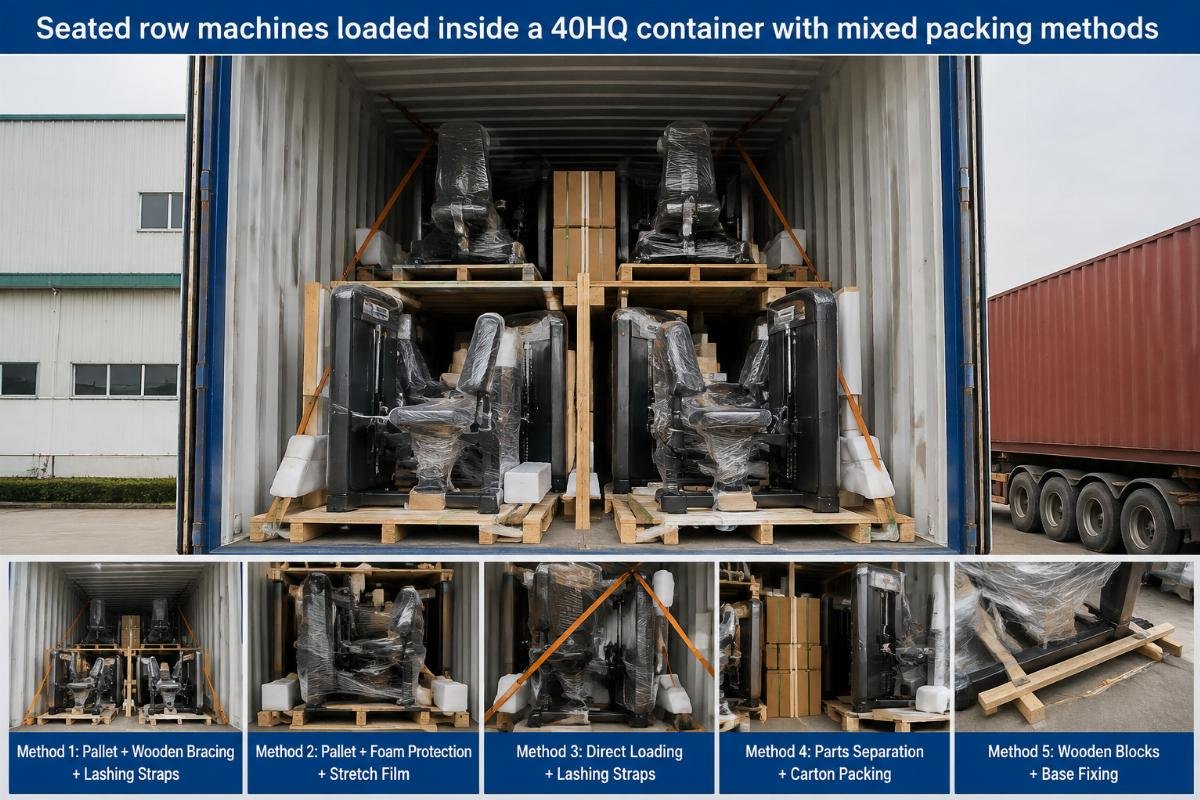
Commercial Gym Flooring Rubber Tiles Supplier for Ethiopia Customs Clearance
Most buyers think closing a CIF deal is the finish line. In Ethiopia, it is barely the starting gun.
The mandatory document package for gym rubber flooring entering Ethiopia includes: commercial invoice, packing list, bill of lading, certificate of origin, VOC/COC certificate, CCPIT-authenticated invoice, and bonded transit declaration for Djibuti-to-inland dry port movement. Missing any single item triggers cargo hold at Demidolo or Modjo dry ports, where daily demurrage compounds until paperwork is rectified.
I have stood inside the Demidolo customs compound watching containers of gym equipment and rubber flooring sit for weeks because someone back in the procurement chain assumed a standard invoice was enough. One particular shipment — a mixed container of commercial treadmills, plate-loaded machines, and rubber floor tiles destined for a new fitness center in Addis Ababa — got flagged the moment it hit the inland dry port. The commercial invoice had never gone through CCPIT authentication, and the certificate of origin carried only the manufacturer’s name instead of the dual-header format Ethiopian customs demands. The importer was days away from a scheduled gym opening. Storage fees ticked upward every single day. It took roughly three weeks of scrambling to get corrected documents approved and released. Since that job, every Ethiopia-bound fitness equipment and flooring order I handle goes through a document pre-check before the container doors are sealed. HS codes, VOC certification, invoice authentication — none of it gets left to chance. [NEED_CITE: Ethiopian Customs Commission import documentation requirements for rubber and sports flooring products]
Getting the paperwork right is not a bureaucratic formality. It is the single biggest variable between a smooth gym fit-out and a budget-blowing storage nightmare. Let me walk through each document layer the way I actually check them on the ground.
What Documents Are Mandatory for Gym Rubber Flooring Entering Ethiopia?
A complete pre-shipment file for rubber gym flooring must contain seven core documents: commercial invoice, packing list, ocean bill of lading, certificate of origin, VOC/COC certificate issued under the Ethiopian Conformity Assessment program, CCPIT-authenticated commercial invoice, and the bonded transit declaration covering Djibuti port to the chosen Ethiopian inland dry port.
Each document serves a distinct checkpoint. The Ethiopian Standards Agency requires a Validity of Conformity or Certificate of Conformity for rubber-based building and sports materials before they clear customs. Without it, the cargo either gets turned back or forced into a destination inspection that adds substantial cost and delay. [NEED_CITE: Ethiopian Standards Agency pre-shipment conformity verification program for rubber and polymer flooring products]
The CCPIT authentication step catches more importers off guard than any other. Ethiopian customs will not accept a plain commercial invoice for valuation purposes. The invoice must be stamped and legalized by the China Council for the Promotion of International Trade before the vessel sails. I have seen shipments arrive at Djibuti with perfectly valid invoices — accurate pricing, correct Incoterms, proper item descriptions — yet still get rejected at the valuation desk because the CCPIT seal was absent. The fix is not complicated, but it must happen before departure. Once the ship has left, retroactive authentication becomes a slow, expensive headache.
The certificate of origin requires particular attention to the header format. Ethiopian customs expects a dual-header showing both the actual manufacturer and the trading entity issuing the invoice. A single-header certificate of origin — listing only the factory or only the exporter — gets rejected outright. This is not a gray-area interpretation. The dry port customs officers apply it strictly.
A Middle East fitness chain operator once ordered a full commercial gym package including heavy-duty rubber flooring tiles. The certificate of origin was prepared in the standard single-header format. When the container reached the Modjo dry port, customs refused to process the entry. The importer had to request a corrected certificate from the issuing authority in China, wait for it to be re-issued with dual headers, courier it to Djibuti, and then submit it for re-assessment. The entire cycle consumed weeks of dead time while the gym’s construction sat idle and storage fees accumulated at a daily rate.
How to Correctly Classify HS Codes for Rubber Gym Tiles?
Rubber gym flooring generally falls under HS heading 4016.91 as floor coverings of vulcanized rubber, while interlocking exercise mats designed primarily for sports use may be classified under 9506.91 as sports equipment accessories — the boundary depends on material composition, end-use declaration, and physical construction.
This classification choice directly determines the import duty rate. Getting it wrong does not just cause a paperwork correction — it can push the cargo into a higher tariff bracket, raising the landed cost noticeably.
The core distinction rests on whether customs views the product as a general-purpose rubber floor covering or as specialized sports equipment. A thick, heavy-density rubber tile made from recycled SBR and virgin rubber granules, designed for commercial gym floors, weight rooms, and cross-training areas, typically fits 4016.91. An interlocking EVA or thin rubber mat marketed explicitly as exercise equipment may fall under 9506.91. [NEED_CITE: World Customs Organization HS classification principles for rubber floor coverings versus sports equipment accessories]
Ethiopian customs officers at inland dry ports will re-examine the HS code declared on the entry document against the physical goods. If the product looks like a rubber floor tile but was declared under a sports equipment code — or vice versa — they will reclassify it. The reclassification often lands on the higher-duty heading. I watched a hotel fitness center project get hit with this exact issue. The rubber flooring tiles were declared under a code that attracted a lower duty assumption, but the physical inspection showed a dense vulcanized rubber product. Customs reclassified the entire batch under 4016.91, and the duty rate jumped to a materially higher tier. The importer absorbed the difference, which erased a meaningful portion of the project margin.
The safe approach is to align the HS code with the product’s physical characteristics and the manufacturer’s technical data sheet before the shipment leaves China. If the rubber tiles are vulcanized, dense, and intended as permanent or semi-permanent gym flooring, 4016.91 is the defensible classification. If they are thin, lightweight, interlocking foam-rubber mats sold as portable exercise accessories, 9506.91 may apply. When in doubt, request a pre-shipment classification opinion from a licensed Ethiopian customs broker. The cost of that opinion is trivial compared to a tariff jump at the dry port.
Why Does CCPIT Authentication Matter and How to Prepare It Before Shipment?
CCPIT authentication converts a standard commercial invoice into a customs-acceptable valuation document for Ethiopian import clearance — without it, the cargo cannot clear, regardless of how accurately the invoice is prepared.
The process itself is straightforward but time-bound. The exporter submits the original commercial invoice along with supporting documents to the local CCPIT office. The council verifies the signatory’s authority, stamps the invoice, and returns it for inclusion in the shipment document package. The typical turnaround runs several working days, which means the authentication request must be initiated well before the container loading date.
The consequences of skipping or delaying this step are severe and entirely avoidable. Ethiopian customs valuation officers rely on CCPIT-authenticated invoices to assess the transaction value for duty calculation. A non-authenticated invoice is treated as insufficient evidence of value. The customs officer may then apply a reference price — often higher than the actual transaction price — or simply hold the cargo until a compliant document arrives.
A fitness equipment distributor in East Africa learned this the hard way on a gym flooring order. The invoice was accurate, the pricing was honest, and the Incoterms were correctly stated. But the authentication step was treated as an afterthought. The document was not submitted to CCPIT until after the vessel had departed. Getting it authenticated post-shipment required courier logistics, coordination between the exporter, CCPIT, and the importer’s clearing agent at Djibuti, and ultimately a waiting period that stretched into weeks. During that window, the container occupied space at the dry port, and demurrage charges mounted daily.
The practical fix is to build CCPIT authentication into the pre-shipment timeline as a non-negotiable milestone. The invoice should be finalized, submitted to CCPIT, authenticated, and scanned back to the clearing agent before the container is gated at the loading port. This eliminates the risk of post-departure document gaps.
What Transit Paperwork Is Needed from Djibuti Port to Ethiopian Inland Dry Ports?
Cargo arriving at Djibuti port bound for Ethiopia must move under a bonded transit declaration — officially the Bonded Transit Declaration — which seals the cargo under customs bond from the port of entry to the designated inland dry port, whether Demidolo, Modjo, or another facility.
Without this transit document, the cargo is treated as un-bonded import goods sitting on Djibuti soil. Ethiopian customs cannot process the entry at the inland dry port because the chain of custody from the port of entry was never formally established. The result is a secondary inspection at the dry port, added handling fees, and further delay.
The transit declaration must accurately reflect the container number, seal number, declared HS codes, total value, and the specific inland dry port where clearance will occur. Any mismatch between the transit declaration and the bill of lading or the commercial invoice creates a discrepancy flag. Customs officers at the dry port will hold the cargo until the discrepancy is resolved.
A common failure point is the seal number. If the container seal is replaced during transit — due to damage, customs inspection at Djibuti, or handling error — and the transit declaration is not updated, the inland dry port officers will refuse to accept the document. The cargo then faces a physical inspection and a re-sealing process before clearance can resume.
I have coordinated transit paperwork for multiple gym equipment and flooring shipments moving through Djibuti. The pattern is consistent: when the transit declaration is prepared correctly before the vessel arrives, the overland movement to the dry port proceeds without incident. When it is prepared hastily or with incomplete data, the cargo gets pulled into a secondary check. The difference in total clearance time is substantial — measured in weeks, not days.
How to Avoid Warehouse Demurrage and Delayed Gym Opening?
The only reliable way to prevent demurrage charges and gym opening delays is to complete a full document pre-check before the container leaves the manufacturer’s facility — verifying HS code alignment, VOC/COC certificate validity, CCPIT authentication status, certificate of origin header format, and transit declaration accuracy in a single consolidated review.
This pre-check should happen at least several working days before the container loading date. The document package should be assembled, reviewed line by line, and shared with the Ethiopian clearing agent for confirmation. Any discrepancy caught at this stage costs nothing to fix. The same discrepancy caught at the dry port costs daily storage fees, re-submission logistics, and lost gym opening revenue.
A fitness facility developer in the Horn of Africa region once ordered a complete commercial gym package — cardio machines, strength equipment, free weights, and rubber flooring — from a single supplier. The gym construction was on schedule. The equipment manufacturing was on schedule. But the document package was treated as an administrative afterthought. The VOC certificate was applied for late. The CCPIT authentication was not initiated until the week of shipment. The certificate of origin was issued in single-header format. By the time the container reached the inland dry port, nearly every document required correction. The gym opening was pushed back by weeks, and the accumulated storage and re-documentation costs ran into a mid-five-figure sum.
The lesson is simple: treat the document package with the same rigor as the product specification. A gym flooring order is not complete when the rubber tiles are loaded into the container. It is complete when the clearing agent at the destination dry port confirms that every document is in order and ready for submission.
Working with a manufacturer that understands this document-intensive environment removes a major source of risk. Bick Fitness, as a Shandong-based commercial gym equipment and flooring manufacturer, handles full container loads and mixed gym packages for the African market. The team coordinates VOC/COC certification applications, aligns HS codes with product specifications, manages CCPIT invoice authentication, and prepares transit documentation in parallel with production. This integrated approach ensures that when the container doors close, the paperwork is already cleared for the next stage.
Conclusion
Ethiopia gym flooring customs clearance is won or lost before the container ever reaches Djibuti. Every document in the package — from the HS code to the CCPIT stamp to the transit declaration — must be verified, aligned, and confirmed by the clearing agent before shipment. Products and pricing matter for the gym’s long-term success, but paperwork determines whether the cargo ever reaches the gym floor.