

Buy Strength Equipment Package Best Price 2026
The cheapest per-unit quote on a strength equipment package is almost never the best price.
The real "best price" on a complete strength equipment package is the one where every spec — weight stack pounds, frame tube gauge, upholstery grade, cable rating — is locked line-by-line in the proforma invoice before the deposit clears, so you never pay twice for re-shipments, replacements, or a second container.
I grew up around the fitness equipment factories clustered between Jining and Dezhou in Shandong. My first job was welding frames for plate-loaded machines on the shop floor, and I spent years doing after-sales installation before being pulled into sales because I could actually talk specs with overseas buyers. A few years back, I quoted a full strength equipment package for a gym buyer in West Africa. To move the deal fast, I lumped the selectorized line into the same spec sheet as the plate-loaded machines without locking the weight stack per machine. When the containers landed in Lagos, three of the selectorized units had 150-pound stacks instead of the 200-pound stacks the buyer’s members expected. The client refused to accept them. The sea-freight cost to re-ship replacement stacks ended up being several times the profit on the entire order. That single mistake rewired how I build every strength equipment package quote to this day.
Let me walk you through what a realistic strength equipment package actually looks like in 2026, where the hidden costs hide, and how to structure the deal so the factory-direct price you see is the price you actually pay.
What Should a Strength Equipment Package Actually Include?
A proper strength equipment package covers four functional zones — plate-loaded, selectorized, free-weight, and functional training — not just the machines that photograph well for a brochure.
Most first-time buyers scroll through a factory catalog, pick the machines that look the most "commercial," and call it a package. The problem is that a real commercial gym floor needs balanced muscle-group coverage, and a hotel fitness room needs compact multi-function units, and a distributor loading a 40-foot high-cube container needs SKU density optimized around cubic volume. The same strength equipment package quote will look completely different across those three buyers.
A typical full-gym strength equipment package should include:
- Plate-loaded machines covering chest press, lat pulldown, leg press, shoulder press, row, and at least two isolation units (pec deck, leg extension/curl combo)
- Selectorized stack machines for the same core patterns, with adjustable weight stacks matched to the target user demographic
- A Smith machine or power rack station with barbell and plate storage
- Free-weight zone: adjustable benches, dumbbell sets, Olympic bar sets, and plate trees
- Functional zone: a cable crossover or dual adjustable pulley, plus floor space for kettlebells, battle ropes, and plyo boxes
The exact SKU count shifts with the venue. A mid-size commercial gym in Southeast Asia might run thirty-plus strength SKUs in a single strength equipment package, while a boutique hotel fitness center in the Middle East might compress the same muscle coverage into a dozen multi-function units. The point is that the package is defined by functional coverage, not by how many machines fit on a price list. [NEED_CITE: muscle group coverage ratios per commercial gym design standards]
How Do You Compare Best Price Across Factories Without Getting Tricked?
The only way to compare a strength equipment package quote across factories is a line-by-line spec matrix — frame tube gauge, weight stack increment, cable rating, upholstery foam density, weld type — not a single lump-sum number.
Factories in the same Shandong cluster can quote the same-looking plate-loaded lat pulldown with a price gap that looks impossible until you pull the spec sheets apart. The cheap quote usually hides the savings in three places: thinner frame tube walls, lighter weight stacks, and lower-grade upholstery foam. None of these show up in a catalog photo. All of them show up within months on a busy gym floor.
Here is the comparison matrix I run buyers through before they sign any strength equipment package PI:
| Spec Point | Factory A (Low Quote) | Factory B (Mid Quote) | Factory C (Verified Quote) |
|---|---|---|---|
| Frame tube wall thickness | Basic | Standard | Controlled |
| Weight stack increment | Self-reported | Standard | Verifiable |
| Cable tensile rating | Not provided | Standard | Verifiable |
| Upholstery foam density | Basic | Standard | Controlled |
| Weld finish | Self-reported | Standard | Full batch-level |
| Spare parts list | None | Sample-level | Full batch-level |
[NEED_CITE: frame tube thickness standards per EN 957 / ASTM F2216 strength equipment categories]
A distributor in the Middle East once sent me three quotes for the same twelve-machine selectorized strength equipment package. The lowest quote was noticeably below the other two. When I asked the low-bid factory for the frame tube spec, they replied with a wall thickness that was a full grade thinner than what the other two factories were running. On a leg press that sees heavy loading every day, that wall thickness gap is the difference between a frame that lasts and a frame that flexes within a year. The buyer switched to the mid-tier quote, locked the tube spec in the PI, and avoided a warranty disaster.
The lesson: a strength equipment package quote that looks too good is almost always subsidized by a spec cut somewhere you cannot see from a product photo.
What Are the Hidden Costs That Blow Up Your Budget After the PI?
The three hidden costs that destroy margin on a strength equipment package are wrong weight stacks, missing spare parts, and poor packing that leads to transit damage — and all three are preventable if the PI is written correctly.
My West Africa story at the top of this article is the weight-stack version of this problem. The other two show up just as often.
Missing spare parts is the quiet killer. A commercial gym opening in a city where there is no local fitness equipment service network needs a spare parts kit bundled into the strength equipment package — extra cables, spare upholstery bolts, replacement weight stack pins, selectorized pin guides. If the factory ships the machines without that kit and a cable snaps six months in, the gym is down one machine while waiting for an air-freighted replacement that costs several times what the part would have cost inside the original container.
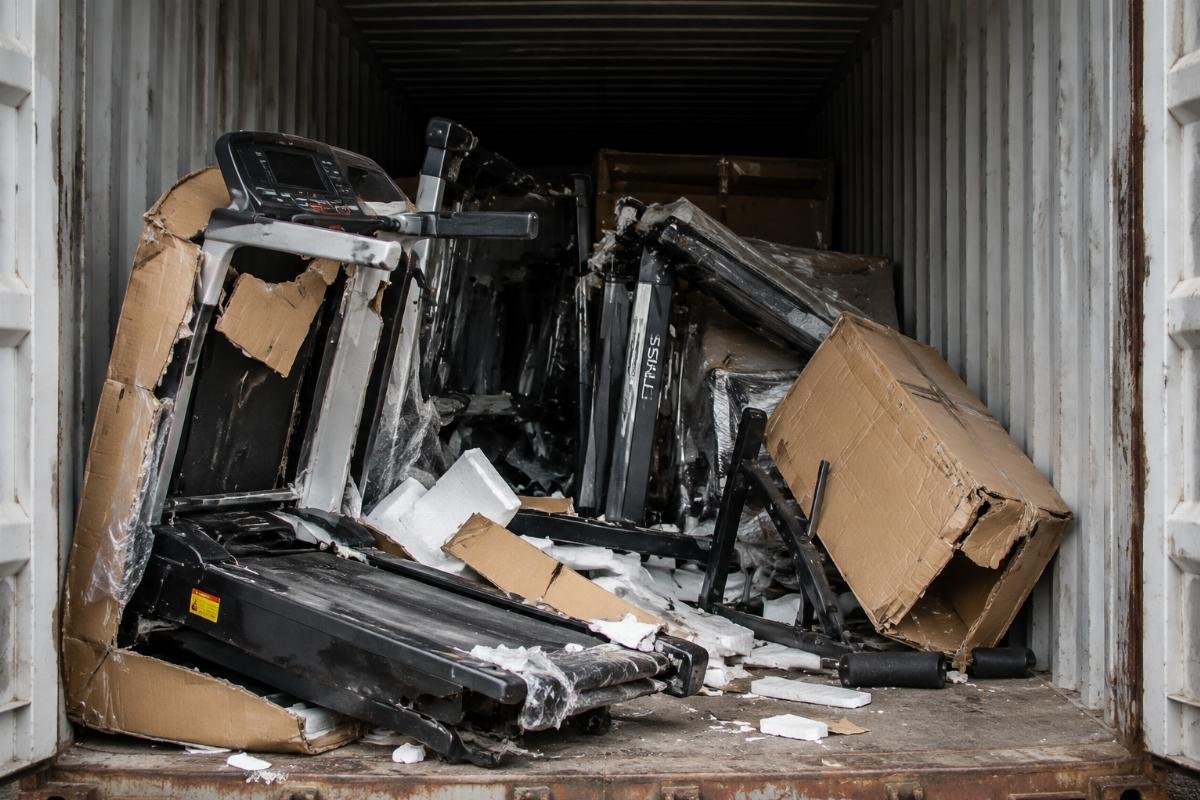
Poor packing is the third trap. Plate-loaded machines shipped loosely in a container will arrive with cosmetic damage — scratched frames, dented weight stacks, torn upholstery. A factory that charges less on the strength equipment package by cutting packing costs is passing the damage bill directly to you. I have seen buyers receive containers where a noticeable portion of the machines needed touch-up work before they could be put on the floor, and the labor cost ate straight into the margin they thought they had saved.
| Hidden Cost | Root Cause | Prevention |
|---|---|---|
| Wrong weight stacks | Spec not locked in PI | Line-by-line weight stack callout per machine |
| Missing spare parts | Spare parts kit not listed | Full batch-level spare parts list in PI |
| Transit damage | Packing cost cut | Verifiable packing standard per machine type |
[NEED_CITE: fitness equipment packaging standards for ocean freight container loading]
A hotel developer in Latin America learned this the hard way on their first strength equipment package order. They saved on the unit price but did not require a spare parts kit. Within months, two selectorized machines went down simultaneously for cable issues, and the air-freight cost for replacement cables and pulleys ran into mid-four figures. The savings they had captured on the original quote were wiped out in a single service call.
How Should You Structure the Package for Different Venue Types?
The structure of a strength equipment package must match the venue type — commercial gyms need full muscle-group coverage, hotels need compact multi-function units, and distributors need container-load optimization — or you will either overbuy or under-equip.
Commercial gym owners tend to want the biggest, most complete strength equipment package they can afford, because their members expect variety. That is the right instinct, but the package still needs to be balanced. Over-indexing on chest and arm machines while short-changing leg and back stations is a common mistake I see in first-time gym builds. The members who train legs and back train them hard and often, and a floor with weak leg coverage loses retention.
Hotel and apartment fitness rooms are a different problem. Space is tight, and the user volume is lower but more spread across the day. A strength equipment package for a hotel should lean on dual-function plate-loaded machines and compact selectorized units that cover multiple muscle groups per square foot of floor space. A twenty-machine commercial package might compress into eight to ten machines for a hotel of equivalent star rating, and the per-unit price will be higher because the compact frames use more engineering per station.
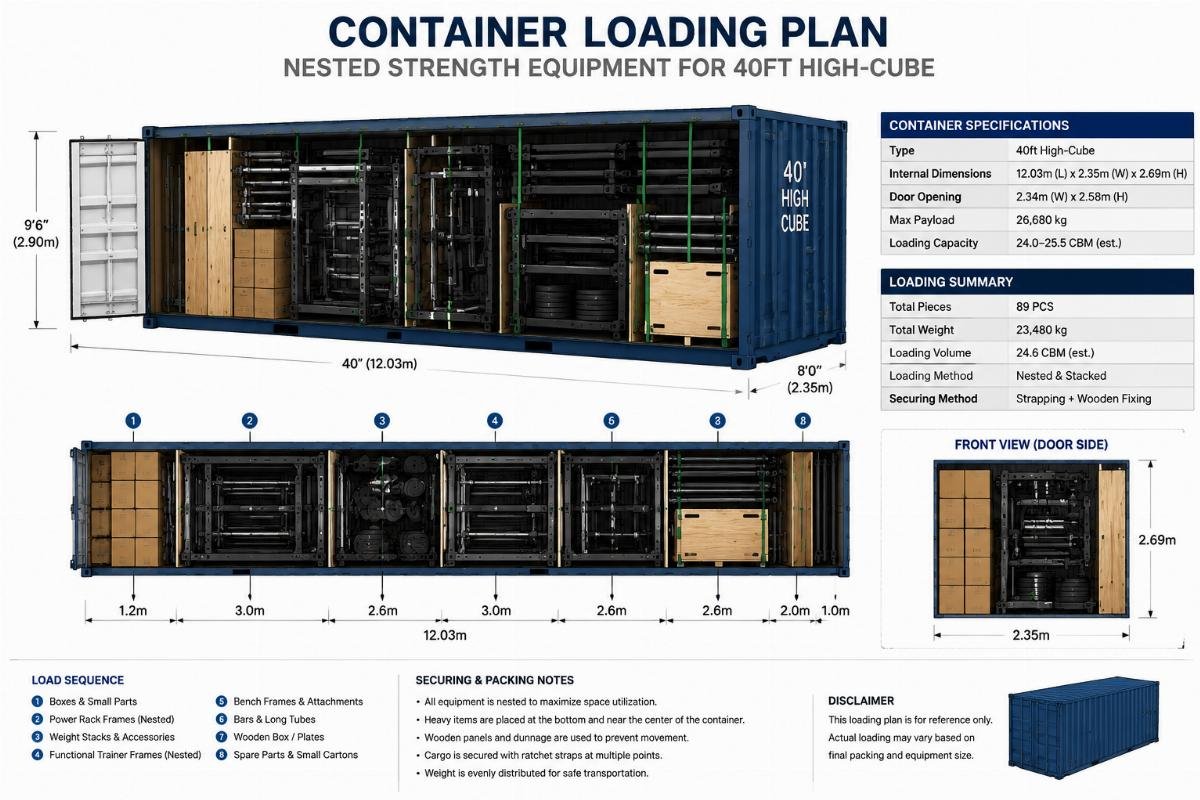
Distributors loading containers for resale have a third calculus. The strength equipment package needs to be designed around cubic utilization — how many SKUs fit cleanly into a 40-foot high-cube, with what nesting of plate-loaded frames and free-weight racks. A factory that understands container loading can often fit a noticeably larger SKU count into the same container by orienting plate-loaded machines vertically and nesting benches inside power rack frames. That is real margin, and it only shows up when the factory is thinking about the strength equipment package as a loading problem, not just a product list.
[NEED_CITE: container loading optimization methods for commercial fitness equipment]
What Is the Right Way to Lock Specs Before You Pay the Deposit?
Every machine in the strength equipment package must have its weight stack, upholstery color, frame tube thickness, weld finish, logo placement, and spare parts list written into the proforma invoice — no verbal agreements, no catalog references, no "as per standard" language.
This is the step that separates buyers who get the best price on a strength equipment package from buyers who get the cheapest quote and then pay for it twice.
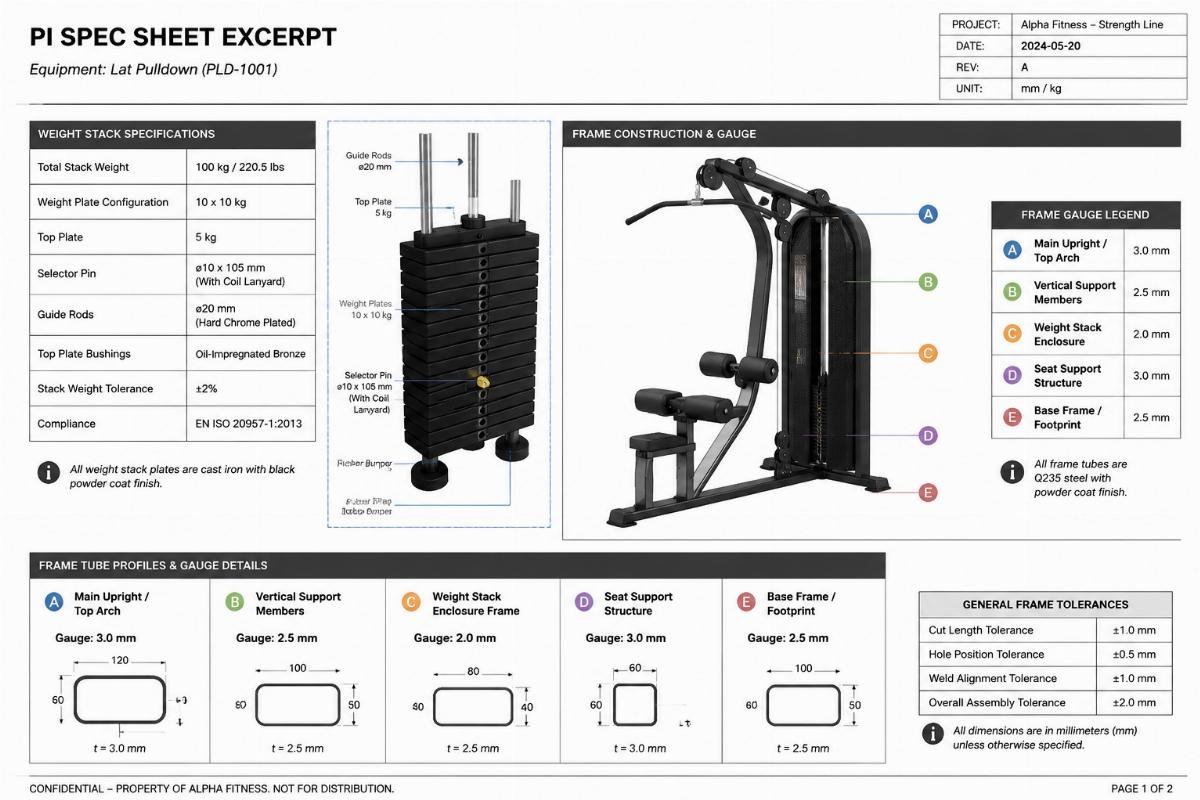
The PI should read like a technical spec sheet, not a purchase order. For each selectorized machine, the PI should state the exact weight stack poundage and increment. For each plate-loaded machine, the PI should state the frame tube wall thickness and the finish type. For every machine in the strength equipment package, the PI should state the upholstery color code, the foam density grade, and whether a custom logo is applied and where. Spare parts should be listed as line items with quantities, not as a footnote.
I have seen buyers accept a PI that says "weight stack as per catalog" and then receive a stack two grades lighter than what they expected. I have seen upholstery colors come back slightly off because the PI referenced a catalog photo instead of a Pantone or RAL code. I have seen logos applied to the wrong panel because the PI did not specify placement. None of these are factory malice. They are specification gaps, and the factory will always produce to the tightest spec written — which means if the spec is loose, the factory will produce to its cheapest default.
A European distributor I work with now requires a two-page spec appendix attached to every strength equipment package PI before they release a deposit. Each machine gets its own row. Every variable is called out. The factory signs it. The result is that their container arrivals match the order almost perfectly, and their after-sales cost has dropped noticeably over the past few orders.
Conclusion
The best price on a strength equipment package is the price you pay once, with every spec locked, every hidden cost removed, and every machine matched to the venue it will serve.
A strength equipment package quote that looks cheap on paper almost always carries hidden costs in weight stack mismatches, missing spare parts, or transit damage. The only reliable way to compare quotes is a line-by-line spec matrix, and the only reliable way to protect yourself is to write every variable into the proforma invoice before the deposit clears. The factory-direct price you see in Shandong is the real price — but only if the spec sheet behind it is airtight.
