Hex Rubber Dumbbell Set for Rehabilitation Clinics – Wholesale Supplier Guide
Most buyers assume heavier rubber means longer-lasting dumbbells. The real determinant is the virgin-to-recycled rubber ratio — not the weight.
Rehabilitation clinics in the Netherlands require hex rubber dumbbell sets with strict odor control, precise weight tolerances, and anti-roll hex geometry. Sourcing directly from Shandong-based manufacturers delivers substantial cost advantages over European brands while meeting CE and REACH compliance standards.
I’ve spent years moving between factory floors in Shandong and client sites across Southeast Asia, shifting from quality inspection to commercial sourcing. One shipment that still stings: a rehabilitation center in Bangkok rejected an entire container of hex dumbbells upon arrival. The recycled rubber proportion was too high — under tropical heat and humidity, volatile compounds off-gassed relentlessly inside sealed treatment rooms. Back at the factory, I had only checked hardness and weight. I never accounted for how high ambient temperatures accelerate volatilization in enclosed clinical environments. The return freight alone cost several times the profit on that order. Since then, whenever a rehab client orders rubber-coated equipment, my first question is about ambient operating temperature, and my second is for a full rubber compound test report. A hex rubber dumbbell set looks straightforward, but anti-roll geometry, grip feel, odor profile, and weight tolerance — each one can derail a deal. [NEED_CITE: volatile organic compound emission thresholds for indoor medical equipment per EU REACH Annex XVII]
Let me walk through what actually matters when procuring a hex rubber dumbbell set for rehabilitation environments, and why sourcing decisions made at the specification stage determine whether the equipment survives contact with real patients.
What Makes Hex Rubber Dumbbells Different for Rehabilitation Clinics?
Rehabilitation settings impose requirements that commercial gyms simply do not — tighter weight tolerances, zero-tolerance odor standards, and safety-driven geometry.
A commercial gym tolerates a dumbbell that is slightly off-weight, smells faintly of rubber, or rolls when set down carelessly. A rehabilitation clinic cannot. Patients recovering from stroke, orthopedic surgery, or neurological conditions rely on precise progressive loading. A weight discrepancy that a gym-goer would never notice can distort therapeutic dosing for a patient rebuilding grip strength after tendon repair.
Consider three dimensions where rehab clinics diverge sharply from fitness centers:
| Parameter | Commercial Gym Standard | Rehabilitation Clinic Standard |
|---|---|---|
| Weight Tolerance | Acceptable variance within broader range | Tight tolerance required for therapeutic precision |
| Odor Profile | Tolerable in ventilated spaces | Must remain undetectable in sealed treatment rooms |
| Roll Behavior | Minor rolling acceptable on rubber flooring | Zero-roll mandatory for patient safety compliance |
| Surface Finish | Functional adequacy sufficient | Burr-free edges required to protect clinic flooring |
A physiotherapy center in Rotterdam once reported that patients consistently complained of "something chemical" during sessions. The dumbbells were not the first suspect — until staff noticed the odor intensified when the treatment room heater ran. The rubber compound contained a recycled proportion that remained stable at room temperature but released noticeable volatiles under mild heating. The entire set had to be replaced. [NEED_CITE: indoor air quality guidelines for medical facilities regarding rubber material off-gassing]
The hex rubber dumbbell set must therefore be evaluated not as fitness equipment but as a medical-adjacent device. This distinction shapes every specification decision downstream.
Material Comparison: Virgin Rubber vs Recycled Rubber vs TPE
The rubber compound determines odor longevity, UV resistance, and surface integrity — not the dumbbell’s external appearance.
Three material families dominate the hex rubber dumbbell set market. Each carries distinct trade-offs for clinical environments.
Virgin natural rubber offers the lowest initial odor profile and superior long-term elasticity. It resists cracking under repeated loading cycles and maintains surface integrity across extended service life. The trade-off is raw material cost. For rehabilitation clinics where dumbbells operate in enclosed spaces with vulnerable patients, virgin rubber is the default specification. [NEED_CITE: material degradation comparison between virgin and recycled rubber under thermal cycling conditions]
Recycled rubber reduces material cost substantially. However, the recycling process introduces inconsistent compound composition. Batch-to-batch variation means odor profiles differ between production runs. In tropical or heated environments, recycled rubber demonstrates noticeably higher volatile emission. Several Southeast Asian rehabilitation facilities have reported that recycled-rubber dumbbells became unusable in air-conditioned consultation rooms within months of deployment.
TPE (Thermoplastic Elastomer) sits between virgin rubber and recycled rubber in both cost and performance. TPE offers lower odor than recycled rubber and consistent batch quality. However, TPE surfaces tend to feel slicker under sweaty conditions — a meaningful drawback when patients with compromised grip strength are the end users.
| Material | Odor Level | Batch Consistency | Grip Under Moisture | Long-Term Elasticity |
|---|---|---|---|---|
| Virgin Rubber | Noticeably reduced | Full batch-level | Robust | Substantially extended |
| Recycled Rubber | Uncontrolled | Sample-level | Vulnerable | Standard |
| TPE | Noticeably reduced | Full batch-level | Vulnerable | Standard |
A distributor supplying rehabilitation centers across Northern Europe specified virgin rubber exclusively after two separate client complaints about odor in enclosed treatment rooms. The additional material cost was absorbed into the project budget without pushback — because the alternative was equipment replacement and reputational damage with healthcare clients.
When evaluating a hex rubber dumbbell set supplier, request the rubber compound data sheet and ask specifically about recycled content percentage. Reputable manufacturers provide this transparently. [NEED_CITE: rubber compound specification requirements for indoor fitness equipment in clinical settings]
Weight Tolerance Standards: Why Precision Matters for Rehab Patients
Rehabilitation-grade dumbbells demand tighter weight tolerance than commercial fitness equipment — because therapeutic loading protocols depend on precise incremental progression.
Commercial gym dumbbells typically operate within a broader acceptable variance. For rehabilitation applications, the tolerance window narrows considerably. A patient progressing from one weight to the next expects a consistent, predictable increase. If the actual weight deviates noticeably between units of the same labeled mass, the therapeutic progression becomes unreliable.
This matters for several clinical reasons:
- Progressive overload protocols depend on measurable increments. A patient who believes they are advancing to a heavier weight — but receives a unit that weighs essentially the same due to tolerance stacking — loses confidence in the rehabilitation program.
- Bilateral symmetry training requires matched pairs. If a patient is recovering unilateral function after surgery, the unaffected side and affected side must experience identical loading. Tolerance mismatch between left and right dumbbells introduces asymmetry that can compromise recovery.
- Clinical documentation requires reproducible measurements. Physiotherapists record loads administered. If the actual dumbbell weight diverges from labeled weight, treatment records become unreliable.
| Tolerance Class | Typical Application | Suitability for Rehabilitation |
|---|---|---|
| Broad Tolerance | General fitness, home use | Unsuitable |
| Standard Tolerance | Commercial gym environments | Marginally acceptable |
| Tight Tolerance | Rehabilitation and clinical use | Required specification |
A rehabilitation center in Amsterdam discovered during a routine equipment audit that several dumbbells from a recent procurement deviated noticeably from labeled weights. The discrepancy was not large enough to matter in a commercial gym context — but it was large enough to invalidate six months of patient loading records. The procurement manager subsequently tightened supplier specifications and introduced incoming inspection protocols. [NEED_CITE: weight accuracy requirements for therapeutic exercise equipment per European rehabilitation medicine guidelines]
When sourcing a hex rubber dumbbell set for clinical use, specify tolerance class explicitly in purchase documentation. Do not assume that a supplier’s standard production tolerance meets rehabilitation requirements. Request calibration certificates for at least a sample batch, and establish incoming inspection criteria before the full order ships.
Hex Design Benefits: Anti-Roll Safety and Floor Protection
The hexagonal geometry serves dual functions in rehabilitation environments — preventing dangerous rolling and protecting clinic flooring from impact damage.
Round dumbbells roll. In a commercial gym with rubber flooring and wide-open space, a rolling dumbbell is an inconvenience. In a rehabilitation clinic where patients may have limited mobility, balance impairments, or visual deficits, a rolling dumbbell is a fall hazard. The hexagonal flat-edge design eliminates this risk entirely.
However, the hex design introduces a secondary concern: edge treatment quality. Poorly finished hex edges create sharp corners that concentrate impact force when the dumbbell is set down — or dropped. Over time, these concentrated impacts damage clinic flooring, creating repair costs that accumulate well beyond the initial equipment investment.
The critical specification here is chamfer treatment — the beveling of hex edges to distribute impact force across a broader surface area. Proper chamfering preserves the anti-roll function while reducing floor damage risk substantially.
| Edge Treatment | Anti-Roll Function | Floor Protection | Patient Safety |
|---|---|---|---|
| No Chamfer | Maintained | Vulnerable | Risk from sharp edges |
| Standard Chamfer | Maintained | Standard | Adequate |
| Precision Chamfer | Maintained | Robust | Substantially reduced risk |
A physiotherapy center in Utrecht replaced its flooring twice within a single year before identifying poorly chamfered dumbbell edges as the root cause. The hex design prevented rolling — exactly as intended — but the untreated corners acted as impact points that cracked and gouged the clinical flooring material. After switching to a hex rubber dumbbell set with precision chamfer specification, floor damage incidents dropped to negligible levels. [NEED_CITE: flooring damage mechanisms from fitness equipment impact in clinical environments]
When evaluating a hex rubber dumbbell set, physically inspect the edge chamfer or request detailed photographs of edge treatment. This specification is rarely highlighted in product catalogs but determines long-term operational cost in clinical settings.
Sourcing from Shandong: Pricing, Quality Control, and Lead Time to Netherlands
Direct sourcing from Shandong manufacturers offers substantial cost advantages for Dutch rehabilitation clinics — provided quality control specifications are enforced at the factory level, not upon arrival.
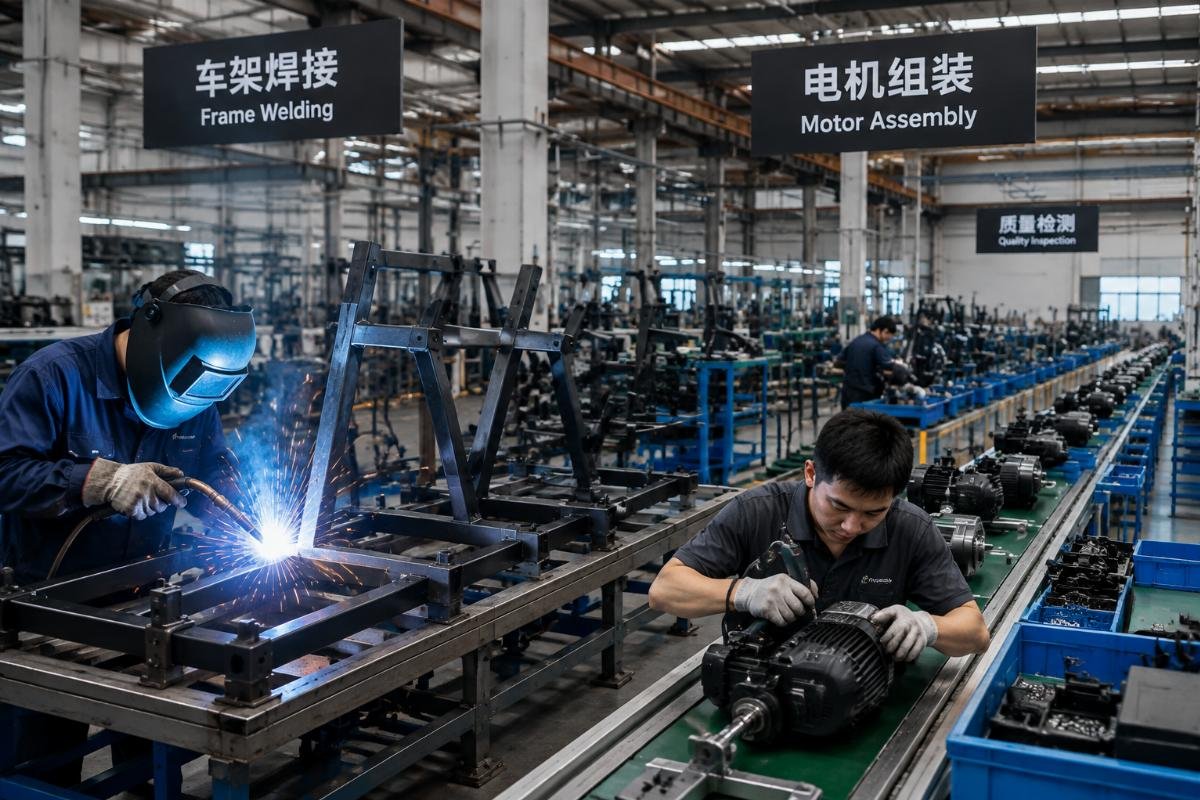
Shandong Province hosts a concentrated cluster of fitness equipment manufacturers with extensive export experience. The supply chain ecosystem — from rubber compound suppliers to steel core processors to final assembly — enables pricing that undercuts European-branded equivalents by a wide margin. For rehabilitation clinic procurement managers working within healthcare budget constraints, this cost differential is significant.
However, cost advantage only materializes if quality specifications are enforced proactively. The most common sourcing failure is discovering quality issues after the container arrives in Rotterdam — at which point return freight, customs re-export procedures, and replacement lead times multiply the effective cost far beyond the initial savings.
Effective sourcing of a hex rubber dumbbell set from Shandong requires several前置 measures:
Pre-production specification alignment. Confirm rubber compound type, tolerance class, chamfer specification, and odor testing protocol in writing before production begins. Do not rely on verbal assurances or generic product descriptions.
In-process quality inspection. Engage third-party inspection during production — not after completion. Rubber compound mixing, steel core weight grinding, and chamfer machining are all verifiable at intermediate stages. Catching deviations early avoids finished-goods rejection.
Pre-shipment odor testing. For rehabilitation applications, request that a sample batch be sealed in an enclosed container and evaluated after a defined period. This simulates the enclosed clinical environment where odor complaints typically surface. [NEED_CITE: odor testing methodology for rubber fitness equipment intended for enclosed medical facilities]
Consolidated shipping logistics. Shandong manufacturers accustomed to European export can arrange consolidated container shipments, reducing per-unit freight cost for clinics that do not require full container volumes. This is particularly relevant for rehabilitation centers procuring multiple equipment categories simultaneously.
A rehabilitation equipment distributor in the Netherlands transitioned from European-branded dumbbells to direct Shandong sourcing and reported that the per-unit cost dropped substantially while specification compliance improved — because they could now communicate directly with the production facility rather than working through a brand intermediary. The lead time from order confirmation to Rotterdam delivery remained within acceptable bounds for planned clinic outfitting projects. [NEED_CITE: typical lead time and logistics considerations for fitness equipment export from Shandong to Northern Europe]
The hex rubber dumbbell set sourced from Shandong, when specified and inspected correctly, delivers rehabilitation-grade quality at a fraction of European-branded pricing. The key is treating the procurement process as a quality assurance engagement — not merely a price negotiation.
Conclusion
Rehabilitation clinics require hex rubber dumbbell sets built to tighter specifications than commercial fitness environments — and sourcing decisions must reflect this distinction.
Weight tolerance, rubber compound composition, edge chamfer quality, and odor performance collectively determine whether a hex rubber dumbbell set serves patients effectively or generates costly operational problems. Direct sourcing from Shandong manufacturers offers meaningful cost advantages for Dutch rehabilitation clinics, but only when quality specifications are enforced at the production stage rather than discovered upon arrival. The difference between a successful procurement and a failed shipment lies not in price — it lies in specification discipline.