Commercial Gym Equipment Manufacturer: Bulk Cardio & Strength Machines for Sale
Showroom feel lies. Hidden structural specs decide whether your gym floor survives three years or eighteen months.
When sourcing from a commercial gym equipment manufacturer, the real decision variables are frame steel gauge, motor continuous duty rating, and bearing class—not headline unit price or the five-minute test ride at a trade show booth.
I spent years on factory floors inspecting weld seams and listening for bearing chatter before moving into export coordination, flying between Chicago and Cologne trade shows season after season. One conversation I keep returning to involved a boutique studio chain buyer from Texas who loaded an entire container of treadmills and functional rigs based on a competitor’s show-floor pricing. Within months, the treadmill motors overheated under back-to-back class schedules, and the cable machine pulleys started binding. The return rate climbed so high they eventually came back to restructure the whole specification sheet. That episode reinforced something I see repeatedly: frame thickness, deck layering, and bearing grade are the parameters that separate equipment that lasts from equipment that becomes a liability. [NEED_CITE: failure mode distribution in commercial treadmill motors per ISO 15243]
Let me walk through what actually matters when you are evaluating a commercial gym equipment manufacturer for a bulk order.
What Specs Actually Determine Commercial Equipment Lifespan?
The parameters you cannot see at a trade show booth are the ones that determine whether a machine survives commercial traffic or fails within a single warranty cycle.
Most buyers spend their booth time testing seat adjustment smoothness and console responsiveness. Those matter, but they are surface-level. The structural backbone of any commercial machine lives in three hidden layers: the frame steel gauge, the motor duty cycle rating, and the bearing specification.
| Parameter | Entry-Level Claim | Verified Commercial Grade |
|---|---|---|
| Frame steel thickness | Self-reported, unverified | Certified gauge with mill test report |
| Motor rating | Peak horsepower advertised | Continuous horsepower rated at commercial duty cycle |
| Bearing class | Generic designation | ABEC-rated with documented supplier |
| Weld inspection | Visual only | Batch-level ultrasonic or magnetic particle |
| Deck construction | Single-layer | Multi-layer with documented resin bonding |
[NEED_CITE: commercial treadmill motor duty cycle standards comparison per IEC 60034]
A mid-sized fitness chain operator in the Gulf region once ordered what looked like a solid treadmill package. The spec sheet listed impressive peak horsepower. But when we pulled the motor nameplate data during pre-shipment inspection, the continuous duty rating told a different story—the motor was sized for light commercial use, not the twelve-hour daily cycles their locations demanded. The difference between peak and continuous rating is where most procurement mistakes hide.
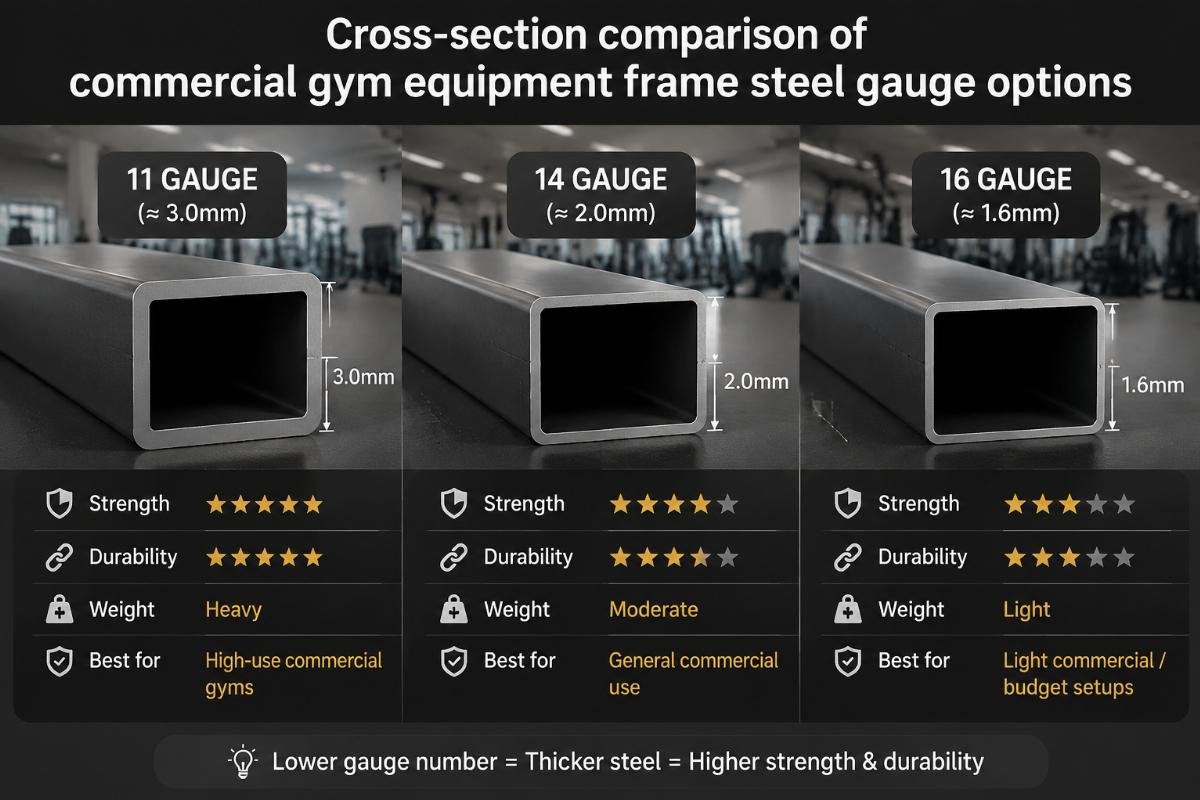
For strength equipment, the frame is the backbone. A power rack marketed at an attractive price point may use thinner wall tubing that flexes under heavy loading over time. The gauge difference between a rack that holds steady at heavy loads and one that develops lateral play is smaller than most buyers realize, but the long-term performance gap is substantial. [NEED_CITE: structural steel gauge standards for fitness equipment per EN 957]
Cardio vs. Strength Machines: How to Balance a Bulk Order?
A data-driven equipment ratio based on actual member traffic patterns prevents over-investment in underused categories and under-specification in high-demand zones.
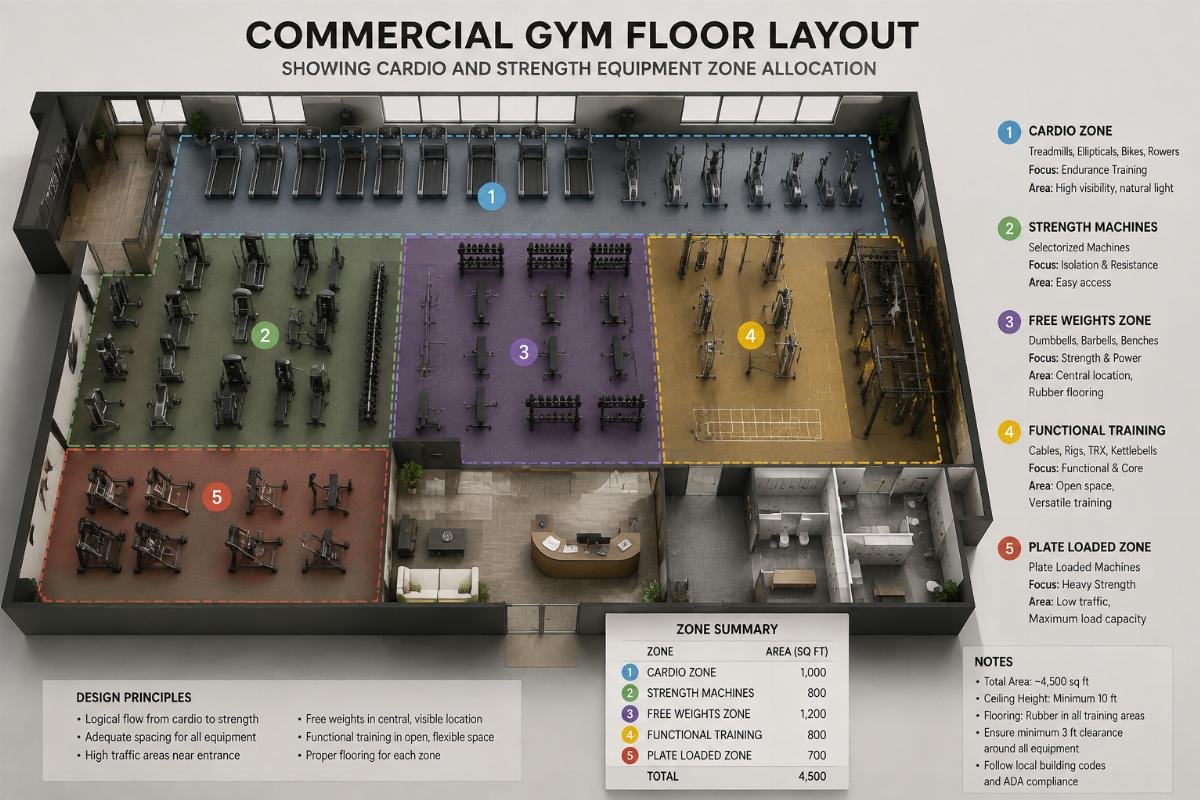
The most common mistake I see in container-load orders is copying the equipment ratio from a brochure template rather than analyzing the specific facility’s usage profile. A high-traffic commercial gym with peak-hour congestion needs a different cardio-to-strength balance than a boutique studio or a hotel fitness center with transient guests.
For a typical full-service commercial gym, the process starts with mapping member flow patterns across peak and off-peak windows. Cardio equipment tends to cluster around early morning and evening rush hours, while strength equipment sees more distributed usage throughout the day. Functional training zones have grown significantly in allocation over recent years, often absorbing square footage that previously went to traditional selectorized machines. [NEED_CITE: commercial gym space allocation trends per IHRSA facility benchmarking reports]
A hotel fitness center buyer I worked with faced a tight footprint and needed to prioritize compact commercial-grade equipment. The solution involved selecting treadmills with reduced footprint profiles while maintaining commercial motor ratings, and pairing them with multi-station cable units that covered multiple muscle groups without the floor space demand of dedicated single-purpose machines. The trade-off was clear: slightly higher per-unit cost for space efficiency, offset by avoiding the need for a larger facility lease.
| Equipment Category | High-Traffic Commercial Gym | Hotel / Apartment Fitness Center | Boutique Studio |
|---|---|---|---|
| Cardio allocation | Substantially high | Moderate, compact footprint priority | Low to moderate |
| Strength allocation | Full range, plate-loaded and selectorized | Multi-station cable systems | Functional and free-weight focused |
| Functional zone | Dedicated area with rigs and racks | Minimal, integrated into multi-use space | Primary training focus |
| Spare parts priority | High-turnover wear items | Motor and belt kits | Cable and pulley assemblies |
[NEED_CITE: fitness equipment usage pattern analysis by facility type]
The key is matching the commercial gym equipment manufacturer’s product range to your specific traffic profile rather than accepting a one-size-fits-all package.
Factory-Direct vs. Brand-Name: Where Does the Real Cost Difference Lie?
The price gap between factory-direct commercial equipment and established brand names reflects branding markup and distribution overhead far more than it reflects proportional quality differences.
This is where procurement decisions get emotional. Many buyers assume that a substantially lower unit price from a direct manufacturer must mean corners have been cut. That assumption is sometimes correct—and sometimes entirely wrong. The difference between a legitimate factory-direct price and a cut-corner price lies in verification, not in the number on the quotation.
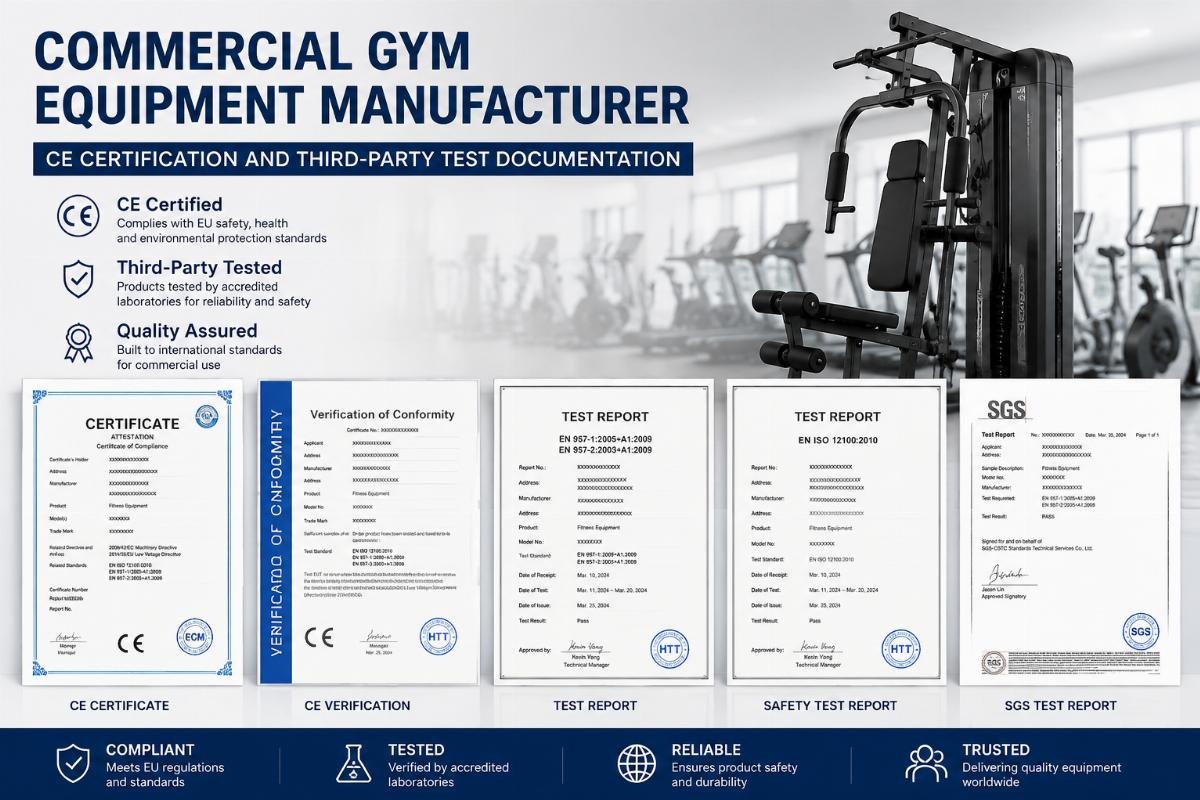
A distributor in the MENA region placed an initial trial order with us after comparing our documentation package against two other suppliers. One competitor offered a lower unit price but could not provide CE test reports from an accredited lab. Another offered competitive pricing but had no verifiable motor supplier documentation. Our pricing sat in the middle, but the documentation package included third-party test certificates, motor nameplate traceability, and a spare parts commitment with defined response timelines. That trial order converted into repeat container shipments within months, driven by after-sales reliability rather than unit price alone. [NEED_CITE: commercial gym equipment certification requirements per EU Machinery Directive 2006/42/EC]
| Verification Element | Transparent Factory-Direct | Opaque Low-Price Supplier |
|---|---|---|
| CE / EN certification | Third-party accredited lab reports | Self-declared or not provided |
| Motor traceability | Named supplier with duty cycle documentation | Generic or unspecified |
| Weld inspection records | Batch-level documentation | Not provided |
| Spare parts commitment | Defined catalog with lead times | Vague or absent |
| Pre-shipment inspection | Third-party available | Resisted or unavailable |
The real cost of cheap equipment is not the replacement unit—it is the downtime, the member complaints, the technician dispatch calls, and the reputational damage with your gym members. A motor failure during peak hours on a Tuesday evening costs several times the savings from choosing the lowest bid.
How to Validate a Manufacturer Before Placing a Container Order?
Request certified documentation, conduct live video production line inspection, and order a pre-shipment sample unit verified by third-party inspection before committing to a container-load purchase.
The validation process should follow a structured sequence rather than relying on trade show impressions or catalog promises.
-
Documentation audit. Request CE certificates and verify them against the issuing body’s database. Ask for motor supplier nameplates and duty cycle test reports. Request frame steel mill test certificates. Any commercial gym equipment manufacturer operating transparently will provide these without hesitation. [NEED_CITE: CE certification verification process per EU NANDO database]
-
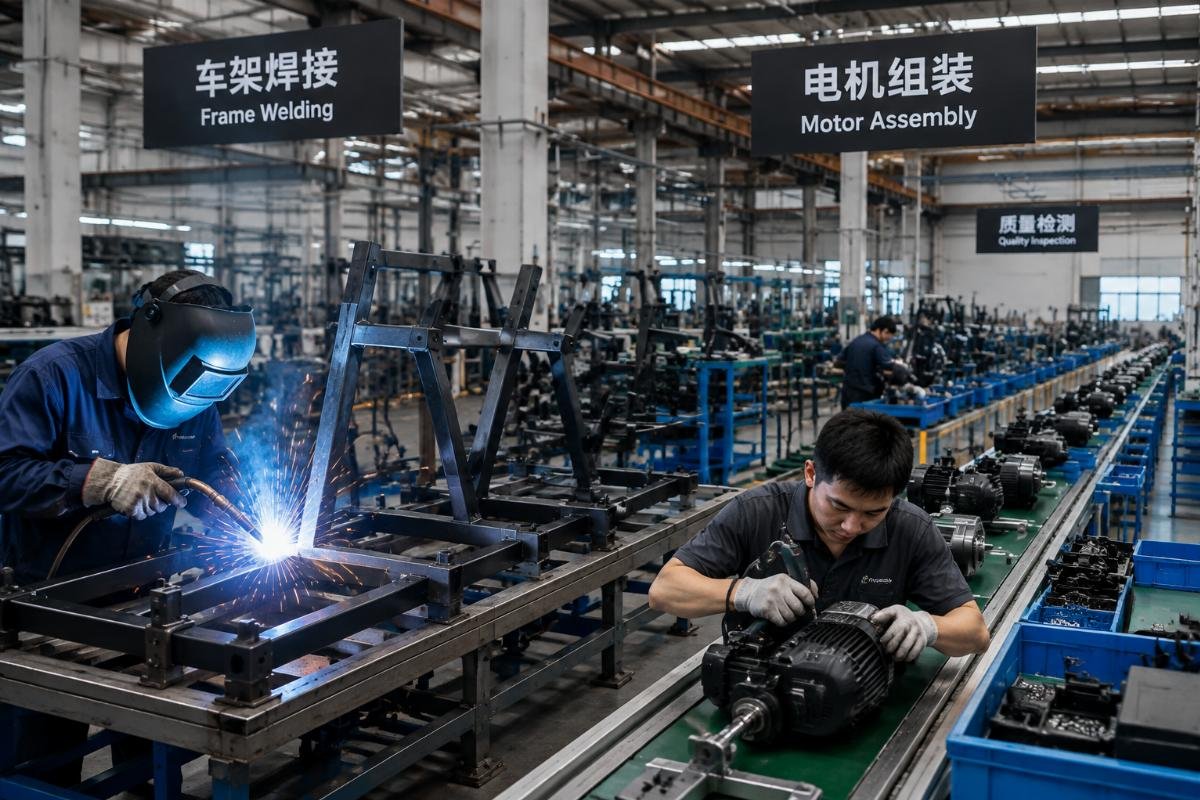
Live production line inspection. Arrange a real-time video walkthrough of the welding stations, assembly lines, and testing areas. Watch how frames are jigged during welding—proper fixturing ensures geometric consistency across batches. Observe the motor testing station and ask to see run-in protocols.
-
Pre-shipment sample verification. Before authorizing full container loading, order a sample unit from the production batch. Engage a third-party inspection service to verify frame dimensions, motor performance under load, and bearing assembly quality against the documented specifications.
A European fitness equipment distributor learned this process the hard way. Their first supplier resisted video inspection requests and delayed providing motor documentation. After switching to a manufacturer that welcomed full transparency, their defect rate dropped noticeably and their after-sales service costs fell substantially. [NEED_CITE: third-party inspection protocols for fitness equipment per SGS or TÜV guidelines]
- Spare parts infrastructure confirmation. Confirm the availability of a spare parts catalog with defined lead times. A commercial gym equipment manufacturer that stands behind its products will have a documented parts supply chain, not just a verbal promise.

What Does a Turnkey Gym Package Actually Include?
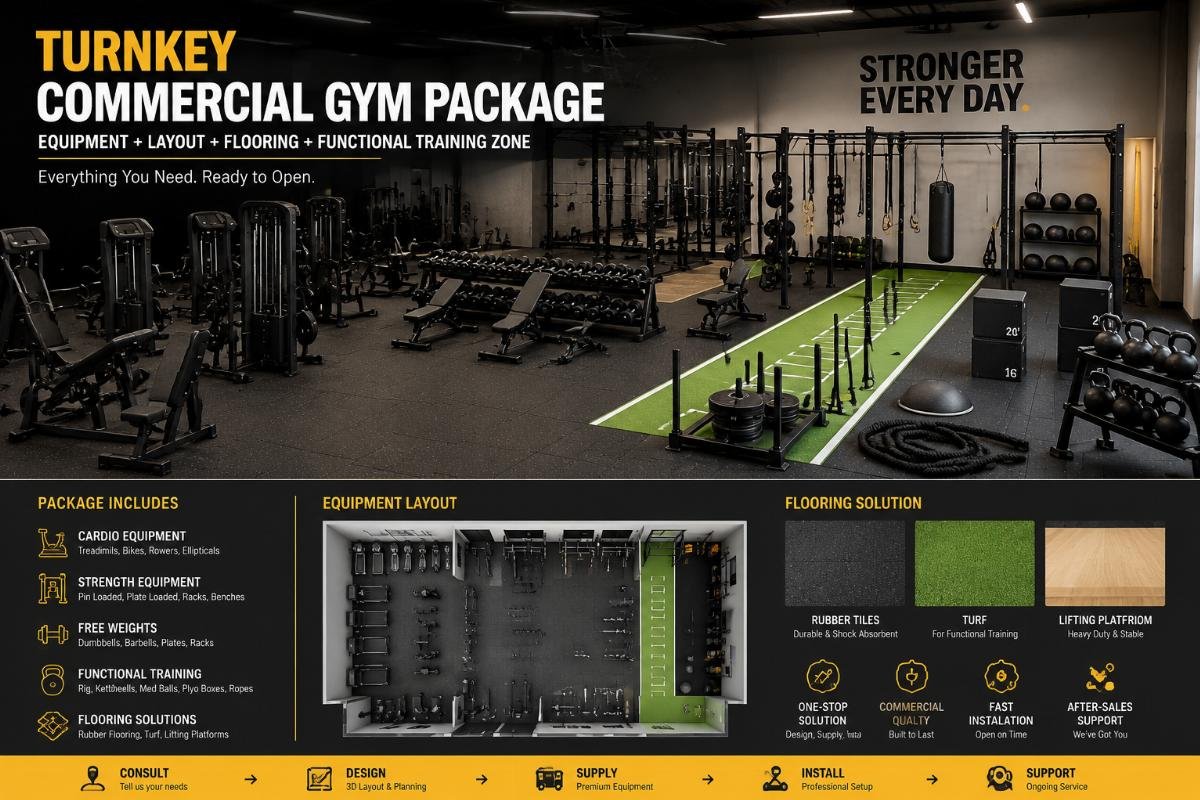
A genuine turnkey commercial gym package covers equipment specification, flooring, layout planning, and spare parts provisioning—not just a list of machines loaded into a container.
The term "turnkey" gets used loosely in this industry. Some suppliers interpret it as "we will load whatever you order into a container." A proper turnkey package from an experienced commercial gym equipment manufacturer involves coordinated planning across multiple dimensions.
Equipment selection must align with the facility’s target member profile, space constraints, and traffic patterns. Flooring specification matters more than most buyers realize—proper rubber flooring thickness and density protect both the equipment and the subfloor, and reduce noise transmission in multi-story hotel or apartment installations. Layout planning should account for member flow, emergency egress, and maintenance access around each machine.
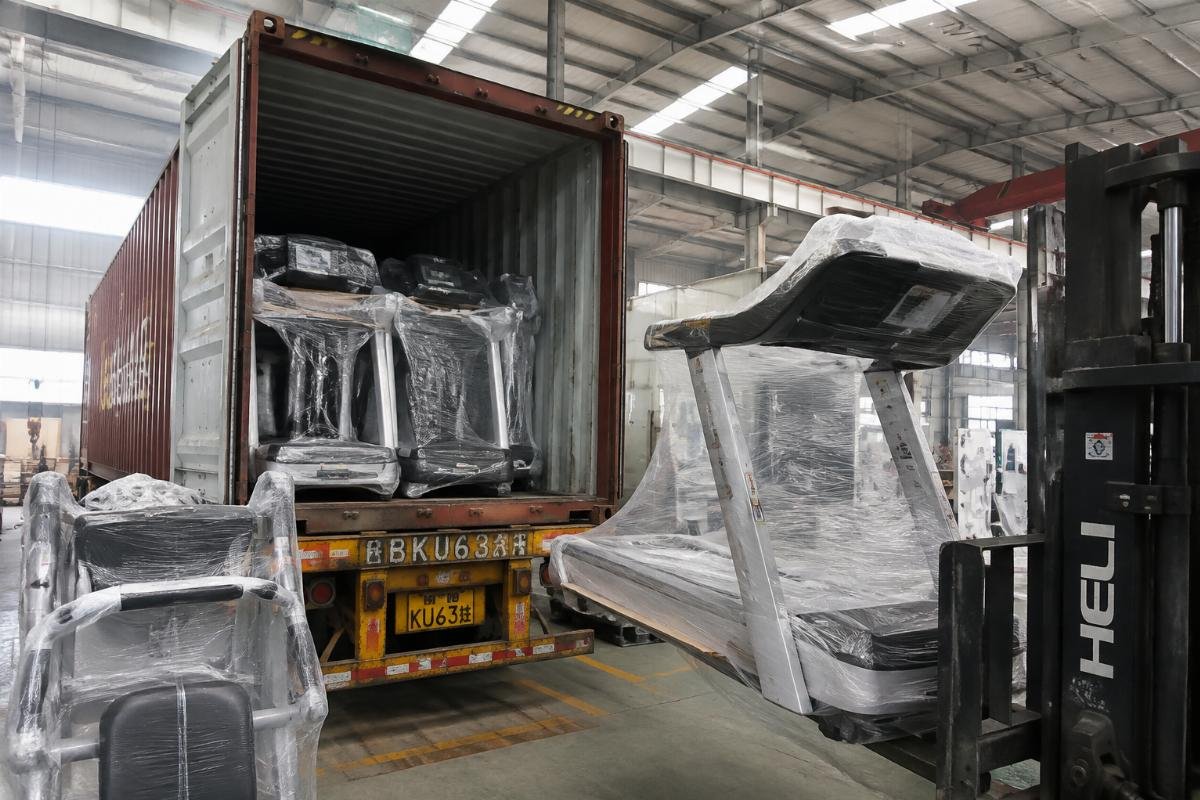
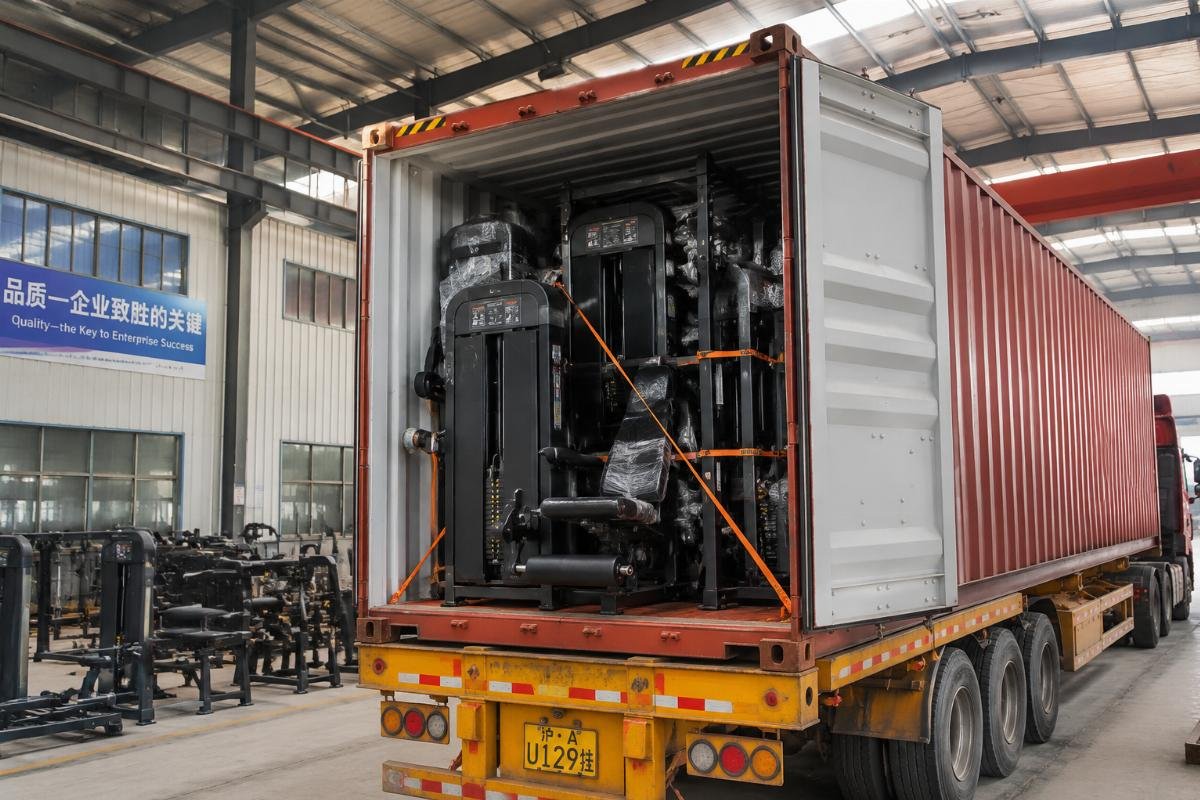
A boutique studio operator in Southeast Asia came to us with a floor plan and a concept deck. The turnkey package we assembled included functional training rigs, free weight stations, a compact cardio selection, and rubber flooring rated for heavy drop zones. The layout optimized traffic flow between the warm-up area and the main training floor. Spare parts kits for cables, pulleys, and treadmill belts were included in the initial shipment so that routine maintenance would not require emergency air-freight orders later.
| Turnkey Component | Basic Supplier Interpretation | Comprehensive Package |
|---|---|---|
| Equipment selection | Order fulfillment from catalog | Profile-matched specification |
| Flooring | Not included or generic | Thickness and density matched to use zone |
| Layout planning | Buyer’s responsibility | Space-optimized with flow analysis |
| Spare parts | Available on request | Provisioned in initial shipment |
| Installation guidance | Basic manual | Detailed layout and assembly support |
[NEED_CITE: commercial gym flooring standards per ASTM F1292 impact attenuation requirements]
The difference between a basic shipment and a genuine turnkey package becomes visible six months after installation, when the basic supplier’s client is scrambling for replacement parts and the comprehensive package client is running smoothly with maintenance stock already on hand.
Conclusion
Bulk commercial gym procurement succeeds when buyers verify hidden structural specifications rather than trusting surface-level impressions. Frame gauge, motor duty cycle, bearing class, and documented certification separate equipment that performs for years from equipment that becomes a recurring cost. A transparent commercial gym equipment manufacturer will welcome scrutiny at every stage—from documentation audit through video inspection to third-party pre-shipment verification—and will support the purchase with a defined spare parts infrastructure and genuine turnkey planning capability.