Cost-Effective Power Rack Sourcing for Portugal Corporate Wellness Managers
The cheapest unit price on a quotation sheet rarely equals the lowest total cost of ownership for a corporate fitness facility.
Corporate wellness managers in Portugal can cut power rack procurement costs substantially by sourcing commercial-grade units directly from Chinese manufacturers, provided they verify steel gauge, weld integrity, and load capacity against EN-compliant benchmarks, and consolidate shipping through full-container or mixed-equipment loading to dilute per-unit freight to Lisbon and Porto ports.
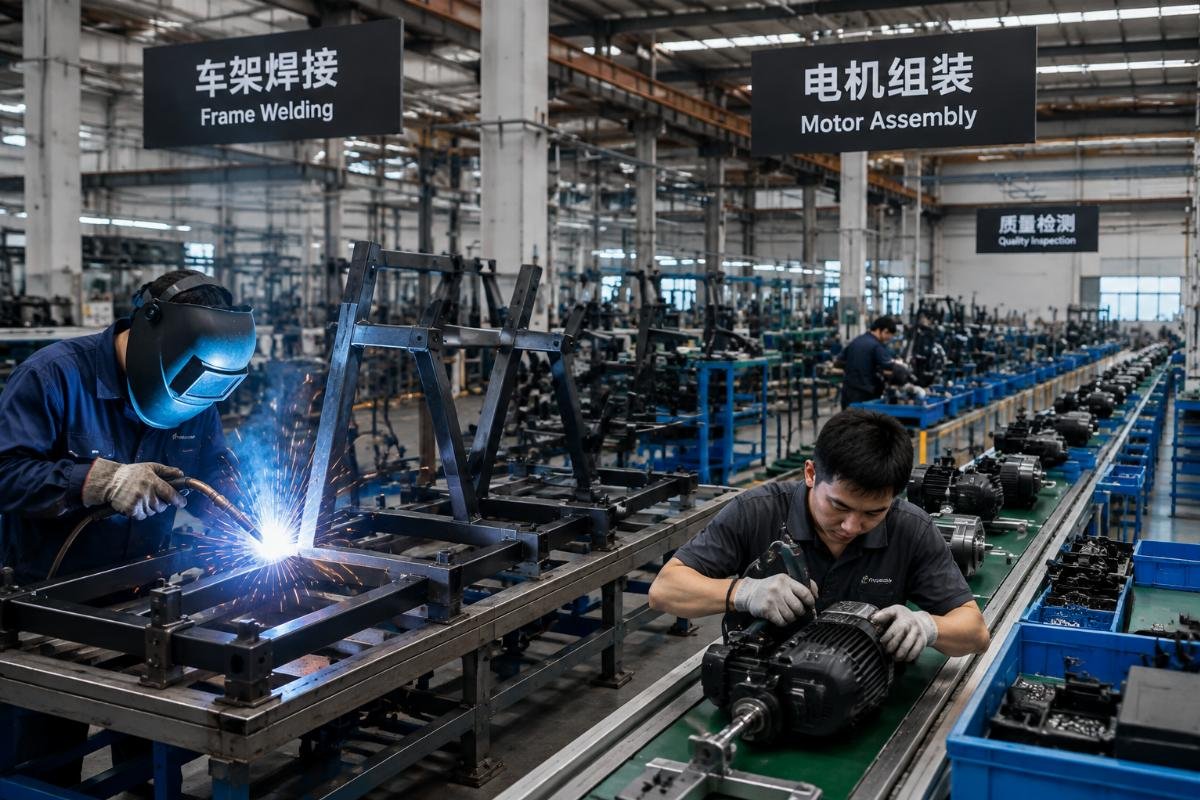
Walking through a factory floor in Shandong, I remember watching a batch of uprights being measured with ultrasonic thickness gauges before welding even began. The operator rejected an entire lot because a few tubes fell outside acceptable tolerance. That kind of discipline is what separates a rack that survives a decade of corporate gym traffic from one that warps and gets returned — sometimes after it has already crossed an ocean. When a European client once received a shipment where the upright wall thickness was noticeably below spec, the entire batch had to be refused at the port, and demurrage fees alone cost several times what the original "savings" had been. [NEED_CITE: common failure modes in imported commercial gym equipment related to structural tolerances]
Getting power rack sourcing right for Portugal-based corporate wellness programs means looking past the sticker price and understanding what actually makes a rack commercial-grade, how much you can realistically save, what quality gates to enforce before the container seals, and how to consolidate freight so the landed cost lands where it should.
What Specs Separate Commercial Power Racks from Home-Grade Models?
The three non-negotiable pillars of a commercial power rack are upright wall thickness, full-penetration welding, and verified dynamic load capacity — none of which are visible in a product photo.
Many buyers assume that if a home rack and a commercial rack look similar in pictures, they are interchangeable. The reality is far different. A corporate wellness room in a Lisbon office tower may see continuous use from early morning to late evening, with multiple employees cycling through heavy squats, rack pulls, and band work every single day. That environment demands equipment built to a fundamentally different standard.
| Specification Dimension | Commercial-Grade | Mid-Range | Home-Grade |
|---|---|---|---|
| Upright Steel Wall Thickness | Heavy-gauge, tight tolerance | Standard tolerance | Thin-wall, wide tolerance |
| Welding Process | Full continuous weld, ground smooth | Intermittent weld | Spot weld, visible gaps |
| Dynamic Load Rating | Tested under moving load conditions | Static load only | Rated for light use |
| Attachment Compatibility | Standard hole pattern, multi-brand fit | Limited compatibility | Proprietary or single-brand |
| Finish Durability | Industrial powder coat, chip-resistant | Basic powder coat | Paint or thin coating |
[NEED_CITE: EN ISO 20957-1 and EN ISO 20957-2 requirements for stationary strength training equipment]
The upright is the spine of the entire structure. In commercial settings, heavy-gauge steel with controlled wall thickness ensures the rack resists lateral flex during heavy barbell work. Home-grade uprights, by contrast, often use thin-wall tubing that may look identical from a distance but will flex noticeably under load — and over time, that flex leads to weld fatigue and structural compromise. [NEED_CITE: relationship between upright wall thickness and lateral deflection in power rack structures]
Welding is equally critical. Full continuous welding, followed by grinding and smoothing, distributes stress evenly across joints. Spot welding or intermittent welding — common in budget racks — creates stress concentration points that can crack under repetitive heavy use. I have seen racks where the welds looked acceptable to the untrained eye but failed ultrasonic inspection because internal porosity was hidden beneath the surface finish.
Dynamic load capacity is the third pillar. Many manufacturers quote a static load number — the weight the rack can hold while sitting still. But in real corporate gym use, barbells are dropped, athletes bounce out of the hole, and safety straps absorb impact. A rack rated only for static load may perform adequately on paper but fail under these dynamic conditions.
A corporate wellness buyer in Porto once compared two quotations side by side. The cheaper option used noticeably thinner uprights and spot-welded joints. The slightly higher-priced option specified heavy-gauge steel and full continuous welding. Two years later, the cheaper racks showed visible upright wobble and weld micro-cracks, while the heavier-spec units remained solid. The replacement cost for the cheaper units — including shipping, customs re-entry, and downtime — dwarfed the initial price difference.
How Much Can Portugal Buyers Actually Save Sourcing Direct from China?
Factory-direct power rack sourcing from China can reduce per-unit procurement costs substantially compared to European and American branded equivalents, but the real savings only materialize when freight is consolidated and per-unit logistics cost is driven down.
The headline number that catches most buyers’ attention is the unit price gap. Commercial-grade power racks sourced directly from established Chinese manufacturers typically come in at a fraction of the cost of comparable units from major Western fitness brands. [NEED_CITE: typical price differential between Chinese factory-direct and Western branded commercial strength equipment]
However, the unit price is only one component of the landed cost equation. The full picture includes ocean freight, port handling charges at Lisbon or Leixões, customs clearance, VAT, inland transport to the corporate facility, and — critically — how efficiently you fill the container.
A single power rack, shipped as loose cargo, carries a per-unit freight burden that can erase much of the factory price advantage. The economics shift dramatically when racks are consolidated into a full container load, or better yet, when they are mixed with other gym equipment — cable crossovers, Smith machines, free weight sets, benches, and flooring — to maximize cubic utilization.
| Cost Component | Loose / LCL Shipment | Consolidated FCL Shipment |
|---|---|---|
| Per-Unit Ocean Freight | Substantially higher | Noticeably reduced |
| Container Utilization | Low | High |
| Port Handling per Unit | Higher | Lower |
| Risk of Damage in Transit | Elevated | Reduced with proper bracing |
| Total Landed Cost per Unit | Modest savings vs. local | Substantial savings vs. local |
[NEED_CITE: typical CBM utilization rates for mixed gym equipment container loads]
I worked with a Portuguese corporate client who initially planned to order just a handful of racks as LCL cargo. The per-unit freight quoted was steep. By expanding the order to include a complete free-weight zone — dumbbells, barbells, plates, benches — and a set of plate-loaded machines, they filled a full container. The per-unit freight cost dropped noticeably, and the total landed cost per rack fell well below what any European distributor could match, even before considering the branding and specification customization that factory-direct sourcing allows.
The key insight: power rack sourcing becomes truly cost-effective not when you find the lowest unit price, but when you engineer the entire shipment to dilute logistics cost across a comprehensive equipment package.
What Quality Checks Should You Require Before Shipping?
Three verification gates — CE certificate model matching, weld integrity documentation, and sample load testing — must be completed before the container door seals, not after it arrives at a Portuguese port.
The most painful mistakes in power rack sourcing happen when quality is assumed rather than verified. A CE mark on a product label does not automatically mean the specific rack model you ordered has been tested and certified. The certificate may cover a different product family, a previous revision, or even a different factory altogether. [NEED_CITE: common CE certificate mismatches in imported fitness equipment and how to verify model-level compliance]
The first gate is certificate verification. Request the CE declaration of conformity and the underlying test report. Confirm that the product model number on the certificate matches exactly the model you are ordering. Confirm that the manufacturing facility listed on the certificate is the actual production site — not a trading company or a different factory within the same group. If the supplier hesitates or provides a certificate that does not align with your specific order, that is a red flag.
The second gate is weld integrity documentation. For commercial-grade racks, request weld inspection reports — ideally ultrasonic or dye penetrant test results for critical load-bearing joints. Full continuous welds should be visually smooth, with no porosity, undercut, or incomplete fusion visible on the surface. A reputable manufacturer will have in-process quality checks at the welding stage and can provide batch-level documentation.
The third gate is pre-shipment sample testing. Before committing to a full production run, request a pre-production sample or a first-article inspection. Test the sample for upright rigidity under load, safety strap and J-cup engagement under dynamic force, and overall structural stability during simulated use. This step catches tolerance issues before they multiply across an entire order.
A corporate wellness buyer in the Iberian Peninsula once received a shipment where the CE certificate covered a light-duty home rack series, not the commercial power rack that was actually shipped. The mismatch was only discovered during a routine facility safety audit months after installation. The cost of replacing the entire set — plus the regulatory exposure — far exceeded what a pre-shipment verification would have cost.
| Verification Gate | What to Request | Risk if Skipped |
|---|---|---|
| CE Certificate Matching | Declaration of conformity with exact model and factory | Regulatory non-compliance, facility audit failure |
| Weld Integrity Report | Ultrasonic or dye penetrant test for critical joints | Structural failure under dynamic load |
| Pre-Shipment Sample Test | First-article load test and dimensional check | Batch-wide tolerance defects |
[NEED_CITE: recommended pre-shipment inspection checklist for imported commercial strength training equipment]
How Do You Consolidate a Full Container with Mixed Gym Equipment?
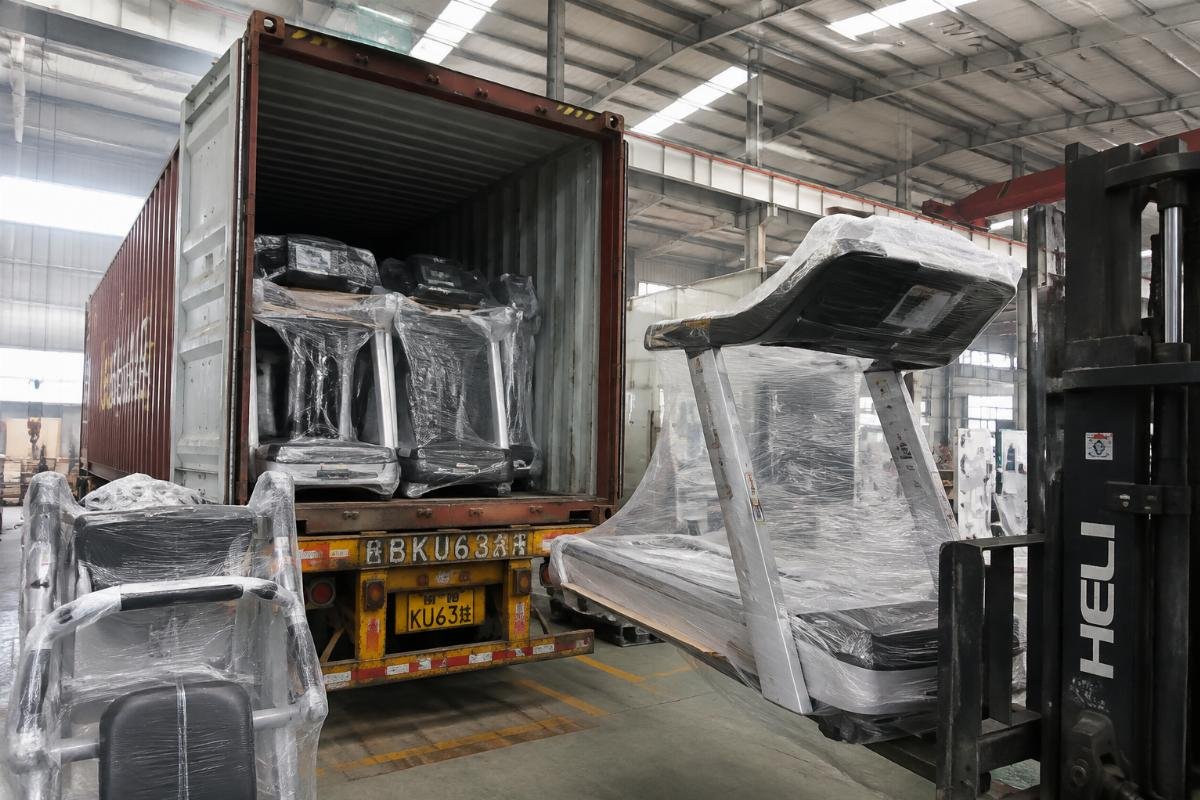
Power racks can be efficiently loaded alongside cable machines, free-weight stations, cardio units, and flooring in a single container — but achieving high cubic utilization requires deliberate space planning and compatible equipment selection.
The container is a three-dimensional puzzle. A standard 40-foot high-cube container offers substantial cubic capacity, but power racks are bulky, irregularly shaped items that leave significant void space if loaded without planning. The solution is to treat the container as a complete gym fit-out shipment and fill the gaps with complementary equipment.
Power racks, for example, can be nested or partially disassembled to reduce their footprint. The void space inside and around the rack frames can be filled with dumbbell sets, weight plates, kettlebells, medicine balls, and plyo boxes. Cable crossover machines and Smith machines can be positioned against the container walls. Benches and storage racks can be stacked in the remaining horizontal space. Rubber flooring rolls can be placed along the floor or wrapped around irregular items to serve as both cargo and protective padding.
The result is a container that arrives at the Port of Lisbon or the Port of Leixões fully utilized, with the per-unit freight cost spread across a comprehensive equipment package rather than concentrated on a few bulky items.
| Equipment Category | Container Loading Role | Space Utilization Benefit |
|---|---|---|
| Power Racks (partially disassembled) | Primary structural cargo | Core volume, with internal voids for small items |
| Plate-Loaded and Selectorized Machines | Wall-line cargo | Fills vertical space along container sides |
| Free Weights (dumbbells, plates, kettlebells) | Void-fill cargo | Packs into rack interiors and gaps |
| Benches and Storage Racks | Horizontal stack cargo | Fills mid-level and floor-level space |
| Rubber Flooring Rolls | Wrap and edge protection | Serves dual role as cargo and padding |
[NEED_CITE: best practices for container loading optimization in mixed gym equipment shipments]
A boutique corporate wellness facility in southern Portugal needed a complete strength and functional training zone. Rather than ordering racks separately and paying LCL rates, they worked with the manufacturer to design a full container package: multiple power racks, a cable crossover, a Smith machine, a full dumbbell set, adjustable benches, and rubber flooring. The container was loaded to high cubic utilization, and the per-unit cost of the racks — once freight, duties, and handling were distributed across the entire shipment — came in at a level that made the entire project financially viable within the client’s capital expenditure budget.
What After-Sales Support Matters for Long-Term Use?
The true cost of a power rack is determined not by the purchase invoice but by the availability of spare parts, the responsiveness of technical support, and the enforceability of warranty terms over the equipment’s service life.
Corporate wellness facilities operate on tight schedules. A power rack with a failed J-cup or a worn safety strap is not just a maintenance issue — it is a downtime issue that affects employee satisfaction and facility utilization metrics. The ability to source replacement parts quickly, without waiting weeks for a shipment from overseas, is a critical factor in long-term operational continuity.
When evaluating power rack sourcing partners, look beyond the initial quotation and assess the supplier’s after-sales infrastructure. Can they provide spare parts — J-cups, safety straps, pull-up bars, bolt kits, weight storage pegs — on demand, with reasonable lead times? Do they maintain documentation of part numbers and specifications for each model they produce, so that replacements are compatible even years after the original order? Is there a technical support channel that can troubleshoot issues remotely and guide on-site maintenance staff through repairs?
Warranty terms also matter, but they must be realistic and enforceable. A warranty that sounds generous on paper is meaningless if the cost of returning a defective part to China exceeds the value of the part itself. Look for suppliers who can ship replacement components directly, absorb freight costs for genuine manufacturing defects, and provide clear documentation of what is covered and what is not.
| After-Sales Factor | What to Evaluate | Long-Term Impact |
|---|---|---|
| Spare Parts Availability | Catalog coverage, lead times, part number traceability | Minimizes equipment downtime |
| Technical Support Responsiveness | Remote troubleshooting capability, multilingual support | Reduces on-site repair complexity |
| Warranty Enforceability | Clear terms, defect freight coverage, claim process | Protects against hidden replacement costs |
| Documentation Retention | Long-term access to drawings, specs, and BOMs | Ensures parts compatibility over equipment lifespan |
[NEED_CITE: importance of after-sales spare parts availability in total cost of ownership for commercial gym equipment]
A European corporate client learned this lesson the hard way. They purchased racks from a supplier who offered an attractive unit price but had no structured spare parts program. When a set of J-cups developed wear after extended use, the client discovered that the original supplier could not provide exact replacements — the product line had been discontinued, and the specifications were not documented. The client ended up sourcing aftermarket parts from a third party, at a cost and delay that negated the original procurement savings.
Conclusion
Smart power rack sourcing for Portugal corporate wellness programs is a discipline of specification rigor, freight consolidation, pre-shipment verification, and long-term parts support — not a race to the lowest unit price. By enforcing commercial-grade standards on upright thickness, weld quality, and dynamic load capacity, consolidating shipments into full containers with mixed equipment, verifying CE compliance at the model level before shipping, and securing a reliable spare parts pipeline, corporate wellness managers can achieve substantial cost savings without compromising the durability and safety their employees depend on.