Commercial Stair Climber Manufacturer | OEM Factory-Direct Pricing for Gyms
Most buyers think the lowest quote wins the deal — until hidden costs from certification rework, spare parts gaps, and half-empty containers eat the margin whole.
Sourcing a stair climber for commercial use means balancing unit price against build quality, certification compliance, and logistics efficiency. The right stair climber sourcing strategy starts with verifying motor duty cycles, frame steel gauge, and export documentation before a single deposit is wired.
I still remember a shipment bound for a hotel chain in the Middle East. The machines looked solid, the paint was clean, and the crating was tight. Then customs flagged the nameplates — no CE marking, wrong voltage label. The container sat at the port for weeks while paperwork was sorted out, and the client nearly rejected the whole order. That kind of delay doesn’t just cost money; it costs credibility with your end user. Since then, I check every compliance detail twice — motor nameplates, welding seams, even the spare parts bag tucked inside the frame. [NEED_CITE: compliance-related customs delay frequency in fitness equipment exports]
If you’re putting together a stair climber sourcing strategy for a gym, hotel, or distribution business, here’s what actually matters — straight from the production floor, not the brochure.
What Specs Matter Most When Sourcing a Commercial Stair Climber?
Motor type, frame gauge, and step mechanism durability determine how long the machine survives under daily commercial use — not the brand sticker on the console.
When you’re comparing quotes from different suppliers, it’s tempting to focus on console features or aesthetic design. But in a high-traffic environment, the real questions are mechanical. Here’s a practical comparison matrix that buyers should request from any stair climber supplier:
| Parameter | Entry-Level Import | Mid-Range Commercial | Heavy-Duty Commercial |
|---|---|---|---|
| Motor Type | DC brushed | AC induction | AC vector-drive |
| Duty Cycle Rating | Light intermittent | Standard continuous | Extended continuous |
| Frame Steel Gauge | Thin-wall tubing | Standard commercial gauge | Reinforced heavy gauge |
| Step Chain/Belt | Single-loop | Dual-loop sealed | Industrial-grade sealed |
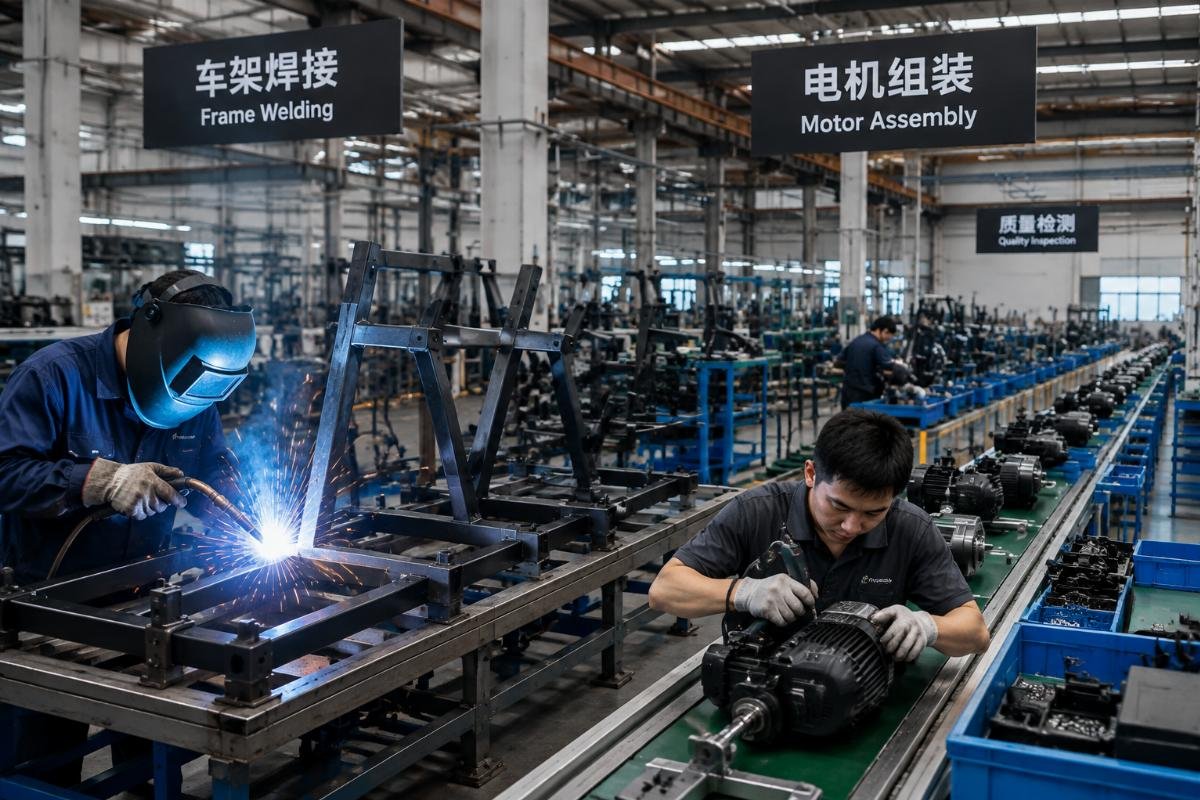
| Welding Standard | Spot welds | Continuous manual weld | Robotic continuous weld |
| Certification Readiness | Self-declared only | Partial CE docs | Full CE/EN ISO 20957 file |
[NEED_CITE: motor duty cycle classification standards for commercial cardio equipment]
A boutique studio owner in Latin America once ordered a single unit to test before committing to a larger stair climber sourcing strategy. The machine ran fine for the first few months, but the motor overheated during peak hours because the duty cycle was rated for light residential use, not all-day commercial traffic. The replacement motor cost nearly as much as the original unit price difference between the cheap option and a proper commercial-grade model.
The frame tells a similar story. Heavier doesn’t always mean better — what matters is steel thickness and welding continuity. A machine that looks bulky might use thin-wall tubing with spot welds at the joints, while a leaner frame with reinforced gauge and continuous welds will outlast it under real-world abuse. [NEED_CITE: frame structural integrity testing methods per EN ISO 20957]
How to Avoid Certification and Compliance Traps?
Missing CE labels, incorrect voltage plates, or incomplete test reports will stall your shipment at customs — verify every document before production starts, not after the container is sealed.
Certification is the single most underestimated risk in international fitness equipment sourcing. Many buyers assume the factory "handles it," only to discover weeks later that the paperwork doesn’t match the actual machine configuration. Here’s a verification checklist any serious stair climber sourcing strategy should include:
- CE Declaration of Conformity — must reference the exact model number and serial range being shipped, not a generic template. [NEED_CITE: CE Declaration of Conformity requirements for fitness machinery under EU Machinery Directive]
- EN ISO 20957 Test Report — covers structural load, step mechanism endurance, and electrical safety. Confirm the report matches your voltage and frequency configuration.
- Motor Nameplate Compliance — voltage, amperage, IP rating, and CE mark must be physically printed on the motor housing, not just listed in the manual.
- Emergency Stop and Safety Labeling — placement and language must match the destination market’s requirements.
- Packaging Markings — gross weight, dimensions, HS code, and country of origin must be externally visible on every crate.
A distributor in Southeast Asia learned this the hard way. They placed a mixed container order — stair climbers, cable machines, and free weights — and assumed the CE documentation covered everything. When the shipment arrived, two of the stair climber models had nameplates showing a different voltage than what was declared. The local inspector held the entire container until corrected documentation was flown in from Shandong. The delay added weeks to their rollout timeline and cost them a penalty clause with their hotel client.
The fix is simple but often skipped: request a pre-production sample of every compliance document, cross-check it against your purchase order specs, and have the factory send photos of the actual nameplates before crating. A reliable stair climber supplier will do this proactively. If they hesitate, that’s your signal to look elsewhere.
What’s the Smart Way to Negotiate MOQ and Pricing?
Factory-direct pricing undercuts distributor markup substantially — but only if you structure the order to fill a container efficiently. Single-unit pricing and full-container pricing tell two very different stories.
Most first-time buyers start by asking for the unit price. That’s the wrong starting point. The real conversation should be about landed cost per unit — meaning the machine price, plus freight, plus customs duty, plus any compliance rework risk, spread across the total order quantity.
Here’s the reality of how pricing tiers typically work in a stair climber sourcing strategy:
| Order Structure | Unit Price Position | Freight Efficiency | Compliance Risk |
|---|---|---|---|
| Single unit / LCL | Highest per-unit cost | Poor — shared container, higher damage risk | Higher — less factory attention to docs |
| Partial container | Moderate | Acceptable | Moderate |
| Full 40HQ mixed | Lowest per-unit cost | Best — optimized CBM loading | Lowest — factory prioritizes documentation |
[NEED_CITE: container load optimization economics for fitness equipment importers]
A regional distributor in the Middle East initially wanted to order stair climbers in small batches to test the market. The unit price was high, freight was expensive per machine, and the factory’s documentation attention was minimal. After switching to a full 40HQ container that mixed stair climbers with power racks, cable crossovers, and plate-loaded machines, the per-unit landed cost dropped noticeably — even though the total order value was higher. The factory also assigned a dedicated quality inspector to the order because the volume justified it.
The key insight: MOQ flexibility isn’t just about the factory saying "yes" to a small order. It’s about whether the factory can help you build a container mix that makes economic sense. A stair climber OEM manufacturer worth working with will offer guidance on SKU combinations, CBM calculations, and loading plans — not just quote you a unit price and wait for your purchase order.
How to Plan a Mixed-Container Order for Maximum Efficiency?
Combining stair climbers with strength equipment and free weights fills containers tighter, cuts per-unit freight, and gives you a complete gym package — if the loading plan is done right.
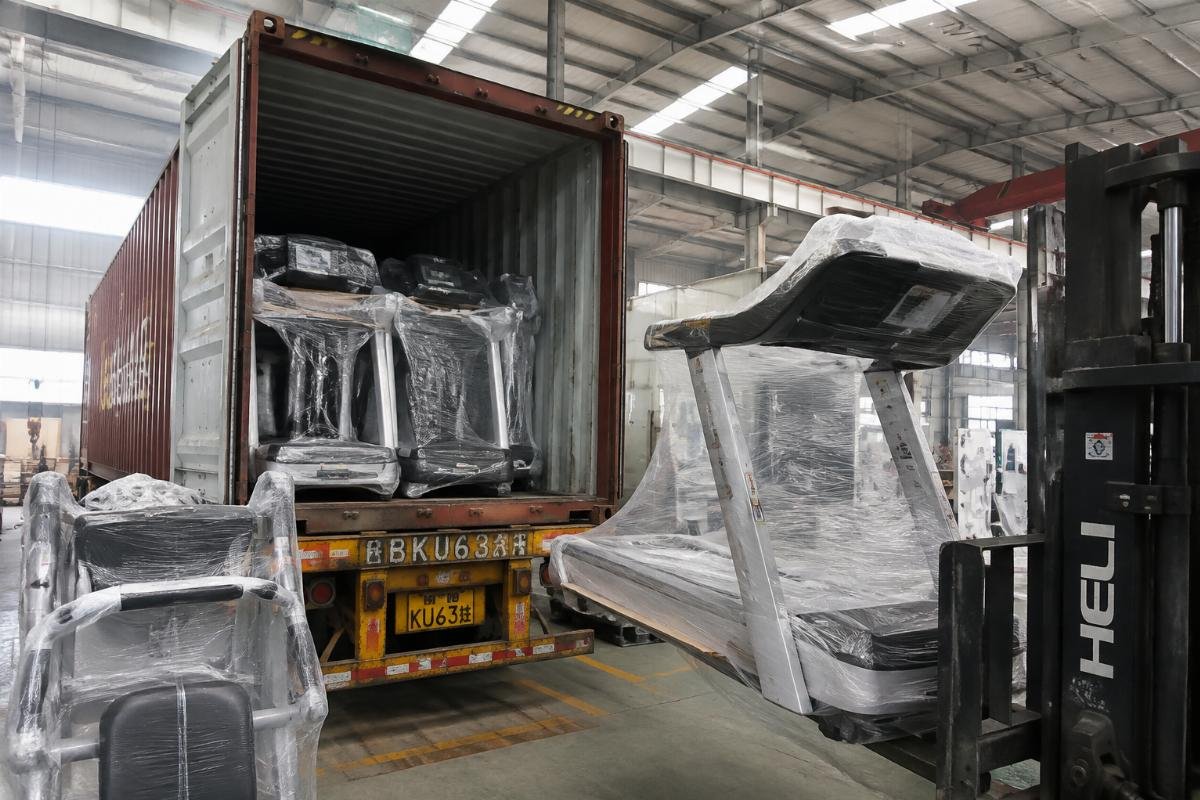
This is where a lot of buyers leave money on the table. They order cardio from one supplier, strength from another, and accessories from a third — then pay for three separate shipments, each running at partial capacity. A smarter stair climber sourcing strategy consolidates everything into one container, or at least coordinates loading across a single manufacturer’s product range.
Here’s a practical approach to mixed-container planning:
- Start with CBM calculations — get the cubic meter dimensions of every SKU before finalizing the order. Stair climbers are bulky but have usable space inside the frame cavity; free weights are dense and fill floor space efficiently.
- Layer heavy items at the bottom — plate-loaded machines and weight stacks go on the container floor. Stair climbers and cable machines stack above. Free weights and accessories fill gaps.
- Protect high-value surfaces — stair climber consoles and display panels need internal foam protection and should never bear weight from above.
- Label every crate by destination zone — if the end user is a hotel fitness center, label crates by floor area (cardio zone, strength zone, free weight zone) so unpacking on-site is efficient.
- Include a spare parts kit in the same container — drive belts, step chain links, console fuses, and emergency stop switches. The cost is minimal relative to the container freight, and it prevents downtime if a component fails in the first year.
[NEED_CITE: container space utilization best practices for mixed fitness equipment shipments]
A hotel developer in the Gulf region used this approach for a chain rollout. Instead of ordering stair climbers separately from the rest of the gym equipment, they worked with a single manufacturer to build a complete package — cardio, selectorized strength, free weights, and flooring — all in coordinated container loads. The result was a shorter overall delivery timeline, lower per-unit freight, and a single point of contact for any quality or documentation issue.
What After-Sales Support Should You Expect from a Chinese Supplier?
Spare parts availability and remote technical guidance matter far more than a long warranty period printed on paper. A warranty without parts is just a promise.
Every stair climber sourcing strategy should include a clear after-sales expectations framework. The warranty period itself is almost secondary — what matters is whether the factory can actually deliver replacement parts quickly and provide technical support that solves real problems, not just reads from a script.
Here’s what a realistic after-sales support structure looks like:
- Spare parts inventory commitment — the manufacturer should hold commonly worn components (drive belts, step rollers, console boards) in stock and ship them within a defined timeframe. [NEED_CITE: spare parts supply chain benchmarks for fitness equipment manufacturers]
- Remote troubleshooting capability — video call support for diagnosing error codes, motor issues, or console malfunctions. A good stair climber OEM manufacturer will have English-speaking technicians available during overlapping business hours.
- Parts compatibility documentation — exploded diagrams and part numbers should be provided at the time of purchase, not requested later when something breaks.
- Warranty claim process clarity — define what’s covered, what requires photos or video evidence, and how replacement parts are shipped (air freight for urgent items, sea freight for bulk).
A fitness chain operator in Eastern Europe had a stair climber fail mid-peak season. The original supplier’s response was to "send it back for repair" — which meant the machine was out of service for months and the operator had to buy a temporary replacement. A supplier with proper after-sales infrastructure would have shipped a replacement motor and drive belt by air within days, keeping the machine running.
The lesson: when you evaluate a stair climber supplier, ask specifically about parts lead times, not just warranty length. A one-year warranty with parts shipped in a week is infinitely more valuable than a three-year warranty with parts that take months to arrive.
Conclusion
A winning stair climber sourcing strategy is built on spec verification, compliance discipline, container efficiency, and real after-sales capability — not just the lowest unit price. Commercial buyers who focus on motor duty cycles, frame construction, and mixed-container loading consistently achieve better landed costs and fewer operational disruptions than those who chase quotes alone.