Commercial Exercise Equipment Container Discount Wholesale Supplier
The real container discount isn’t about unit price—it’s about cubic efficiency, MOQ tier stacking, and Incoterm selection.
When sourcing from a commercial exercise equipment container discount wholesale supplier, the actual savings come from optimizing how much equipment fits into a 40HQ, negotiating volume-based price breaks without overcommitting to inventory, and choosing the right shipping terms based on your own freight forwarding leverage. A poorly loaded container can waste over a fifth of its volume, while a well-structured annual framework agreement can push discounts significantly deeper than a one-off order.
I still remember standing in a Jebel Ali warehouse at five in the morning, watching a forklift driver peel open carton after carton of plate-loaded machines. The hotel buyer had ordered a full container of strength equipment, and when the shipment arrived in Dubai, the weight stack plates were off by a couple of millimeters from the contracted spec. The client refused the lot. We spent days re-measuring every single plate with a caliper, and the emergency air-freight replacement shipment cost more than the ocean freight savings we had negotiated. That was the moment I stopped looking at FOB unit prices and started obsessing over what actually happens inside a steel box before it leaves the factory yard. [NEED_CITE: root cause distribution for fitness equipment shipment disputes at destination ports]
Understanding how a commercial exercise equipment container discount wholesale supplier calculates real savings requires looking past the quotation sheet and into the loading bay.
What Does "Container Discount" Actually Mean in Fitness Equipment Buying?
A container-level discount is a composite of three variables: packing density, MOQ tier progression, and Incoterm structure—not a single line-item reduction.
Most first-time buyers assume that ordering a full container automatically unlocks the lowest unit price. In reality, factories price based on how efficiently the container is filled and what the buyer’s commitment looks like over time. A buyer who orders one treadmill and a single Smith machine pays a retail-adjacent price. A buyer who commits to a 40HQ of mixed cardio and strength equipment, with a rolling annual forecast, accesses a completely different pricing tier. [NEED_CITE: MOQ tier pricing models in commercial fitness equipment manufacturing]
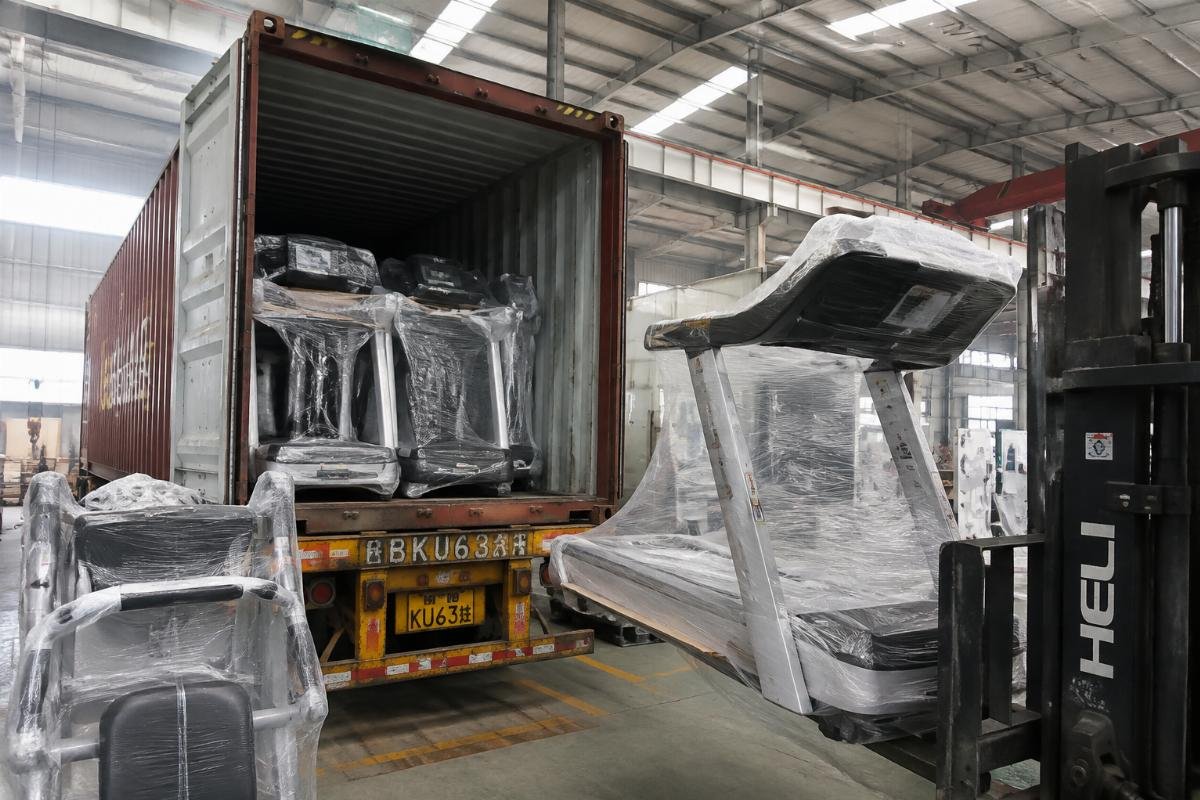
The packing density variable is where most money leaks. A 40HQ container has a fixed internal volume, but the way different equipment categories stack together determines whether you ship air or ship product. Plate-loaded strength machines ship flat-packed and nest efficiently. Commercial treadmills come in bulky crates with significant dead space around the motor housing and console. Functional training accessories like battle ropes, plyo boxes, and adjustable dumbbells fill the gaps between larger items. A supplier who understands this mix can design a loading plan that pushes cubic utilization well beyond what a single-product order achieves.
| Factor | Single-SKU Full Container | Mixed-SKU Optimized Container | Loose Bulk Without Plan |
|---|---|---|---|
| Cubic Utilization | Standard | Noticeably higher | Noticeably lower |
| Per-Unit Freight Allocation | Moderate | Substantially reduced | Wasted |
| Destination Unpacking Complexity | Low | Moderate | High |
| Damage Risk in Transit | Low | Controlled | Vulnerable |
A Middle East hotel developer once ordered thirty selectorized machines in a single container, all the same model. The factory loaded them efficiently, but when the shipment reached the project site, the client realized they had no free-weight zone and no functional training equipment. They had to place a second, smaller order for racks, benches, and dumbbells—shipped as LCL at a per-cubic-meter rate that was several times higher than the original FCL cost. The combined landed cost per piece ended up far above what a single mixed container would have delivered.
The takeaway is straightforward: a commercial exercise equipment container discount wholesale supplier who only quotes unit price without discussing the loading plan is leaving money on the table.
Which Equipment Mixes Best in One Container to Maximize Volume?
The ideal container mix pairs heavy, flat-packed strength equipment with bulky but lightweight cardio units, then fills residual voids with free-weight accessories and flooring.
Commercial gym buyers typically need three equipment categories: cardio, strength, and free weights. Each category has a different packaging profile, and understanding how they interact inside a container is the difference between a cost-effective shipment and an expensive one. [NEED_CITE: fitness equipment packaging dimensions and container loading optimization standards]
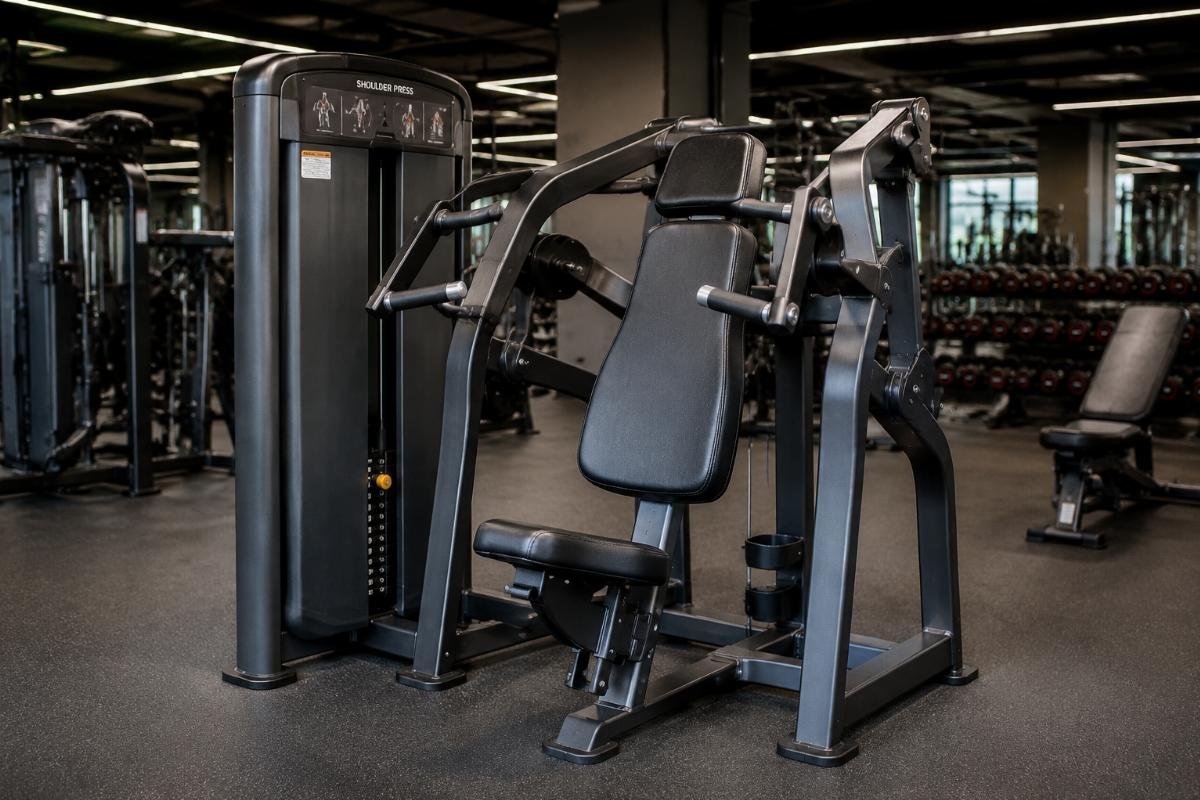
Cardio equipment—treadmills, ellipticals, exercise bikes—tends to ship in large crates because the assembled frame cannot be fully broken down. The motor compartment and console create irregular shapes that leave gaps. Strength machines, particularly plate-loaded and selectorized models, are designed for flat-pack shipping: the frame separates from the weight stack guide rods, and the seat pads ship separately. This means a single strength machine occupies significantly less cubic space than its assembled footprint suggests. Free weights—dumbbells, barbells, weight plates, kettlebells—are dense and compact, often shipped on pallets or in reinforced cartons that slot neatly under taller items.
| Equipment Category | Packaging Profile | Container Role |
|---|---|---|
| Commercial Cardio | Bulky, irregular crate | Primary volume consumer |
| Plate-Loaded Strength | Flat-pack, nestable | High density, structural base |
| Selectorized Machines | Semi-flat, moderate crate | Mid-density filler |
| Free Weights | Compact, heavy pallets | Void filler, weight stabilizer |
| Functional Accessories | Small cartons, flexible | Gap filler, last-layer coverage |
| Gym Flooring | Rolled or tiled pallets | Bottom layer or side wall |
The loading sequence matters as much as the product selection. Heavy free-weight pallets go on the container floor to stabilize the center of gravity. Flat-packed strength frames stack on top. Cardio crates are positioned upright against the container walls, with their irregular shapes facing inward so that smaller accessory cartons can be wedged into the gaps. Gym flooring rolls line the side walls as both product and protective buffer.
A distributor in West Africa received a mixed container of treadmills and power racks on their first order. The factory had loaded everything on uniform pallets without considering the height difference between the treadmill crates and the rack components. The upper third of the container was essentially empty air. On the reorder, the loading plan was redesigned: treadmills stood vertically, power racks were flat-packed and stacked horizontally across the middle layer, and the remaining space was filled with adjustable benches and dumbbell sets. The same container carried substantially more sellable product without increasing the freight cost.
Working with a commercial exercise equipment container discount wholesale supplier who provides a detailed loading plan before production begins is non-negotiable for any buyer serious about landed cost optimization.
How to Negotiate MOQ Tiers Without Overcommitting Inventory?
The negotiation lever is not the first order—it is the annual framework commitment that unlocks progressive price breaks without forcing warehouse overflow.
Fitness equipment is not a fast-moving consumer good. A single commercial treadmill occupies significant floor space in a warehouse, and holding excess inventory ties up working capital for extended periods. Buyers who understand this dynamic structure their negotiations around rolling forecasts rather than one-time purchase orders. [NEED_CITE: MOQ tier negotiation strategies in commercial fitness equipment import]
Most factories operate with a tiered pricing structure: single-unit pricing for sample or trial orders, half-container pricing for buyers who consolidate multiple SKUs into a 20GP, full-container pricing for 40HQ commitments, and annual framework pricing for buyers who commit to a specified volume over twelve months with quarterly or monthly call-offs. The discount gap between a single full-container order and an annual framework agreement can be substantial—easily the difference between a viable margin and a razor-thin one.
The key is to negotiate the framework without taking delivery of the entire volume at once. A typical structure works like this: the buyer and supplier agree on an annual volume commitment, lock in the framework pricing, and then schedule production and shipment in quarterly batches. Each batch ships as a full container or a consolidated LCL depending on the mix. The buyer gets the framework price from the first shipment, and the supplier gets a predictable production schedule.
A Latin American gym chain started with a single-container trial order of cardio and strength equipment for their flagship location. The unit price was standard full-container level. After the first gym opened successfully, they committed to an annual framework covering four additional locations. The framework agreement moved them into a higher discount tier, and because the factory could plan production across multiple months, they also offered more favorable payment terms. The chain avoided the capital burden of ordering all five gyms’ worth of equipment upfront, while still accessing the best available pricing.
Buyers should be cautious about one trap: committing to a framework volume that exceeds actual project pipeline. If the annual commitment is not met, some suppliers will claw back the discount on shipments already delivered. A safer approach is to negotiate a framework with a minimum take-or-pay threshold set conservatively below the realistic project pipeline, with an upside clause that deepens the discount if the buyer exceeds the threshold.
A commercial exercise equipment container discount wholesale supplier who offers flexible MOQ structures—allowing buyers to start with a single unit, scale to a full container, and then transition to an annual framework—is aligned with how real gym projects develop over time.
FOB vs CIF: Which Shipping Term Saves You More on Gym Equipment?
The choice between FOB and CIF depends entirely on whether the buyer has their own freight forwarding relationships and can negotiate ocean rates independently.
Incoterms are one of the most misunderstood elements of international fitness equipment procurement. Many buyers default to CIF because it feels simpler—the supplier handles everything up to the destination port. But CIF pricing from the supplier’s side includes a freight markup, and that markup is rarely competitive with rates a buyer can secure through their own forwarder. [NEED_CITE: Incoterm cost comparison for fitness equipment import shipments]
FOB means the supplier delivers the goods to the origin port and clears them for export. From that point, the buyer’s freight forwarder takes over: ocean freight, insurance, destination port charges, customs clearance, and inland delivery. If the buyer has a forwarder with strong volume contracts on the China-to-destination trade lane, FOB will almost always be cheaper than CIF. The buyer controls the freight cost, can shop for competitive rates, and has direct visibility into every charge.
CIF means the supplier arranges and pays for ocean freight and insurance to the destination port. The supplier’s freight cost is embedded in the unit price, and the buyer has no visibility into what the supplier actually pays the carrier. In many cases, the supplier adds a margin on the freight itself. The buyer only discovers the real freight cost when they compare the CIF quote against an independent FOB-plus-freight quote.
DDP (Delivered Duty Paid) takes the supplier’s responsibility all the way to the buyer’s door, including import duties and taxes. While this sounds convenient, DDP pricing from a Chinese supplier often includes significant markups on duty calculation and inland delivery at destination. Buyers in markets with complex duty structures—such as countries with anti-dumping duties on certain fitness equipment categories—should be especially cautious with DDP, as the supplier may not have accurate duty rate data.
| Incoterm | Buyer’s Freight Control | Typical Cost Position | Best For |
|---|---|---|---|
| FOB | Full control via own forwarder | Noticeably lower for buyers with established forwarders | Experienced importers with freight relationships |
| CIF | None, supplier-controlled | Moderate, includes supplier freight markup | First-time importers, small shipments |
| DDP | None, full supplier responsibility | Noticeably higher, includes duty and inland markup | Buyers in simple duty environments, door-delivery preference |
A distributor in Southeast Asia had been buying CIF for years because it was easier. When they finally obtained three independent FOB freight quotes from their local forwarders, they discovered that the ocean freight component embedded in their CIF price was substantially higher than the market rate. Switching to FOB saved them a significant amount on every container shipped—savings that compounded across their annual volume.
The rule of thumb: if you ship multiple containers per year, invest in a reliable freight forwarder and buy FOB. If you ship one or two containers and do not have forwarding relationships, CIF may be acceptable for simplicity, but always benchmark it against an independent freight quote.
What Hidden Costs Kill Your Container-Level Savings?
Destination port拆柜 charges, HS code misclassification, and emergency air-freight for replacement parts are the three silent profit destroyers that erase container-level discounts.
The container discount looks great on the invoice from the supplier. But the real test is the landed cost per unit after the container reaches the destination country and the equipment is ready for installation. Three categories of hidden cost routinely undermine the savings.
The first is destination unpacking and distribution complexity. A mixed container carrying cardio, strength, and free-weight equipment for multiple end clients requires deconsolidation at a warehouse near the destination port. Each pallet must be sorted, inspected, and staged for final delivery. If the buyer is a distributor serving multiple gym clients in the same city, the warehouse handling cost per unit increases with the number of distinct SKUs in the container. A single-SKU container is far simpler to distribute. The buyer must weigh the cubic efficiency benefit of mixed loading against the downstream handling cost. [NEED_CITE: fitness equipment import destination handling and deconsolidation cost factors]
The second is HS code misclassification. Fitness equipment falls under several different Harmonized System codes depending on the specific product type, and duty rates vary significantly between codes. A commercial treadmill may be classified differently from a home treadmill. A plate-loaded machine and a selectorized machine may fall under different subheadings. If the buyer’s customs broker uses an incorrect code, the shipment may be held for inspection, reassessed at a higher duty rate, or subject to penalties. The cost of a classification error can exceed the freight savings from the entire container.
The third is emergency air-freight for replacement parts. This is the scenario I witnessed firsthand in Dubai. When equipment arrives with manufacturing defects or specification deviations, the buyer cannot wait for ocean-freight replacement parts—gym opening dates do not shift. Air freight for heavy fitness equipment components is extraordinarily expensive. A single pallet of weight stack plates flown from China to the Middle East can cost several times what the ocean freight savings were on the original container. The only defense is rigorous pre-shipment inspection and clear specification documentation before production begins.
A commercial exercise equipment container discount wholesale supplier who provides detailed packing lists with HS codes, offers pre-shipment inspection access, and maintains a spare parts inventory for rapid dispatch is protecting the buyer’s real landed cost—not just the FOB invoice price.
Conclusion
Container-level discounts in fitness equipment procurement are earned through packing efficiency, framework commitments, and Incoterm discipline—not through haggling over unit price alone. Buyers who master the interplay between mixed-container loading, progressive MOQ tiers, and FOB freight control consistently achieve lower landed costs than those who focus solely on the supplier’s quotation. The hidden costs at destination—handling complexity, duty classification errors, and emergency air-freight—reward buyers who plan beyond the port of loading and partner with a commercial exercise equipment container discount wholesale supplier who thinks in terms of total project cost, not just factory gate price.