
Commercial Elliptical Pricing Guide: OEM Manufacturer for Oman Buyers
The price tag on a commercial elliptical is never just a number—it is a composite of steel thickness, bearing grade, packaging volume, and the customs duty waiting at Sohar port.
For Oman-based gym owners and regional distributors, commercial elliptical pricing typically lands between $300 and $800 per unit on an FOB basis, depending on whether the machine targets light commercial use (hotels, boutique studios) or heavy commercial deployment (high-traffic fitness chains). Anything quoted below this range almost always signals compromised frame tubing or non-sealed bearings that will fail under sustained use.
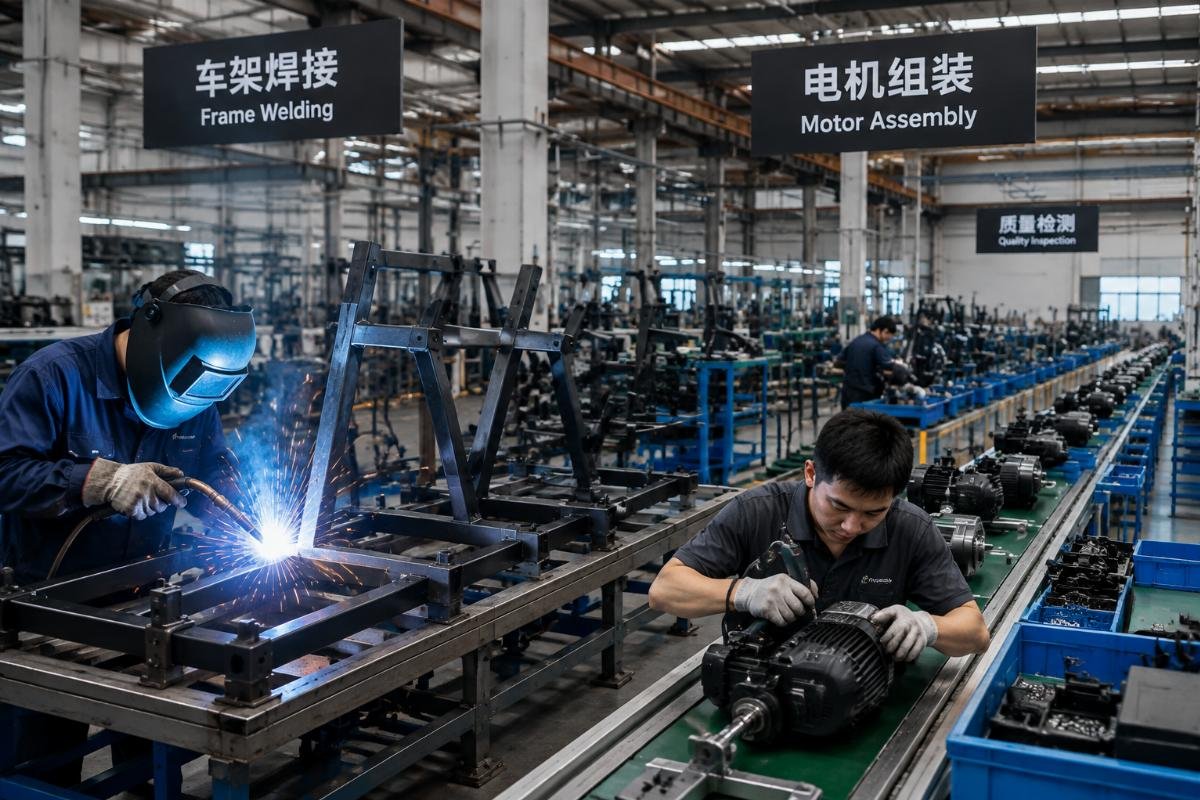
I still remember the smell of iron filings sticking to my gloves back in the Ningjin workshop, welding flywheel shrouds before dawn shifts. Years later, standing on a Lagos dock watching a hotel client’s technician struggle to pry open a seized pedal arm bearing—because the spec sheet said "sealed" but the actual shipment used open-type cartridges—I learned to dissect every quotation down to the bolt grade. [NEED_CITE: root cause analysis of fitness equipment bearing failures in humid coastal environments] Oman buyers are shrewd; they want the price broken into pieces they can verify.
Let us walk through exactly what drives commercial elliptical pricing, where the hidden costs lurk, and how smart buyers in the Gulf region structure their orders to protect margins.
What Is the Real Price Range for Commercial Ellipticals in Oman?
The FOB price for a genuine commercial-grade elliptical sits firmly between $300 and $800, with the spread determined by flywheel mass, stride length, and whether the console includes a self-powered generator.
When I pull up recent shipment records for cardio equipment heading to Middle Eastern ports, the data clusters into three distinct tiers. Light commercial units—think hotel fitness corners with moderate daily usage—occupy the lower end. Heavy commercial machines built for twelve-hour daily operation in chain gyms command the upper boundary. [NEED_CITE: average export unit price range for commercial fitness equipment from China to GCC countries]
Here is how the tiers break down in practice:
| Specification Tier | Frame Tubing | Flywheel Weight | Stride Length | Typical FOB Position |
|---|---|---|---|---|
| Light Commercial (Hotel) | Standard wall thickness | Moderate mass | Standard stride | Lower range |
| Mid Commercial (Studio) | Reinforced wall thickness | Substantial mass | Extended stride | Mid range |
| Heavy Commercial (Chain Gym) | Heavy-duty wall thickness | Maximum mass | Full commercial stride | Upper range |
A Middle East distributor once showed me a quotation from a competing source that looked remarkably attractive—until I asked for the salt-spray test report. [NEED_CITE: salt-spray testing methodology per ISO 9227 for fitness equipment surface treatment] The supplier could not produce one. That single missing document told me everything about the frame coating process, and by extension, how quickly the machine would show rust in Oman’s humid coastal climate.
The lesson here is straightforward: commercial elliptical pricing below the established range is not a bargain. It is a deferred maintenance bill.
Which Core Specifications Directly Determine Your Procurement Cost?
Flywheel weight, stride length, and the presence of a self-powered generation system are the three parameters that create the widest price gaps between seemingly similar ellipticals.
Let me explain why each matters, because I have seen buyers fixate on the wrong metrics.
Flywheel Weight and the Stability Misconception
Most people assume a heavier flywheel automatically means a better machine. The reality is more nuanced. What matters is not raw mass but the rotational inertia profile and the bearing seal rating that supports it. A well-engineered moderate-weight flywheel with precision bearings delivers smoother stride轨迹 than a heavier flywheel running on inferior cartridges. [NEED_CITE: biomechanical analysis of elliptical stride trajectory stability and bearing seal requirements]
When I inspect production runs, I check the bearing housing for double-lip seals rated for contaminated environments. Single-lip seals save a few dollars per unit at the factory but allow sweat and dust ingress that destroys the bearing within months in a Gulf climate.
Stride Length: The 50cm Commercial Threshold
Anything below a 50cm stride length is fundamentally a home-grade machine dressed in commercial paint. True commercial ellipticals start at 50cm and extend beyond, accommodating users of varying heights without compromising biomechanical efficiency. The longer stride requires a longer main frame, more steel, and a reinforced pivot assembly—all of which push commercial elliptical pricing upward.
Self-Powered Generation Systems
Machines equipped with self-generating consoles eliminate the need for external power supplies and reduce installation complexity. However, the generator unit and its associated electronics add meaningful cost. For hotel projects where outlets are limited, this premium pays for itself. For warehouse-style gyms with abundant power infrastructure, it may be an unnecessary expense.
| Parameter | Light Commercial | Heavy Commercial |
|---|---|---|
| Frame Tubing Wall | Standard | Heavy-duty |
| Bearing Seal Type | Single-lip | Double-lip sealed |
| Stride Length | Standard | Extended (50cm+) |
| Console Power | External adapter | Self-generated |
| Pedal Material | Basic composite | Reinforced aluminum |
A boutique studio owner in Muscat once asked me why his competitor’s machine felt smoother despite having a lighter flywheel. The answer was in the pivot bearings—double-lip sealed, precision-ground races versus the single-lip cartridges in the competitor’s unit. The bearing upgrade added modest cost but transformed the user experience.
Why Does Full Container Load Procurement Reduce Per-Unit Cost Significantly?
The per-unit landed cost for commercial ellipticals drops substantially when buyers commit to full container loads rather than loose cargo, primarily because packaging optimization and freight amortization work in the buyer’s favor.
This is where many first-time importers get caught. They focus obsessively on the FOB unit price and ignore the logistics math that determines what actually lands at Sohar or Muscat port.
Let me walk you through the calculation framework I use with clients.
The Packaging Volume Factor
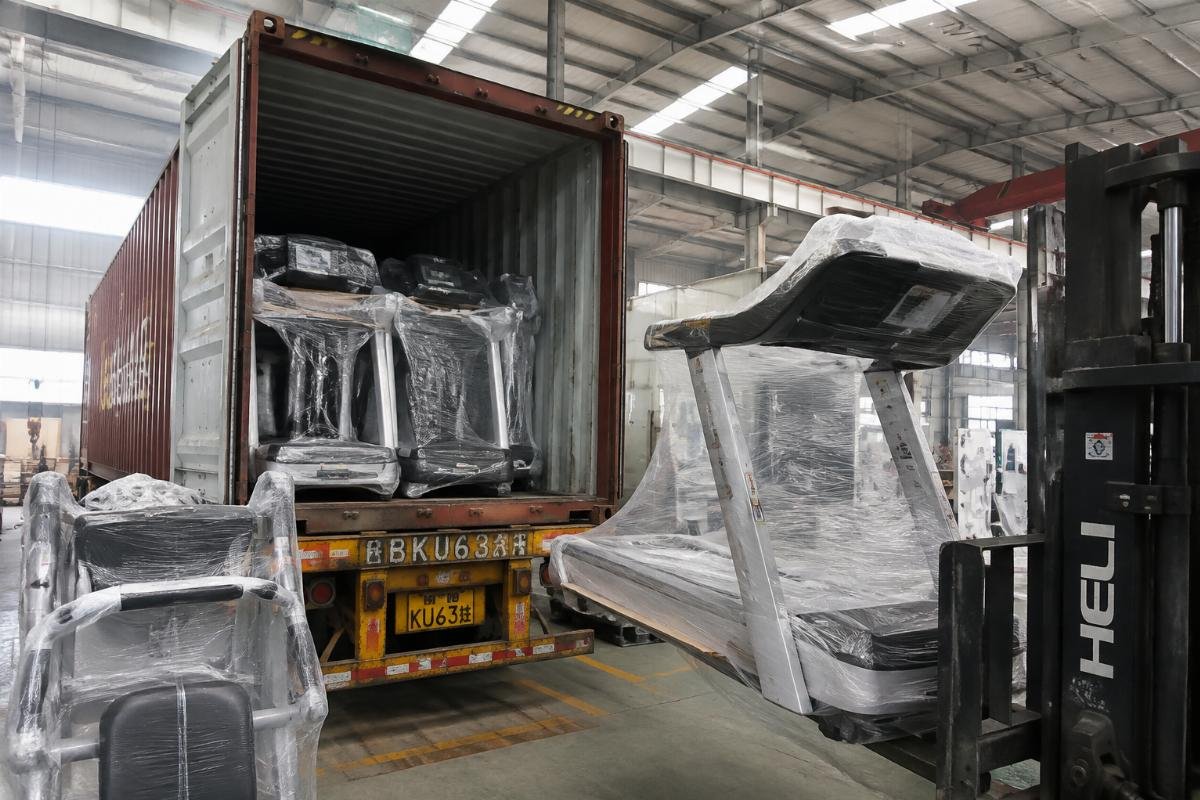
Commercial ellipticals ship in knocked-down (KD) configuration to maximize container utilization. A well-designed KD package reduces the volumetric footprint significantly compared to fully assembled shipping. The difference between a poorly packaged machine and an optimized KD design can mean fitting additional units in the same container—or, conversely, paying to ship air.
When I work on container consolidation projects, I calculate the volumetric efficiency carefully. For mixed loads combining ellipticals with strength equipment, the goal is to nest the packaging so that every cubic meter of the container carries revenue-generating product. [NEED_CITE: container loading optimization methodology for mixed fitness equipment shipments]
Freight Amortization Logic
Ocean freight rates are quoted per container, not per unit. Whether you load a partial container or a full one, the base freight cost remains similar. Spread across more units, the per-unit freight charge drops noticeably. For Oman-bound shipments, the difference between less-than-container-load and full-container-load procurement can represent a significant percentage of the total landed cost.
Oman-Specific Landing Cost Formula
The actual cost equation for an Omani buyer looks like this:
Landed Cost = (FOB Unit Price × Quantity) + Ocean Freight + Customs Duty + Port Clearance Fees + Inland Transportation
The customs duty in Oman is a fixed percentage, but the port clearance fees and inland trucking costs are where unexpected expenses accumulate. [NEED_CITE: Oman customs duty rate and port clearance fee structure for fitness equipment imports]
I always advise clients to request the packed volume per unit in cubic meters before finalizing a purchase. A machine that appears cheap on an FOB basis may become expensive once you calculate how many units actually fit in a container.
How Do OEM Branding and After-Sales Parts Factor Into the True Cost?
OEM branding costs follow a diminishing marginal curve based on order volume, and after-sales parts provisioning is non-negotiable for any serious commercial deployment.
Let me address both elements, because they routinely appear as surprises in post-purchase cost discussions.
The OEM Mold Cost Allocation
When a distributor requests custom branding—logo engraving, custom console graphics, proprietary color schemes—the factory must create or modify molds and tooling. This is a fixed cost that gets amortized across the order quantity.
The math is simple but often misunderstood. If the mold cost remains constant, doubling the order quantity cuts the per-unit branding surcharge in half. I have seen buyers place small trial orders with custom branding, only to discover that the per-unit mold allocation made the economics unworkable. The smart approach is to negotiate mold cost absorption into the unit price once cumulative orders reach a threshold.
The After-Sales Parts Conversation
Here is where I see the most dangerous cost-cutting. Some buyers decline the spare parts package to save a small amount upfront, then face catastrophic downtime when a pedal bearing fails or a drive belt snaps during peak operating hours.
For any commercial elliptical deployment, I insist that the initial order includes a proportional spare parts kit covering high-wear components: pedal bearings, drive belts, pivot bushings, and console batteries. The cost of a single emergency service call—technician time, replacement part air-freight, customer goodwill—dwarfs the cost of provisioning spares at the time of original purchase.
| Cost Element | Small Order Impact | Large Order Impact |
|---|---|---|
| OEM Mold Allocation | Substantial per-unit burden | Noticeably reduced per unit |
| Spare Parts Kit | Higher percentage of order value | Lower percentage, better coverage |
| Emergency Service Risk | Substantially extended downtime | Mitigated through inventory |
A regional distributor once told me about a hotel project where three ellipticals went down simultaneously because no spare bearings were on hand. The emergency air-freight of replacement parts, combined with technician dispatch costs, erased the profit from the entire project. Now that distributor includes a spare parts package in every quotation as standard practice.
Conclusion
Commercial elliptical pricing is a function of specification integrity, procurement volume, and logistics intelligence—not merely the number on a quotation sheet.
Buyers who understand the relationship between frame construction, bearing quality, and long-term reliability make purchasing decisions that protect their reputation and their margins. Those who chase the lowest FOB price without examining the underlying specifications inevitably discover that the cheapest machine is the most expensive one to own. Structure your orders to maximize container utilization, provision spare parts from day one, and verify every claim with documentation rather than promises.