Squat Rack Bulk Wholesale Return Policy for Gym Buyers
Returning a full container of squat racks to China is almost never the financial or logistical solution.
For bulk wholesale buyers, the return policy for heavy fitness equipment does not involve shipping goods back to the factory. Instead, it relies on pre-shipment quality control, immediate spare parts replacement via air freight, and localized warranty support to resolve defects without disrupting gym operations.
I still remember the silence in the warehouse office when the phone rang from Valparaíso. A client in Chile had just received a container of power racks, but customs detained the shipment due to a mismatched HS code in the documentation. The demurrage charges were accumulating daily, quickly surpassing the value of the steel itself. In that moment, the concept of "returning" the goods became absurd. The cost of reverse logistics for heavy industrial items like a squat rack return policy wholesale arrangement is prohibitive. Freight rates, customs duties, and handling fees make sending defective units back to Shandong economically unviable. This reality shapes how professional manufacturers structure their after-sales support. It is not about reversing the supply chain; it is about forward-moving resolution. [NEED_CITE: Incoterms 2020 rules regarding risk transfer and buyer responsibilities]
Understanding this distinction is critical for regional distributors and commercial gym chains. When you place a container-load order, you are not just buying steel tubes and powder coating; you are buying a risk mitigation strategy. The following sections detail how this strategy works in practice, moving away from the misconception of physical returns toward effective warranty execution.
Why Returning Bulk Squat Racks to China Is Rarely Feasible?
The primary reason physical returns are excluded from most squat rack return policy wholesale agreements is the asymmetry of logistics costs. Shipping a forty-foot container from China to North America or Europe is expensive. Shipping it back is often double that cost, plus import duties that may not be refundable. For a distributor importing fitness equipment, the math simply does not work. If five percent of a shipment has minor cosmetic issues, the cost to return those units exceeds the total profit margin of the entire container.
Consider a scenario involving a Middle East distributor who received fifty units with minor powder coat scratches. The instinct might be to reject the shipment. However, returning a single container would incur costs several times higher than the value of the damaged goods. Instead, the manufacturer sent a ratio of spare parts and touch-up kits freely. This approach resolved the issue within days, whereas a return process would have taken months and resulted in significant financial loss for both parties. [NEED_CITE: Industry standards for freight insurance and claim limitations]
Furthermore, customs regulations in many countries treat re-imported goods as new entries, subjecting them to full taxation again. There is no streamlined "return lane" for used or defective commercial gym equipment at most international ports. The administrative burden of proving that these goods are the same ones that left the country, in the same condition, is immense. Therefore, the industry standard has shifted toward replacement and repair. This is why a robust squat rack return policy wholesale framework focuses on what stays in your gym, not what leaves it.
What Does Our Wholesale Warranty Actually Cover?
A clear warranty distinguishes between structural integrity and wearable components. Many buyers assume that a factory warranty covers all damage, including issues arising during transit. This is a dangerous assumption. Under FOB terms, risk transfers to the buyer once the goods pass the ship’s rail at the port of loading. Any damage occurring during ocean transit is typically the responsibility of the carrier or the insurance provider, not the manufacturer. [NEED_CITE: General average and particular average principles in marine insurance]
However, manufacturing defects are a different matter. A comprehensive warranty for bulk orders covers structural failures in the frame, such as weld cracks or bending under rated loads. These are rare but critical. The warranty also covers functional parts like pulleys, bearings, and cables, but these are often treated as consumables with a shorter coverage period. For a squat rack return policy wholesale agreement, the key is defining what constitutes a defect versus normal wear or logistics damage.
| Component Category | Coverage Type | Resolution Method | Typical Timeframe |
|---|---|---|---|
| Structural Frame | Long-term Warranty | Replacement Parts or Local Repair | Immediate Assessment |
| Powder Coat Finish | Short-term/Logistics | Touch-up Kits or Spare Panels | Days via Air Freight |
| Hardware (Bolts/Nuts) | Pre-shipment QC | Free Replacement Kits | Included in Container |
| Wearable Parts (Pulleys) | Limited Warranty | Spare Parts Supply | Standard Lead Time |
This table illustrates the qualitative difference in coverage. Notice that "Replacement Parts" is the dominant resolution method. For a European hotel chain that once received twenty power racks with missing bolts, the solution was not to return the racks. The manufacturer air-freighted the missing hardware within days. The downtime was minimal, and the gym opened on schedule. This is the practical application of a warranty that understands the urgency of commercial fitness operations. [NEED_CITE: Best practices for commercial gym equipment maintenance and warranty claims]
How to File a Claim for Damaged or Defective Goods?
When an issue arises, speed and evidence are paramount. A streamlined claim process requires specific documentation to distinguish between manufacturing errors and transit damage. The first step is always photo evidence. Buyers must provide clear images of the damage, including close-ups of the defect and wider shots showing the packaging condition. This allows the technical team to assess whether the issue originated in the factory or during handling.
For a squat rack return policy wholesale transaction, the claim process typically follows a forty-eight-hour response protocol. Upon receiving the evidence, the manufacturer evaluates the severity. If it is a minor cosmetic issue, touch-up paint or spare panels are dispatched. If it is a structural concern, replacement components are manufactured and shipped via express courier. The goal is to minimize the time the equipment is out of service.
A common mistake buyers make is discarding the original packaging before inspection. Packaging details are crucial for insurance claims if the damage occurred during transit. Without the original crate or pallet configuration, it becomes difficult to prove that the manufacturer did not secure the load properly. Therefore, retaining packaging materials until the equipment is fully assembled and inspected is a critical part of the risk management process. [NEED_CITE: Guidelines for filing freight damage claims with carriers]
To facilitate this, reputable manufacturers include extra hardware and spare parts in every container load. This proactive measure ensures that minor issues, such as stripped threads or lost pins, can be resolved on-site without waiting for international shipments. It transforms a potential complaint into a minor maintenance task. This inclusion is a hallmark of a mature squat rack return policy wholesale provider who understands the realities of global distribution.
Preventing Issues Before They Happen: Pre-Shipment Inspection
The most effective return policy is one that prevents the need for returns altogether. Pre-shipment inspection is the cornerstone of this strategy. Before the container is sealed, a thorough quality check ensures that all units meet the specified standards. This can be done by a third-party inspection agency or through video verification provided by the manufacturer.
For bulk orders, random sampling is often insufficient. A full batch-level inspection is preferable for high-value contracts. This involves checking weld quality, powder coat thickness, and assembly fitment. Any deviations are corrected before the goods leave the factory floor. This step eliminates the majority of potential defects that would otherwise trigger a warranty claim. [NEED_CITE: ISO 9001 quality management standards for manufacturing processes]
In the case of the Chilean client mentioned earlier, the issue was not with the product quality but with documentation. Accurate HS codes and detailed packing lists are part of the pre-shipment process. Ensuring that these documents match the physical goods and the destination country’s requirements prevents customs delays. This administrative diligence is as important as the physical inspection of the steel.
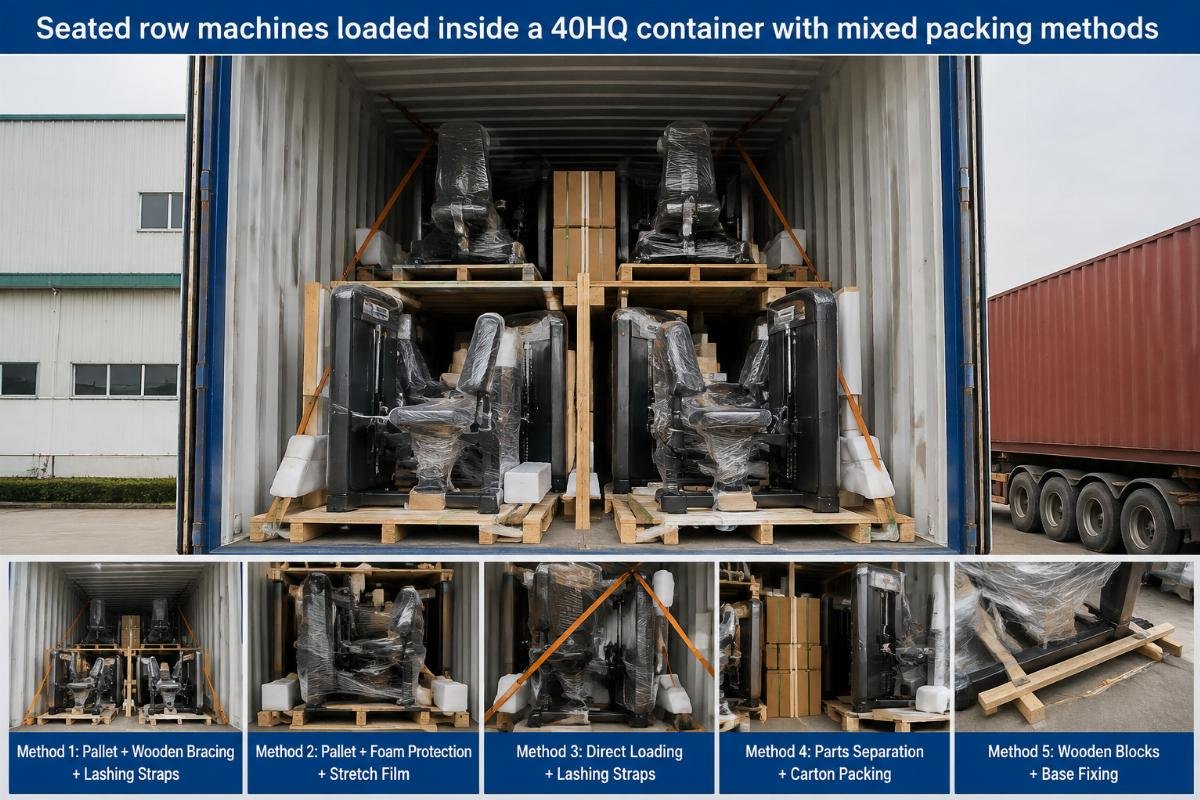
Buyers should request a pre-shipment video call to verify the loading process. Seeing how the racks are secured in the container provides confidence that they will arrive intact. Proper bracing and blocking prevent movement during ocean transit, reducing the risk of cosmetic damage. This collaborative approach to quality assurance builds trust and reduces the likelihood of disputes upon arrival. It is a proactive element of a comprehensive squat rack return policy wholesale strategy.
Conclusion
Effective warranty management for bulk fitness equipment focuses on rapid resolution, not physical returns.
By understanding that freight costs make returning goods impractical, buyers can shift their focus to robust pre-shipment inspections and efficient spare parts logistics. A clear squat rack return policy wholesale agreement protects your investment by ensuring that any defects are addressed quickly, keeping your gym operational and your customers satisfied.