Gym Flooring Rubber Tiles Wholesale for France Sports Center Operators
Thickness alone does not determine impact resistance—density does.
When sourcing gym flooring rubber tiles wholesale for French sports centers, the real battle is not about unit price per square meter; it is about REACH compliance, density-to-hardness matching, and batch-level traceability that prevents customs rejection at Le Havre or Marseille. [NEED_CITE: EU REACH regulation requirements for rubber flooring imports]
Every time I open a sample box at the IHRSA show in Chicago or the FIBO expo in Cologne, I pull out a pocket durometer and a scale cube to check density before I even look at the price list. Years ago, when I was still running quality checks on the production floor in Shandong, we shipped a full container of interlocking tiles to a buyer in Germany. The mats looked perfect, smelled fine to our noses, and passed every visual inspection. Three weeks later, the entire shipment was held at Hamburg customs. A third-party lab flagged VOC emissions above the threshold. The return freight, warehouse fees, and re-testing costs ended up exceeding the original cargo value. That single incident rewired how I evaluate gym flooring rubber tiles wholesale—because in the European market, a cheap tile that fails REACH is not a bargain; it is a financial black hole.
If you are a procurement manager or sports center operator in France evaluating gym flooring rubber tiles wholesale, the rest of this guide walks through the compliance floor you must clear, the specification matrix that actually matters, the hidden cost traps between virgin and recycled rubber, and the verification steps that separate a reliable factory from a risky one.
Why REACH Compliance Is Non-Negotiable for the French Market
Any rubber flooring imported into France must comply with EU REACH regulation, specifically the restrictions on polycyclic aromatic hydrocarbons and phthalates in rubber granules and binders. [NEED_CITE: REACH Annex XVII entry 50 regarding PAH limits in rubber articles]
This is not a nice-to-have certificate you can tack on later. French customs, particularly at Le Havre and Fos-sur-Mer, have been conducting random sampling of rubber flooring shipments with increasing frequency over recent years. If a container gets flagged and the lab results come back non-compliant, the options are brutal: re-export at your own cost, destroy the cargo, or attempt a reprocessing route that almost never makes financial sense.
I worked with a French distributor who had sourced gym flooring rubber tiles wholesale from a supplier that claimed "eco-friendly" on the product sheet. The supplier even had a generic ISO certificate. But when the French buyer requested the actual REACH test report tied to that specific batch, the supplier could not produce one—only a template document from a different product line. The shipment sat in a bonded warehouse for weeks, accruing storage fees that eventually wiped out the margin the buyer had negotiated so hard to secure.
The key takeaway here is that REACH compliance must be batch-specific, not company-level. A factory might pass REACH for one formulation but switch to a cheaper binder for another batch without telling you. This is why requesting the test report alone is not enough—you need to verify that the report references the exact SKU and production date of your order. [NEED_CITE: EN 14877 synthetic sports surface standards for indoor facilities]
Specification Matrix: Matching Density, Thickness, and Zone Requirements
The correct specification for each training zone depends on the interaction between density, thickness, and the type of impact the floor must absorb—not on picking the thickest tile available.
Many buyers assume that a heavier, thicker tile is always better. In reality, a thick tile made from low-density recycled rubber will compress permanently under a dropped barbell, while a thinner but high-density virgin rubber tile will rebound and protect both the subfloor and the equipment. The mismatch between density and application is one of the most common reasons for premature flooring failure in commercial gyms.
Here is a specification matrix we use when advising French sports center operators on gym flooring rubber tiles wholesale selections:
| Zone | Recommended Density Range | Thickness Range | Hardness Range | Key Requirement |
|---|---|---|---|---|
| Heavy free-weight area | High density | Thicker range | Higher Shore A | Impact absorption from dropped loads |
| Machine and selectorized area | Medium-high density | Medium range | Medium Shore A | Equipment stability and vibration dampening |
| Functional and cardio zone | Medium density | Standard range | Medium-low Shore A | Joint comfort and noise reduction |
| Stretching and group class | Lower density | Thinner range | Lower Shore A | Comfort underfoot for extended standing |
[NEED_CITE: Shore A hardness testing standards for rubber flooring materials]
A chain of fitness centers in the Lyon area once asked us to replace their flooring after only a short period of use. They had installed the same thick, low-density recycled tile across every zone to simplify procurement. In the free-weight section, the tiles had developed permanent dents from Olympic plate drops. In the cardio zone, the same tiles felt uncomfortably hard because the recycled rubber compound had been optimized for impact resistance rather than underfoot comfort. The fix required拆ting out the heavy zone tiles, replacing them with a higher-density option, and swapping the cardio zone for a different compound—essentially paying for the flooring twice.
The Hidden Cost Trap: Virgin Rubber Versus Recycled Rubber
The price gap between virgin SBR rubber and recycled crumb rubber tiles is real, but the total cost of ownership often reverses the advantage within a few years of heavy commercial use.
When you evaluate gym flooring rubber tiles wholesale, the per-square-meter quote for recycled rubber tiles can look significantly lower than virgin rubber options. This is because recycled crumb rubber—sourced from end-of-life tires—is a commodity material with lower raw material costs. Virgin SBR, produced from synthetic styrene-butadiene rubber, carries a higher material cost but delivers more consistent density, lower VOC emissions, and better long-term color stability.
The trap is not the purchase price. It is what happens afterward.
Recycled rubber tiles, particularly those from suppliers who do not control their granule sourcing, can carry residual odors that persist for months after installation. In a French sports center with mechanical ventilation designed to a specific air exchange rate, a strong rubber smell triggers member complaints and, in worst cases, indoor air quality testing that forces the facility to close sections for remediation. I have seen a boutique studio in Paris lose an entire weekend of revenue because members complained of headaches traced to newly installed recycled rubber flooring.
Beyond odor, recycled tiles tend to show higher rates of surface granule loss over time. In high-traffic functional training areas where athletes perform box jumps, burpees, and sled pushes, the surface abrasion accelerates. A virgin rubber tile with properly vulcanized EPDM color flecks will resist this wear noticeably longer. [NEED_CITE: EPDM granule content impact on rubber flooring weathering and abrasion resistance]
| Factor | Virgin SBR Rubber | Recycled Crumb Rubber |
|---|---|---|
| Initial unit cost | Higher | Noticeably lower |
| VOC emission level | Substantially reduced | Variable, often higher |
| Odor persistence | Minimal | Noticeably prolonged |
| Surface granule loss | Resistant | Vulnerable under heavy abrasion |
| Color stability | Robust | Fades noticeably over time |
| Batch consistency | Controlled | Uncontrolled |
A gym flooring rubber tiles wholesale buyer who optimizes purely on initial cost may save on the purchase order but end up fielding member complaints, paying for early replacement, or absorbing reputational damage in a competitive market.
How to Verify a Supplier’s Quality Control Capability
The difference between a supplier who can reliably deliver REACH-compliant gym flooring rubber tiles wholesale and one who cannot lies in batch-level testing, third-party certification, and sample traceability—not in marketing claims.
When I visit production facilities or audit suppliers for our European clients, I look for three concrete capabilities before I even discuss pricing.
First, does the factory conduct in-house density and hardness testing on every production batch? Density should be measured in kilograms per cubic meter using a cut-sample method, and hardness should be verified with a calibrated Shore A durometer. A factory that only tests finished tiles at random intervals is not controlling the process—it is inspecting luck. [NEED_CITE: ISO 2781 rubber density testing methods]
Second, can the supplier provide a REACH test report from an accredited third-party laboratory such as SGS or TÜV, tied to the specific batch you are ordering? The report must list the tested substances, the detection limits, and the conclusion for each restricted substance under REACH Annex XVII. A generic "REACH compliant" statement on a website means nothing without the supporting data.
Third, does the factory retain batch samples for post-shipment reference? If a dispute arises at customs or on-site, having a sealed reference sample from the same production run allows both parties to conduct independent testing and resolve the issue based on evidence rather than argument.
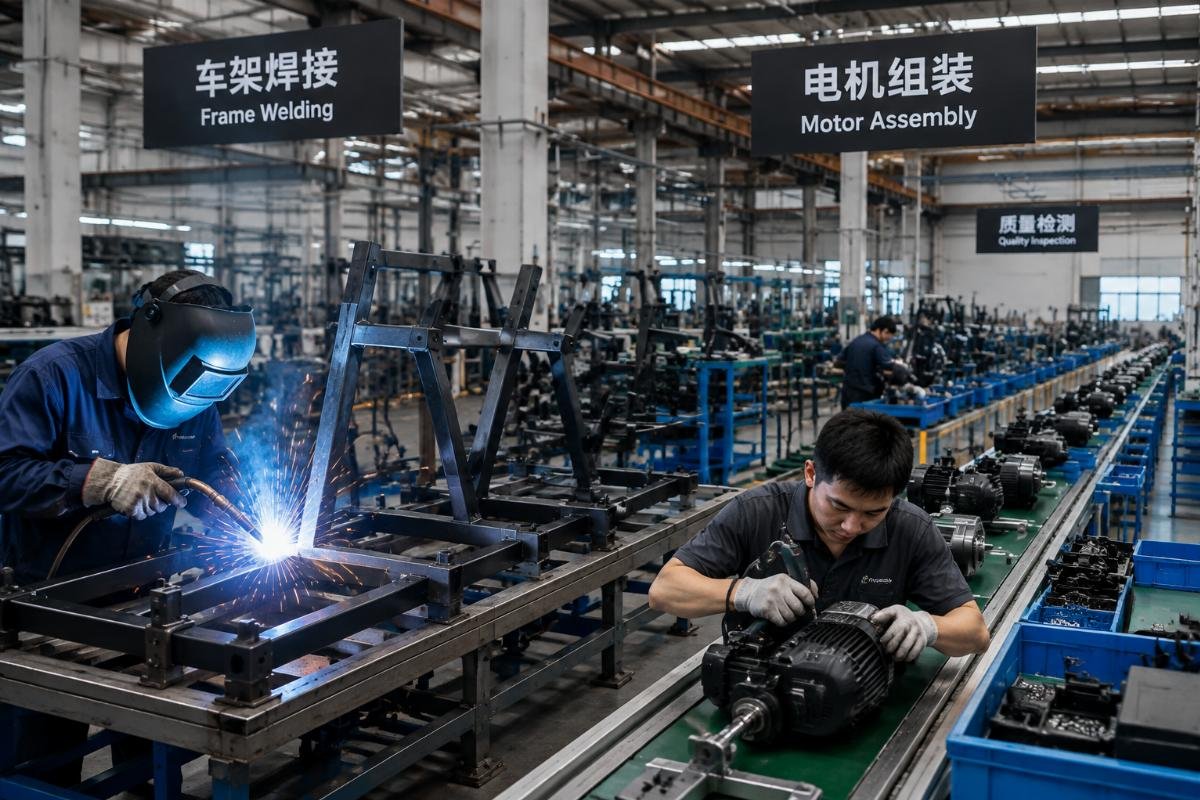
At Bick, our production workflow includes batch-level density checks, hardness verification, and retention of sealed reference samples for every gym flooring rubber tiles wholesale order destined for the European market. We coordinate with accredited laboratories for REACH testing and provide the full test documentation package alongside the shipping documents, so our French clients have everything needed for smooth customs clearance. This is not an afterthought—it is built into the production and quality control process because we have learned, through hard experience, that documentation is as important as the product itself.
Conclusion
Sourcing gym flooring rubber tiles wholesale for French sports centers is a compliance and specification exercise, not a price competition. REACH certification must be batch-specific and third-party verified, density and thickness must be matched to each training zone rather than standardized across the facility, and the total cost of ownership—including odor complaints, premature wear, and customs rejection risks—must be weighed against the initial unit price. A supplier who can demonstrate batch-level testing, accredited lab reports, and sample traceability will protect your investment far better than one who simply offers the lowest quote.