Where Distributors Source Power Rack for Regional Distribution
Most distributors think the lowest FOB quote means the highest margin. The reality is that hidden costs—rework at destination, air-freighted replacement parts, and rejected containers—routinely erase any upfront savings.
Distributors sourcing a power rack wholesale supplier for exclusive regional distribution must evaluate factories across three non-negotiable dimensions: production capacity and steel traceability, quality control systems with verifiable certifications, and after-sales infrastructure that can support terminal gym clients long after the container clears customs.
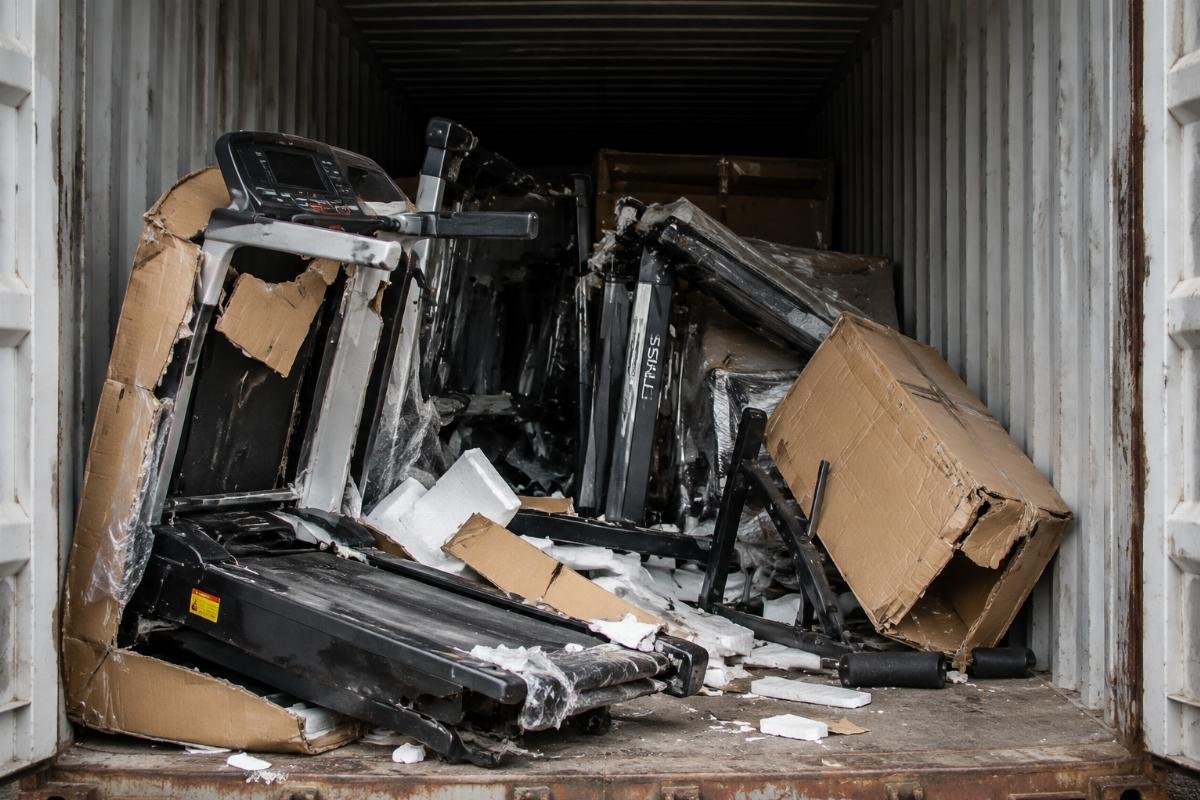
I still remember the call I got from a Riyadh-based buyer a few years back. His first container of squat racks had just been opened at Jebel Ali, and the terminal gym owner refused to accept the shipment. The upright wall thickness was outside tolerance, and the weld seams had not been ground smooth—visible bumps right through the powder coat. The local rework bill ended up costing more than the original freight. That episode burned into my skull one rule: when you are building a regional distribution business, your power rack wholesale supplier is either your shield or your liability. There is no middle ground [NEED_CITE: fitness equipment import dispute root causes in MENA region].
Let me walk you through how experienced distributors actually vet a power rack wholesale supplier, what specs matter most to end users, and how to lock in exclusive territory rights without overcommitting on your first order.
What Specs Should Distributors Prioritize When Sourcing Power Racks?
End users in commercial gyms care about two things above all else: load-bearing stability under heavy eccentric work and attachment compatibility for future expansion. If your product selection ignores either, you will lose repeat orders.
When I spec out a power rack wholesale supplier’s catalog for a distributor entering a new market, I build a comparison matrix around the parameters that actually drive terminal complaints and repeat purchases. Price sits at the bottom of that list, not the top.
| Parameter | Tier-1 Factory Offering | Mid-Tier Factory Offering | Budget-Only Factory Offering |
|---|---|---|---|
| Upright steel grade | Verifiable cold-rolled, certified mill test reports | Self-reported grade, no mill certificates | Uncontrolled source, mixed batches |
| Wall thickness tolerance | Controlled within international standard bands | Standard commercial tolerance | Noticeably thin at base, inconsistent |
| Weld process | Robotically welded in position jigs | Manual MIG with fixture | Hand-welded, no fixture |
| Weld finishing | Ground flush before coating | Light grinding, visible ripples | As-welded, visible spatter |
| Hole spacing compatibility | Standard 1-inch Westside spacing throughout | Mixed spacing, adapter-dependent | Non-standard, limited attachment fit |
| Load rating documentation | Third-party tested, documented | Factory self-declared | Not provided |
| Finish adhesion | Multi-stage pretreatment + electrostatic powder | Basic pretreatment + powder | Wipe-down + spray, poor adhesion |
The critical takeaway here is that upright wall thickness and weld quality are the two parameters most frequently cited in field failures. A power rack wholesale supplier who cannot show you mill test certificates for every heat of steel is gambling with your reputation [NEED_CITE: structural failure modes in commercial strength equipment per ISO 20957].
I once worked with a West African distributor whose previous supplier switched steel batches mid-production without notification. The first containers shipped fine. The third container used lower-grade steel that bent permanently under loads the earlier batches handled without issue. By the time the distributor traced the problem back to the mill source change, he had already lost two major gym chains as clients.
For distributors, the practical rule is simple: request mill test certificates for the first production batch, and then spot-check every third container thereafter. Any reliable power rack wholesale supplier will provide these without hesitation because their documentation systems are already in place [NEED_CITE: steel material traceability requirements in fitness equipment manufacturing].
How to Vet a Power Rack Factory Beyond the Price Sheet?
A credible power rack wholesale supplier opens their welding bay, coating line, and inspection station to serious buyers. If a factory refuses a walkthrough or limits you to the showroom, walk away.
When I take a distributor through factory vetting, we focus on three physical areas that reveal more than any brochure ever could.
Welding bay inspection. Look at the jigs and fixtures first. A factory producing power racks for export at scale will have dedicated positional welding jigs for each SKU, not improvised clamps on a workbench. Check the weld seams on finished uprights—consistent bead width, no undercut, no porosity visible to the naked eye. Then ask to see the welder qualification records. Certified welders working in jigs produce dramatically more consistent results than freelance welders rotating between products [NEED_CITE: welding quality control standards in structural steel fabrication for fitness equipment].
Coating line verification. The coating process is where budget factories cut corners most aggressively. A proper line includes a degreasing stage, phosphating or zirconium pretreatment, drying oven, electrostatic powder application booth, and curing oven with controlled temperature profiles. Ask the power rack wholesale supplier to show you their coating thickness gauge readings and adhesion test results (cross-cut test per international standard). If they only show you a finished rack looking pretty under showroom lights, they are hiding something.
Inspection and testing capability. A serious factory maintains a dedicated inspection area with load testing fixtures, coating thickness gauges, and dimensional checking tools. Request to see their incoming material inspection records, in-process inspection checkpoints, and final random inspection reports. The power rack wholesale supplier should be able to demonstrate a documented quality management system, not just口头 promises.
A Southeast Asian distributor I advised insisted on visiting three shortlisted factories before placing a trial order. At the first factory, the coating line was a single spray booth with no pretreatment stage—racks came out looking acceptable but the powder peeled within months in humid climates. The second factory had decent welding but no load testing fixture; they could not prove their racks met stated capacity ratings. The third factory passed all checkpoints: certified welding, multi-stage coating with documented thickness controls, and a load test bay where every batch had sample units tested to failure. That distributor has been ordering from the third factory exclusively for multiple container cycles since.
What Makes a Factory Grant You Exclusive Regional Distribution?
Factories do not grant exclusive distribution rights based on relationship or initial order size alone. They grant exclusivity when they see verifiable evidence that you can move volume consistently and protect their brand reputation in your territory through competent after-sales coverage.
This is where many distributors misunderstand the negotiation. They lead with "I want exclusive rights for my country" and offer a vague annual purchase commitment. The factory hears risk, not opportunity.
What actually convinces a power rack wholesale supplier to lock in exclusivity is a structured proposal that addresses their three core concerns:
Volume predictability. Instead of a single annual number, present a quarterly rolling forecast tied to your existing customer pipeline and market development plan. Show them your current distribution channels—how many gym dealers you serve, what territories you cover, what your installation and service capacity looks like. A power rack wholesale supplier needs to see that your commitment is backed by real market access, not just ambition [NEED_CITE: exclusive distribution agreement structures in international fitness equipment trade].
Brand and quality protection. Demonstrate that you understand their product positioning and will not dilute it by selling into discount channels or misrepresenting specifications. Share your quality control process at destination—how you inspect incoming containers, how you handle warranty claims, how you train your sub-dealers on proper installation. The factory wants assurance that their reputation in your market is in competent hands.
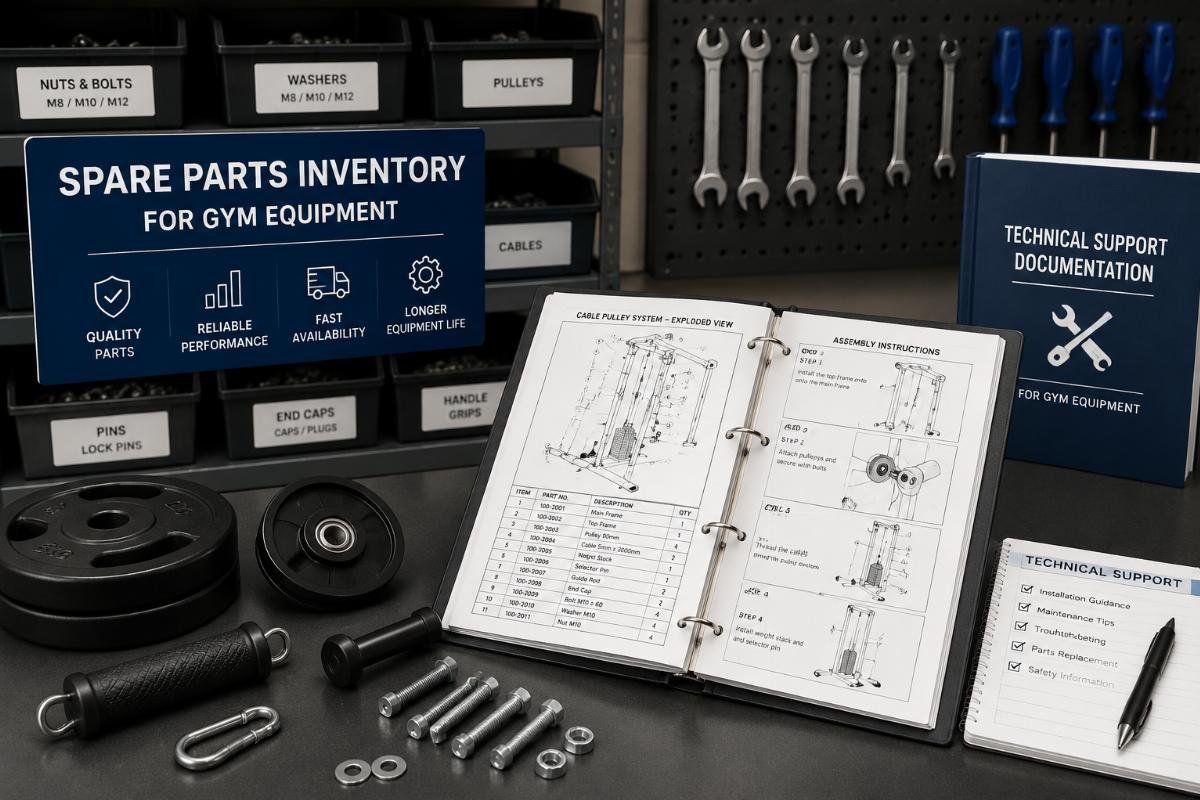
After-sales infrastructure. This is often the deciding factor. Explain your spare parts stocking strategy, your technical service team’s capability, and your response time commitments to end users. A power rack wholesale supplier will strongly prefer a distributor who stocks critical spare parts locally and can resolve field issues without factory intervention, over a distributor who moves slightly more volume but generates constant warranty headaches across time zones.
I watched a Middle Eastern distributor secure exclusive rights for three countries across the Gulf region—not by offering the largest first order, but by presenting a detailed after-sales network plan that included regional spare parts warehousing, trained installation crews, and a documented warranty response protocol. The factory saw lower long-term risk with this distributor than with a higher-volume competitor who had no service infrastructure.
How to Handle Quality Claims and After-Sales with Overseas Factories?
The single most important after-sales clause in your contract with a power rack wholesale supplier is the spare parts supply ratio and response timeline, locked in before the first container ships—not negotiated after a problem arises.
International after-sales disputes in fitness equipment almost always trace back to ambiguous contractual terms. The distributor assumes the factory will respond quickly to quality claims. The factory assumes the distributor is exaggerating or misusing the product. Without pre-agreed mechanisms, both sides end up frustrated and the end user loses trust.
Build these elements into your supply agreement from day one:
Spare parts allocation. Negotiate a free spare parts ratio calculated as a percentage of each order value or unit count. This should cover high-wear and high-failure components: adjustment pins, spring clips, J-cup protective inserts, cable attachments if applicable, and replacement hardware kits. A reasonable power rack wholesale supplier will agree to include spare parts worth a small percentage of each shipment at no additional cost, because they know field issues are inevitable in any manufactured product [NEED_CITE: spare parts provisioning best practices in international fitness equipment distribution].
Claim documentation protocol. Agree on exactly what evidence constitutes a valid quality claim: photographs with scale reference, video of the defect in function, batch number traceability, and quantity affected. Define the factory’s response timeline—acknowledgment within a set number of business days, root cause analysis within a longer set period, and resolution proposal (replacement parts in next shipment, credit against future orders, or on-site inspection for systemic issues).
Escalation mechanism. For disputes that cannot be resolved bilaterally, specify a neutral third-party inspection or arbitration mechanism. This protects both parties and signals to the power rack wholesale supplier that you are a serious, professional operation—not a buyer who will make unreasonable demands or accept unreasonable treatment.
A Latin American distributor I worked with learned this lesson the hard way. Their first two orders went smoothly. The third order had a batch of pull-up bars with incorrect hole drilling that made attachment mounting impossible on one side. Without a pre-agreed claim protocol, the factory disputed the claim for weeks, requesting increasingly burdensome evidence. By the time resolution was reached, the distributor had already lost a major commercial gym contract because they could not deliver installed equipment on time. Their subsequent contract with a new power rack wholesale supplier included a detailed claim protocol, and they have not had a single unresolved dispute since.
Conclusion
Sourcing a power rack wholesale supplier for exclusive regional distribution is a multi-dimensional evaluation, not a price comparison exercise. Distributors who prioritize verifiable quality systems, structured exclusivity proposals, and pre-agreed after-sales mechanisms build sustainable businesses that survive the inevitable challenges of international trade. The factories that reward this discipline with exclusive partnerships and priority production scheduling are the ones worth building long-term relationships with.