Plate-Loaded Functional Trainer for Boutique Studios | Bick Wholesale Supplier
Most buyers assume taller is better. In Irish boutique studios, taller often means unsellable.
The short answer: Irish boutique studio owners should prioritize plate-loaded functional trainers with a compact footprint (under 6 sqm), reduced overall height to fit ceilings below 3 meters, and a 2:1 cable ratio for smooth progressive overload—sourced direct from a Chinese factory with CE certification and single-unit MOQ flexibility to cut landed costs substantially versus European brands.
I still remember a job in an old district of Qingdao where I specified a standard-height dual-cable unit for a private training studio. The ceiling clearance was tight, and when the rig arrived, the top cross-member scraped the suspended ceiling tiles. We couldn’t return it, we couldn’t swap it, and we ended up cutting the frame on site. The client was not happy, and I absorbed the freight loss. Since then I measure every doorway, every beam, and every sprinkler drop before I approve a spec sheet. When I moved to the factory side, I kept seeing the same mistake repeated by studio owners across Europe—ordering spec from a brochure without checking the actual room.
This guide walks through the real selection criteria for a Functional Trainer Plate-Loaded unit in a space-constrained boutique studio environment, with a focus on the Irish market where older buildings dominate the commercial rental stock.
What Makes a Plate-Loaded Functional Trainer Ideal for Boutique Studios?
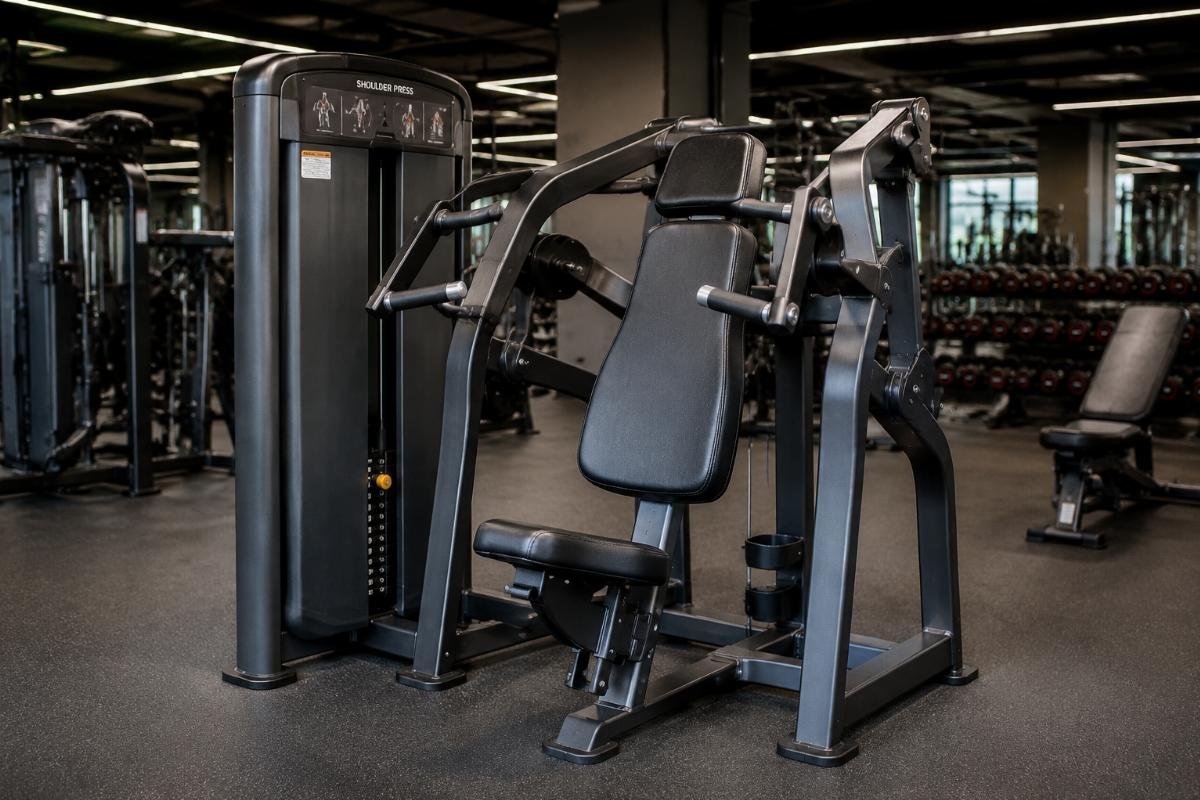
Plate-loaded designs deliver commercial durability with fine-grained load adjustment, matching the progressive programming style of private-led small group sessions.
Selectorized pin machines are fast to adjust, but their weight stacks are fixed in large increments and the enclosed mechanism adds maintenance overhead. Cable crossovers offer versatility but rely on fixed selectorized stacks that limit top-end loading for stronger clients. A Functional Trainer Plate-Loaded configuration sits in the middle: the user loads standard Olympic plates in small increments, the cable system provides multi-planar resistance, and the open frame is easier to service. [NEED_CITE: comparative maintenance cost between plate-loaded and selectorized cable machines in commercial environments]
In a boutique studio where a single coach may train clients ranging from rehab-level to advanced hypertrophy, the ability to add or remove plates in fine steps matters more than quick-pin convenience. A client recovering from shoulder surgery might need just a few kilograms of cable tension; the same machine an hour later might need to handle heavy unilateral rows for a strength athlete. Plate loading handles both ends of that spectrum without requiring a full stack upgrade.
The open frame also means fewer proprietary parts. If a pulley wears or a cable frays, a local technician can typically source a replacement without waiting for a branded service visit. For a studio operating on thin margins, this serviceability advantage compounds over time. [NEED_CITE: serviceability and parts availability comparison between plate-loaded and pin-loaded cable systems]
How to Check Ceiling Height and Footprint Before Ordering?
Measure the clear height from finished floor to the lowest obstruction—sprinkler heads, ductwork, lighting tracks—not just the structural slab.
Irish commercial properties, especially in Dublin, Cork, and Galway city centers, frequently occupy converted retail units, former offices, or older industrial buildings. Ceiling heights in these spaces often sit well below the standard gym clearance. A typical modern commercial gym builds to a clear height of around 3.5 meters or more. Many boutique studio conversions in Ireland operate with clear heights in the range of 2.7 to 2.9 meters after accounting for HVAC ducts, fire suppression, and lighting.
Ordering a standard-height Functional Trainer Plate-Loaded unit designed for a 3.5-meter environment into a 2.8-meter room is the single most common specification error I see. The unit will either not fit, or it will require costly structural modification that voids the warranty.
Here is the practical checklist I use with clients before they confirm an order:
- Measure clear floor-to-ceiling height at the exact installation point, not just at the room center
- Identify any suspended obstructions within the equipment footprint and add a safety margin
- Confirm the overall height of the short-version unit from the supplier, not the standard version
- Verify the cable carriage travel on the short version—reduced frame height typically shortens the load horn travel, which affects the range of motion on exercises like cable squats or lat pulldowns
- Map the equipment footprint plus a clearance zone around all accessible sides for plate loading and user movement [NEED_CITE: minimum safety clearance standards for plate-loaded strength equipment per European gym safety guidelines]
| Parameter | Standard Version | Short / Low-Ceiling Version |
|---|---|---|
| Overall Frame Height | Requires high-ceiling environment | Fits rooms with restricted overhead clearance |
| Cable Carriage Travel | Full range of motion | Noticeably reduced travel distance |
| Plate Horn Capacity | Full-length horn | Shorter horn, reduced maximum plate load |
| Installation Flexibility | Limited to purpose-built gyms | Suitable for converted commercial spaces |
A studio owner in central Dublin once ordered two units from a European brand without checking the short-version option. The frames arrived, the installers refused to assemble them because the top cross-member would have sat below the sprinkler line, and the units had to be crated back out. The freight and restocking charges were a painful lesson. [NEED_CITE: common installation failure modes for oversized strength equipment in low-ceiling commercial spaces]
Plate-Loaded vs Selectorized vs Cable Crossover: Which Fits Your Studio?
For a boutique studio balancing budget, maintenance cost, and loading precision, the plate-loaded functional trainer offers the strongest overall value.
The table below compares the three main configurations a studio owner typically considers when building a functional training zone.
| Factor | Plate-Loaded Functional Trainer | Selectorized Cable Machine | Traditional Cable Crossover |
|---|---|---|---|
| Load Adjustment Granularity | Fine, plate-by-plate | Fixed pin increments | Fixed pin increments |
| Initial Purchase Cost | Noticeably lower than branded selectorized | Premium pricing tier | Mid to premium pricing tier |
| Ongoing Maintenance | Low, open frame, standard cables | Higher, enclosed stack guides and pins | Moderate, enclosed mechanism |
| Top-End Load Capacity | Scales with plates loaded | Limited by stack weight | Limited by stack weight |
| Floor Space Efficiency | Compact dual-sided designs available | Typically larger footprint | Large, dedicated footprint |
| Serviceability | High, generic parts compatible | Lower, proprietary components | Moderate |
[NEED_CITE: total cost of ownership comparison between plate-loaded and selectorized cable machines over typical commercial equipment lifespan]
A selectorized unit might look attractive for its quick-adjust convenience, but the weight stack is a hard ceiling. If your strongest client needs more resistance than the stack provides, you are stuck—either you add a separate machine or you accept a programming limitation. With a Functional Trainer Plate-Loaded unit, the ceiling is whatever plates the client can load. For a boutique studio serving a mixed clientele, that flexibility is worth more than the marginal time saved by a pin selector.
The cable crossover, meanwhile, is a staple of large commercial gyms but often consumes too much floor area for a boutique format. A dual-sided plate-loaded functional trainer delivers much of the same cable-based exercise library in a significantly tighter footprint, which is critical when every square meter of rent matters.
How to Source Directly from a Chinese Factory Without Getting Burned?
Verify CE certification independently, insist on live video factory inspection, and lock down warranty terms and spare parts commitments in writing before placing any deposit.
Sourcing a Functional Trainer Plate-Loaded unit directly from a Chinese manufacturer can deliver substantial cost savings versus buying through a European distributor or a branded OEM. But the distance, the language gap, and the variability in factory quality control mean that a careless buyer can end up with equipment that fails safety inspections, arrives with missing components, or ships with no after-sales support pathway.
I have seen buyers receive units where the welding on the plate horns was visibly inadequate, where the cable routing did not match the assembly drawings, and where the powder coating chipped within weeks of installation. These are not rare edge cases—they are predictable outcomes when the buyer skips proper due diligence.
Here is the process I recommend:
- Request the CE certificate and cross-check it against the notified body database; a self-declared CE mark without third-party involvement carries limited legal weight in the EU machinery directive context [NEED_CITE: EU Machinery Directive compliance requirements for imported strength training equipment]
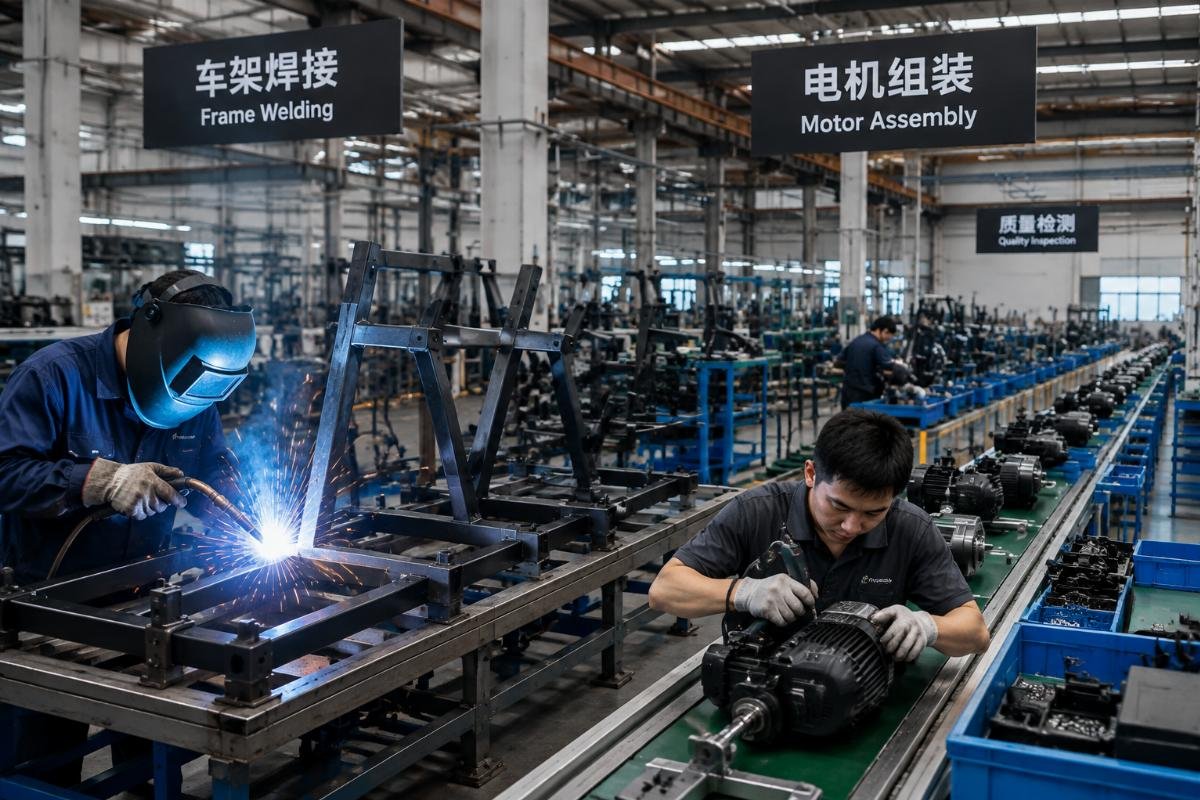
- Ask for a live video call walking through the production floor, the welding station, the cable assembly area, and the finished goods packing zone; a factory confident in its process will accommodate this readily
- Specify the steel grade, the plate horn diameter, the cable diameter, and the pulley bearing type in the purchase contract—do not accept generic descriptions like "high-quality steel"
- Negotiate a spare parts package covering cables, pulleys, and fasteners for the first period of operation, and confirm the lead time for replacement parts if a failure occurs post-installation
- Clarify the warranty scope: does it cover the frame, the cables, the pulleys, the upholstery, or only the frame? What is the claim process, and who bears the return freight?
A studio owner in western Ireland sourced a pair of units from a factory that claimed CE compliance but could not produce a valid notified body number. The units cleared customs, but when the local safety officer requested documentation during a routine inspection, the owner had no paperwork to show. The resolution required expensive retroactive testing. [NEED_CITE: documentation requirements for CE-marked fitness equipment under EU market surveillance]
What Are the Real Landed Costs and Lead Times for Ireland?
Factory-direct pricing for a Functional Trainer Plate-Loaded unit typically undercuts European branded equivalents by a wide margin, but the true landed cost must include ocean freight, customs clearance, VAT, and inland haulage to the studio.
The headline factory price is only the starting point. A realistic landed cost calculation for Ireland must account for the following elements:
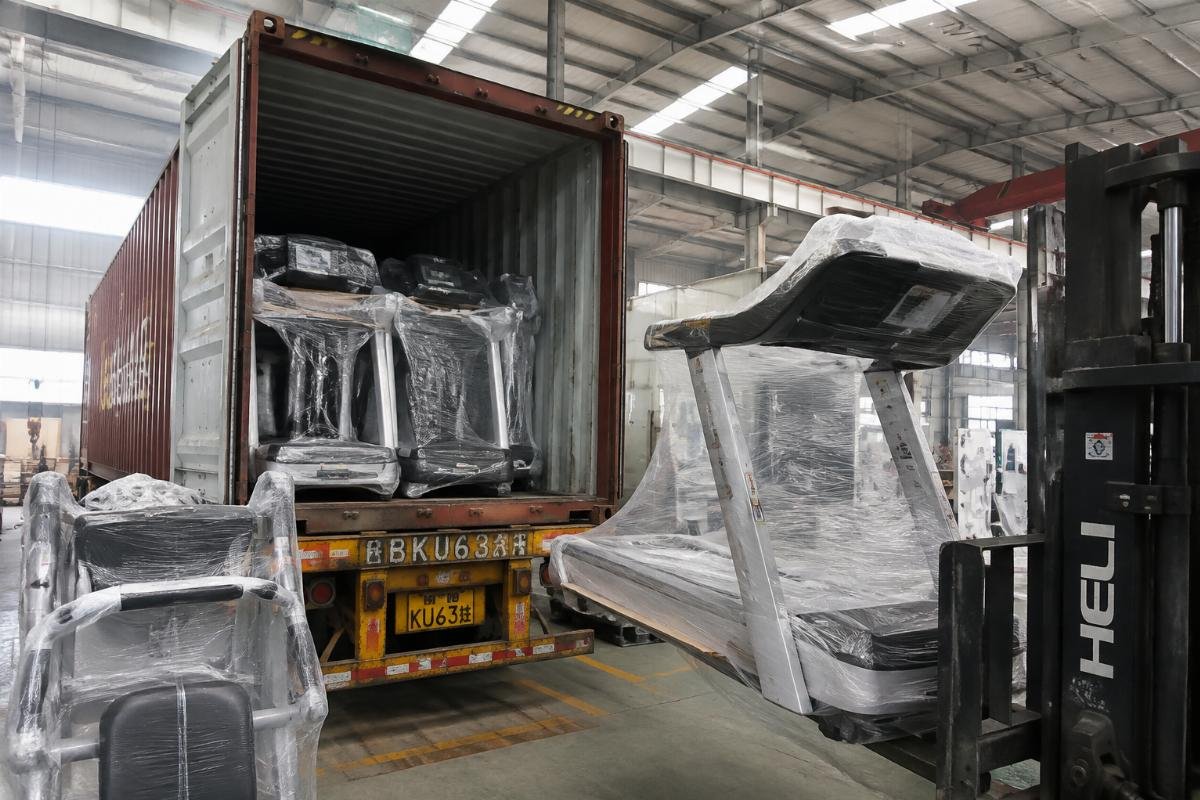
- Ocean freight: a single unit can often be consolidated into an LCL shipment, or paired with other equipment to fill a container more efficiently; FCL shipping becomes cost-effective when the order includes multiple units or a broader equipment package
- Customs clearance and duty: strength training equipment falls under specific HS codes that attract a defined duty rate; a customs broker familiar with fitness equipment imports can prevent misclassification and overpayment [NEED_CITE: applicable HS code and import duty rate for plate-loaded strength training equipment imported into the EU]
- VAT: standard Irish VAT applies on the total landed value including duty
- Inland transport: from the port of entry to the studio, particularly in city-center locations with access restrictions, narrow streets, or upper-floor installations requiring manual handling
Lead times from order confirmation to studio delivery typically span several weeks for production, plus ocean transit time and customs processing. Buyers should plan well ahead of a studio opening date and build buffer time into the schedule. Rushing production to meet an unrealistic deadline often leads to quality compromises on the factory floor.
A buyer in the south of Ireland consolidated a Functional Trainer Plate-Loaded unit with a set of dumbbells, a bench, and rubber flooring into a single container shipment. The per-unit freight cost dropped substantially compared to shipping the trainer alone, and the total landed cost per item came in well below what the same buyer would have paid sourcing each item separately from European distributors. The key was planning the full equipment list upfront and treating the order as a single project rather than a series of isolated purchases.
Conclusion
Selecting the right Functional Trainer Plate-Loaded unit for an Irish boutique studio is a spatial and financial exercise, not just a product choice.
Match the frame height to the actual ceiling clearance, confirm the cable travel meets the training needs, compare plate-loaded value against selectorized and crossover alternatives on total cost of ownership, and source from a factory that provides verifiable CE documentation, transparent production access, and a clear spare parts commitment. The savings are real, but only if the buyer does the homework before the deposit goes out.