Commercial Spin Bike Manufacturer | OEM Factory Direct for Indonesia Market
Heavier flywheels do not guarantee a smoother ride — drivetrain consistency under continuous load does.
Sourcing commercial spin bikes from a commercial spin bike manufacturer in China for the Indonesia market requires navigating SNI certification, selecting the correct drivetrain and frame specifications for heavy-use gym environments, and verifying factory production capability beyond catalog photography. The real cost driver is not FOB pricing — it is customs clearance at Tanjung Priok port when documentation gaps trigger demurrage charges that exceed product margins.
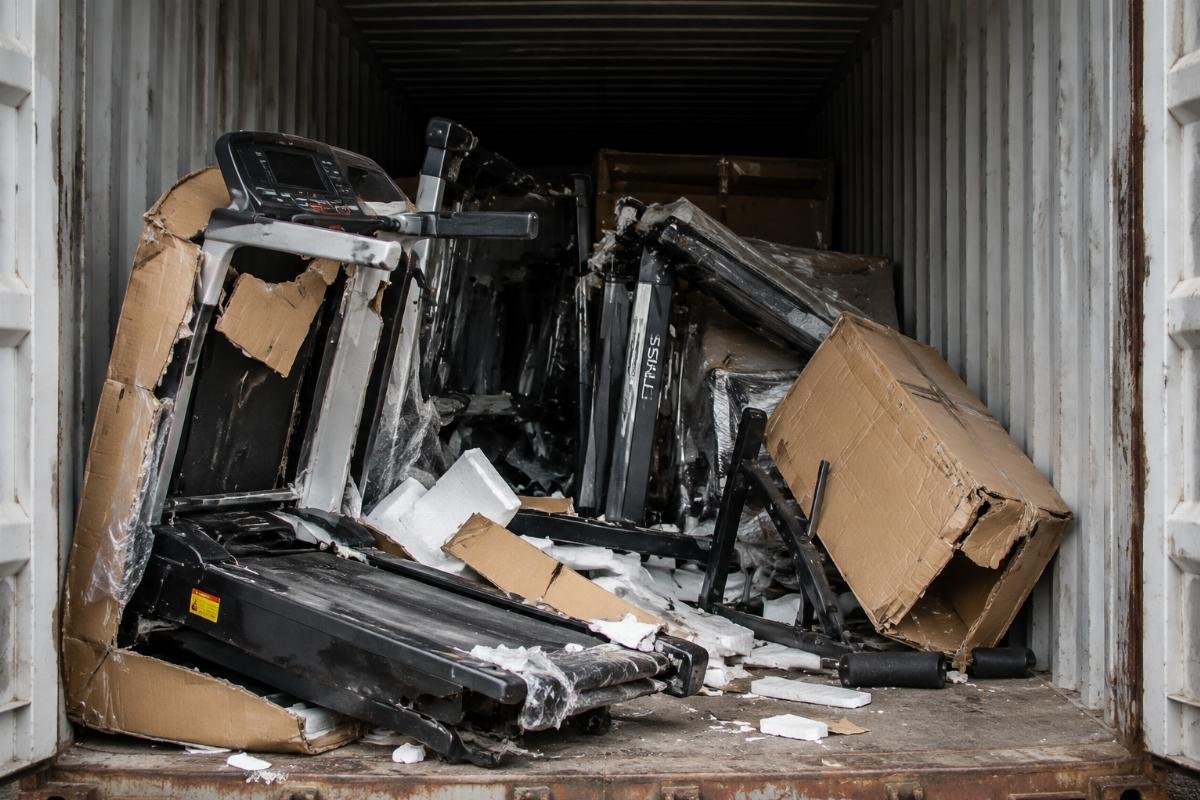
I spent years handling customs paperwork in the Pearl River Delta before moving to the trade side, and I still remember the first time a full container of spin bikes sat stranded at Tanjung Priok for weeks. The buyer — a boutique studio owner in Jakarta — had already placed newspaper ads for the grand opening. Every day that container stayed on the dock, demurrage fees climbed, and the opening date slipped further away. The root cause was not the product quality or the shipping route. It was a missing SNI certification document that nobody caught before the goods left the warehouse. Since that experience, I treat import documentation for Indonesia as the first step of production planning, not an afterthought. [NEED_CITE: Indonesia SNI mandatory certification scope for fitness equipment under Ministry of Trade Regulation]
When buyers search for a commercial spin bike manufacturer, they usually start with frame aesthetics and flywheel weight. Those are the wrong starting points. The conversation should begin with what happens after the bikes arrive at the port.
What Specs Define a True Commercial Spin Bike for Heavy-Duty Use?
Commercial viability is determined by frame tube thickness, welding process, bearing seat machining precision, and drivetrain type — not by marketing labels or catalog photos.
A spin bike marketed as "commercial grade" may look identical to a heavy-duty home model on the outside. The difference lives inside the frame structure and the drive system. Boutique studios and hotel fitness centers in Indonesia typically run spin bikes for extended hours daily, often in high-humidity coastal environments. The frame must resist fatigue cracking at weld joints, and the drivetrain must maintain consistent resistance without frequent belt or chain replacement.
| Specification Parameter | Entry-Level Claim | True Commercial Grade |
|---|---|---|
| Frame tube wall thickness | Thin-wall, lightweight design | Heavy-wall, reinforced structure |
| Welding process | Spot weld, visible seams | Continuous weld, ground and smoothed |
| Bearing seat machining | Standard tolerance | Precision-machined, micron-level alignment |
| Flywheel weight range | Marketed as primary selling point | Secondary to drivetrain consistency |
| Resistance mechanism | Basic friction pad | Magnetic or belt-driven, sealed system |
[NEED_CITE: Fitness equipment frame welding standards comparison for commercial durability]
Many buyers assume the heaviest flywheel produces the best ride quality. That is a misconception rooted in home-use marketing. In a commercial setting, what matters is how consistently the resistance mechanism performs across thousands of back-to-back sessions. A precision-machined bearing seat keeps the flywheel aligned, reducing vibration and bearing wear over time. A poorly machined seat causes wobble that no flywheel weight can compensate for.
A boutique studio in Jakarta once ordered a full package of spin bikes for a new location. The initial quote from a trading company listed an attractive flywheel weight and a glossy frame finish. When the production samples arrived for inspection, the weld seams on the main frame tube showed visible porosity, and the bearing seats had measurable play. The studio owner switched to a commercial spin bike manufacturer that could provide weld inspection records and machining tolerance documentation. The lead time was slightly longer, but the bikes performed reliably through the first year of intensive daily use.
How Does OEM Branding Work When Sourcing from a China Factory?
Full OEM and ODM capability from a commercial spin bike manufacturer covers frame color customization, console branding, saddle logo placement, and retail-ready packaging — with MOQ flexibility that accommodates both single-unit testing orders and full container loads.
OEM branding is one of the primary reasons distributors and gym chains source directly from China rather than purchasing international brands. The process involves multiple touch points across the production line, and each one requires clear communication between the buyer and the factory.
Frame color is the most visible customization element. Factories with in-house powder coating lines can match any RAL color code, which matters when a distributor needs the bikes to align with a client’s brand identity. Console branding goes beyond a simple sticker — it involves mold modification for logo embossing or screen-printed graphics on the display panel. Saddle logos can be debossed or heat-transferred depending on the material. Packaging design, including carton printing and foam insert configuration, is another layer that the factory must coordinate.
[NEED_CITE: OEM fitness equipment branding process including mold modification and packaging customization]
A distributor in Southeast Asia once consolidated a full gym package — spin bikes, strength machines, and free weights — into a single container order. The OEM branding requirement covered the entire package, not just the cardio section. The commercial spin bike manufacturer coordinated with other production lines to ensure consistent brand colors across all equipment categories. The container consolidation service meant the distributor avoided multiple LCL shipments and the associated handling risks.
MOQ flexibility is where factory-direct sourcing reveals its advantage over trading companies. Some manufacturers require minimum orders measured in full container loads. Others accommodate single-unit sample orders for buyers who need to test the product before committing to a larger purchase. The key is finding a commercial spin bike manufacturer that treats small orders as relationship-building opportunities rather than logistical burdens.
What Are Indonesia-Specific Import Requirements for Spin Bikes?
SNI certification, correct HS code declaration, and pre-shipment document verification are mandatory for spin bikes entering Indonesia — missing any one of these triggers port delays and demurrage costs that can exceed the product margin entirely.
Indonesia’s import regulatory framework for fitness equipment is among the most documentation-intensive in Southeast Asia. The Standar Nasional Indonesia certification applies to multiple product categories, and fitness equipment falls within the scope of mandatory SNI requirements. [NEED_CITE: Indonesia SNI mandatory certification requirements for fitness and gym equipment imports]
The HS code classification for spin bikes must be declared accurately. Misclassification — even an innocent error — can trigger customs inspection, document rejection, and warehouse storage fees that accumulate daily. Tanjung Priok port in Jakarta is the primary entry point for fitness equipment shipments, and its customs clearance procedures require complete documentation packages submitted before the container arrives.
The document checklist typically includes the commercial invoice, packing list, bill of lading, certificate of origin, SNI certification certificate, and any applicable import licensing documents. Each document must cross-reference the others in product description, quantity, and value. Discrepancies between the invoice and the packing list, for example, are a common trigger for customs holds.
A hotel fitness center replacement project in Bali nearly faced the same Tanjung Priok delay scenario. The buyer had sourced spin bikes from a new supplier who was unfamiliar with Indonesia’s SNI requirements. The commercial spin bike manufacturer stepped in to provide pre-verification of the SNI documentation package before the goods were loaded. The pre-shipment review caught a mismatch between the SNI certificate product description and the commercial invoice wording. Correcting that mismatch at the factory took a few days. Correcting it at the port would have taken weeks and cost a small fortune in storage fees.
How to Compare Factory Direct Pricing vs Trading Company Quotes?
Genuine factory-direct pricing from a commercial spin bike manufacturer runs substantially below international brand pricing — the verification method is production line audit capability and container consolidation flexibility, not just the price number on the quotation.
Trading companies add margin layers to the factory base price. That is their business model, and there is nothing wrong with it — as long as the buyer understands what they are paying for. The problem arises when a trading company presents itself as the factory, making it impossible for the buyer to assess whether the price reflects actual production costs or accumulated intermediary margins.
Verifying factory-direct status requires more than asking for a business license. A genuine commercial spin bike manufacturer can arrange a production line visit — whether physical or virtual — and walk the buyer through each manufacturing stage: tube cutting, welding, machining, powder coating, assembly, and quality inspection. The factory can also demonstrate container consolidation capability, showing how spin bikes can be loaded alongside other fitness equipment to maximize container utilization.
[NEED_CITE: China fitness equipment factory audit verification methods for international buyers]
Pricing transparency extends beyond the unit price. A factory-direct quotation should break down customization costs — frame color changes, console branding modifications, packaging design adjustments — as separate line items. Trading companies often bundle these costs into a single unit price, making it difficult for the buyer to understand what drives the total cost.
A gym chain operator in Indonesia received two quotations for a multi-unit spin bike order. One came from a trading company, the other directly from a commercial spin bike manufacturer. The trading company’s quote was lower on the surface. When the operator requested a production line visit, the trading company could not arrange one. The factory-direct quote was slightly higher but included a detailed cost breakdown, a virtual production line tour, and a container consolidation plan that combined the spin bikes with strength equipment for a future order. The operator chose the factory-direct route because the transparency reduced long-term sourcing risk.
What After-Sales Support Should You Expect from a China OEM Manufacturer?
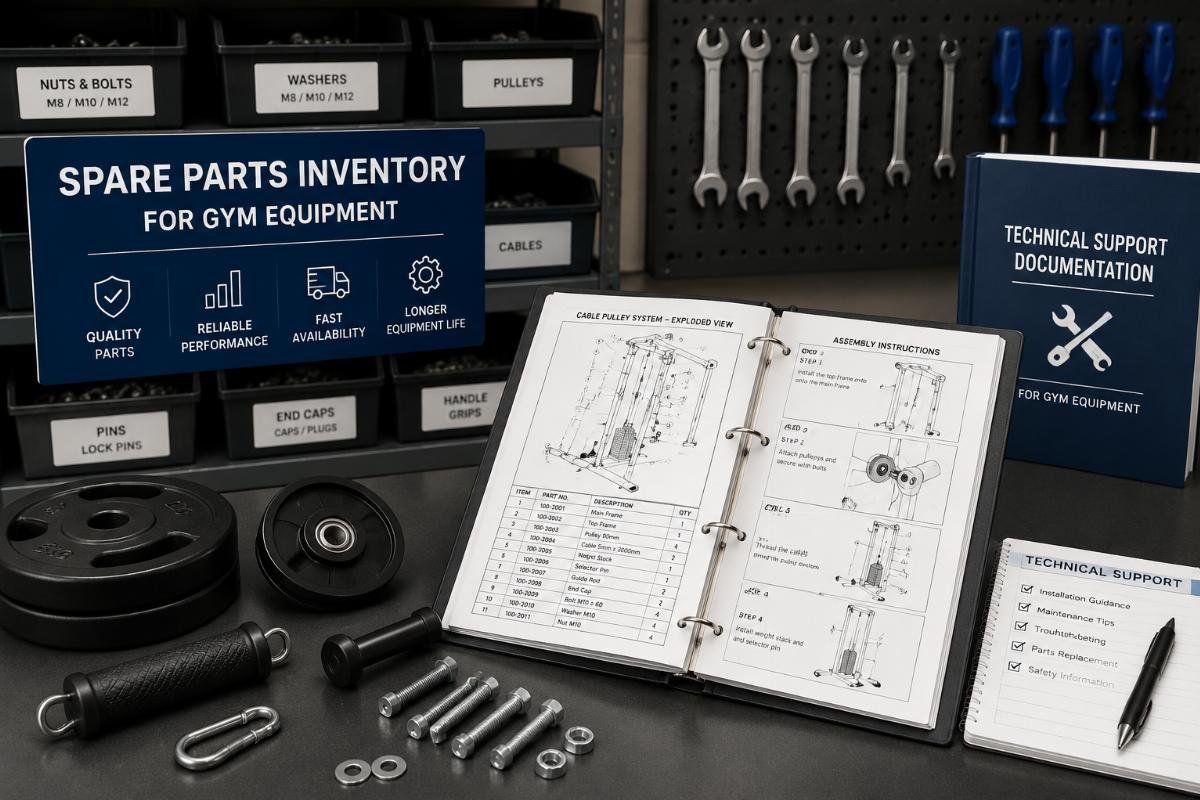
Warranty terms, spare parts supply cycle, and technical support responsiveness define the long-term partnership value of a commercial spin bike manufacturer — product quality matters at purchase, but after-sales infrastructure matters for every year after.
Commercial spin bikes in gym and studio environments experience wear on specific components: drive belts, resistance mechanisms, pedal bearings, and saddle adjustment hardware. The question is not whether these parts will need replacement — it is how quickly the manufacturer can supply replacements and how clearly the warranty terms cover them.
A reliable commercial spin bike manufacturer provides a warranty document that specifies coverage duration, covered components, and exclusion conditions. More importantly, the manufacturer maintains a spare parts inventory that can be shipped on short notice. The spare parts supply cycle — the time between ordering a replacement part and receiving it at the buyer’s location — is a critical metric. For buyers in Indonesia, this cycle must account for international shipping time and customs clearance for spare parts shipments.
[NEED_CITE: Fitness equipment after-sales spare parts supply chain best practices for international buyers]
Technical support responsiveness is the third pillar. When a gym operator encounters an unfamiliar issue — a unusual noise from the drivetrain, a resistance mechanism that behaves inconsistently — they need access to someone who understands the product’s engineering. A commercial spin bike manufacturer with dedicated export after-sales teams can provide video-call troubleshooting, replacement part identification, and maintenance guidance remotely.
A hotel fitness center in Surabaya replaced its entire spin bike fleet through a commercial spin bike manufacturer. The warranty package included a spare parts supply agreement with predefined response timelines. When a drive belt failed during the first month of operation, the replacement part was shipped within days, and the hotel’s maintenance team received video guidance on installation. The rapid response prevented extended equipment downtime and maintained guest satisfaction during the hotel’s peak season.
Conclusion
Sourcing commercial spin bikes for the Indonesia market is a documentation and specification challenge before it becomes a pricing challenge. SNI certification, frame and drivetrain specifications, OEM branding coordination, factory-direct verification, and after-sales spare parts infrastructure — these five elements determine whether a spin bike purchase succeeds or becomes an expensive lesson. The commercial spin bike manufacturer that can address all five simultaneously is the partner worth building a long-term sourcing relationship with.