Commercial Gym Equipment Manufacturer & Wholesale Supplier | Bick
Brand premiums, not build quality, drive most of the price gap between imported and locally distributed fitness gear.
Gym equipment price in South Africa is shaped by four layers: factory cost, ocean freight, import duties, and distributor markups. Buyers sourcing directly from certified Chinese manufacturers typically cut landed costs substantially compared to purchasing through local dealers, provided they verify SABS compliance, voltage compatibility, and after-sales parts availability upfront.
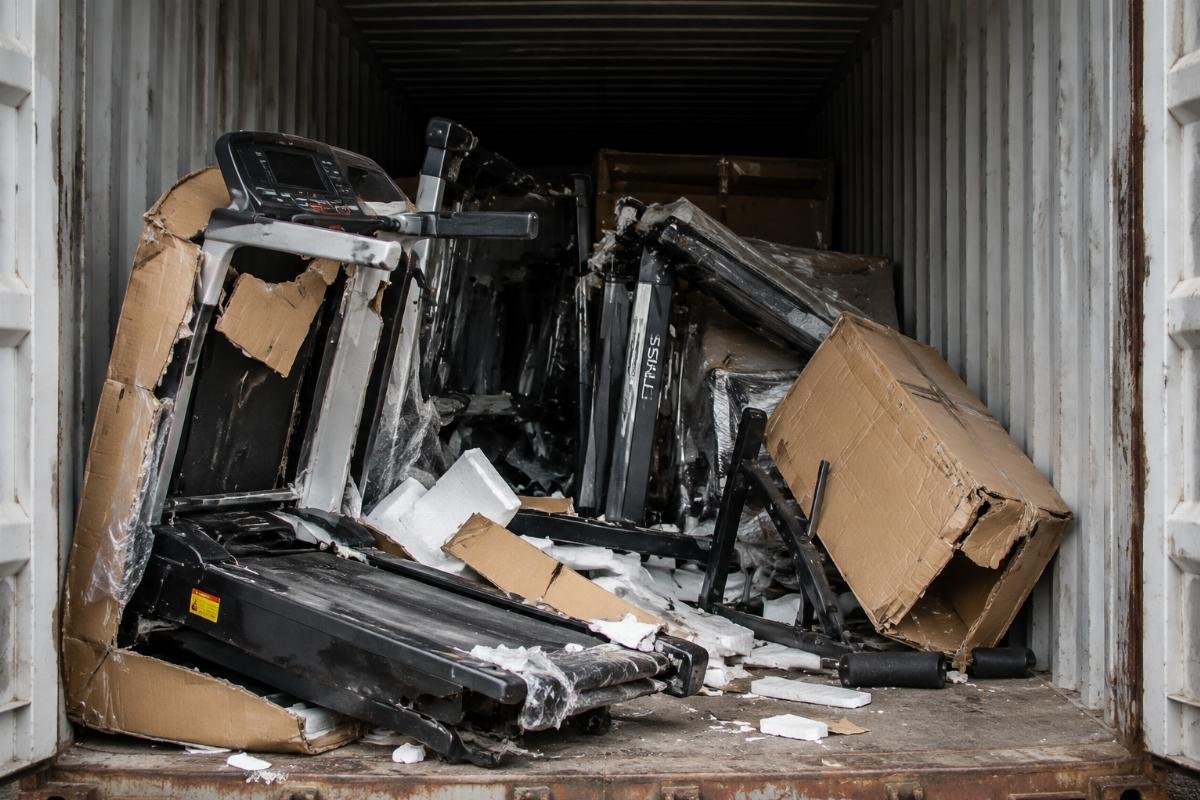
I still think about a container of commercial treadmills that sat stuck at a Middle Eastern port for weeks because the motor nameplates lacked the required regional certification mark. The client was fielding angry gym members daily, and the emergency air-freight bill for replacement plates nearly swallowed whatever margin the order had generated. Since that job, I walk through every compliance checkbox—certifications, voltage, plug type, packaging spec—before a single unit rolls off the line. Spending extra time on paperwork at the quoting stage saves far more than it costs at the destination port. [NEED_CITE: South African Revenue Service tariff classification for fitness machinery]
When buyers ask me about gym equipment price in South Africa, I break the number down layer by layer so they can see where each rand goes. The factory invoice is only the starting point; freight, duty, value-added tax, clearing fees, and dealer margins stack on top. Understanding that stack is what separates a budget that survives contact with reality from one that collapses at the first customs query.
Once the cost structure is clear, the next question becomes which equipment grade actually delivers value over the life of the investment.
What Determines Gym Equipment Price in South Africa?
Four cost layers determine the final gym equipment price in South Africa: ex-works factory price, ocean freight, import duty plus value-added tax, and distributor markup.
The ex-works price reflects steel grade, motor rating, electronics origin, and assembly labor. Ocean freight depends on whether the buyer books a full container or consolidates a shared load. South African customs applies a duty band on fitness machinery, and the standard VAT rate applies on top of the duty-assessable value. [NEED_CITE: SARS customs tariff heading for gymnasium exercise equipment] Finally, any local dealer layer adds warehousing, showroom overhead, and profit margin—often the single largest invisible component.
| Cost Layer | Factory-Direct Sourcing | Local Dealer Purchase |
|---|---|---|
| Equipment unit price | Verifiable factory quote | Noticeably higher due to intermediary margin |
| Freight control | Buyer selects shipping terms | Bundled and often inflated |
| Duty transparency | Buyer manages HS code classification | Absorbed into retail price |
| After-sales parts | Direct from manufacturer with batch traceability | Dependent on dealer stock availability |
| Custom branding | Full OEM/ODM capability | None or limited |
A Johannesburg commercial gym operator recently compared a branded quote for a mixed cardio and strength package against a factory-direct build from a Shandong manufacturer. The branded quote landed well into the millions of rand; the factory-direct version, with identical frame steel grades and the same motor class, came in substantially lower once duty and freight were added at buyer-controlled rates. The savings were large enough to fund an additional functional training zone that had been cut from the original plan.
The takeaway is straightforward: the gym equipment price in South Africa is not a fixed number. It is a stack that buyers can reconfigure by choosing where each layer is sourced and who controls each cost line.
Commercial vs Home Gym Equipment: Which Offers Better Value?
Commercial-grade equipment costs more per unit but delivers a lower annual cost of ownership in any high-traffic environment.
The distinction matters because buyers often compare unit prices without projecting usage hours. A commercial treadmill rated for continuous motor duty and built with heavier-gauge steel frames will outlast a home-grade unit by a wide margin in a gym setting. [NEED_CITE: IHRSA health club equipment lifecycle and usage intensity data] Home equipment, designed for one to three users per day, accumulates wear rapidly when subjected to dozens of daily users.
| Parameter | Commercial Grade | Home Grade |
|---|---|---|
| Frame construction | Heavy-duty welded steel | Lighter-gauge tubular |
| Motor duty rating | Continuous commercial duty | Intermittent residential |
| Bearing and roller spec | Sealed industrial class | Standard consumer class |
| Expected service life under gym use | Substantially extended | Noticeably shorter |
| Warranty structure | Multi-year with parts supply | Limited consumer warranty |
| Annual cost per usage hour | Noticeably lower | Noticeably higher |
A Cape Town hotel fitness center initially spec’d home-grade treadmills to keep the fitout budget low. Within a short operational window, two units needed motor replacements and a third showed belt tracking issues. The downtime frustrated guests, and the replacement cycle erased the initial unit-price savings. Switching to commercial-grade units with accessible spare parts supply stabilized operations and reduced maintenance calls dramatically.
For any buyer calculating gym equipment price in South Africa, the correct comparison is not unit price but cost per usable hour over the equipment’s service life. Commercial grade wins that calculation in every high-traffic scenario.
How to Import Gym Equipment from China to South Africa?
Importing gym equipment from China to South Africa follows a defined sequence: product selection, certification verification, shipping arrangement, customs clearance, and duty payment—with SABS compliance and voltage confirmation as the two most common failure points.
The process looks simple on paper. In practice, most delays and extra costs come from skipping a verification step early in the sequence.
- Product selection and specification lock. Confirm frame material grade, motor power class, electronics origin, and upholstery spec. Request a detailed spec sheet, not a brochure. [NEED_CITE: SABS mandatory specification requirements for electrical fitness equipment]
- Certification verification. Confirm whether the equipment carries CE marking for export and whether any components require SABS approval for South African import. Motor nameplate markings must match the documentation exactly.
- Voltage and plug confirmation. South Africa uses the Type M plug standard with a 220-volt 50-hertz supply. Confirm that the equipment matches this supply and that the plug type is correct or that an adapter plan is in place.
- Shipping arrangement. Decide between full container load and less-than-container consolidation. A full container offers the lowest per-unit freight cost; consolidation suits trial orders or space-constrained budgets.
- Documentation preparation. Ensure the commercial invoice, packing list, bill of lading, certificate of origin, and any required test reports are complete and consistent before the vessel departs.
- Customs clearance and duty payment. A licensed clearing agent classifies the goods under the correct HS code, calculates duty and VAT, and submits the entry to SARS. [NEED_CITE: SARS import clearance documentation requirements for fitness machinery]
A Durban-based equipment importer placed a trial order for a small batch of treadmills. The units arrived, but customs held the shipment because the motor nameplate lacked the required certification mark. The整改 cycle—re-documentation, inspection coordination, and compliance remediation—took well over a month and generated storage fees that ate into the trial budget. The lesson was clear: certification is not a post-shipment concern. It is a pre-shipment checkpoint.
Buyers who treat certification and voltage confirmation as pre-order gates rather than post-arrival surprises find that the gym equipment price in South Africa stays close to the original landed-cost projection.
What Are the Hidden Costs of Buying Gym Equipment?
Hidden costs in fitness equipment purchases include spare parts unavailability, unplanned downtime, premature replacement cycles, and retrofit modifications for local compliance.
The invoice price is the visible portion. The costs that erode margins over time live below the surface.
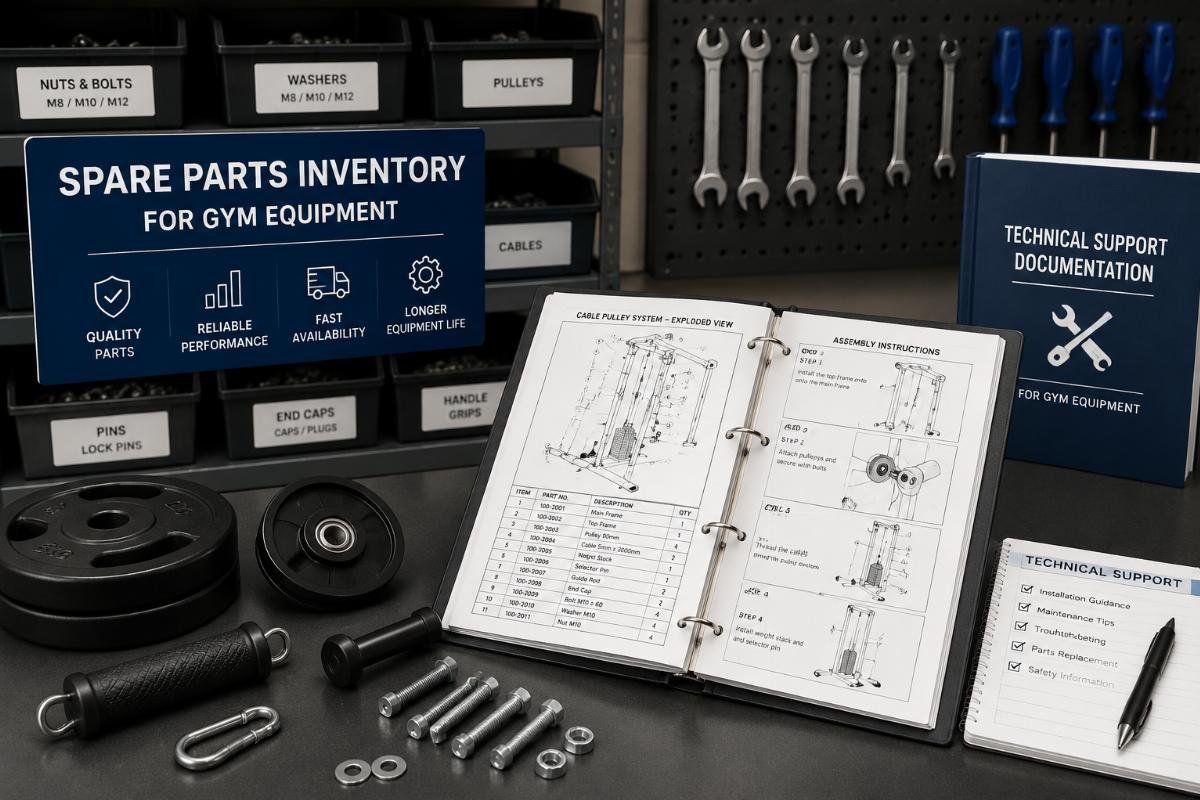
Spare parts availability is the most significant hidden variable. A treadmill or cable machine is only as reliable as the supply chain behind its wear components—drive belts, deck surfaces, cable sets, pulley bearings, and electronic control boards. If the supplier cannot provide batch-traceable parts within a reasonable lead time, a single component failure can sideline a revenue-generating machine for weeks. [NEED_CITE: fitness equipment maintenance cost distribution by component category]
Downtime carries a compounding cost. A non-functional piece of cardio equipment in a commercial gym reduces member satisfaction and can trigger membership cancellations. In a hotel setting, it generates guest complaints that the front desk must manage. The revenue impact of downtime often exceeds the repair cost itself.
Retrofit costs arise when equipment arrives without the correct plug type, without required certification markings, or with control boards calibrated for a different voltage frequency. Modifying equipment after arrival is always more expensive than confirming specifications before production.
| Hidden Cost Category | Mitigation Approach |
|---|---|
| Spare parts delay | Source from manufacturers with documented parts supply and batch traceability |
| Unplanned downtime | Select equipment with modular components and accessible service points |
| Premature replacement | Specify commercial-grade construction matched to projected usage intensity |
| Retrofit modification | Lock voltage, plug type, and certification markings before production begins |
A gym owner in Pretoria purchased a mixed package from a supplier who could not supply replacement cables for a cable crossover machine after the initial warranty period. The gym sourced compatible cables from a third party at a premium and experienced a fit issue that required on-site modification. The total cost of that single workaround—parts, labor, and downtime—was a meaningful fraction of what a complete machine replacement would have cost.
Understanding these hidden layers ensures that the gym equipment price in South Africa reflects the true total cost of ownership, not just the landing price at the dock.
How to Choose the Right Gym Equipment Supplier?
The right gym equipment supplier combines verifiable certifications, flexible order quantities, documented after-sales parts supply, and transparent communication on lead times.
The supplier landscape ranges from large integrated manufacturers to small trading companies with no production capability. Each type carries different risk profiles for a South African buyer.
Certifications form the baseline. A manufacturer that holds CE certification for export markets and can demonstrate compliance with South African import requirements reduces the buyer’s regulatory risk substantially. [NEED_CITE: CE marking requirements for electrical fitness equipment exported to African markets] Ask for copies of test reports, not just certificates—certificates can be transferred; test reports are tied to specific product configurations.
Order flexibility matters for buyers who are testing a new market or scaling gradually. A manufacturer willing to accommodate single-unit trial orders alongside full container packages allows the buyer to validate product quality before committing larger capital.
After-sales infrastructure separates serious manufacturers from one-time sellers. The key question is not whether the supplier offers a warranty, but whether they maintain a parts inventory tied to batch serial numbers and can ship replacement components within a predictable timeframe.
| Supplier Evaluation Factor | What to Verify |
|---|---|
| Certification authenticity | Test reports matching specific product configurations, not generic certificates |
| Production capability | Factory audit access or verified production facility documentation |
| Parts supply commitment | Documented parts catalog with batch traceability and lead time commitments |
| Order flexibility | Willingness to handle trial quantities alongside volume orders |
| Communication responsiveness | Technical query turnaround time during the quoting stage |
A fitness equipment distributor in East Africa built a long-term supply relationship after a trial order of functional training rigs revealed that the manufacturer’s technical team responded to spec queries within hours, provided batch-level test reports without prompting, and included a spare parts list with the shipment. That trial order validated not just the product quality but the operational reliability that matters over years of repeat purchasing.
For buyers evaluating gym equipment price in South Africa, the supplier choice is as consequential as the product choice. A reliable manufacturer protects the investment long after the container is cleared.
Conclusion
The gym equipment price in South Africa is a controllable variable, not a fixed market condition. Buyers who understand the cost stack, choose commercial-grade equipment matched to usage intensity, manage the import process with certification gates upfront, account for hidden ownership costs, and select suppliers on verifiable capability rather than brochure claims will consistently achieve better outcomes than those who compare unit prices in isolation.