
Commercial Elliptical for Hotel Group Deployment | Bulk OEM Supplier
Most EPC contractors think elliptical selection comes down to flywheel weight and stride length. It doesn’t. The real failure point is deployment environment — humidity, usage intensity, and user profile — and ignoring these variables turns a straightforward procurement into a multi-property disaster.
For hotel group multi-property deployments, EPC contractors should source commercial ellipticals from factory-direct manufacturers that offer OEM flexibility, environment-specific material upgrades (stainless steel bearings for high-humidity zones, reinforced pedal arms for mixed-use traffic), and container consolidation services — prioritizing deployment environment checks and spec verification over spec-sheet comparisons.
I still remember a Middle East resort project where we spec’d a standard commercial elliptical with a 30-pound flywheel for a poolside fitness room. Six months later, every single unit’s pedal bearings were seized solid. The coastal humidity sat above 70 percent year-round, and the standard carbon-steel bearings had corroded beyond salvage. The entire batch had to be air-freighted back, rebuilt with stainless steel components, and shipped again. The logistics cost alone wiped out the margin on the whole order [NEED_CITE: corrosion failure rates in coastal hospitality environments per ISO 9227 salt-spray testing protocols]. After that, I started treating environment assessment as the first step — not an afterthought — in any commercial elliptical sourcing conversation.
The lesson here is straightforward: spec sheets lie if you don’t cross-reference them against where the machines will actually live. Let’s walk through how experienced EPC contractors approach this.
Why Deployment Environment Matters More Than Spec Sheets for Hotel Ellipticals?
Humidity, ambient temperature, daily usage hours, and user type collectively determine bearing life, frame fatigue, and electronic component reliability — far more than flywheel weight or console features ever will.
When you’re outfitting a hotel fitness center, the machine doesn’t operate in a climate-controlled lab. It sits next to a pool where humidity spikes every morning, or in a resort gym where the AC runs intermittently, or in a business hotel where the equipment sees thirty minutes of use per day versus a resort property where it runs six hours straight during peak season.
Consider the bearing failure pattern. Standard commercial ellipticals use sealed cartridge bearings rated for general indoor fitness environments. In a coastal resort where ambient humidity regularly exceeds the threshold for condensation on steel surfaces, those bearings begin ingesting moisture through micro-gaps in the seals. The grease emulsifies. The races pit. Within months, pedal stroke develops play, then grinding, then complete seizure [NEED_CITE: bearing degradation mechanisms in high-humidity environments per ISO 15243 damage classification].
| Environment Variable | Standard Commercial Spec | Environment-Adapted Spec |
|---|---|---|
| Coastal humidity (above 65% RH) | Carbon-steel bearings, standard grease | Stainless steel bearings, marine-grade grease |
| High daily usage (above 6 hours) | Standard pedal arm thickness | Reinforced pedal arm, oversized pivot bushings |
| Mixed user profile (guests + members) | Standard pedal bearing clearance | Tightened tolerance, extended service interval |
| Temperature fluctuation (unconditioned space) | Standard electronic console | Humidity-sealed console, conformal-coated PCB |
A European hotel group we worked with deployed identical elliptical configurations across three properties — a city business hotel, a beachfront resort, and a mountain lodge. The beachfront property’s units needed bearing replacements within the first year. The mountain lodge, where usage was light and humidity low, still had original bearings at the three-year mark. The city hotel fell somewhere in between. Same machine, same spec sheet, radically different outcomes [NEED_CITE: hospitality fitness equipment maintenance frequency benchmarking data].
The takeaway: before you finalize a bulk order, walk the actual deployment sites — or get detailed environmental data from the property management team. Document humidity ranges, HVAC schedules, expected daily usage hours, and whether the primary users are transient hotel guests or long-term fitness members.
What Specs Should EPC Contractors Verify Before Bulk Ordering?
Commercial-grade heavy-duty frame construction, stainless or ceramic-bearing options for humid environments, flywheel dynamic balance precision, and pedal assembly clearance tolerance are the four non-negotiable verification points for hotel group procurement.
Most procurement managers start with flywheel weight. That’s a consumer-grade heuristic. For commercial elliptical sourcing in hospitality, the critical specs sit deeper in the mechanical architecture.
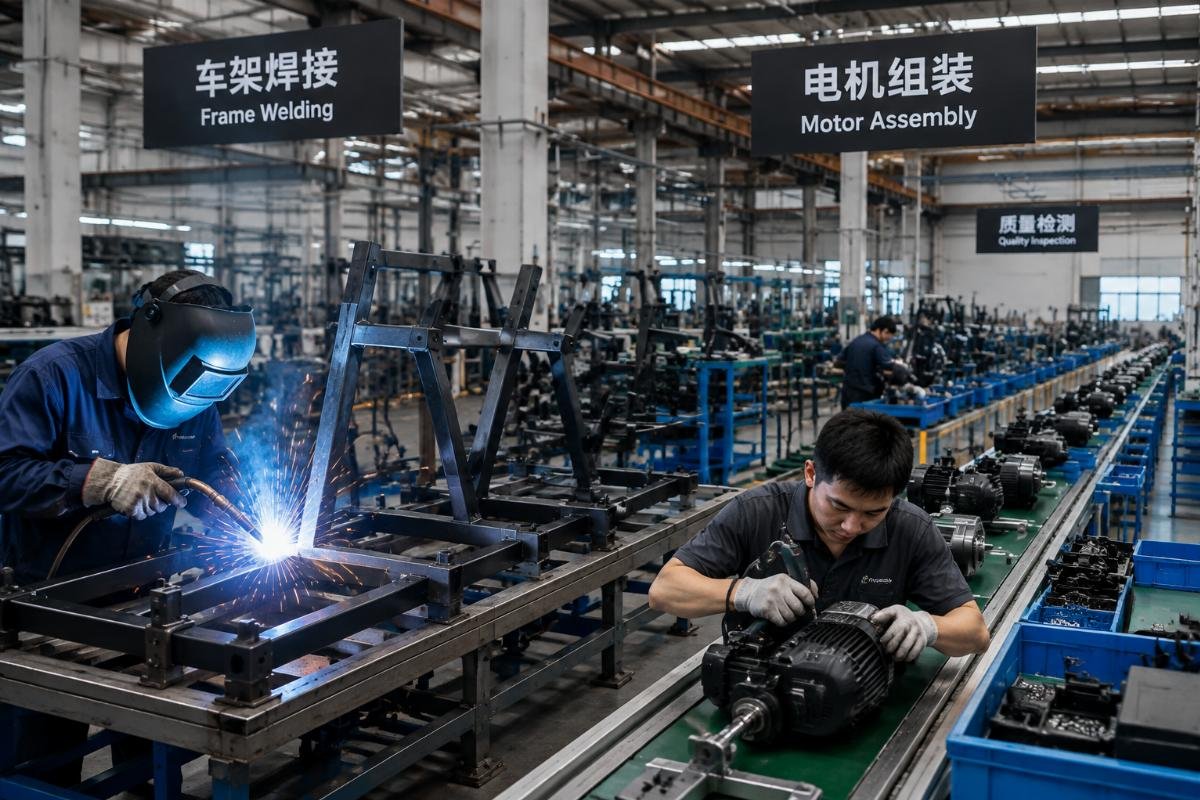
Frame steel thickness and welding quality. Commercial ellipticals for hotel deployment need a frame that withstands continuous multi-user loading. Look for frame tube thickness in the heavy-duty range — not the light commercial tier that bends under sustained use. Weld joints should be continuous, not intermittent tack welds. Ask the manufacturer for weld penetration documentation or third-party structural testing reports [NEED_CITE: commercial fitness equipment structural integrity standards per EN 957 / ISO 20957].
Bearing material and seal specification. This is where environment-mismatch failures originate. For any property with humidity above moderate levels, specify stainless steel bearings or ceramic hybrid bearings as a baseline. Standard carbon-steel bearings with rubber seals are adequate for dry, climate-controlled business hotels — but they’re a liability in coastal or tropical resort settings.
Flywheel dynamic balance grade. A poorly balanced flywheel creates vibration that accelerates wear on every rotating joint in the machine. For commercial hotel ellipticals, the flywheel should meet at least a G6.3 balance grade — anything below that produces noticeable vibration at operating speed, which guests perceive as poor quality and which mechanically degrades the unit faster [NEED_CITE: rotating component balance grade specifications per ISO 1940-1].
Pedal assembly clearance and pivot bushing specification. In mixed-use hotel environments where guests use the machine with improper footwear or excessive force, pedal pivot points take abnormal lateral loads. Oversized pivot bushings and tightened pedal clearance tolerances reduce play development over time.
| Verification Point | What to Check | Red Flag |
|---|---|---|
| Frame construction | Tube thickness, weld continuity, load rating documentation | Intermittent welds, no structural test report |
| Bearing specification | Material grade, seal type, grease compatibility | Standard carbon steel in humid-zone deployment |
| Flywheel balance | Balance grade certification | No balance documentation, vibration at low RPM |
| Pedal assembly | Bushing size, clearance tolerance, lateral play spec | Standard consumer-grade pivot design |
A buyer from a Southeast Asian hotel development group once told me they’d received quotes from several suppliers, all quoting similar flywheel weights and stride lengths. When we pulled the actual bearing specs and frame drawings, two of the five suppliers were offering residential-grade components dressed in commercial housings. The price difference was marginal. The failure timeline difference was months versus years.
How to Match Elliptical Configurations Across Multi-Property Hotel Groups?
Tier configurations by property usage intensity rather than deploying a single SKU across all properties — this prevents both over-specification waste and premature wear-out in high-traffic locations.
Hotel groups love standardization. One SKU, one spare parts inventory, one maintenance protocol across every property. It simplifies procurement and operations. But it also guarantees that half your fleet is either overbuilt or underbuilt for its actual deployment conditions.
The smarter approach is tiered configuration based on usage intensity profiling.
Tier 1 — Light usage properties. Business hotels in secondary cities where the fitness center sees maybe twenty to thirty user sessions per day, mostly short-duration guest workouts. Here, a standard commercial elliptical with basic specifications handles the load adequately. Standard bearings, standard flywheel, standard pedal assembly. Maintenance intervals follow the manufacturer’s baseline schedule.
Tier 2 — Moderate usage properties. Upscale business hotels or limited-service resorts with steady guest traffic and some local member usage. Daily sessions may reach fifty to eighty. Upgrade to stainless steel bearings if the property is in a humid climate zone. Reinforced pedal bushings if member usage exceeds guest usage. Slightly heavier flywheel for smoother operation under sustained load.
Tier 3 — High usage properties. Full-service resorts, destination hotels, or properties with significant local membership. Daily sessions can exceed a hundred, with extended operating hours. These properties need the full commercial-grade package: oversized bearings, reinforced frame joints, heavy-duty pedal assemblies, and potentially a self-generating resistance system to eliminate power dependency in high-use zones [NEED_CITE: commercial fitness equipment usage classification per IHRSA facility benchmarking reports].
| Usage Tier | Typical Daily Sessions | Bearing Spec | Frame Reinforcement | Maintenance Interval |
|---|---|---|---|---|
| Light | Below 30 | Standard sealed cartridge | Standard | Baseline schedule |
| Moderate | 50 to 80 | Stainless steel (humid zones) | Selective reinforcement | Accelerated schedule |
| High | Above 100 | Stainless or ceramic hybrid | Full reinforcement | High-frequency schedule |
The cost delta between tiers is typically modest — a mid-single-digit percentage on per-unit price — but the lifecycle cost difference is substantial. A Tier 1 machine in a Tier 3 environment will generate warranty claims and replacement costs that dwarf the initial savings. Conversely, a Tier 3 machine in a Tier 1 environment is capital sitting idle.
An Asia-Pacific hotel chain we supported had originally spec’d a single configuration across twelve properties. After the first year, three resort properties were burning through pedal bearings at triple the expected rate, while four city hotels had machines that looked barely used. We restructured the order for the next cycle into three tiers, matched to property-level usage data. Maintenance costs dropped noticeably across the portfolio, and guest complaint tickets related to equipment downtime fell to near zero.
Where to Source Commercial Ellipticals with OEM Flexibility and Container Consolidation?
Factory-direct manufacturers offering OEM branding, flexible MOQ from single units to full container loads, environment-specific material customization, and spare parts bundling deliver the lowest total deployed cost for hotel group multi-property projects.
The sourcing channel matters as much as the spec. Buying through trading companies adds margin layers and removes your ability to customize. Buying direct from a factory with OEM capability gives you control over material selection, branding, and logistics consolidation.
For EPC contractors managing hotel group deployments across multiple countries, the practical sourcing requirements break down as follows:
OEM flexibility. Hotel groups often want equipment branded to their property standard or to a unified group fitness identity. The manufacturer needs to accommodate custom console faceplates, frame color matching, logo application, and packaging customization — without imposing prohibitive MOQs on each SKU variation.
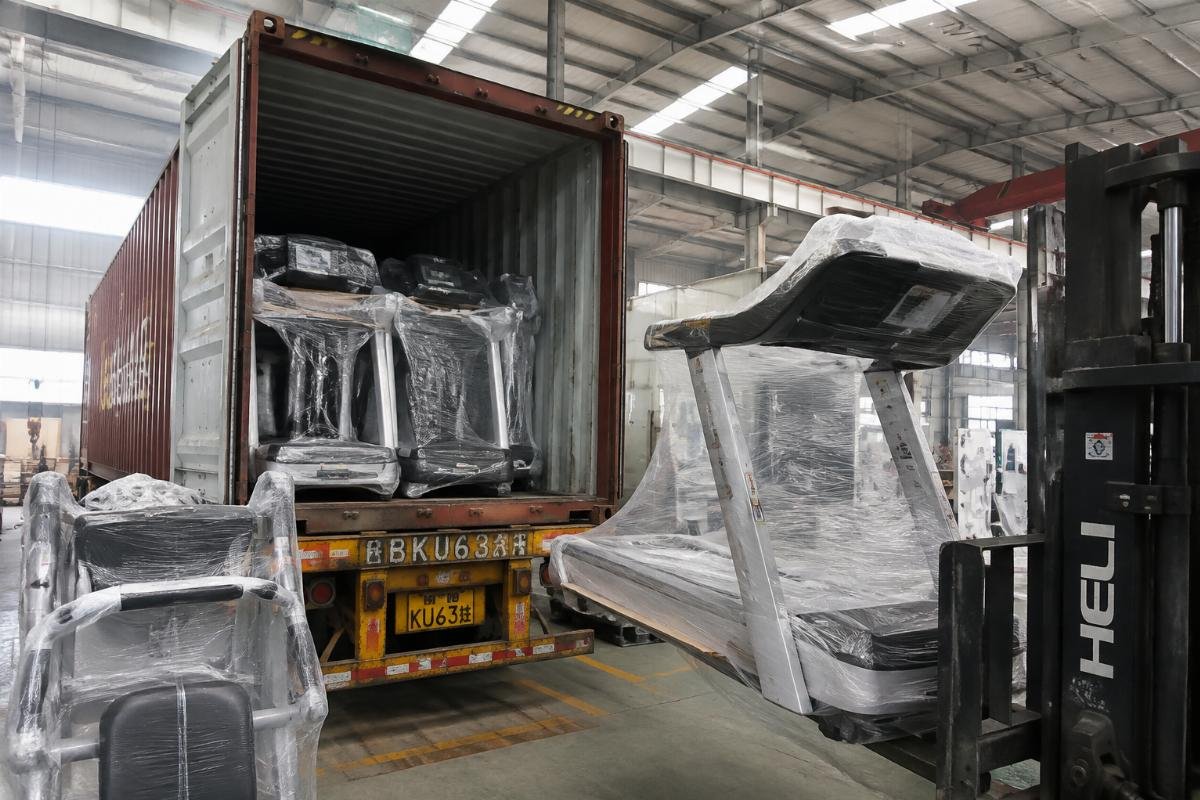
MOQ elasticity. A multi-property rollout rarely means ordering identical quantities to every site. Some properties need two machines, others need ten. The manufacturer should accommodate mixed-SKU container loads — consolidating ellipticals with treadmills, bikes, and strength equipment into single shipments to minimize freight cost per unit [NEED_CITE: container consolidation best practices for international fitness equipment logistics].
Environment-specific material upgrades. As discussed earlier, bearing material, grease specification, and electronic component sealing should be customizable at the factory level — not retrofitted after arrival. The manufacturer needs to offer stainless steel bearing options, marine-grade grease fills, and humidity-sealed console electronics as standard customization choices, not as special-order exceptions.
Spare parts bundling. For multi-country deployments, shipping individual replacement parts on demand is logistically expensive and operationally slow. A competent factory-direct supplier will bundle a spare parts package with the initial order — bearings, pedal straps, drive belts, console membranes — sized to cover the first maintenance cycle across all deployed properties.
Bick, based in Shandong Province, operates exactly this model. We supply commercial ellipticals — alongside a full cardio, strength, and free-weight product line — to hotel groups, gym chains, and distributors across multiple regions. Our factory handles OEM branding, offers MOQ flexibility from single units to full gym packages, and consolidates mixed-equipment container loads to reduce per-unit freight cost. CE certification is standard. Spare parts packages are bundled with every bulk order. The pricing sits substantially below premium Western brands, which matters when you’re equipping a twelve-property rollout and every percentage point of unit cost compounds across the fleet.
What After-Sales Infrastructure Do EPC Contractors Need for Multi-Country Deployment?
Spare parts availability, remote technical support, and clear warranty terms form the operational backbone of multi-country hotel elliptical deployments — without them, equipment downtime becomes a guest satisfaction crisis.
Deploying fitness equipment across borders means you can’t drive to the property when something breaks. The after-sales infrastructure has to travel with the equipment.
Spare parts supply. Every bulk order should include a spare parts inventory sized for the deployed fleet’s first operational year. Critical wear items — bearings, belts, pedal straps, pivot bushings — should be stocked on-site at each property or at a regional maintenance hub. The manufacturer should maintain a standing parts catalog with cross-reference to the specific models deployed, and offer expedited shipping for unexpected failures.
Technical support. Properties need access to someone who understands the equipment — not a generic call center, but technical staff who can walk local maintenance teams through diagnostics, bearing replacement procedures, console troubleshooting, and drive system adjustments. Video support sessions, detailed technical manuals, and exploded-part diagrams are baseline expectations [NEED_CITE: fitness equipment after-sales support framework per international hospitality procurement standards].
Warranty terms. Hotel group procurement typically negotiates extended warranty coverage — two to three years on frame and structural components, one to two years on wearable parts and electronics. The warranty should be explicit about what’s covered, what’s excluded, and how claims are processed across jurisdictions. Ambiguity here creates disputes that sour the supplier relationship.
A Middle East hotel group we deployed to required a comprehensive spare parts package covering all twelve properties in their portfolio, plus on-call video technical support for their regional maintenance team. We bundled a two-year supply of critical wear parts with the initial shipment, provided multilingual technical documentation, and established a direct-line support protocol for their engineering staff. Equipment uptime stayed high, and the group re-ordered for their next development phase without competitive bidding.
Conclusion
Environment-first spec selection, tiered multi-property configuration, and factory-direct sourcing with OEM flexibility and spare parts bundling are the three pillars of successful hotel group elliptical deployment.
EPC contractors who treat deployment environment as the primary input — not an afterthought — avoid the costly cycle of premature failure, emergency air-freight, and guest complaints. Matching machine configuration to property-level usage intensity prevents both waste and wear-out. And sourcing from a factory-direct manufacturer with OEM capability, container consolidation, and after-sales infrastructure keeps total deployed cost manageable across multi-country rollouts. The spec sheet is a starting point. The real decisions happen before the order is placed.