China Lat Pulldown Supplier for University Athletic Facilities
"Commercial grade" is not a standard; it is a marketing variable that ranges from fragile tubing to industrial steel.
To successfully compare lat pulldown suppliers in China for university facilities, you must ignore the initial unit price and strictly verify three structural metrics: main frame steel tube thickness (minimum 3mm), sealed bearing quality in the pulley system, and the precision of the weight stack guide rods. These factors determine whether the equipment survives high-traffic student use or fails within a single semester.
I still remember the silence in the procurement office of a Division II university in the Midwest. The athletic director was not angry; he was exhausted. We had sourced a full strength room package from a factory that promised specifications identical to premium American brands at a fraction of the cost. The lat pulldowns looked perfect in the catalog. But within months, the cables began to fray, and the weight stacks developed a rhythmic clanking sound that echoed through the force room. The supplier had substituted nylon bushings for sealed bearings and used thin-walled tubing that flexed under heavy load. I lost the entire shipping cost on that container because the university refused to accept the liability risk. That failure taught me that when you compare lat pulldown suppliers in China, you are not buying metal; you are buying engineering integrity.
The market is flooded with manufacturers who can produce aesthetically similar machines. However, the internal components dictate longevity. For institutional buyers, the goal is not just acquisition but asset preservation. You need a partner who understands that a university gym operates under different stress conditions than a boutique studio.
Why Does Weight Stack Smoothness Depend on Guide Rods Rather Than Plates?
Most buyers assume that the smoothness of a lat pulldown is determined by the material of the weight plates or the lubrication of the stack. This is a common misconception. In reality, the perceived quality of the movement is dictated by the precision of the guide rod system and the interface between the rod and the weight plate bushings.
When students perform high-repetition sets, any lateral play in the weight stack translates into friction and noise. Low-quality suppliers often use cold-drawn steel rods with inconsistent diameters or poor surface finishes. Over time, this causes the bushings to wear unevenly, leading to the infamous "clunk-clunk" sound that signals impending failure.
| Component Feature | Budget-Oriented Specification | True Commercial Specification |
|---|---|---|
| Guide Rod Material | Standard carbon steel, minimal finishing | Chrome-plated or hardened steel, micron-level precision |
| Bushing Type | Simple nylon or plastic bushings | Self-lubricating composite or bronze-impregnated bushings |
| Rod Diameter Tolerance | Noticeable variance, prone to binding | Tight tolerance, consistent smooth travel |
| Wear Resistance | Vulnerable to rapid degradation | Robust against high-frequency cycling |
[NEED_CITE: mechanical friction principles in linear motion systems]
A European university client once reported that their previous supplier’s machines required constant maintenance because the weight stacks would jam during dynamic movements. Upon inspection, we found that the guide rods were not properly aligned with the frame mounting points. This misalignment created binding forces that no amount of lubrication could fix. When you compare lat pulldown suppliers in China, ask for video evidence of the weight stack traveling freely from top to bottom without manual assistance. If it sticks, the machining tolerances are insufficient for institutional use.
How Do Steel Gauge and Weld Integrity Define Structural Safety?
The primary frame of a lat pulldown bears the brunt of dynamic loads, especially when users employ aggressive pulling techniques or drop the weight stack. Many suppliers advertise "heavy-duty" construction but use steel tubes with wall thicknesses that are inadequate for commercial environments.
In the fitness industry, there is no universal legal definition of "commercial grade." Some factories consider 2mm tubing sufficient, while others adhere to a strict 3mm minimum for main structural members. For a university setting, where equipment usage is unpredictable and often intense, anything less than 3mm is a liability.
Furthermore, the welding technique is critical. Spot welding may look clean from a distance, but it lacks the continuous strength required at high-stress joints. Continuous welding ensures that the frame acts as a single unified structure rather than a collection of loosely connected parts.
| Structural Element | Risk Area | Verification Method |
|---|---|---|
| Main Frame Tubing | Bending under heavy load | Request mill certificates for steel gauge |
| Joint Welds | Cracking at stress points | Inspect for continuous vs. spot welding |
| Base Stability | Tipping during unilateral exercises | Check base footprint dimensions and weight |
[NEED_CITE: ISO standards for static and dynamic load testing in strength equipment]
I recall reviewing a quote from a supplier who claimed their frames were reinforced. However, close-up photos revealed that the welds were merely tacked at intervals. Under repeated stress, these tack welds became initiation points for cracks. By contrast, reputable manufacturers use robotic continuous welding to ensure uniform penetration. When you compare lat pulldown suppliers in China, demand detailed images of the weld beads at the main joint connections. If they hesitate to provide these, it is a sign that their production standards do not meet commercial requirements.
What Component Details Reveal the True Quality of the Pulley System?
The pulley system is the heart of the lat pulldown. It transforms the user’s input into resistance. If the pulleys fail, the machine becomes unusable. Many suppliers cut costs by using open bearings or simple bushings inside the pulley wheels. These components cannot withstand the high rotational speeds and lateral forces generated during vigorous exercise.
Sealed bearings are essential. They protect the internal rolling elements from dust, sweat, and debris, which are abundant in university gyms. Additionally, the cable itself must be of sufficient diameter and properly swaged. Thin cables are prone to fraying, and poor swaging can lead to catastrophic failure if the ferrule slips.
| Pulley Component | Low-Cost Alternative | Commercial Standard |
|---|---|---|
| Bearing Type | Open bushings or plain nylon | Sealed ball bearings |
| Cable Diameter | Thin, prone to stretching | Thick, multi-strand steel core |
| Swaging Quality | Basic crimp, potential slip | Double-swaged, tested for pull-out strength |
| Pulley Wheel | Plastic or thin aluminum | Machined aluminum or reinforced nylon |
[NEED_CITE: bearing life expectancy under radial and axial loads]
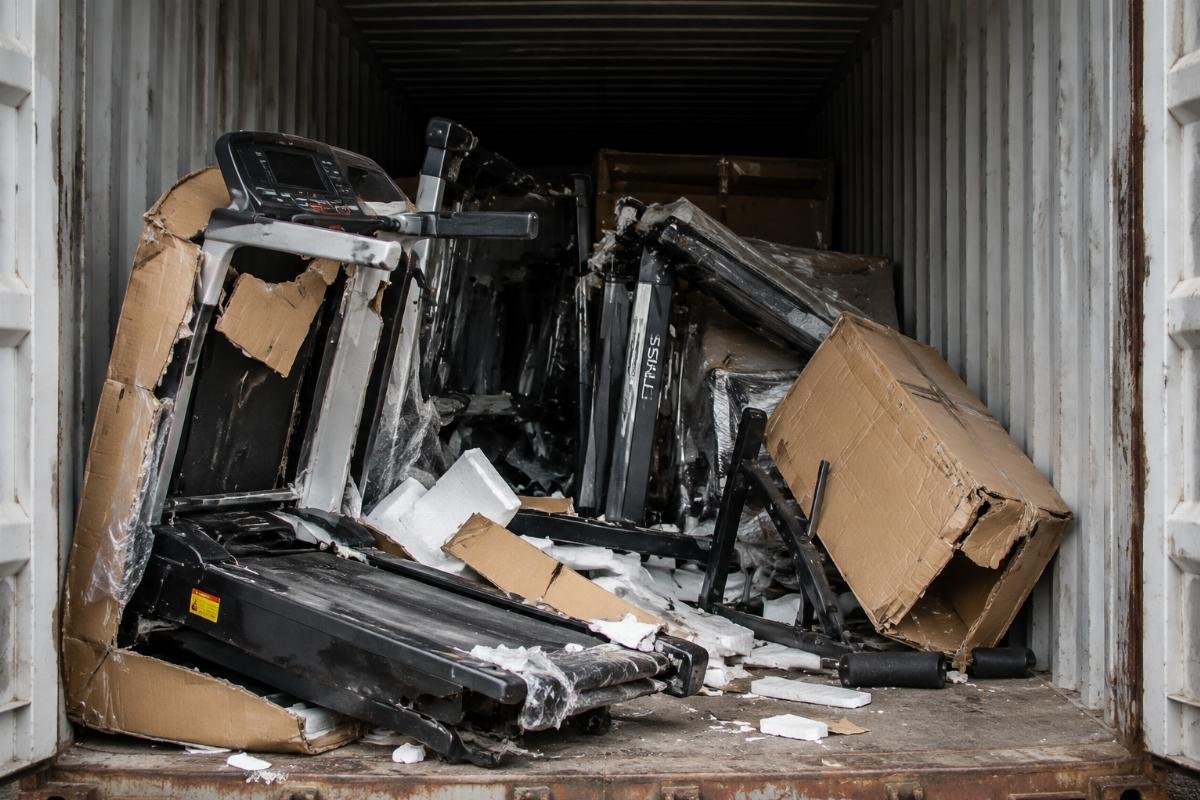
A case from a multi-campus consolidation project highlights this issue. The buyer mixed their order with cardio equipment to save on shipping. However, the protective packaging for the strength machines was insufficient. Upon arrival, several pulley housings were cracked due to impact during transit. More importantly, the internal bearings had been contaminated by dust ingress because the seals were not robust. This led to premature noise and stiffness. When you compare lat pulldown suppliers in China, inquire about their packaging standards for container loads. A supplier who invests in protective foam and reinforced cartons understands the logistics realities of international shipping.
How Can You Verify After-Sales Support and Spare Parts Availability?
Buying equipment is only the first step. The real test of a supplier is their ability to support you after the sale. Universities cannot afford downtime. If a cable breaks or a bearing fails, the machine must be back in service quickly. Many overseas suppliers operate on a "sell and forget" model. They may offer a warranty, but fulfilling it requires shipping individual parts across oceans, which is slow and expensive.
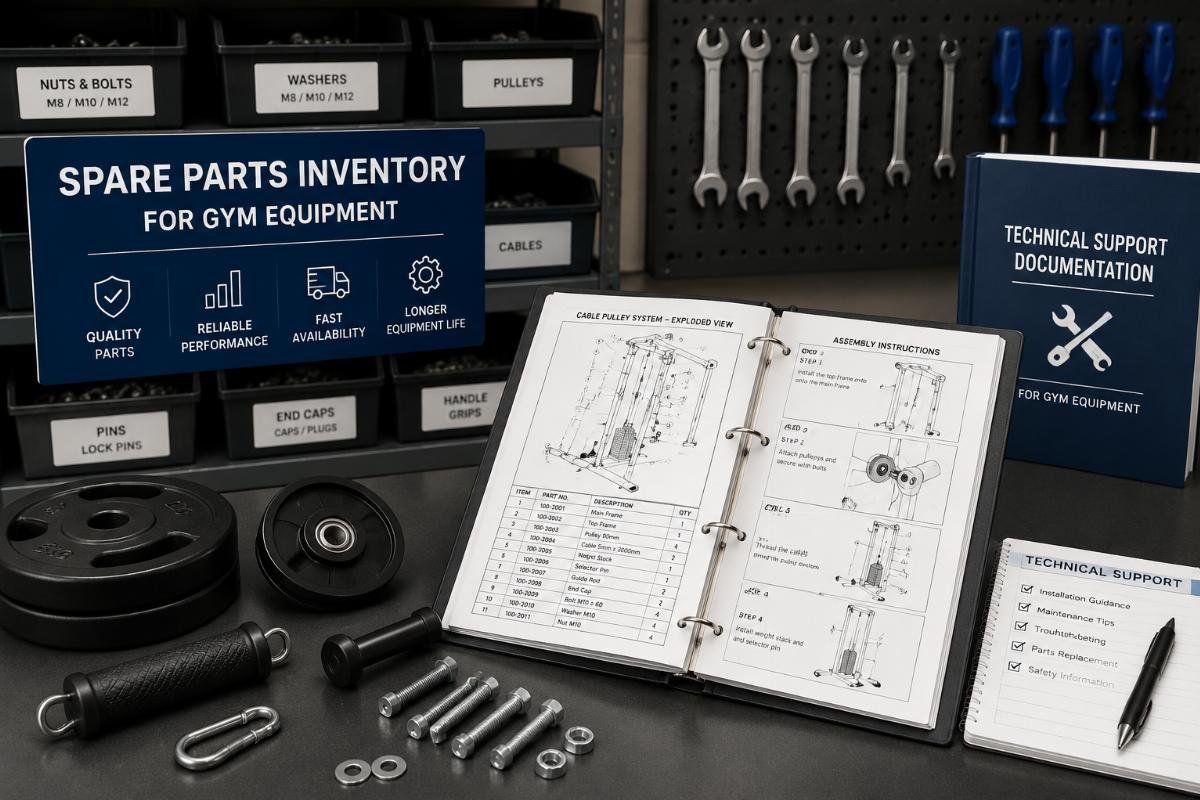
The best partners maintain a stock of critical spare parts and have a streamlined process for dispatching them. They also provide clear technical documentation, including exploded views and part numbers, so that local maintenance teams can perform repairs without waiting for external technicians.
| Support Feature | Typical Overseas Supplier | Preferred Partner |
|---|---|---|
| Spare Parts Stock | Made-to-order, long lead time | Local or regional stock available |
| Response Time | Days to weeks for replies | Hours for urgent technical queries |
| Documentation | Basic manual, no diagrams | Detailed exploded views and part lists |
| Technical Training | None | Video guides and remote support |
[NEED_CITE: importance of maintenance accessibility in institutional facility management]
In my current role, I ensure that every shipment includes a comprehensive spare parts kit and digital access to assembly videos. This proactive approach minimizes downtime. For example, when a client in the Middle East reported a noisy pulley, we were able to identify the specific bearing model from our records and ship a replacement immediately, rather than asking them to disassemble the unit first. When you compare lat pulldown suppliers in China, ask about their spare parts policy. Do they keep inventory? Can they ship small parcels quickly? The answer will tell you whether they are interested in a one-time transaction or a long-term partnership.
Conclusion
Selecting the right manufacturer is about verifying engineering details, not just comparing price tags.
For university athletic facilities, the durability of lat pulldowns depends on thick steel frames, sealed bearings, and precise guide rods. By focusing on these structural elements and ensuring robust after-sales support, you can secure equipment that withstands the rigors of daily student use. When you compare lat pulldown suppliers in China, prioritize transparency and technical competence over initial cost savings.