Cable Station Blanket Order Terms: OEM Manufacturer for Bulk Supply
Most buyers assume blanket orders exist solely to secure a lower unit price immediately.
A blanket order for cable stations is fundamentally a logistics and cash flow instrument, not just a bulk discount mechanism. It locks in pricing and production capacity while allowing phased deliveries that align with your site readiness, reducing warehouse overhead and mitigating the risk of holding excessive inventory before revenue generation begins.
I learned this the hard way during a project for a European fitness chain expanding into secondary cities. They wanted twenty cable crossovers delivered at once to secure a "bulk rate." The units sat in a rented warehouse for months because three locations were still awaiting final electrical inspections. The storage fees ate up the entire margin savings from the volume discount. That experience shifted my perspective from chasing the lowest sticker price to optimizing the total cost of ownership through structured release schedules. [NEED_CITE: impact of inventory holding costs on gym startup budgets]
This approach transforms procurement from a transactional headache into a strategic advantage. By understanding the specific components of Blanket Order Terms for Cable Station agreements, buyers can balance production efficiency with operational flexibility.
What Defines a Blanket Order for Gym Equipment?
It is a long-term supply agreement with scheduled releases, not merely a large one-time purchase.
A standard purchase order demands immediate production and shipment of the full quantity. A blanket order, by contrast, commits to a total volume over a defined period—often six to twelve months—but allows the buyer to call off shipments in smaller batches. This structure is critical for multi-site rollouts where construction timelines vary.
The core components include a total quantity commitment, a fixed price lock-in period, and a predefined release schedule. For manufacturers, this visibility allows for better raw material procurement, particularly for steel frames and cable assemblies which fluctuate in market price. For buyers, it eliminates the need to renegotiate terms for every single gym opening. [NEED_CITE: standard definitions of blanket purchase agreements in international trade]
Consider the difference in risk exposure. With a single large order, you bear the full risk of damage, loss, or specification errors upfront. With a blanket order, initial batches serve as quality benchmarks. If a minor adjustment is needed on the pulley alignment or seat upholstery, it can be corrected before the remaining units are produced. This iterative quality control is impossible with one-off bulk shipments.
When negotiating Blanket Order Terms for Cable Station contracts, clarity on the "release window" is vital. Manufacturers need lead time to prepare each batch. Typically, a thirty to sixty-day notice is required before each scheduled shipment. This ensures the production line is allocated correctly without disrupting other clients’ orders.
How Do MOQs Work in Phased Deliveries?
Minimum order quantities apply per shipment, allowing flexibility for multi-site rollouts rather than demanding full volume upfront.
A common misconception is that a blanket order waives Minimum Order Quantity (MOQ) requirements entirely. In reality, the MOQ shifts from the total contract volume to individual release batches. However, these per-shipment MOQs are often more flexible than standard spot-buy thresholds because the manufacturer has already secured the tooling and material allocation for the broader contract.
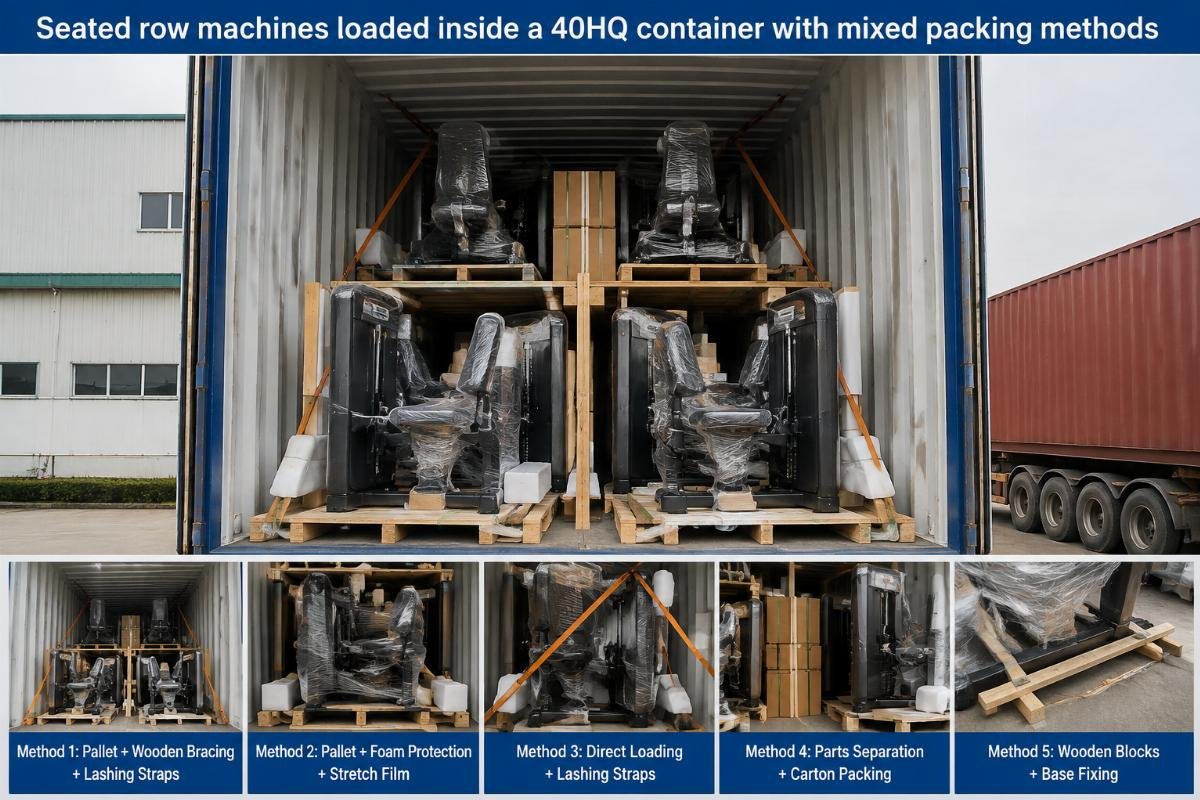
For cable stations, which are bulky and heavy, shipping efficiency is paramount. A single unit might incur disproportionate freight costs due to volumetric weight. Therefore, manufacturers often set the per-shipment MOQ based on container utilization rather than just unit count. For example, a release might require enough units to fill a twenty-foot container efficiently, mixing cable crossovers with complementary strength equipment like power racks or benches. [NEED_CITE: logistics optimization strategies for fitness equipment freight]
| Delivery Model | Inventory Risk | Cash Flow Impact | Logistics Complexity |
|---|---|---|---|
| Single Bulk Shipment | High | High upfront outlay | Low (one clearance) |
| Blanket Order (Phased) | Low | Distributed payments | Moderate (multiple clearances) |
| Spot Buying | Variable | Unpredictable | High (constant negotiation) |
This table illustrates why distributors and gym chains prefer the phased approach. The inventory risk is significantly reduced because stock arrives only as needed. Cash flow is preserved since payment is tied to each release rather than the total contract value.
In practice, this means a buyer can commit to fifty cable stations annually but take delivery of ten units every two months. This aligns with typical gym expansion cycles where new locations open quarterly. The key is ensuring the Blanket Order Terms for Cable Station agreement explicitly states whether unused portions of the annual commitment can be carried over or if they expire at year-end.
What Are the Real Costs of OEM Branding in Bulk?
Initial tooling costs are high but decrease significantly per unit when spread over a blanket order volume.
Many buyers hesitate to pursue private labeling due to the perceived high cost of custom molds and branding setup. While it is true that creating custom decals, powder coat colors, or modified structural components involves upfront engineering and tooling fees, a blanket order amortizes these costs effectively.
For instance, creating a custom mold for a branded weight stack shroud or a unique pulley housing might cost several thousand dollars. If ordered in a single batch of ten units, this fee adds hundreds of dollars to each machine. However, if spread across a blanket order of one hundred units delivered over a year, the per-unit cost becomes negligible. [NEED_CITE: economies of scale in OEM manufacturing tooling amortization]
Furthermore, blanket orders allow for consistent branding across multiple product lines. Instead of branding just the cable station, buyers can apply the same custom color scheme and logo placement to treadmills, ellipticals, and free weights within the same contract. This creates a cohesive gym aesthetic without paying separate setup fees for each equipment category.
Manufacturers often offer tiered branding options. Basic branding might include laser-cut logos on the frame and custom stickers, which have low setup costs. Advanced branding could involve custom castings or unique fabric patterns for seats, which require higher initial investment. The Blanket Order Terms for Cable Station should detail which level of customization is included in the base price and which incurs additional tooling fees.
It is also crucial to define ownership of the molds. In many agreements, if the buyer covers the tooling cost, they retain ownership. This prevents the manufacturer from using the same custom designs for other clients. Ensure this intellectual property clause is clearly stated in the contract.
How to Structure Payment Terms for Long-Term Supply?
Staged payments aligned with production milestones protect both buyer cash flow and manufacturer material costs.
Standard payment terms for single orders often require a significant deposit followed by full payment before shipment. For blanket orders, this structure is inefficient and risky for the buyer. A more balanced approach involves a master deposit for the entire contract, followed by incremental payments for each release batch.
A typical structure might involve a twenty to thirty percent deposit on the total blanket order value to secure raw materials and production slots. Then, for each scheduled release, the buyer pays the remaining balance for that specific batch before it ships. This ensures the manufacturer has working capital for materials while the buyer does not tie up funds in inventory that has not yet been delivered. [NEED_CITE: best practices for payment structures in long-term supply contracts]
Flexibility is key here. Construction delays are common in gym fit-outs. A rigid payment schedule can force a buyer to pay for equipment that cannot yet be installed. Negotiating a "lead time buffer" allows the buyer to delay a specific release by a few weeks without penalty, provided the overall contract timeline is maintained.
| Payment Milestone | Typical Percentage | Purpose |
|---|---|---|
| Contract Signing | 20-30% | Secures material pricing and production slot |
| Per Batch Production Start | 0-10% | Optional, covers labor initiation |
| Per Batch Before Shipment | 70-80% | Covers remaining manufacturing and logistics |
| Retention (Optional) | 5-10% | Held for warranty period or final inspection |
This staged approach aligns financial outflow with physical inflow. It also provides leverage for quality control. If a previous batch had issues, the buyer can address them before releasing funds for the next batch. When discussing Blanket Order Terms for Cable Station, ensure the contract specifies the currency for payments and any exchange rate fluctuation clauses, especially for long-term agreements spanning multiple years.
Conclusion
Blanket orders transform procurement from a transactional cost center into a strategic logistical asset.
By locking in prices and capacity while allowing phased deliveries, buyers can significantly reduce inventory holding costs and improve cash flow management. The key lies in clearly defining release schedules, per-shipment MOQs, and amortized OEM costs. Understanding these Blanket Order Terms for Cable Station enables gym chains and distributors to scale efficiently without the burden of excess stock or rigid payment structures.