Buy Commercial Lat Pulldown Machine Bulk Order | Factory Direct
The pulley bearing inside the shroud decides whether a lat pulldown lasts five years or five months—not the paint job, not the logo, and certainly not the catalog photo.
When sourcing a commercial lat pulldown machine bulk order, the unit price you see on the quotation sheet accounts for barely half your real cost. The rest hides in steel gauge tolerances, pulley bearing grades, cable safety margins, and whether the factory can still ship you a matching guide rod two years from now. Factory-direct sourcing from Shandong-based manufacturers typically cuts procurement costs substantially compared to branded equivalents, but only if you know which spec sheets to demand before the container is sealed.
I still remember a shipment that went out to a South American gym chain a while back. They had ordered a full batch of plate-loaded lat pulldowns from another source, chasing the lowest per-unit number. When the units hit the gym floor, everything looked solid—thick cushions, clean welds, glossy powder coat. Within a few months, the pulleys started seizing. The gym owner sent me a video: the nylon bushing inside the top pulley had worn through, the cable was fraying against a deformed guide rod, and the weight stack was grinding sideways in its housing. The replacement parts alone ended up costing a significant fraction of what the machines had originally cost. That kind of failure does not show up in a brochure. It shows up in a phone call at midnight. [NEED_CITE: common failure modes in selectorized strength equipment per ISO 20957]
If you are putting together a commercial lat pulldown machine bulk order for a gym chain, a hotel fitness center, or a distribution warehouse, the conversation has to go deeper than FOB price per unit. Let me walk you through the specs that actually separate machines that hold up from machines that become liabilities.
What Specs Actually Differentiate Commercial Lat Pulldowns in Bulk Orders?
Frame steel gauge, pulley bearing type, and cable rating are the three invisible variables that determine whether a lat pulldown survives heavy commercial use or starts falling apart within months.
Most buyers compare lat pulldowns by looking at the seat pad thickness, the cushion stitching, and the overall footprint. Those matter, but they are cosmetic compared to what is happening inside the frame and the pulley housing. Here is what a proper spec comparison looks like when you are evaluating a commercial lat pulldown machine bulk order:
| Specification | Budget Tier | Mid-Range Commercial | Heavy-Duty Commercial |
|---|---|---|---|
| Frame Steel Wall Thickness | Thin-wall, prone to flex | Standard commercial gauge | Heavy-wall, minimal deflection |
| Pulley Bearing Type | Nylon bushing | Sealed ball bearing | Precision sealed bearing, low friction |
| Cable Rating | Light-duty, marginal safety margin | Standard commercial rating | High-tensile, substantial safety factor |
| Guide Rod Surface Treatment | Basic paint | Powder coating | Chrome-plated or hardened finish |
| Seat Adjustment Pin Diameter | Narrow, loosens over time | Standard diameter | Oversized, wear-resistant |
[NEED_CITE: steel gauge standards for fitness equipment frames per ASTM and EN norms]
The frame is the skeleton. When the wall thickness drops below a certain threshold, the entire unit flexes under load. You will not notice it on day one. You will notice it when the guide rod starts bending because the frame is twisting every time someone loads heavy plates or slams the weight stack. A heavier gauge frame costs more in raw material, but it eliminates an entire category of warranty claims.
The pulley system is where the real separation happens. A nylon bushing is cheap to produce and feels acceptable during a light showroom demo. Under continuous commercial use, it generates heat, deforms, and eventually seizes—exactly what happened with that South American order. Sealed ball bearings run cooler, smoother, and last substantially longer. The cost difference per unit is modest; the warranty cost difference is enormous.
The cable is the lifeline. Commercial environments demand cables rated well beyond the maximum expected load, with a safety factor that accounts for repetitive cycling, sweat corrosion, and user abuse. A cable that snaps under load is not a product complaint—it is a liability event. [NEED_CITE: cable safety factor requirements for selectorized strength machines]
When I prepare spec sheets for a commercial lat pulldown machine bulk order, I always include close-up photos of the weld seams, the bearing housing cross-section, and the cable attachment point. If a factory cannot provide those, they are hiding something.
Plate-Loaded vs Selectorized Lat Pulldown: Which Fits Your Bulk Order?
Plate-loaded machines serve budget-conscious distributors and markets where weight plates are already abundant; selectorized machines win in high-traffic commercial gyms where convenience and throughput matter more than upfront cost.
This is one of the first questions I get from buyers assembling a commercial lat pulldown machine bulk order, and the answer depends entirely on the end user’s operating model.
Plate-loaded lat pulldowns are mechanically simpler. There is no internal weight stack, no guide rod assembly, no selectorized pin mechanism. The user loads Olympic plates onto a horn. This simplicity translates into a noticeably lower production cost, which means a lower per-unit price in a bulk order. For distributors targeting markets in regions where Olympic plates are standard and labor costs for gym maintenance are low, plate-loaded is a rational choice. The trade-off is that users must have access to plates, and the loading/unloading cycle adds friction to the workout experience.
Selectorized lat pulldowns integrate the weight stack inside the frame. The user inserts a pin, sits down, and pulls. No plates to carry, no setup time. This is the format that high-traffic commercial gyms, hotel fitness centers, and apartment complex gyms prefer, because it maximizes member throughput and minimizes staff intervention. The trade-off is higher manufacturing complexity—guide rods, weight stack plates, selector mechanisms, and additional cable routing all add cost.
| Factor | Plate-Loaded | Selectorized |
|---|---|---|
| Upfront Unit Cost | Noticeably lower | Higher due to integrated stack |
| User Convenience | Requires separate plates | Pin-select, ready to use |
| Maintenance Complexity | Simpler, fewer internal parts | More components, guide rod care needed |
| Best Fit | Distributors, budget gyms, home-use markets | Commercial chains, hotels, high-traffic facilities |
| Guide Rod Wear Risk | None (no internal stack) | Present—rod surface quality matters |
[NEED_CITE: market segmentation data for plate-loaded vs selectorized strength equipment in commercial fitness]
Here is a scenario I have seen play out more than once. A hotel developer in Southeast Asia was outfitting fitness centers across multiple properties. Their initial instinct was to go plate-loaded across the board to keep the per-room equipment cost down. But once we walked through the operational reality—guests who do not carry gym bags, front desk staff who are not going to fetch weight plates at midnight, and the brand perception of a "real gym" experience—the switch to selectorized for the lat pulldown and a few other key pieces made the project feel like a proper fitness facility rather than a closet with some iron in it. The per-unit cost went up, but the overall project value perception went up more.
For a commercial lat pulldown machine bulk order, the smart move is often a mixed configuration: selectorized for the flagship locations, plate-loaded for the secondary sites or the markets where plates are plentiful. The factory should be able to accommodate both in the same container load.
How to Verify Factory-Direct Claims Before Placing Bulk Orders?
Request weld seam photos, bearing spec sheets, cable test certificates, and load-test videos—not just polished catalog pages. A genuine factory-direct supplier will provide verifiable documentation without hesitation.
The term "factory direct" gets thrown around loosely in the fitness equipment trade. Every exporter with a website claims it. The question is whether the entity you are talking to actually controls the production line, or whether they are a trading company layering a margin on top of a factory they visit occasionally.
When I am helping a buyer qualify a source for a commercial lat pulldown machine bulk order, I ask for a specific set of documents and media. If the supplier pushes back or offers excuses, that is the answer.
First, ask for raw material certificates. The steel tube supplier provides mill certificates that specify the grade and wall thickness. A real factory keeps these on file and can pull them up for any production batch. A trading company usually cannot.
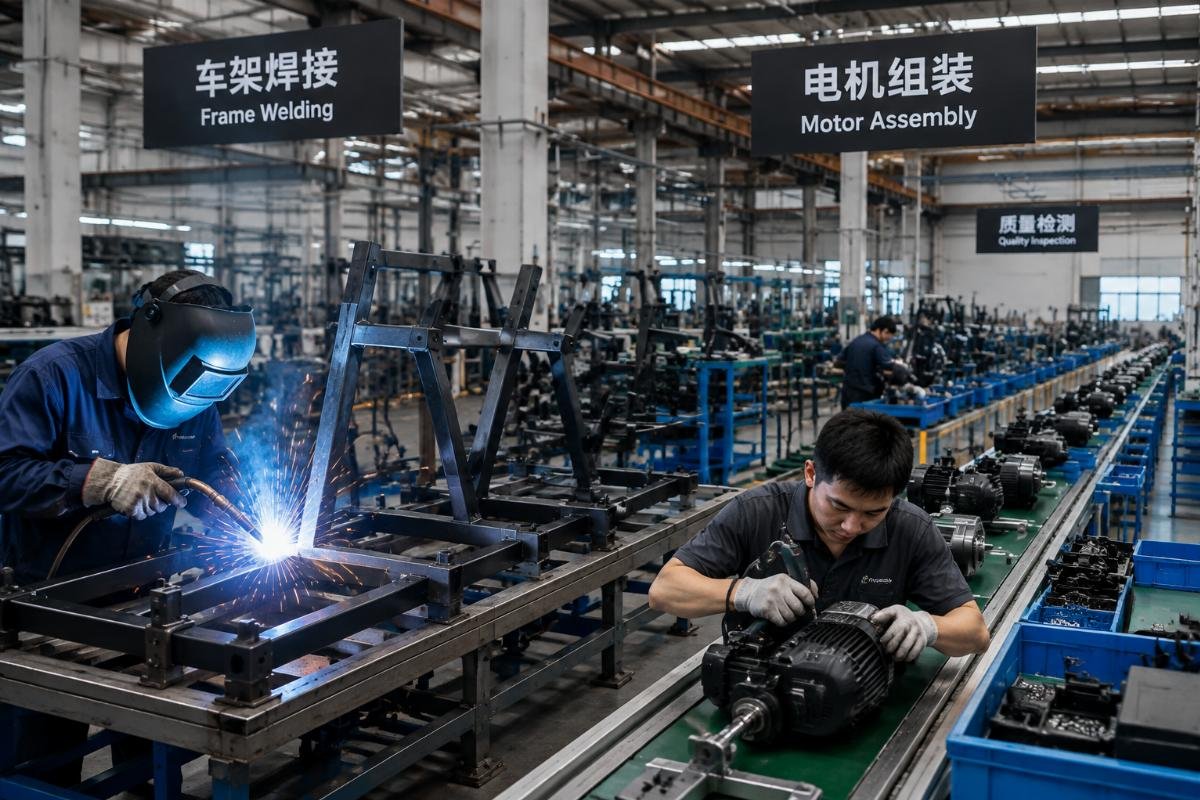
Second, ask for weld seam photos taken during production, not finished product shots with the welds hidden under powder coat. The weld pattern tells you whether the factory uses proper fixture-based welding or hand-welds in the open. Fixture welding produces consistent, repeatable seams. Hand welding looks artistic but introduces variability that shows up as frame misalignment down the line.
Third, ask for the pulley bearing specification sheet. The bearing manufacturer’s part number, the seal type, the load rating—these should be documented and traceable. If the factory says "we use standard bearings" without a part number, they are either buying the cheapest option available or they do not know what is inside their own product.
Fourth, ask for a load-test video of the specific model you are ordering, not a generic factory reel. You want to see the machine under load, the cable running smoothly through the pulleys, the weight stack tracking straight on the guide rods, and the frame showing zero visible flex.
[NEED_CITE: verification documentation standards for commercial fitness equipment manufacturing]
| Verification Item | Genuine Factory-Direct | Trading Company or Unverified Source |
|---|---|---|
| Raw Material Mill Certificates | Provided per batch | Not available or vague |
| Weld Seam Photos (During Production) | Readily available | Refused or only finished shots |
| Bearing Specification Sheet | Full part number and rating | "Standard bearing" with no detail |
| Load-Test Video (Specific Model) | Provided on request | Generic factory footage only |
| Guide Rod Surface Treatment Spec | Documented process | Unspecified or inconsistent |
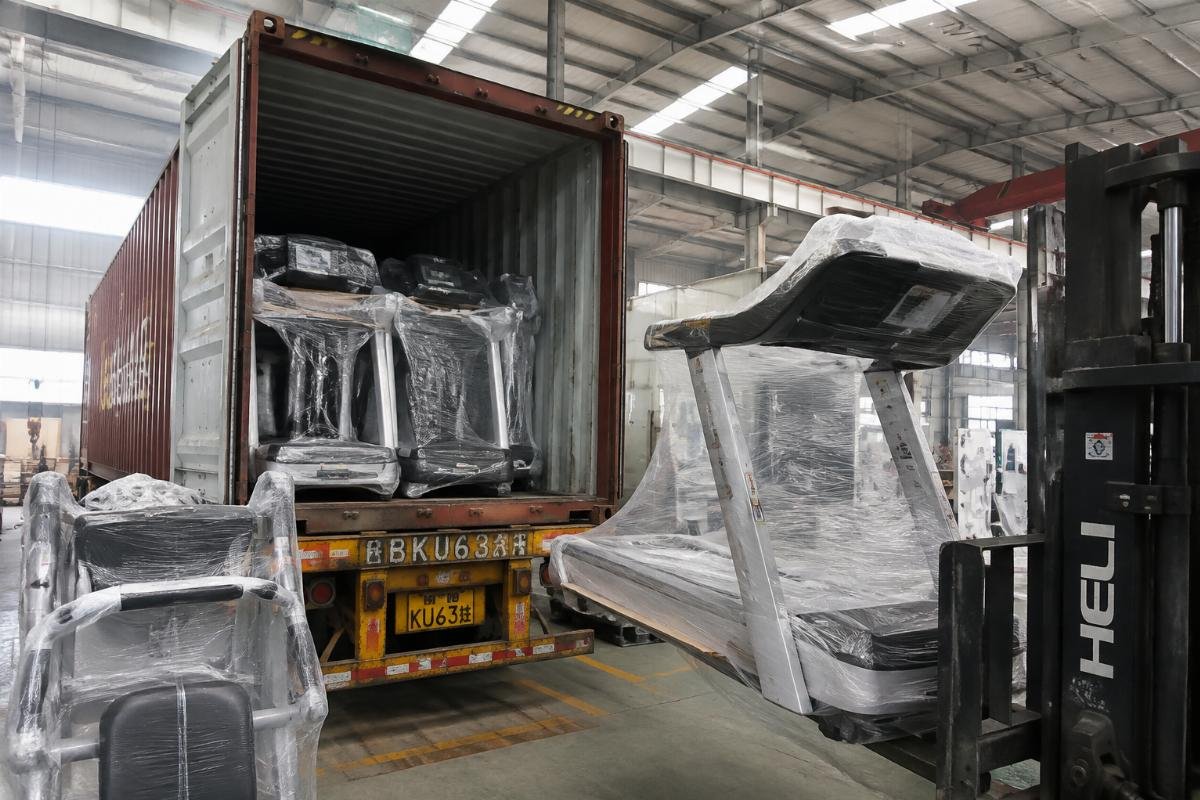
A buyer from the Middle East once told me he had been burned by a supplier who claimed factory-direct pricing on a commercial lat pulldown machine bulk order. The catalog photos looked identical to a known brand’s product. When the container arrived, the frames were built from thinner-wall tubing, the pulleys used bushings instead of bearings, and the guide rods were painted instead of chrome-plated. The per-unit savings evaporated the moment the first wave of warranty claims hit. The lesson: verification is not optional. It is the entire point of buying factory-direct.
What Is the Real Cost Structure of Bulk Lat Pulldown Procurement?
The unit price is the visible portion of your total cost. Shipping consolidation efficiency, spare parts availability, warranty terms, and the long-term cost of component failures make up the rest—and they can swing your true cost per unit dramatically.
When buyers compare quotations for a commercial lat pulldown machine bulk order, the instinct is to sort by unit price and pick the lowest number. This is the single most expensive habit in fitness equipment procurement.
Consider what happens after the container arrives. The machines need to be assembled, positioned, and put into service. If the factory has not included clear assembly documentation, or if the hardware bags are not labeled by station, your gym installation team loses hours figuring out which bolt goes where. If the cushion vinyl tears during installation because the foam density is too low, you are replacing pads before the machines even see their first user.
Then there is the spare parts question. Every commercial lat pulldown will need cables replaced eventually. Pulley bearings will wear. Selector pins will bend if users are rough with them. Seat adjustment mechanisms will loosen. The question is not whether you will need parts—it is whether the factory can supply them in a matching specification months or years after the original order.
| Cost Component | Low-Quote Factory | Reliable Factory-Direct |
|---|---|---|
| Unit Price | Appears lowest | Moderately higher |
| Shipping Efficiency | Poor container utilization | Consolidated loading, maximized space |
| Spare Parts Availability | Delayed or mismatched | In-stock, same-spec, fast dispatch |
| Warranty Claim Frequency | Higher due to spec gaps | Lower due to verified build quality |
| Long-Term Replacement Cost | Substantially higher | Noticeably contained |
[NEED_CITE: total cost of ownership analysis for commercial fitness equipment procurement]
A distributor in Latin America learned this the hard way. They sourced a large batch of selectorized lat pulldowns based on the lowest unit price. The machines looked acceptable on arrival. But within a short period, the guide rods started showing wear marks because the surface treatment was inadequate. The weight stacks began tracking unevenly. The factory they bought from could not supply replacement guide rods in the correct diameter—they had switched to a different rod supplier in the meantime. The distributor ended up sourcing replacement rods locally at a cost that dwarfed the original per-unit savings.
For a commercial lat pulldown machine bulk order, the real conversation is about total cost over the equipment’s service life. A factory that controls its own supply chain, maintains consistent component sourcing, and keeps spare parts in stock will cost more on day one and substantially less by year three.
How to Structure MOQ and OEM Terms for Lat Pulldown Bulk Deals?
Start with mixed-container MOQs that let you test multiple models in one shipment. Negotiate branding lead times, exclusive territory clauses, and spare parts commitments before the first production run—not after.
The MOQ question is where many buyers new to factory-direct sourcing get stuck. They assume they need to fill an entire container with a single SKU to get a viable price. That is not how experienced buyers operate, and it is certainly not how flexible factories structure their orders.
A mixed-container approach lets you combine lat pulldowns with other strength machines, cardio units, or free weight equipment in a single shipment. This spreads the shipping cost across a broader product range and lets you test market response on multiple models without overcommitting to one. For a commercial lat pulldown machine bulk order, this means you can include selectorized and plate-loaded versions in the same container, along with matching cable crossovers or smith machines, creating a cohesive strength zone package.
OEM branding is another area where the details matter more than the headline promise. Most Shandong factories offer custom logo placement, color matching, and branded packaging. What varies is the lead time impact, the minimum quantity per color variant, and whether the factory will commit to not selling the same configuration to a competing buyer in your territory.
| OEM Term | Basic Supplier | Committed Factory Partner |
|---|---|---|
| Logo Placement | Available, limited options | Full customization, multiple positions |
| Color Matching | Standard palette only | Custom RAL matching with sample approval |
| MOQ Per Color Variant | High, forces overstock | Flexible, supports market testing |
| Territory Exclusivity | Rarely offered | Negotiable for committed annual volume |
| Spare Parts Commitment | Ad hoc | Contractual supply guarantee |
[NEED_CITE: OEM and private-label best practices in commercial fitness equipment manufacturing]
I have worked with a distributor in the Middle East who started with a single mixed container—lat pulldowns, a smith machine, a cable crossover, and a set of adjustable benches, all under their own brand. The factory handled the custom color scheme, the branded packaging, and the assembly documentation in Arabic. That first container was a market test. When the products performed well and the gym operators in their territory responded positively, they moved to an annual framework agreement that included territory exclusivity for their branded line and a guaranteed spare parts supply for the following years. The relationship evolved from a transactional order into a strategic supply partnership.
The key is to treat the first commercial lat pulldown machine bulk order as the beginning of a conversation, not the entire conversation. Structure it so you can learn, adjust, and scale without painting yourself into a corner.
Conclusion
A commercial lat pulldown machine bulk order is won or lost on the specs you verify before the container is sealed, not the price you celebrate on the quotation. Frame gauge, pulley bearing type, cable rating, guide rod treatment, and spare parts commitment are the variables that separate a five-year asset from a five-month liability. Factory-direct sourcing from Shandong manufacturers offers a substantial cost advantage, but only when the buyer demands documentation, inspects the details that catalogs hide, and structures the order for long-term operational reality rather than short-term price satisfaction.