Maple Wood Reformer Sourcing Strategy: A Complete Buying Guide for Studio Owners
Thicker maple does not mean stronger reformers — it just means heavier shipping bills.
Studio owners sourcing maple wood reformers should prioritize North American hard maple grading for load-bearing frames, pair it with gauge-rated steel reinforcement, and evaluate factory-direct pricing models that account for FOB terms, container consolidation, and spare parts availability — not just per-unit sticker price.
When I first walked through a Pilates equipment manufacturing cluster in Shandong Province, the air smelled of sawdust and hot steel. A buyer from a boutique studio chain in Dubai was standing next to a carriage assembly line, holding two reformer rails — one branded, one unbranded — and trying to feel the difference. He could not. That moment crystallized something I have seen repeat across dozens of sourcing trips: the gap between perceived quality and actual commercial-grade construction is far narrower than most buyers assume, provided you know which specifications to verify. [NEED_CITE: ASTM F3514 safety requirements for Pilates reformer structural integrity]
What separates a reformer that survives five years of commercial PT studio use from one that warps in eighteen months is not brand markup. It is wood grade selection, steel frame gauge, powder coating micron thickness, and whether the factory can supply spare parts five years after your order ships.
Let me walk you through the decisions that actually matter when you are building a maple wood reformer sourcing strategy.
What Wood Grade Should You Choose for Commercial Maple Reformers?
FAS-grade North American hard maple belongs on load-bearing rails and carriage frames; Select grade is sufficient for decorative side panels — mixing them incorrectly is the single most common cost mistake in reformer procurement.
Most studio owners assume "maple is maple" and that higher grade automatically means better equipment. The reality is more nuanced. The National Hardwood Lumber Association grading system defines FAS (Firsts and Seconds) as boards yielding at least 83 percent clear cuttings on the poor side, making them ideal for long, stress-bearing components like reformer rails where grain continuity directly affects load distribution. [NEED_CITE: NHLA hardwood grading rules for FAS and Select categories]
Select grade, by contrast, allows smaller clear sections and is perfectly adequate for side panels, end caps, and cosmetic surfaces where structural loading is minimal. A reformer built entirely from FAS-grade maple is over-engineered and overpriced. One built entirely from Select or lower grades on load-bearing components will develop rail deflection under repeated commercial use.
| Component | Recommended Grade | Structural Role | Cost Impact |
|---|---|---|---|
| Rails and carriage frame | FAS | Primary load-bearing | Noticeably higher |
| Shoulder rests and headpiece | FAS or Select | Moderate load | Moderate |
| Side panels and end caps | Select or #1 Common | Cosmetic only | Substantially lower |
| Foot bar housing | FAS | Stress concentration zone | Moderate |
I reviewed a batch of reformers destined for a physical therapy clinic in Southeast Asia where the manufacturer had used #1 Common grade maple for the main rails. The grain interruptions — knots and mineral streaks — created stress concentration points that led to micro-fractures within months of commercial use. The factory replaced the rails at no charge, but the shipping delay and reinstallation labor cost the clinic several times the original rail price difference.
When evaluating maple wood reformer sourcing options, ask the factory to specify which grade is used on which component. A transparent supplier will provide a component-by-grade breakdown. If they only say "solid maple" without grade differentiation, treat that as a red flag.
How Do You Verify Steel Frame Quality from Shandong Factories?
Request 11-gauge steel specifications, powder coating thickness in the 60-80 micron range, and third-party weld inspection documentation — these three data points separate commercial-grade reformers from light-duty imitations.
The wooden carriage and rails get all the aesthetic attention, but the steel undercarriage determines whether a reformer survives a decade of jumping boards, spring resistance changes, and lateral torque from aggressive reformer choreography. Shandong Province hosts a dense concentration of fitness equipment manufacturers, and steel quality varies dramatically between facilities that primarily serve commercial gyms and those focused on home-use equipment.
11-gauge steel (approximately 3mm thickness) is the commercial standard for reformer base frames. Some factories substitute 14-gauge (approximately 2mm) to reduce weight and cost — acceptable for home use, insufficient for studios running eight to ten classes daily. [NEED_CITE: Steel gauge thickness standards for commercial fitness equipment frames]
Powder coating serves dual purposes: corrosion resistance and surface durability. A coating thickness in the 60-80 micron range, applied over proper sandblasting and phosphating pretreatment, provides robust protection against sweat, cleaning chemicals, and impact from metal components. Thinner coatings chip prematurely; thicker coatings become brittle and crack under flex.
| Quality Parameter | Commercial Standard | Home-Grade Alternative | Verification Method |
|---|---|---|---|
| Steel frame gauge | 11-gauge | 14-gauge | Caliper measurement |
| Powder coating thickness | 60-80 microns | 40-50 microns | Coating thickness gauge |
| Weld inspection | Third-party certified | Self-reported | Request inspection certificate |
| Surface pretreatment | Sandblast + phosphate | Wipe-clean only | Visual and adhesion test |
A distributor in the Middle East once received a container of reformers where the weld quality looked acceptable externally but lacked proper penetration on load-bearing joints. The factory had skipped third-party inspection to meet a tight production deadline. Three months into studio operation, two frames developed joint fatigue cracks. The replacement cost and reputational damage far exceeded what a pre-shipment inspection would have cost.
When you are conducting maple wood reformer sourcing due diligence, request weld inspection reports from an independent third party — not in-house quality summaries. Ask for coating thickness measurement photos with the gauge visible in frame. These documents take minutes to produce but reveal whether the factory treats commercial specifications seriously.
What Is the Real Cost Breakdown When Sourcing Factory-Direct?
Material and labor account for the majority of unit cost, but logistics configuration, order consolidation strategy, and spare parts inclusion determine whether factory-direct pricing actually delivers savings versus branded alternatives.
The headline factory price for a maple wood reformer typically sits substantially below branded equivalents — often reflecting genuine manufacturing cost advantages rather than quality compromise. Shandong-based manufacturers benefit from localized supply chains for both hardwood and steel, established export logistics infrastructure, and production volumes that amortize tooling costs across diverse client portfolios.
However, the landed cost equation involves layers that first-time importers frequently underestimate.
Material costs — maple lumber, steel tubing, springs, upholstery foam, leatherette, pulleys, and ropes — represent the largest single cost block. Labor for cutting, shaping, assembly, finishing, and quality inspection follows. These two categories are relatively transparent when you request a detailed quotation breakdown.
Logistics introduces variability. A reformer’s dimensions mean that container loading efficiency matters enormously. A factory experienced in fitness equipment export will offer container consolidation services — combining reformers with Cadillacs, chairs, and small accessories to maximize cubic utilization. This capability transforms a partially filled container into a cost-effective shipment. [NEED_CITE: Container loading optimization strategies for oversized fitness equipment export]
MOQ flexibility also affects real cost. Some Shandong factories accommodate orders starting from single units, particularly for OEM-branded studio equipment. This flexibility allows boutique owners to test equipment quality before committing to full studio buildouts, or to order replacement units matching existing inventory years after initial purchase.
| Cost Component | Typical Proportion | Optimization Strategy |
|---|---|---|
| Raw materials | Majority of unit cost | Grade specification per component |
| Manufacturing labor | Significant portion | Factory selection based on fitness equipment specialization |
| Ocean freight | Variable by volume | Container consolidation with complementary equipment |
| Spare parts buffer | Small percentage | Negotiate inclusion at order stage |
I worked with a studio owner in Europe who initially focused exclusively on per-unit price comparison. After accounting for less-than-container shipping, customs handling for partial loads, and the absence of included spare springs and ropes, the landed cost gap between factory-direct and a regional distributor narrowed considerably. The lesson: always calculate landed cost, not invoice cost.
Factories like Bick, operating from Shandong’s fitness equipment manufacturing corridor, structure their pricing to reflect direct manufacturing margins without distributor layering. Their quotation process typically includes detailed cost breakdowns and container loading plans, allowing buyers to model true landed scenarios before committing.
How Can You Customize OEM Branding with Low MOQ?
Shandong manufacturers offer OEM services ranging from laser-engraved logos to fully custom upholstery and retail packaging, with MOQ thresholds accessible even for boutique studios and small distributors testing market response.
Private-label branding transforms commodity equipment into differentiated studio assets or retail products. The customization infrastructure in Shandong’s fitness equipment sector has matured considerably, with factories accustomed to serving diverse branding requirements across markets from North American boutique studios to Middle Eastern fitness chains.
Laser engraving on maple wood surfaces produces permanent, professional branding — studio logos on carriage ends, motivational text on shoulder rests, or serial numbering for inventory tracking. The maple grain accepts laser marking cleanly, creating contrast without compromising surface smoothness.
Custom upholstery extends beyond color selection. Commercial studios operating in humid climates may specify moisture-resistant leatherette with antimicrobial treatment. Rehabilitation-focused practices might prefer softer foam density for patient comfort during extended therapeutic sessions. Retail-oriented buyers need packaging designed for e-commerce fulfillment — reinforced corner protection, instructional insert placement, and branded unboxing experience.
| Customization Option | MOQ Threshold | Lead Time Impact | Typical Application |
|---|---|---|---|
| Laser logo engraving | Minimal | Negligible | Studio branding |
| Custom upholstery color | Low | Minor | Brand color matching |
| Specialized foam density | Moderate | Noticeable | Clinical or luxury positioning |
| Retail packaging design | Moderate | Noticeable | E-commerce and distribution |
| Full OEM color and material | Higher | Substantial | Exclusive product lines |
A fitness equipment distributor in Latin America started with a modest order of reformers featuring laser-engraved branding and custom color upholstery matching their corporate identity. The low initial commitment allowed them to test market reception before scaling to full container orders with comprehensive retail packaging. This staged approach minimized inventory risk while building brand recognition.
When evaluating maple wood reformer sourcing partners for OEM capability, request physical samples of previous custom work — not digital renderings. Examine laser engraving depth consistency, upholstery seam durability, and packaging protection adequacy. Factories with genuine OEM experience will have sample rooms displaying diverse client work across multiple markets.
Bick’s OEM infrastructure supports this staged customization approach, accommodating single-unit branding orders alongside full container commitments. Their production facilities handle laser engraving, upholstery customization, and retail packaging design within integrated workflows, reducing coordination complexity for international buyers.
What Warranty and Spare Parts Support Should You Expect?
Commercial-grade reformer suppliers provide multi-year frame warranties, defined moving parts coverage, and committed spare parts availability extending well beyond the warranty period — treat any supplier unable to articulate these terms as a liability.
Warranty structures reveal manufacturer confidence in their product durability and their commitment to long-term client relationships. The distinction between a factory selling equipment and a factory supporting equipment becomes apparent when components wear, springs lose tension, or ropes fray after years of commercial use.
Frame warranties in the multi-year range signal that the manufacturer stands behind their steel construction and wood selection. Moving parts — springs, ropes, pulleys, upholstery — naturally experience wear and typically carry shorter coverage periods. The critical question is not just warranty length but spare parts availability duration.
A reformer purchased today should have accessible replacement springs, ropes, and pulleys available five, seven, or ten years from now. Factories serving commercial markets maintain parts inventories and production tooling specifically for this purpose. Those focused on one-time sales may discontinue parts support within a few years, leaving buyers with unusable equipment when minor components fail.
| Support Element | Commercial Standard | Red Flag Indicator |
|---|---|---|
| Frame warranty duration | Multi-year coverage | No written warranty |
| Moving parts warranty | Defined shorter period | Verbal-only commitments |
| Spare parts availability | Extended years beyond warranty | Parts discontinued quickly |
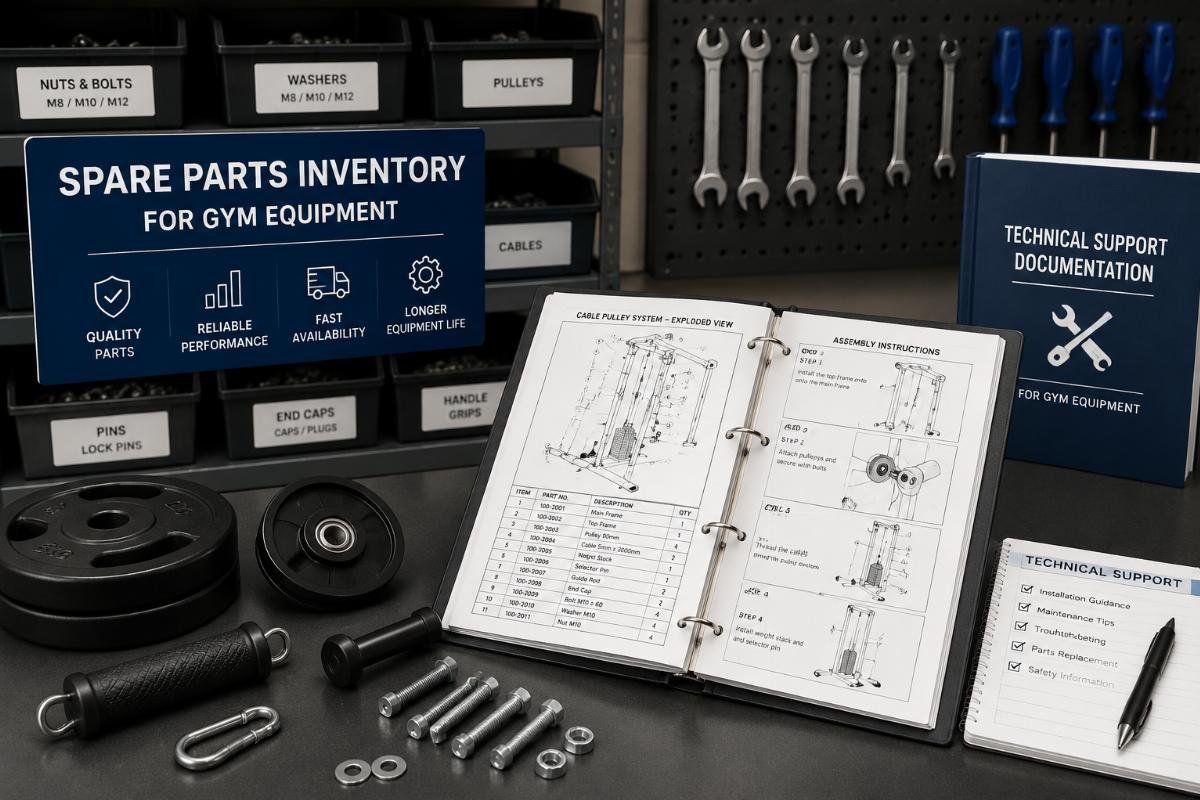
| Technical documentation | Detailed manuals and diagrams | No support materials |
| Remote technical support | Accessible response channels | No post-sale communication |
A studio chain operator in the Asia-Pacific region discovered the importance of this distinction when reformers from one supplier required replacement pulleys after extended use. The original supplier had ceased production of that specific pulley configuration, forcing the chain to source incompatible alternatives or replace entire units. A different supplier in their portfolio maintained parts availability for equipment types discontinued years prior, demonstrating genuine lifecycle support commitment.
When conducting maple wood reformer sourcing conversations, ask explicitly: How long will you supply replacement parts for this model? Can you provide technical diagrams for maintenance? What is your response time for warranty claims from my region? The answers — and more importantly, the specificity of those answers — indicate whether you are building a relationship with a manufacturing partner or simply completing a transaction.
Bick structures their warranty and support framework around commercial equipment lifecycle expectations, providing documented frame coverage, defined moving parts terms, and committed spare parts supply with technical support resources. This approach reflects their positioning as a long-term manufacturing partner rather than a spot supplier.
Conclusion
Successful maple wood reformer sourcing depends on specification literacy, not brand loyalty or price obsession.
Wood grade selection for appropriate components, steel frame verification through documentation, realistic landed cost calculation, accessible OEM customization, and genuine long-term parts support — these five dimensions separate equipment that serves commercial operations reliably from equipment that becomes a recurring cost center. Shandong’s manufacturing ecosystem offers genuine value for studio owners and distributors who approach procurement with informed specifications rather than assumptions.