Buy Strength Machine China Supplier
The lowest FOB price per unit is rarely the lowest total cost of ownership.
Choosing a reliable China strength machine supplier requires verifying structural specs, production certifications, and logistics planning — not just comparing unit prices. The real cost traps hide in packaging volume, steel gauge misrepresentation, and pulley bearing grades that fail under commercial duty cycles.
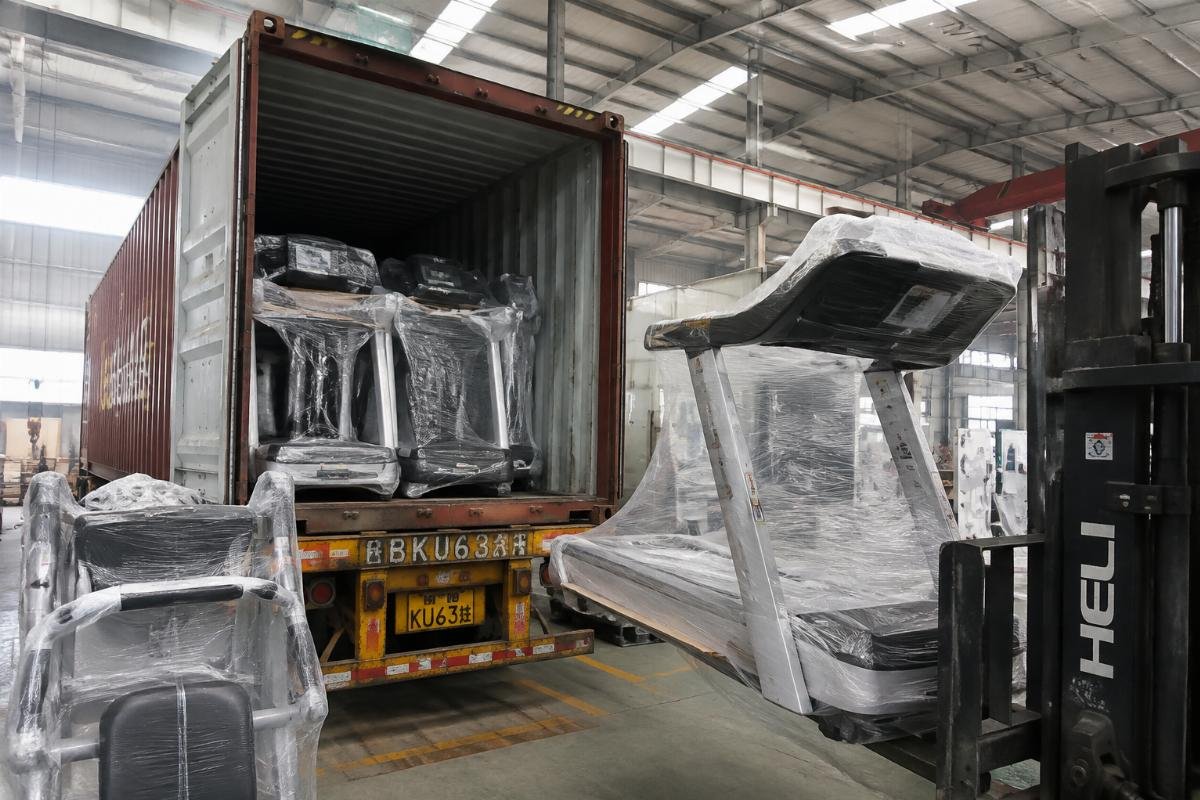
I used to spend my mornings at the container yard in Ningbo, watching forklift drivers try to wedge the last pallet of weight plates into a high-cube box that was already two cubic meters over capacity. One shipment of selectorized machines was supposed to fit a single 40HQ. The factory had quoted a per-unit FOB price that looked unbeatable, but nobody had checked how the weight stacks were packed — each one crated separately in solid timber. We ended up leaving nearly a fifth of the order on the dock, and the client’s opening date for their gym chain slipped by weeks. That was the moment I stopped trusting any quote that didn’t come with a packing list, a loading diagram, and a steel thickness certificate side by side. [NEED_CITE: common packaging and loading disputes in fitness equipment export]
What follows is a breakdown of the specs, certifications, and supplier evaluation criteria that actually separate a smooth first container from a costly lesson.
What Specs Should You Verify Before Buying Strength Machines from China?
Tube wall thickness, welding method, and pulley bearing diameter are the three non-negotiable checkpoints that determine whether a machine survives commercial use or starts rattling within months.
When a Middle East distributor received their first full container of plate-loaded machines, everything looked solid on arrival. Six months later, the Smith machines were generating warranty claims — the pulley assemblies were singing, and the cables were fraying at an alarming rate. The root cause was not the cable itself but the bearing inside the pulley: it was sized for light residential use, not the repetitive load cycles of a hotel gym running twelve hours a day. [NEED_CITE: pulley bearing diameter and cable specification standards for commercial fitness equipment]
Here is how the critical specs break down across typical sourcing tiers:
| Spec Parameter | Commercial-Grade Expectation | Budget Factory Typical | Verification Method |
|---|---|---|---|
| Frame tube wall thickness | Verifiable at stated gauge | Self-reported, often overstated | Ultrasonic thickness gauge |
| Welding method | Full continuous weld on load joints | Spot weld or intermittent fillet | Visual inspection + dye penetrant |
| Pulley bearing diameter | Substantially larger, commercial-rated | Undersized, residential-grade | Caliper measurement on sample |
| Cable strand count | Multi-strand, commercial-rated | Fewer strands, lower fatigue life | Cut sample cross-section check |
| Weight stack guide rods | Chrome-plated, smooth travel | Unplated or poorly finished | Manual push test + visual |
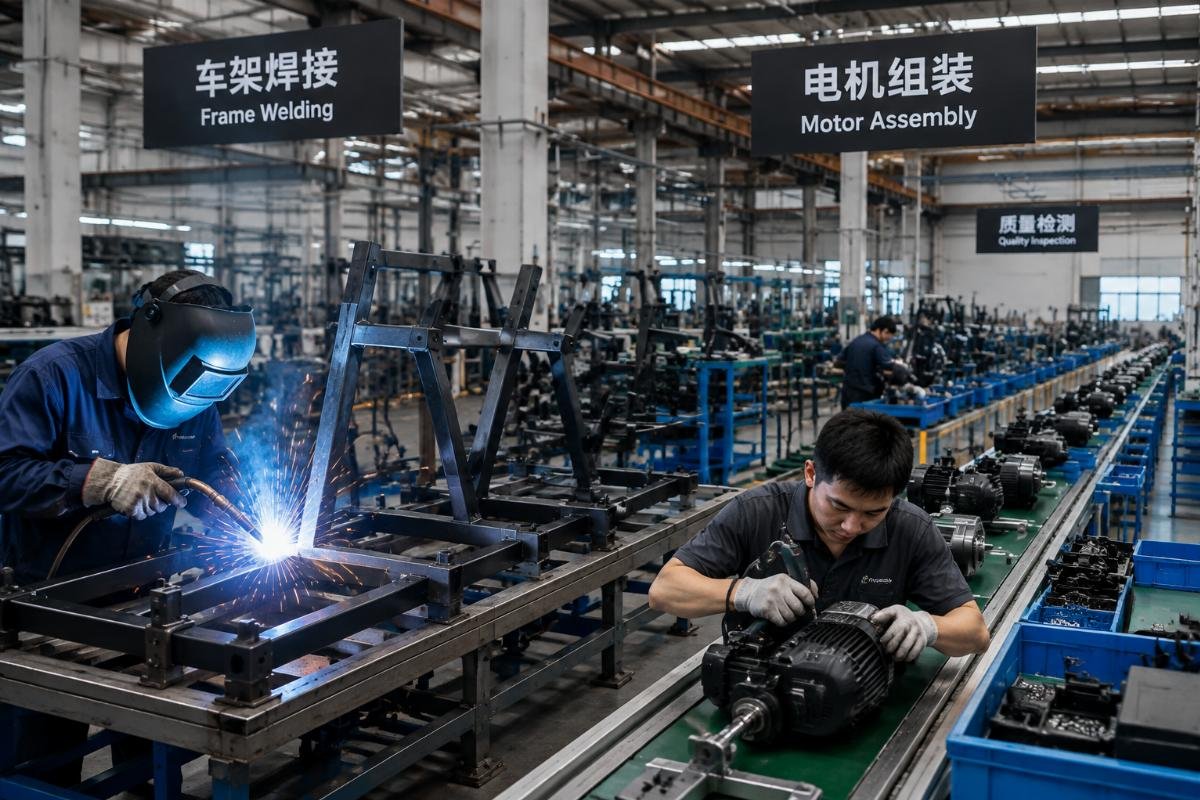
The welding point deserves special attention. A full continuous weld along a load-bearing joint distributes stress evenly and resists fatigue cracking over thousands of cycles. Spot welding, while cheaper and faster, creates concentrated stress points that can propagate micro-cracks — invisible at first, then catastrophic under sustained use. [NEED_CITE: welding fatigue comparison between continuous and spot welds in structural steel]
When evaluating any China strength machine supplier, request a cut sample of the frame tube. Measure the wall thickness yourself with an ultrasonic gauge or send it to a third-party inspector. Factories that are confident in their steel will never refuse this. Those that deflect or offer "trust me" assurances are signaling a red flag.
How Do You Avoid the Hidden Cost of Poor Packaging and Container Loading?
The weight stack packaging method alone can swing your container utilization by a noticeable margin — and that margin directly determines whether you need a second shipment or can fit your entire order in one.
This is the part of the quotation that almost nobody asks about until the container is sitting at the factory door and the loading supervisor is scratching his head. Plate-loaded and selectorized machines carry heavy weight stacks, and those stacks need protection during ocean transit. The question is how.
Timber crates offer maximum protection but consume significant volume. Shrink-wrap with corner protectors and foam padding, when done correctly, protects the weight stack surfaces while freeing up enough space to squeeze in an extra bench or a set of dumbbells. I have seen the difference between these two approaches eat up an entire pallet position in a 40HQ — which, for a buyer paying per container, is essentially paying for air.
A Southeast Asia hotel developer once ordered a complete strength line for their rooftop fitness center. The factory’s loading plan showed the machines fitting neatly. When the actual packing arrived, the weight stacks were individually boxed in plywood. The container held the machines but left no room for the free weights and flooring the buyer also needed. The solution was a second, smaller shipment — adding freight cost, customs clearance fees, and a delay that pushed past the hotel’s soft opening. [NEED_CITE: container loading optimization strategies for mixed fitness equipment shipments]
The fix is straightforward but rarely initiated by the buyer:
- Request a detailed packing list before confirming the order — every item, its dimensions, its gross weight, and its packaging type.
- Ask for a 3D loading diagram showing exactly how the machines will be positioned inside the container.
- Specify your packaging preference for weight stacks: shrink-wrap with edge protection for ocean freight, or crates only if the destination involves rough inland transport.
- Explore mixed loading — combining strength machines with free weights, benches, and even rubber flooring in a single container. A China strength machine supplier with full product line capability can consolidate these items efficiently, eliminating the need for multiple LCL shipments.
Factories that manufacture the full range — cardio, strength, free weights, and flooring — have a structural advantage here. They can plan a single container load that maximizes every cubic meter, rather than forcing the buyer to coordinate across multiple vendors and hope the volumes add up.
Which Certifications Actually Matter for Commercial Strength Equipment?
A CE certificate on file does not automatically mean the entire machine has been tested — many certificates cover only the electronic components, leaving the structural frame and load-bearing joints completely unverified.
This is one of the most common misunderstandings I encounter when buyers send me a supplier’s certification folder for review. They see a CE document, feel reassured, and move forward. But the fine print often tells a different story.
For strength equipment, the relevant standards address mechanical safety — load capacity, structural integrity, pinch points, and stability under use. [NEED_CITE: EN ISO 20957 series standards for stationary training equipment safety requirements] If the certificate only references low-voltage electrical directives, it says nothing about whether the frame can handle the forces generated during a heavy barbell squat or a loaded cable crossover rep.
Here is what a thorough certification review should include:
| Certification Element | What to Check | Red Flag |
|---|---|---|
| CE scope | Covers structural + mechanical safety | Only covers electrical/electronic |
| Load test report | Third-party lab, actual test data | Self-declared without test evidence |
| Material certificate | Steel grade and thickness documented | Not provided or vague references |
| Welding procedure | WPS/PQR records available | No welding documentation |
| EN ISO 20957 compliance | Specifically references applicable part | Generic "CE" statement only |
A European distributor I worked with learned this the hard way. They had been importing a line of cable crossover machines from a China strength machine supplier for over a year, all based on a CE certificate the factory provided upfront. When their insurance auditor requested the actual test reports for the structural frame, the factory could not produce them. The certificate had been issued for the motorized incline bench that shared the same product family — not the cable machine itself. The distributor had to pull the entire line from their catalog, re-test with a certified lab, and absorb the cost. [NEED_CITE: CE certification scope limitations in fitness equipment exports]
The practical takeaway: ask for the test report, not just the certificate. Verify that the report references the specific machine model you are buying, and that it covers structural and mechanical parameters — not just electrical safety. A legitimate China strength machine supplier will have these reports ready and will not hesitate to share them.
How to Compare China Strength Machine Suppliers Beyond Unit Price?
A comprehensive supplier scorecard should weight container loading efficiency, after-sales responsiveness, and OEM flexibility alongside unit price — because the cheapest machine that arrives damaged or fails in months costs far more than a slightly pricier one that performs.
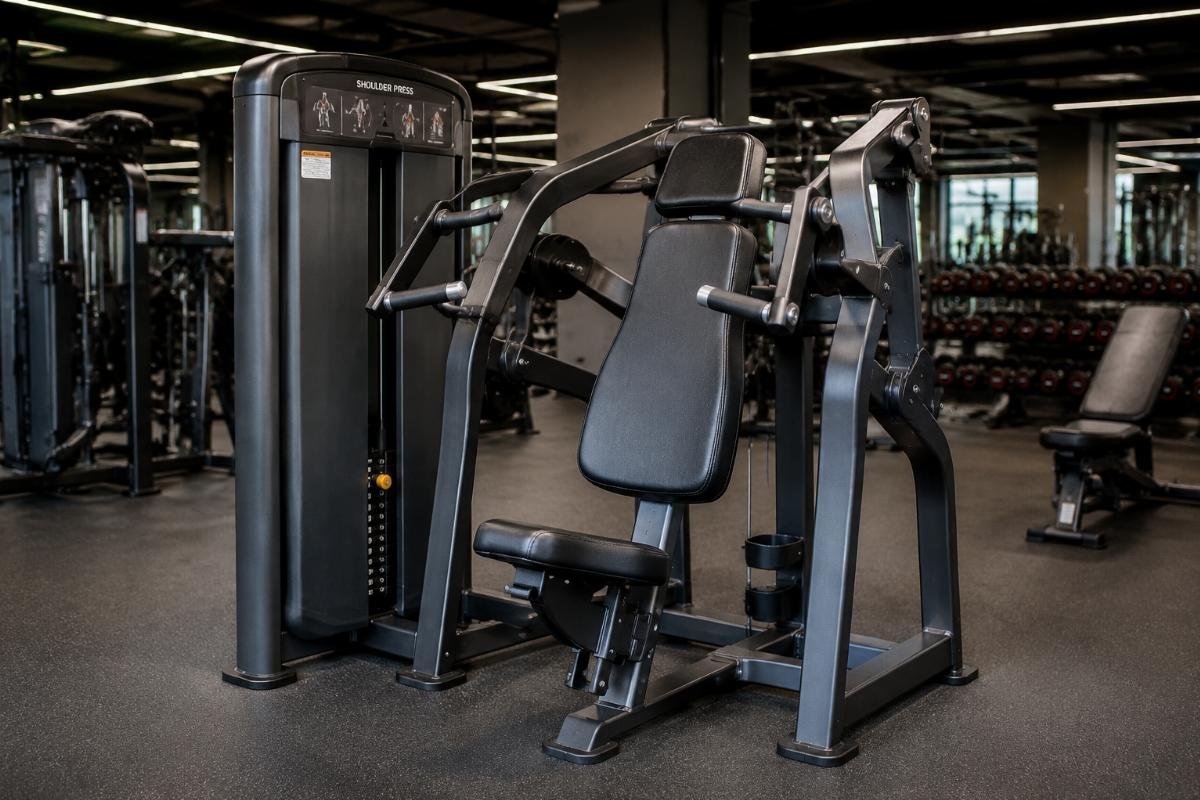
Unit price is the easiest number to compare, which is precisely why it is the most misleading. Two factories quoting the same Smith Machine at a similar price point may deliver vastly different total outcomes based on how they pack it, what steel they use, how they weld it, and what happens when something breaks eighteen months into deployment.
I recommend building a comparison matrix that includes factors most buyers overlook:
| Evaluation Factor | Why It Matters | How to Verify |
|---|---|---|
| Container loading efficiency | Directly affects per-unit landed cost | Request 3D loading plan before ordering |
| Steel thickness consistency | Determines frame longevity | Ultrasonic test on random production samples |
| Welding quality | Prevents fatigue failure under commercial use | Visual + dye penetrant inspection |
| After-sales parts availability | Minimizes machine downtime | Confirm spare parts catalog and lead times |
| OEM and branding flexibility | Supports private-label distribution | Review past custom projects and MOQ terms |
| Product range breadth | Enables single-source container consolidation | Check full catalog across equipment categories |
A gym chain operator in Africa was comparing three suppliers for a multi-gym rollout. The first factory had the lowest unit price but could not provide a loading plan and refused third-party steel testing. The second had decent pricing and good certifications but only manufactured strength equipment — meaning the buyer would need separate shipments for free weights and flooring. The third option, a China strength machine supplier with a full product ecosystem, offered a slightly higher per-unit price but delivered a complete container plan that included strength machines, adjustable benches, dumbbell sets, and rubber flooring — all consolidated into one shipment with coordinated customs documentation. The total landed cost per square meter of gym space was lower with the third option, despite the higher machine price. [NEED_CITE: total cost of ownership analysis in commercial fitness equipment procurement]
The OEM dimension also deserves attention. Buyers planning to build a private-label brand need a factory that can accommodate custom color schemes, branded upholstery, logo placement, and even minor design modifications — without imposing prohibitive minimum order quantities. A factory that manufactures in-house across multiple product categories typically has more flexibility here, because they control the entire production chain rather than outsourcing sub-assemblies.
Conclusion
Sourcing strength equipment from China is a high-reward move when the evaluation goes beyond the quotation sheet. Verify the steel, inspect the welds, audit the pulley bearings, demand real loading plans, and read the fine print on every certificate. The factories that welcome this scrutiny — and can demonstrate consistency across structure, packaging, certification, and product range — are the ones that deliver equipment that performs in the field and protects your margins over the long term.