Battle Rope Set for Cruise Ship Gyms: China Wholesale Supplier
Thicker is not better; density is. Standard cotton-core battle ropes rot from the inside out in marine environments, regardless of diameter.
For cruise ship fitness centers, a battle rope set for cruise ship applications must feature a 100% synthetic polyester core, UV-stabilized high-density braiding, and marine-grade stainless steel anchoring hardware. Natural fiber blends are strictly prohibited due to rapid moisture absorption and mold growth in high-humidity maritime conditions.
I still remember the smell when we opened that container in Lagos. It wasn’t the usual scent of new rubber and steel; it was the sharp, sour odor of mildew. The client had ordered standard gym battle ropes for a luxury hotel project, assuming that "commercial grade" meant universal durability. After forty days at sea and immediate exposure to tropical humidity, the cotton cores had absorbed ambient moisture, swelled, and begun to decompose inside their PVC sheaths. The entire batch was unsalvageable. That loss taught me that maritime fitness equipment requires a fundamentally different engineering approach than land-based gym gear. On a cruise ship, you are not just fighting gravity; you are fighting salt air, constant vibration, and relative humidity levels that rarely drop below eighty percent. [NEED_CITE: impact of high humidity on natural fiber tensile strength]
Sourcing the right gear means ignoring standard catalog specifications and focusing on material chemistry and mechanical anchoring. This guide breaks down exactly what procurement managers and fit-out contractors need to specify when ordering a battle rope set for cruise ship facilities to ensure longevity and safety.
Why Do Standard Battle Ropes Fail on Cruise Ships?
The primary failure mode for functional training ropes in maritime environments is internal core degradation. Most standard battle ropes use a cotton or cotton-blend core because it provides a soft hand-feel and is cost-effective for dry-land gyms. However, cotton is hygroscopic, meaning it actively absorbs water from the air. In the enclosed, air-conditioned yet humid environment of a cruise ship gym, this moisture gets trapped inside the rope’s outer sheath.
Once trapped, the moisture creates an ideal breeding ground for mold and bacteria. The core begins to rot, losing its structural integrity long before the outer jacket shows visible signs of wear. When a user generates dynamic waves with a compromised rope, the sudden tension can cause the rotted core to snap, leading to potential injury or equipment damage. [NEED_CITE: ASTM standards for textile moisture absorption rates]
Furthermore, salt air accelerates corrosion in any metal components attached to the rope, such as standard zinc-plated eyelets. On a ship, even trace amounts of salt spray can penetrate standard coatings, leading to rust stains on expensive marine flooring and weakening the anchor point. A proper battle rope set for cruise ship installation eliminates these risks by using hydrophobic materials and corrosion-resistant hardware.
Key Specifications for Marine-Grade Battle Ropes
When evaluating suppliers, do not rely on diameter alone. A thirty-eight-millimeter rope with a poor core will fail faster than a twenty-five-millimeter rope with a high-density synthetic structure. The specification sheet must explicitly detail the following components.
| Specification Component | Standard Gym Grade | Marine-Grade Requirement | Performance Impact |
|---|---|---|---|
| Core Material | Cotton or Cotton/Poly Blend | 100% Polyester or Polypropylene | Zero moisture absorption; prevents internal rot |
| Sheath Material | Standard PVC or Nylon | UV-Stabilized High-Density Polyethylene (HDPE) | Resists salt-air degradation and fading |
| Braiding Density | Standard Weave | High-Density Tight Weave | Prevents fraying under heavy dynamic load |
| End Fittings | Zinc-Plated Steel | 316 Marine-Grade Stainless Steel | Eliminates rust contamination and corrosion |
| Certification | General CE | CE + Salt-Spray Test Report | Verifies resistance to corrosive environments |
The shift to a 100% polyester core is non-negotiable. Polyester is hydrophobic, meaning it repels water rather than absorbing it. This ensures that the rope’s tensile strength remains consistent regardless of the ambient humidity levels. Additionally, the outer sheath must be treated for UV resistance. While cruise ship gyms are indoors, ropes are often stored on deck during transit or used in semi-open air venues on larger vessels. Standard PVC becomes brittle and cracks under UV exposure, whereas UV-stabilized HDPE maintains flexibility. [NEED_CITE: effect of UV stabilization on polymer longevity]
When sourcing a battle rope set for cruise ship from a manufacturer, request a sample cross-section. You should see a tightly woven, uniform core with no visible gaps. Loose braiding allows salt particles to *rom the inside out.
Anchoring Solutions for Steel Decks
The rope is only half the equation. The anchor point must withstand significant dynamic loads without compromising the ship’s structural integrity. Standard gym anchors, which often rely on expansion bolts into concrete, are useless on steel decks. Moreover, drilling into insulated sandwich panels common in modern ship construction requires specialized reinforcement to prevent thermal bridging and water ingress.
Marine-grade anchoring involves two critical factors: material composition and load distribution. The eye bolts and mounting plates must be made from 316 stainless steel. This grade offers superior resistance to chloride-induced stress corrosion cracking compared to the more common 304 stainless steel. [NEED_CITE: difference between 304 and 316 stainless steel in marine environments]
Installation on a cruise ship typically involves welding mounting plates directly to the deck’s structural steel or using through-bolt systems with backing plates to distribute shear forces. Drilling without reinforcement can crack the deck coating and lead to localized corrosion. For retrofit projects, where welding might be restricted due to fire safety protocols, clamp-on systems designed for I-beams or specific deck profiles are necessary. These systems must be tested for both static and dynamic loads to ensure they can handle the sudden jerks generated by vigorous battle rope exercises.
A common mistake is using standard rubber grommets for cable protection. In a marine environment, these degrade quickly. Instead, use marine-rated chafe guards or stainless steel thimbles to protect the rope where it connects to the anchor. This prevents the rope from cutting into itself or the anchor point during high-intensity intervals. When configuring your battle rope set for cruise ship, ensure the supplier provides installation diagrams compatible with marine steel structures.
Wholesale Sourcing Checklist for Cruise Fit-outs
Procuring fitness equipment for a cruise line involves more than just selecting the right product; it requires verifying the supplier’s ability to meet maritime standards and logistics constraints. Many manufacturers claim to offer "commercial grade" gear but lack the specific testing data required for marine applications.
First, verify certification. Beyond general CE marking, ask for salt-spray test reports. These documents prove that the metal components have undergone accelerated corrosion testing equivalent to years of marine exposure. Without this data, you are guessing at the hardware’s lifespan. [NEED_CITE: ISO standards for salt spray testing of metallic coatings]
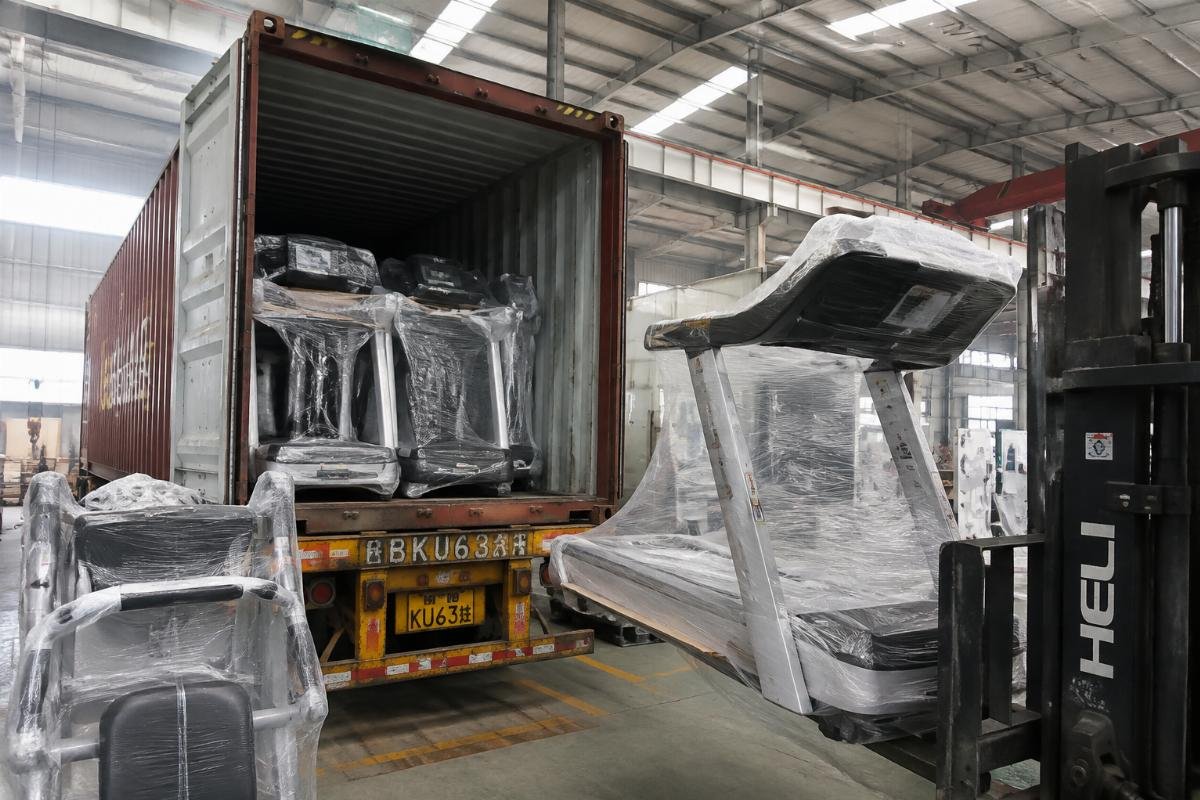
Second, consider consolidation. Shipping individual items to a port is inefficient and costly. A reliable partner should be able to consolidate the battle rope set for cruise ship orders with other functional training gear, such as plyo boxes, medicine balls, and flooring, into a single container. This reduces freight costs and simplifies customs clearance at destination ports. For cruise lines, timing is critical; equipment must arrive precisely during the dry dock window. Delays can incur massive penalties.
Third, request OEM branding options. Cruise lines often require branded equipment to maintain their luxury aesthetic. Ensure the supplier can apply heat-transfer logos or custom color matching for the rope sheaths without compromising the material’s UV stability. Some cheaper printing methods peel off in high humidity, leaving a messy appearance.
Finally, check the warranty terms for spare parts. On a ship, you cannot easily replace a single broken anchor bolt. A comprehensive package should include a kit of spare stainless steel fittings and end caps. This foresight minimizes downtime and ensures the fitness center remains operational throughout the voyage.
Conclusion
Durability in maritime fitness is defined by material science, not marketing claims. Standard gym equipment fails rapidly in the harsh, humid, and salty environment of a cruise ship. By specifying 100% synthetic cores, UV-stabilized sheaths, and 316 stainless steel anchoring, procurement managers can ensure safety and longevity. A properly specified battle rope set for cruise ship facilities eliminates the risk of internal rot and corrosion, providing a reliable training tool for guests. Always verify supplier capabilities through salt-spray test reports and prioritize consolidation partners who understand the logistical precision required for marine fit-outs.