Bumper Plate Storage Rack for Rehab Clinic Chain | Wholesale Supplier
More weight on the base plate does not mean more stability—it is the triangulated bracing geometry that keeps a loaded rack from tipping when a clinician pulls the top plate at shoulder height.
Rehab clinic chains sourcing a bumper plate storage rack must prioritize verified static load ratings, weld pull-out documentation, and OSHA-compliant labeling over unit price, because transit breakage and on-site rework across thirty-plus locations routinely erase any upfront savings from the cheapest quote.
I still remember standing on the show floor in Chicago, watching a procurement manager from a multi-site rehab chain flip one of our plate racks upside down and knock on the base tube with a knuckle. He asked, point-blank, whether the rack could pass an OSHA load test with the top peg fully loaded. At the time, we only had CE paperwork in the folder. I froze. He walked away, and the deal nearly died right there on the carpet. Back at the factory in Shandong, I spent the next few weeks tearing into ANSI/AS400 storage standards and NFPA aisle-width rules until I could spec a rack that would not become a liability in a US clinic. [NEED_CITE: OSHA 1910 general industry requirements for storage rack load marking and stability] That episode reshaped how I evaluate every bumper plate storage rack that leaves our line.
For chains buying across multiple clinics, the conversation is never just about how many plates a rack can hold. It is about whether the rack survives container transit, fits between treatment tables without blocking egress, and arrives with paperwork that satisfies a facility safety audit. Let me walk you through the specs that actually matter.
What Load Capacity Does a Rehab Clinic Plate Rack Actually Need?
Clinical use loads a bumper plate storage rack very differently from a commercial weightlifting gym, so over-specifying capacity wastes freight budget without adding safety.
In a heavy gym, a single rack may see thirty athletes pulling and returning twenty-kilo plates all day. In a rehab clinic, the same rack often holds lighter calibration plates, smaller diameter bumpers for gait training, and the occasional medicine ball. The peak load per peg is lower, but the frequency of reach-in cycles is higher, and the rack sits closer to treatment areas where a tipped unit is a patient safety incident, not just an equipment annoyance.
| Parameter | Typical Gym Spec | Rehab Clinic Spec | Why It Matters |
|---|---|---|---|
| Static load per peg | Heavy-duty | Moderate-duty | Clinics use lighter plates |
| Base footprint | Large, open floor | Compact, near walls | Space is premium in clinics |
| Peg diameter tolerance | Standard | Tight | Smaller plates wobble on loose pegs |
| Load marking | Optional | Required by code | OSHA audit trigger |
| Top-load tipping test | Often skipped | Mandatory | Patient-adjacent zone |
[NEED_CITE: ANSI/AS400 standard methodology for static versus dynamic load testing of storage racks]
A Mid-Atlantic rehab group once asked us to quote a gym-grade rack for their new locations. When we reviewed their plate inventory, the heaviest piece per station was a ten-kilo bumper. Specing a rack rated for double that meant thicker steel, heavier shipping weight, and a noticeably larger container footprint. We downgraded the tube thickness, added a wider triangulated base, and kept the peg tolerance tight for the smaller plates. The per-unit cost dropped, the container held more units, and the rack still passed the required tipping test with the top peg loaded.
The takeaway is simple: match the bumper plate storage rack rating to the actual plate inventory, not to a marketing number pulled from a bodybuilding catalog.
Which Rack Type Fits Tight Clinic Spaces: Wall-Mount vs Freestanding?
Wall-mount racks reclaim a meaningful portion of floor area but demand stud verification; freestanding units offer layout flexibility for clinics that rotate equipment between rooms.
Rehab clinics often operate in converted retail or office space where every square foot of treatment area is billable. A freestanding bumper plate storage rack with a four-by-four footprint consumes floor space that could otherwise hold a plinth or a balance beam station. Mounting the same rack on a structural wall clears that footprint almost entirely.
However, wall mounting is not a universal fix. Many clinic leases prohibit penetrating load-bearing walls, and drywall-only anchoring on a fully loaded rack is a collapse waiting to happen. I have seen a European physio chain specify wall-mount racks across all sites, only to discover at installation that three locations had masonry walls requiring expansion anchors the rack’s pre-drilled pattern did not match. The rework delayed the rollout by weeks.
| Factor | Wall-Mount Rack | Freestanding Rack |
|---|---|---|
| Floor space recovery | Substantial | None |
| Structural verification required | Yes | No |
| Relocation between rooms | Difficult | Straightforward |
| Load capacity ceiling | Lower (anchoring limited) | Higher (self-supported base) |
| Fire egress impact | Minimal if placed correctly | Must verify aisle clearance |
[NEED_CITE: NFPA Life Safety Code requirements for aisle clearance and egress width in healthcare-adjacent facilities]
For a chain rolling out across a mix of leased and owned sites, the safer play is to spec both types from the same bumper plate storage rack supplier. That way, the plate peg spacing, finish, and load markings stay consistent across locations, and the maintenance team only stocks one set of spare pegs and touch-up paint. A North American clinic network we worked with did exactly this: wall-mount units in their high-density urban locations, freestanding units in suburban sites with larger treatment floors. The visual consistency across the chain was noticeable during their investor walkthroughs.
What Safety and Compliance Docs Must a Wholesale Supplier Provide?
A CE mark alone does not satisfy US clinic procurement; buyers must collect OSHA-aligned load test reports, weld procedure records, and coating certification before the first container clears customs.
This is the hill I will die on after years of watching shipments get held up or rejected. CE certification covers European machinery directives. It does not automatically demonstrate compliance with OSHA 1910 general industry storage requirements, nor does it satisfy an American facility safety auditor who wants to see a third-party load test on the exact rack model being installed.
When a US-based rehab chain first engaged us, their risk management team sent a checklist that ran to several pages. The non-negotiables were:
- A static load test report from an accredited third-party lab, covering both evenly distributed and concentrated load scenarios on each peg.
- Weld procedure qualification records showing pull-out and shear values for the critical base-to-upright joints.
- Salt-spray test documentation for the powder coat finish, because clinic cleaning chemicals are harsher than typical gym wipe-down solutions.
- Permanent load-rating labels affixed to each rack, legible after years of disinfectant exposure.
[NEED_CITE: OSHA 1910 general industry standards for load marking on storage equipment]
A European buyer once accepted a shipment based on the supplier’s in-house test sheet. Six months in, a clinic physiotherapist pulled a fully loaded top peg, the weld at the base gave way, and the rack tipped into a treatment zone. No patient was hurt, but the incident report triggered a chain-wide recall. The supplier had no third-party weld certs to produce, and the insurance claim became a protracted dispute.
When vetting a bumper plate storage rack supplier, ask for the actual test reports, not a certificate summary page. Verify that the lab is accredited, that the tested model matches the shipped model, and that the load markings on the rack match the report. If a supplier hesitates on any of these, walk away. The cost of a third-party test is a rounding error compared to the cost of a recall across thirty clinic sites.
How to Evaluate a Bumper Plate Rack Supplier for Chain Rollouts?
Consistency across production batches, container consolidation capability, and spare parts lead time matter more than the quoted unit price when outfitting a multi-site clinic chain.
Ordering one rack for a single studio is a transaction. Outfitting a thirty-location rehab chain is a logistics operation. The supplier must hold the same steel grade, the same weld quality, and the same finish batch after batch, because a visible color mismatch between Site 7 and Site 22 will get flagged in a brand audit.
I evaluate a bumper plate storage rack supplier on four operational dimensions before I even look at the price sheet:
-
Production consistency. Request production records from three separate batches. Check whether the tube thickness, peg diameter, and weld placement fall within the same tolerance band. A supplier who cannot show this has no process control.
-
Container consolidation. A chain rollout rarely ships as a single product. The rack needs to share a container with barbells, benches, and flooring. The supplier must know how to nest racks, protect finishes during transit, and maximize container utilization without crushing the bottom units.
-
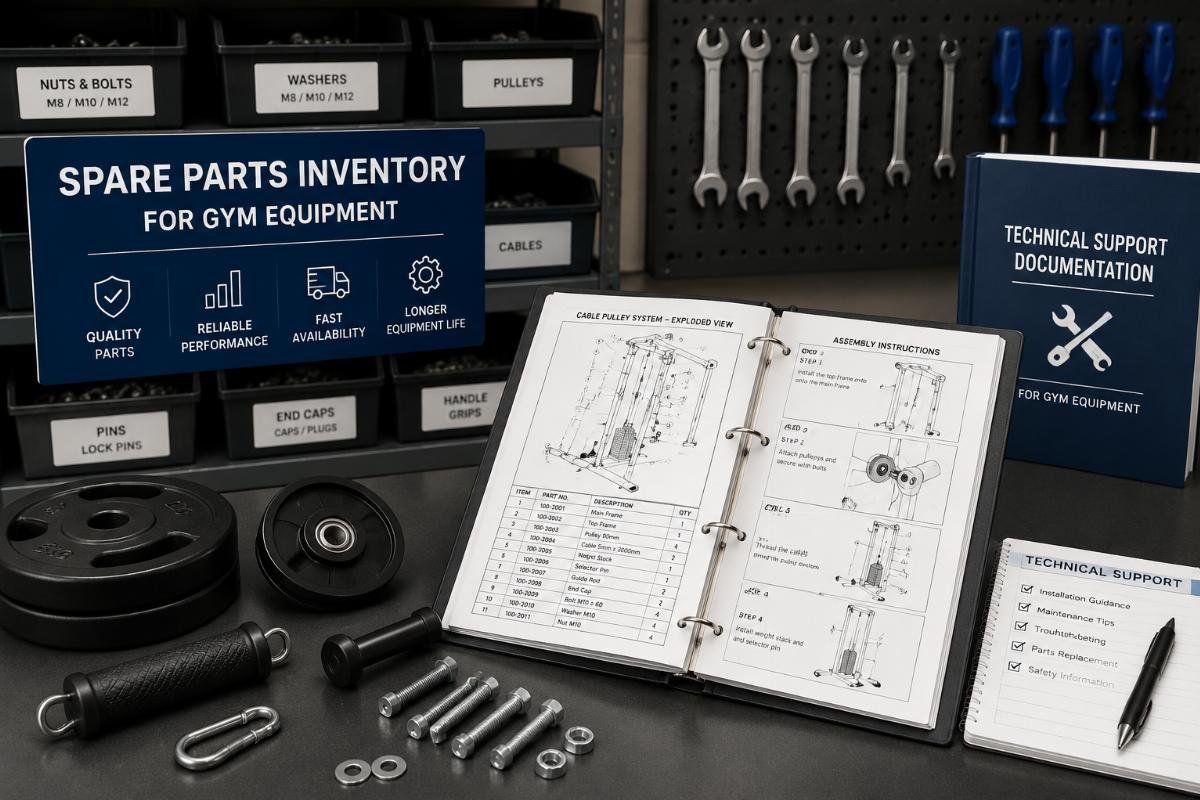
Spare parts pipeline. Pegs bend. Feet crack. Labels peel. When a clinic calls on a Tuesday morning needing a replacement peg, the supplier must be able to ship it within days, not weeks. A supplier who only sells complete units and keeps no spare inventory is a poor fit for a chain.
-
Documentation portability. Every shipment must include the test reports, material certs, and load labels for that specific batch. If the paperwork is batch-agnostic or missing, the clinic’s safety officer will reject the delivery.
[NEED_CITE: Industry best practices for QC consistency in multi-batch fitness equipment manufacturing]
A Southeast Asian distributor once switched to a cheaper bumper plate storage rack supplier to win a hospital chain tender. The first batch looked fine. The second batch had pegs that were a fraction of a millimeter undersized, causing plates to rattle during use. The third batch had a different powder coat shade. The hospital chain rejected the entire third shipment, and the distributor absorbed a loss that wiped out the margin from the first two batches.
The lesson: for a chain rollout, the bumper plate storage rack supplier is a manufacturing partner, not a catalog vendor.
What Are the Hidden Costs of Cheap Plate Racks in Multi-Site Clinics?
Transit damage, replacement delays, and on-site installation rework routinely multiply the true cost of a cheap bumper plate storage rack far beyond the initial invoice.
Procurement managers under budget pressure often default to the lowest unit quote. This is understandable, but it is also where the real money leaks out of a chain rollout. I have watched three separate clinic groups learn this the hard way.
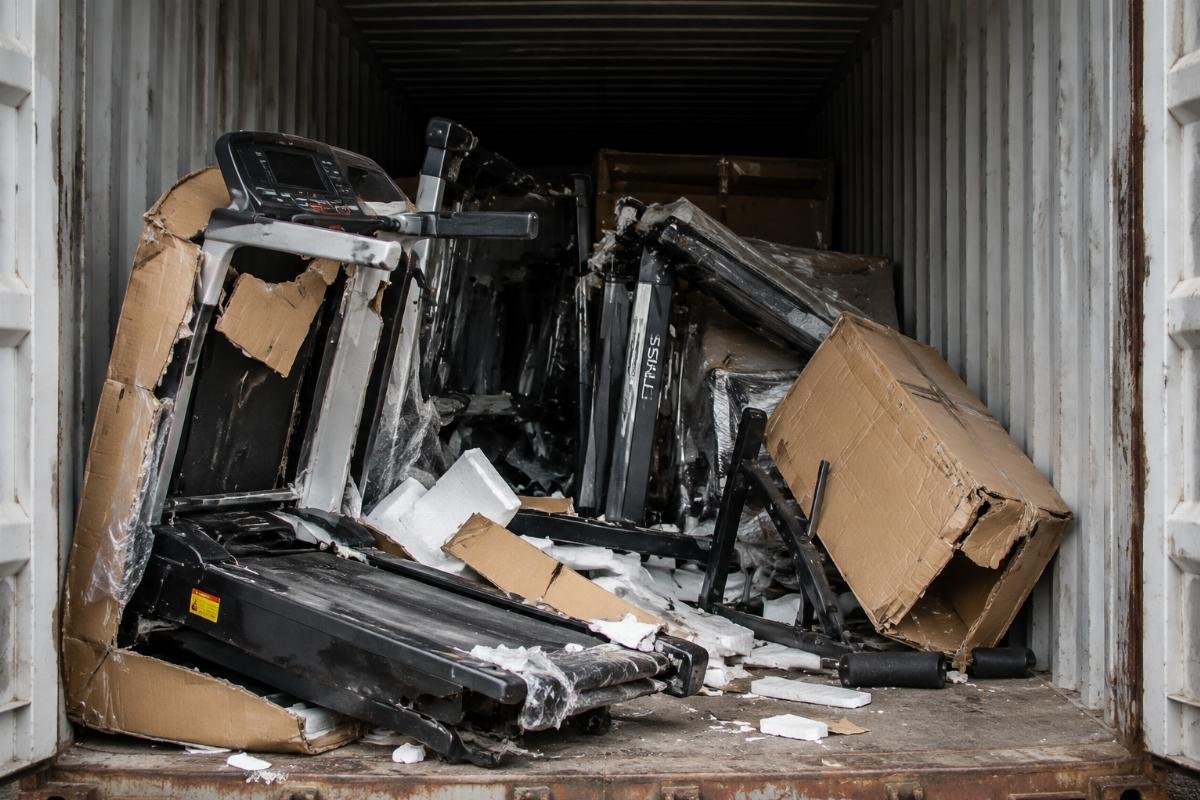
The first leak is transit damage. A rack built with thinner steel and minimal bracing may survive a forklift move in the factory, but it will not survive a four-week ocean crossing stacked under pallets of plates. Dented uprights, bent pegs, and scratched finishes arrive at the clinic dock. The clinic cannot install damaged units, and the supplier is overseas and slow to respond.
The second leak is replacement lead time. When a bent peg needs replacing, a supplier with no spare parts inventory will quote a production lead time measured in weeks. The clinic site sits partially incomplete, the installation crew is rescheduled, and the clinic opening is delayed.
The third leak is installation rework. Racks that arrive without pre-drilled anchor patterns, or with patterns that do not match local wall standards, force the installation team to drill on-site. This adds labor hours, generates debris in a clinical environment, and sometimes damages the wall finish.
| Cost Category | Cheap Rack Scenario | Spec-Right Rack Scenario |
|---|---|---|
| Transit damage rate | Noticeably higher | Minimal with proper bracing |
| Replacement part lead time | Extended, measured in weeks | Short, from stocked spares |
| On-site installation rework | Frequent, due to mismatched patterns | Rare, with pre-verified patterns |
| Total cost of ownership | Substantially above invoice | Close to invoice price |
[NEED_CITE: Total cost of ownership analysis methodology for commercial fitness equipment procurement]
A Midwest rehab chain once compared our quote against a significantly cheaper alternative. They went with the cheaper option. Eight months later, their operations director called me back. Between transit damage on two containers, a six-week wait for replacement pegs, and the installation crew having to re-drill anchor holes at eleven sites, the true cost had climbed well past what our quote would have been. We ended up supplying the next rollout, with a container consolidation plan that included spare pegs and touch-up kits in every box.
Conclusion
A rehab clinic chain’s bumper plate storage rack decision is a safety, logistics, and brand consistency call—not a price call. Match the load rating to the actual clinical plate inventory, choose wall-mount or freestanding based on each site’s structural reality, demand third-party test documentation that satisfies OSHA-aligned audits, and evaluate the supplier on batch consistency and spare parts responsiveness. The cheapest unit on the quote sheet almost always costs the chain more by the time the last site is operational.