Custom Logo Half Rack Wholesale Manufacturer for Gyms
Thicker steel walls do not automatically mean higher load capacity—yield strength grade and weld penetration depth matter far more than raw thickness numbers.
When sourcing a custom logo half rack for commercial gyms, the real decision is not about unit price comparison. It is about verifying whether the steel grade, welding standards, and coating durability actually match high-frequency commercial use. A reliable custom logo half rack wholesale manufacturer will provide verifiable material certificates, third-party weld inspection reports, and salt-spray test documentation—not just a glossy catalog.
I still remember a bulk order I handled years ago at a trade show in Chicago. A commercial gym chain wanted to cut costs and picked a factory that had never exhibited at any major fitness expo. The spec sheet claimed a specific wall thickness, but when the half racks arrived, the actual measurement fell noticeably short. The J-cup clearance was loose enough that barbells wobbled during heavy squats. The gym owner called me the same day the units were assembled. Since then, I have spent extended time walking the strength equipment halls at FIBO and IHRSA, focusing specifically on welding nodes and powder coating processes. The price gap on a quotation might look small, but it hides differences in steel yield strength, fixture precision, and salt-spray endurance—details invisible on a showroom floor but obvious once you flip open the inspection reports.
If you are evaluating a custom logo half rack wholesale manufacturer for the first time, here is what actually separates a dependable partner from a risky one.
What Steel Specs Actually Matter for a Half Rack?
The load-bearing ceiling of a half rack is determined by steel yield strength grade and wall thickness tolerance, not by the thickness number printed on a brochure.
Most buyers fixate on wall thickness alone—asking whether the frame uses 2 mm or 3 mm tubing. That is only half the picture. A 2 mm tube made from higher-grade steel with controlled yield strength can outperform a 3 mm tube made from lower-grade material with inconsistent composition. The key is the material certificate, which should specify the steel grade, yield strength range, and tensile strength range. [NEED_CITE: ASTM A500 structural tubing grade requirements and yield strength classification]
When I inspect production facilities, I always ask to see the mill test certificates for the batch of steel tubing being used. Some factories provide certificates that match the order; others hand you a generic document that could belong to any shipment. The difference shows up under load. A rack built from properly certified steel with controlled yield strength will hold J-cups firmly under repeated heavy loading, while one built from uncertified material will develop play in the peg holes over time, even if the wall thickness looks adequate on a caliper.
Here is a comparison framework I use when evaluating steel specifications from different suppliers:
| Evaluation Factor | Certified OEM Facility | Basic Workshop |
|---|---|---|
| Material Certificate | Full batch-level, traceable | Self-reported or generic |
| Yield Strength Control | Controlled, per standard grade | Uncontrolled |
| Wall Thickness Tolerance | Standard, verifiable | Noticeably wider deviation |
| J-Cup Fit Under Load | Robust, minimal play | Vulnerable to loosening |
A commercial gym buyer in Southeast Asia once received a full container of half racks where the wall thickness deviation caused the J-cup pegs to sit loosely in the holes. The gym members complained about barbell wobble within weeks of installation. The root cause was not insufficient thickness—it was inconsistent tolerance control during tube forming. [NEED_CITE: structural steel tubing tolerance standards per EN 10210]
When you request a quote from a custom logo half rack wholesale manufacturer, ask specifically for the steel grade designation, the yield strength range, and whether wall thickness tolerance is verified per batch. If the supplier cannot provide this, walk away.
How to Verify Welding Quality Before Placing a Bulk Order?
Weld penetration depth and node pull-out resistance are the real indicators of structural integrity—not the visual appearance of the weld bead.
A clean, uniform weld bead on the outside means nothing if the internal penetration is shallow. In a half rack, the critical weld nodes are where the uprights meet the base, where the J-cup mounts attach, and where any cross-bracing connects. These joints endure cyclic loading every time a lifter racks or unracks a barbell. Inadequate penetration creates a fatigue crack initiation point that will eventually propagate under repeated stress. [NEED_CITE: welding inspection standards for structural fitness equipment per AWS D1.1]
I always ask the factory to provide third-party weld inspection reports, specifically covering penetration depth verification and pull-out test results at critical nodes. Some manufacturers conduct these tests in-house and present the results as verified data. Others skip the tests entirely and rely on visual inspection alone. The gap between these two approaches becomes visible only after the racks have been in use for an extended period.
During a factory visit at a production facility in Shandong, I watched their quality team perform pull-out tests on J-cup mount welds. The testing rig applied progressively increasing force until the joint either held or failed. The results were documented with photographs and force readings. This is the level of verification you should expect from a serious custom logo half rack wholesale manufacturer.
Here is what to look for when evaluating welding quality claims:
| Weld Verification Aspect | Reliable Manufacturer | Unverified Supplier |
|---|---|---|
| Penetration Depth Testing | Verifiable, per batch | Not provided |
| Node Pull-Out Test | Full batch-level sampling | Sample-level or none |
| Weld Inspection Report | Third-party documented | Self-reported only |
| Fatigue Crack Resistance | Substantially extended | Vulnerable |
A CrossFit box owner in Europe ordered a batch of half racks from a supplier who showed impressive showroom samples. The welds looked perfect. But after several months of heavy use, cracks appeared at the base joints. The supplier had relied on visual inspection only—no penetration testing, no pull-out verification. The replacement cost ended up being several times the original order savings. [NEED_CITE: fatigue failure analysis in welded structural fitness equipment joints]
Ask your custom logo half rack wholesale manufacturer for weld inspection documentation before committing to a bulk order. If they hesitate or offer only visual photos, treat it as a warning sign.
Why Does Coating Fail After Shipping?
Coating adhesion and salt-spray endurance depend on pre-treatment quality—degreasing and phosphating—not on powder thickness alone.
Many buyers assume that a thicker powder coating layer automatically means better durability. That is a misconception. The real determinant is whether the pre-treatment process—degreasing to remove oils and phosphating to create a conversion layer—was executed properly before the powder was applied. If the pre-treatment is skipped or rushed, even a thick coating will blister, peel, or chip under normal use, and the problem becomes dramatically worse in humid or saline environments. [NEED_CITE: powder coating pre-treatment standards and salt-spray test methodology per ASTM B117]
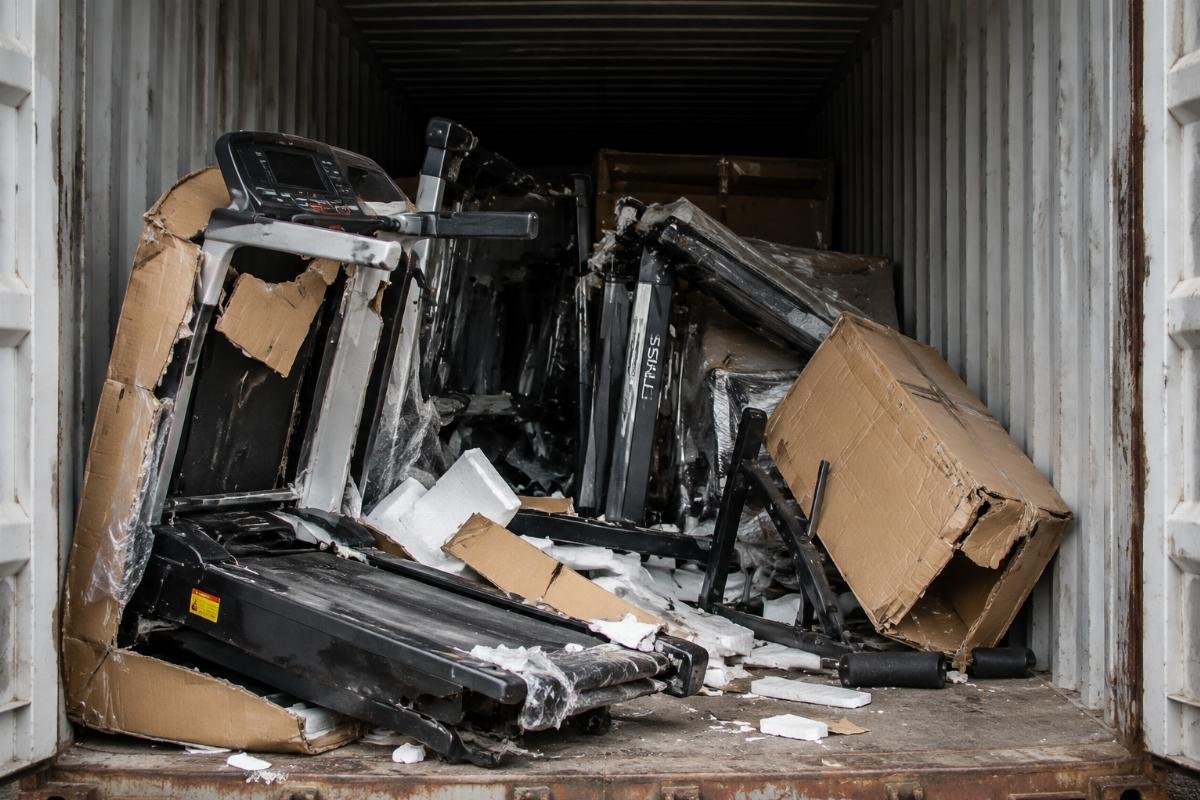
This issue is especially critical for buyers in coastal regions or those shipping internationally by sea. Salt-laden container air during ocean transit can trigger coating failure within weeks if the pre-treatment was inadequate. I have seen half racks arrive at a Middle East distributor’s warehouse with visible blistering on the uprights, even though the coating looked flawless at the factory. The root cause was insufficient phosphating—the powder had nothing to bond to at the microscopic level.
When evaluating a custom logo half rack wholesale manufacturer, ask specifically about their pre-treatment line configuration and salt-spray test hours. A reliable factory will have a multi-stage pre-treatment system and will test coated samples regularly. Here is a framework for comparing coating quality claims:
| Coating Quality Factor | Professional OEM Facility | Basic Coating Shop |
|---|---|---|
| Pre-Treatment Process | Controlled multi-stage | Uncontrolled or skipped |
| Salt-Spray Endurance | Substantially extended | Noticeably reduced |
| Coating Adhesion | Robust, cross-cut verified | Vulnerable to peeling |
| 海运 Transit Resistance | Resistant | Vulnerable to blistering |
A distributor in the Gulf region placed a full container order with a factory that quoted a lower price by cutting the pre-treatment stages. The half racks arrived with coating blistering on multiple uprights. The distributor had to arrange local recoating at a cost that wiped out the entire price advantage—and damaged their reputation with gym owners in the process. [NEED_CITE: coating failure modes in marine shipping environments for powder-coated steel]
Before placing an order, request salt-spray test reports and cross-cut adhesion test results from your custom logo half rack wholesale manufacturer. If they cannot provide these, the coating process is a gamble.
What MOQ and Customization Flexibility Should You Expect?
The right OEM partner adjusts MOQ and customization scope to your actual business stage—from single-unit prototyping to full container mixed loading.
Different buyers have very different needs. A commercial gym chain outfitting a new location may need a full container of identical half racks with a specific logo and color. A CrossFit box testing a new concept may want just a few units with custom hole patterns. A regional distributor building a product catalog may need mixed container loads combining half racks with other strength equipment. A rigid manufacturer who insists on high MOQs and single-SKU containers will not serve any of these scenarios well.
I have worked with buyers across multiple regions who needed different levels of flexibility. One boutique studio owner in Australia wanted a small batch of half racks with a custom logo and a non-standard color to match their brand identity. Another distributor in Latin America needed to consolidate half racks, cable crossovers, and free weight equipment into a single container to optimize shipping costs. The common thread was that the manufacturer’s willingness to accommodate their specific requirements determined whether the partnership worked.
A reliable custom logo half rack wholesale manufacturer should offer:
- Single-unit prototyping so you can verify build quality before committing to volume
- Custom logo application through powder coating color matching, laser etching, or welded badge plates
- Mixed container loading allowing you to combine half racks with other strength and free weight equipment in one shipment
- OEM and ODM capability covering design modifications, hole pattern customization, and attachment compatibility adjustments
The manufacturer I work with in Shandong has supported buyers across multiple regions with this kind of flexibility. Their production facilities hold CE certification, and they handle full OEM and ODM branding—from custom logo placement to bespoke color matching. Whether you are a gym chain ordering a full container of identical units or a studio owner testing a small batch with custom specifications, their MOQ flexibility means you do not have to overcommit inventory to verify quality. They also offer container-load consolidation, which is essential for distributors who need to ship a complete gym package in one container rather than paying for multiple partial shipments.
The key is to find a custom logo half rack wholesale manufacturer who treats your order size as a starting point for collaboration, not a barrier to entry.
Conclusion
Sourcing a custom logo half rack is a materials and process verification exercise, not a price comparison exercise. Steel yield strength grade, weld penetration depth, pre-treatment quality, and salt-spray endurance are the four factors that determine whether a half rack survives commercial use—or fails within months. A trustworthy custom logo half rack wholesale manufacturer will provide verifiable documentation for each of these factors and will accommodate your specific MOQ and customization requirements without forcing you into rigid order structures.