Custom Logo Cable Station Manufacturer for Sports Centers | Bick OEM
A custom logo is not a sticker; it is a structural variable.
Successful sourcing of a Custom Logo Cable Station Manufacturer requires prioritizing mechanical interface alignment—specifically weight stack pin spacing and cable diameter tolerances—over aesthetic branding details. Failure to verify these specifications against local operational habits results in installation failures, port detention costs, and compromised structural integrity, regardless of the visual quality of the powder coating or logo placement.
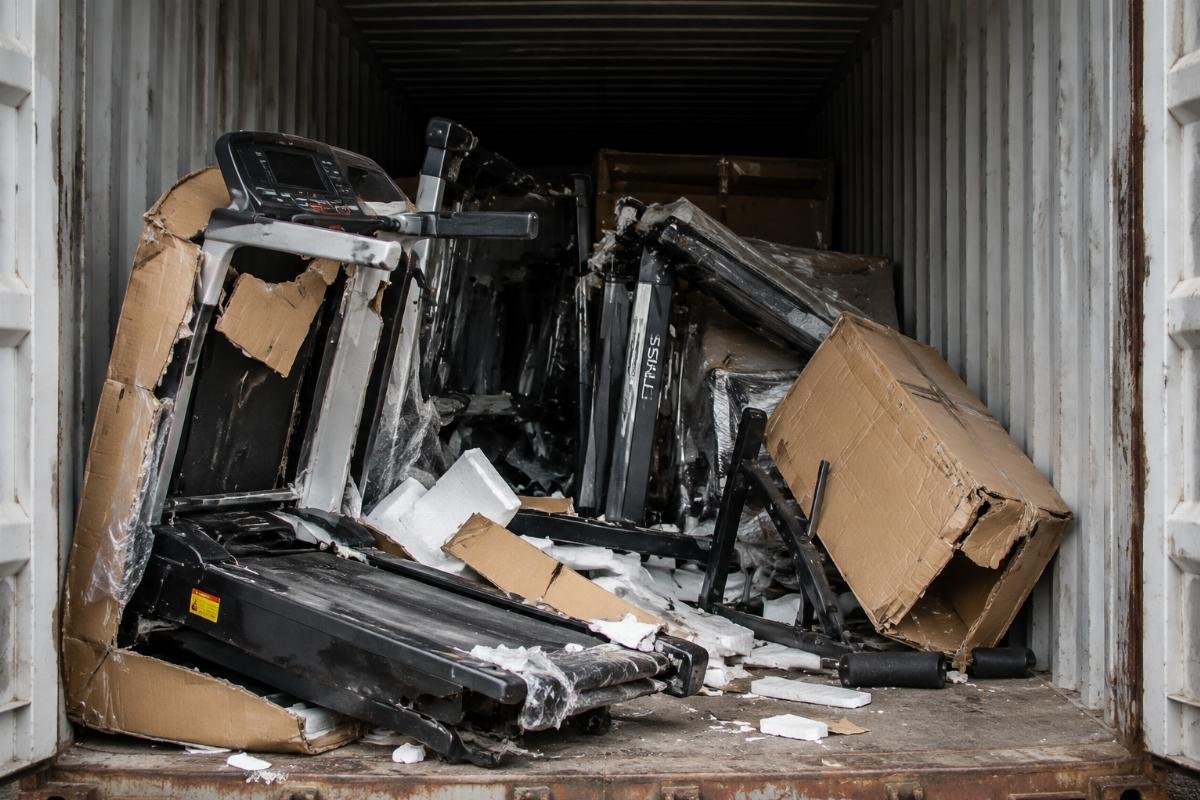
I spent three days in the equipment room of a private gym in Riyadh, watching a technician struggle with a brand-new cable crossover. The shipment had arrived from a domestic supplier with perfect color matching and crisp logo printing. Yet, the machine was useless. The weight stack pin spacing followed a metric standard, while the local gym ecosystem relied entirely on imperial-style pins. The selector pins simply would not engage. Worse, the steel cable diameter was slightly off-spec, causing it to bind in the pulley sheaves during high-tension movements. The client refused the entire container. The cargo sat at Jebel Ali Port, accumulating detention fees that eventually exceeded the profit margin of the whole order. That incident shifted my focus from general trade to technical verification. Now, when I review specs for a Custom Logo Cable Station Manufacturer, the first questions are never about color codes. They are about pin types, cable construction, and pulley ratios.
These mechanical mismatches are silent killers in international fitness equipment procurement. They do not show up in renderings. They only appear when the end-user tries to lift the first rep.
Why Do Custom Cable Stations Fail Installation?
The primary cause of installation failure is not aesthetic deviation but mechanical interface mismatch. Buyers often assume that "custom" refers solely to visual elements like logos and paint. In reality, the functional viability of a Custom Logo Cable Station Manufacturer output depends on invisible tolerances.
Consider the weight stack. It is the heart of the selectorized machine. If the vertical distance between pin holes does not match the standard used in the target region, the machine becomes inoperable. This is not a minor inconvenience; it is a total functional failure. Similarly, cable diameter variations of even half a millimeter can cause excessive friction or premature wear in the pulley system. [NEED_CITE: ISO standards for fitness equipment safety and mechanical interfaces]
| Specification Factor | Risk of Mismatch | Impact on Operation | Verification Method |
|---|---|---|---|
| Weight Stack Pin Spacing | High | Selector pins fail to engage; weights cannot be adjusted | Physical template check against local standard pins |
| Cable Diameter Tolerance | Medium | Binding in pulleys; uneven tension; accelerated wear | Caliper measurement against pulley groove spec |
| Pulley Bearing Type | Medium | Noise generation; increased maintenance frequency | Visual inspection of bearing seals and rotation smoothness |
| Logo Placement Depth | Low | Potential stress concentration if welded improperly | Review of welding blueprint vs. branding area |
A Middle East hotel project once faced this exact issue. The supplier had used a generic mold for the weight stack guide rods. The hole spacing was accurate for the European market but incompatible with the imperial pins preferred by the local staff. The cost to re-drill and re-powder coat the stacks locally was substantial. It highlighted a critical truth: verification must happen before production, not after arrival.
When engaging a Custom Logo Cable Station Manufacturer, request a detailed specification sheet that includes pin diameter, hole spacing, and cable construction details. Do not accept "standard" as an answer. Define "standard" for your specific market.
What Specifications Must Be Aligned Before Production?
Alignment begins with the user’s physical interaction with the machine. Regional preferences dictate mechanical design. In some markets, users prefer heavier initial resistance and specific grip angles. In others, smoothness and silence are paramount due to residential or hospitality settings.
At Bick, our pre-production confirmation process for OEM details focuses on these mechanical interfaces. We do not just confirm the logo file. We confirm the load path. For a Custom Logo Cable Station Manufacturer, this means validating the pulley ratio. A 2:1 ratio offers different resistance curves than a 1:1 setup. If the buyer expects a certain feel based on previous equipment, the ratio must match.
Cable diameter is another critical parameter. Standard commercial cables often range within a specific tolerance. However, if the pulley sheaves are designed for a narrower cable, a thicker one will jam. Conversely, a thinner cable may slip or wear out the sheave grooves faster. [NEED_CITE: Mechanical engineering principles for wire rope and pulley systems]
| Component | Critical Parameter | Common Pitfall | Recommended Action |
|---|---|---|---|
| Weight Stack | Pin Hole Spacing | Metric/Imperial mismatch | Provide physical sample or precise CAD drawing of local pins |
| Steel Cable | Diameter & Construction | Friction in pulleys | Specify exact diameter and core type (e.g., IWRC) |
| Pulleys | Sheave Groove Width | Mismatch with cable size | Ensure groove width matches cable diameter with minimal clearance |
| Frame | Welding Points | Logo placement over stress zones | Review structural drawings to ensure branding does not compromise integrity |
A boutique studio owner in Europe once requested a specific logo placement on the main upright of a cable crossover. The proposed location coincided with a primary weld joint. By adjusting the mold position slightly, we moved the branding area to a non-structural panel without altering the visual balance. This preserved both the aesthetic intent and the mechanical safety.
These specifications are not optional extras. They are the foundation of a functional machine. A reliable Custom Logo Cable Station Manufacturer will ask for these details proactively. If they do not, proceed with caution.
How to Balance Branding with Structural Integrity?
Branding is often viewed as a superficial layer. In manufacturing, it is a structural consideration. Laser cutting, welding, and powder coating all interact with the material’s integrity. Placing a large, deep-cut logo near a high-stress joint can create a stress concentration point. Over time, this can lead to micro-cracks and eventual failure.
Most buyers think custom logo application is just printing or simple engraving. Truly, it requires adjusting mold positions to avoid stress points. For a Custom Logo Cable Station Manufacturer, this means understanding the load paths of the frame. The uprights of a cable station endure significant tensile and compressive forces. Any modification to these surfaces must be evaluated for its impact on strength.
We adhere to strict guidelines regarding branding areas. Logos should be placed on flat, non-load-bearing panels whenever possible. If placement on a structural member is necessary, the depth of the engraving or the method of attachment must be carefully controlled. Powder coating thickness also plays a role. In high-humidity environments, such as coastal hotels in the Middle East or Southeast Asia, coating thickness must meet specific standards to prevent corrosion. [NEED_CITE: ISO standards for powder coating thickness and corrosion resistance]
| Branding Method | Structural Impact | Durability | Best Use Case |
|---|---|---|---|
| Laser Engraving | Low (if shallow) | High | Small logos on flat panels |
| Welded Plate | Medium (heat affect) | Very High | Large logos on non-critical zones |
| Sticker/Decal | None | Low (peeling risk) | Temporary promotions or low-wear areas |
| Molded-In | None | Highest | High-volume runs with custom molds |
A regional distributor once consolidated mixed containers for shipment. The custom-painted frames were not adequately protected. During sea freight, vibration caused minor abrasions where frames touched. While the logos were intact, the finish was compromised. This led to a rejection upon arrival. The lesson was clear: packaging reinforcement standards are as important as the product itself.
Balancing aesthetics and integrity requires a partner who understands both design and engineering. A competent Custom Logo Cable Station Manufacturer will provide feedback on logo placement to ensure long-term durability.
What Are the Hidden Costs of Poor Specification?
The initial price of a machine is only part of the total cost of ownership. Poor specification leads to hidden costs that can far exceed any initial savings. These include port detention fees, local rework labor, replacement parts shipping, and reputational damage.
In the Riyadh case mentioned earlier, the cost of reworking the weight stacks locally was significant. The labor rates in the destination country were higher than the manufacturing cost differential. Additionally, the delay in opening the gym affected revenue projections. These are the true costs of vague orders.
When sourcing from a Custom Logo Cable Station Manufacturer, invest time in upfront verification. Request sample components if possible. Verify pin spacing with physical tools. Check cable samples for smoothness. These small steps prevent large losses later.
| Cost Category | Cause | Impact Level | Mitigation Strategy |
|---|---|---|---|
| Port Detention | Documentation or spec errors | High | Clear communication and pre-shipment inspection |
| Local Rework | Mechanical mismatch | High | Pre-production sample approval |
| Replacement Parts | Wear due to wrong specs | Medium | Correct initial specification |
| Reputation | Customer dissatisfaction | High | Consistent quality and reliability |
A US buyer once ordered a batch of cable stations with incorrect pulley ratios. The machines felt "wrong" to users. The buyer had to replace the pulley systems locally, incurring double the logistics cost. This could have been avoided with a simple video call to demonstrate the resistance curve before mass production.
Hidden costs are avoidable. They require diligence and a partner who values precision over speed. A professional Custom Logo Cable Station Manufacturer will support this diligence with transparent processes and detailed documentation.
Conclusion
Specification alignment precedes aesthetic customization.
Sourcing a Custom Logo Cable Station Manufacturer is not merely about branding. It is about ensuring that every mechanical interface, from weight stack pins to cable diameters, aligns with local operational habits. Neglecting these details leads to costly failures. Prioritize technical verification, understand the structural implications of branding, and account for hidden costs. Success lies in the details that are not visible in a rendering but are felt in every repetition.